
Introduction
Migration has become one of the most significant forces shaping societies across the world. It affects population distribution, economic development, cultural diversity, political institutions, and social relations. In the United States, the state of Georgia provides an important example of how migration contributes to demographic transformation and social change. Over the past several decades, Georgia has experienced substantial population growth due to both domestic migration from other states and international immigration from various regions of the world.
The demographic evolution of Georgia reflects broader trends of globalization, urbanization, economic restructuring, and changing migration patterns. The state has transformed from a predominantly rural and agricultural society into a dynamic and diverse region characterized by growing metropolitan centers, expanding economic opportunities, and increasing cultural pluralism.
This article examines migration and demographic change in Georgia from a political and sociological perspective. It explores historical migration trends, current demographic patterns, social impacts, political implications, and future challenges associated with population change.

Understanding Migration and Demographic Change in Georgia
Migration refers to the movement of people from one place to another with the intention of establishing temporary or permanent residence. It can occur within national boundaries (internal migration) or across international borders (international migration).
Demographic change refers to alterations in population characteristics such as:
- Population size
- Age structure
- Ethnic composition
- Birth and death rates
- Urban-rural distribution
- Educational attainment
Migration often acts as a major driver of demographic transformation by introducing new populations, altering labor markets, and reshaping cultural identities.
Historical Background of Migration in Georgia
Georgia’s demographic history has been shaped by multiple waves of migration.
During the nineteenth century, the state’s population was largely rural and dependent on agriculture. The economy relied heavily on cotton cultivation and enslaved labor. Following the Civil War and Reconstruction, population movements reflected economic restructuring and industrial development.
The twentieth century witnessed significant migration trends. One notable phenomenon was the Great Migration, during which many African Americans left Georgia and other Southern states in search of employment opportunities and greater social equality in northern and western cities.
Beginning in the late twentieth century, the trend reversed as many individuals and families moved to Georgia. Economic growth, lower living costs, expanding industries, and favorable climate conditions attracted migrants from across the United States.
The growth of Atlanta as a major economic and transportation hub further accelerated migration into the state.
Internal Migration and Population Growth
Internal migration has played a crucial role in Georgia’s demographic expansion.
People from states such as New York, California, Illinois, Florida, and New Jersey have relocated to Georgia for various reasons, including employment opportunities, affordable housing, and improved quality of life.
Several factors encourage internal migration:
Economic Opportunities
Georgia has developed diverse economic sectors including:
- Technology
- Logistics
- Manufacturing
- Healthcare
- Education
- Financial services
Atlanta, Savannah, Augusta, and Columbus have become major employment centers attracting workers from different regions.
Lower Cost of Living
Compared to many northeastern and western states, Georgia offers relatively affordable housing and lower living expenses. This economic advantage attracts retirees, professionals, and families seeking financial stability.
Urban Development
Rapid urban growth has created new residential communities, transportation systems, and commercial centers that support population expansion.
As a result, Georgia has consistently ranked among the fastest-growing states in the United States.
International Immigration in Georgia
International immigration has significantly influenced Georgia’s demographic landscape.
Immigrants arrive from:
- Mexico
- India
- China
- Korea
- Vietnam
- Nigeria
- El Salvador
- Guatemala
- Caribbean nations
Many settle in metropolitan Atlanta and surrounding counties.
Economic Contributions
Immigrants contribute to multiple sectors of the economy, including:
- Construction
- Hospitality
- Healthcare
- Information technology
- Agriculture
- Small business ownership
Their participation helps meet labor demands and supports economic growth.
Cultural Diversity
Immigration has increased cultural diversity throughout Georgia. New communities bring languages, traditions, cuisines, religions, and cultural practices that enrich social life.
Cities now host multicultural festivals, international markets, and diverse religious institutions reflecting growing global connections.
Population Growth and Urbanization
Migration has fueled rapid urbanization across Georgia.
Atlanta Metropolitan Region
The Atlanta metropolitan area represents the state’s primary population center. It attracts migrants due to:
- Employment opportunities
- Educational institutions
- Transportation infrastructure
- Business investment
The city’s growth has transformed surrounding suburbs into major urban centers.
Expansion of Suburban Communities
Counties surrounding Atlanta have experienced remarkable population increases. New housing developments, schools, and commercial facilities continue to emerge.
Suburban growth demonstrates the relationship between migration and spatial population redistribution.
Challenges of Urban Growth
Rapid population expansion creates challenges such as:
- Traffic congestion
- Housing shortages
- Environmental pressure
- Infrastructure demands
- Public service expansion
Managing urban growth remains a critical policy concern.
Changing Racial and Ethnic Composition
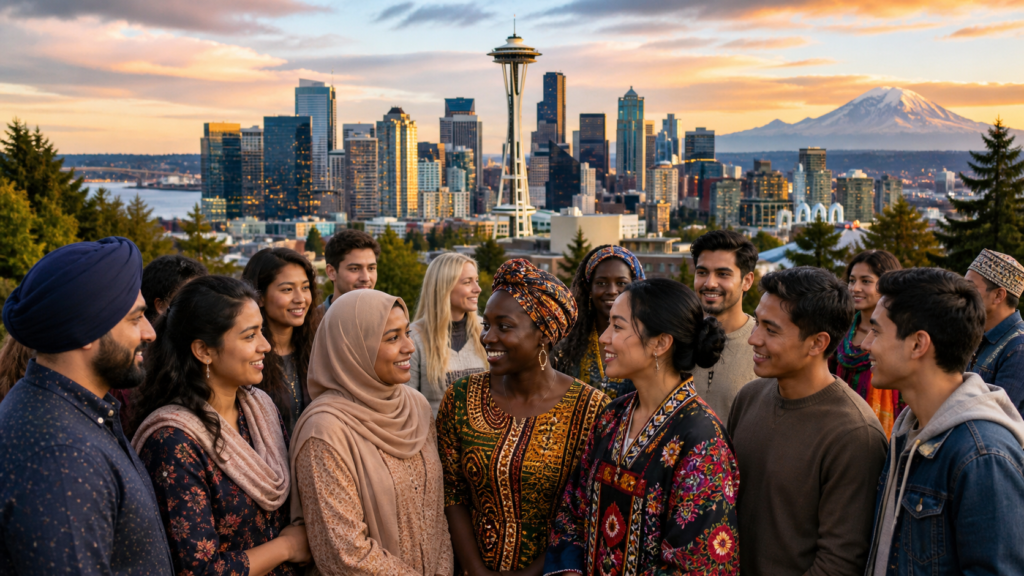
One of the most important demographic consequences of migration is increasing racial and ethnic diversity.
Historically, Georgia’s population consisted primarily of White and African American communities. Contemporary migration patterns have introduced greater ethnic complexity.
Today the state includes growing populations of:
- Hispanic and Latino residents
- Asian Americans
- African immigrants
- Middle Eastern communities
- Multiracial populations
This diversity contributes to new forms of social interaction, cultural exchange, and identity formation.
Sociological Significance
From a sociological perspective, demographic diversity can promote:
- Social innovation
- Cultural creativity
- Global awareness
- Economic adaptability
At the same time, societies must address challenges related to integration, inequality, and intercultural understanding.
Age Structure and Demographic Transition
Migration also influences age distribution.
Many migrants moving to Georgia are working-age adults. Their arrival contributes to labor force expansion and economic productivity.
At the same time, Georgia attracts retirees seeking warmer climates and lower living costs.
These trends create a complex demographic structure characterized by:
- Growing workforce populations
- Expanding elderly populations
- Increased demand for healthcare services
- Greater educational needs
The coexistence of younger workers and older retirees requires balanced public policy planning.
Political Implications of Demographic Change
Demographic transformation has important political consequences.
Electoral Changes
Population growth affects political representation.
As Georgia’s population increases, electoral districts must be adjusted to reflect demographic realities. Growing diversity influences voting patterns and political competition.
In recent years, demographic shifts have contributed to changes in electoral outcomes, making Georgia a highly competitive political state.
Policy Priorities
Changing populations generate new policy demands involving:
- Immigration
- Healthcare
- Education
- Housing
- Transportation
- Economic development
Political leaders must respond to the needs of increasingly diverse constituencies.
Civic Participation
Migration introduces new voices into democratic processes. Immigrants, migrants, and younger populations often engage in civic organizations, community associations, and political activities that influence governance.
Economic Effects of Migration
Migration generally contributes positively to economic development.

Labor Market Expansion
Migrants provide essential labor across multiple industries. Their participation helps address worker shortages and supports business growth.
Entrepreneurship
Many migrants establish small businesses that create jobs and stimulate local economies.
Immigrant-owned enterprises often contribute to neighborhood revitalization and commercial diversification.
Innovation and Human Capital
Highly skilled migrants bring expertise, education, and professional experience that enhance innovation and productivity.
Universities, technology firms, and healthcare institutions particularly benefit from skilled migration.
Social Challenges Associated with Migration
Despite numerous benefits, migration can also create challenges.
Housing Affordability
Rapid population growth increases housing demand, often leading to rising prices and affordability concerns.
Educational Pressures
Schools may experience enrollment growth requiring additional teachers, facilities, and resources.
Infrastructure Demands
Roads, public transportation systems, and utilities must expand to accommodate growing populations.
Social Integration
Communities must foster inclusion and intercultural understanding to prevent social fragmentation and discrimination.
Effective policies are necessary to ensure successful integration and social cohesion.
Theoretical Perspectives on Migration
Several sociological theories help explain migration patterns in Georgia.
Push-Pull Theory
Push-pull theory suggests that migration occurs because individuals are pushed away from unfavorable conditions and pulled toward attractive opportunities.
People move to Georgia because of:
- Employment opportunities
- Lower living costs
- Better climate
- Improved quality of life
Human Capital Theory
Human capital theory views migration as an investment decision. Individuals relocate to maximize economic opportunities and future earnings.
World Systems Theory
World systems theory emphasizes globalization and economic interdependence. International migration reflects global labor demands and unequal development between regions.
Social Network Theory
Existing migrant communities encourage further migration by providing information, support, and resources for newcomers.
These theoretical frameworks help explain Georgia’s demographic transformation.
Future Demographic Trends in Georgia
Current evidence suggests that Georgia will continue experiencing population growth.
Several trends are likely to shape the future:
- Continued domestic migration
- Growth of immigrant populations
- Expansion of metropolitan areas
- Increasing racial diversity
- Aging population segments
- Technological workforce development
Policymakers will need to address issues involving sustainability, social inclusion, housing, and infrastructure.
Successful adaptation will depend on strategic planning and effective governance.
Conclusion on Demographic Change in Georgia
Migration has fundamentally transformed Georgia’s demographic landscape. Internal migration and international immigration have contributed to rapid population growth, urbanization, economic development, and cultural diversity. These changes have reshaped social institutions, political dynamics, and community structures throughout the state.
From a political science perspective, demographic change influences representation, policy priorities, and democratic participation. From a sociological perspective, migration affects identity formation, social integration, cultural interaction, and economic opportunity.
While migration creates challenges related to housing, infrastructure, and social cohesion, it also provides significant benefits through labor force growth, entrepreneurship, innovation, and cultural enrichment. Understanding these processes is essential for developing policies that promote inclusive development and sustainable social progress.
As Georgia continues to evolve, migration will remain a central force shaping its future society, economy, and political system.
FAQs on Demographic Change in Georgia
1. What is meant by Demographic Change in Georgia?
Demographic Change in Georgia refers to shifts in the state’s population size, age structure, racial and ethnic composition, migration patterns, and urban-rural distribution over time.
2. What are the main causes of Demographic Change in Georgia?
The primary causes include internal migration from other U.S. states, international immigration, natural population growth, urbanization, and economic development.
3. How has migration influenced Demographic Change in Georgia?
Migration has significantly increased Georgia’s population, diversified its ethnic composition, and contributed to the rapid growth of urban and suburban areas.
4. Why is Atlanta important in understanding Demographic Change in Georgia?
Atlanta serves as Georgia’s largest metropolitan area and attracts migrants due to its strong economy, educational institutions, and employment opportunities, making it a major driver of demographic transformation.
5. How has international immigration contributed to Demographic Change in Georgia?
International immigrants have increased cultural diversity, expanded the labor force, and introduced new languages, traditions, and business activities across the state.
6. What role does urbanization play in Demographic Change in Georgia?
Urbanization has led to population concentration in cities and suburbs, resulting in economic growth, infrastructure development, and changing community structures.
7. How has racial diversity affected Demographic Change in Georgia?
Georgia has become more ethnically diverse due to immigration and migration, leading to greater cultural interaction and changes in social and political dynamics.
8. What economic effects are associated with Demographic Change in Georgia?
Demographic changes have supported labor market expansion, entrepreneurship, innovation, consumer demand, and overall economic growth.
9. How does Demographic Change in Georgia impact political representation?
Population shifts influence electoral districts, voting patterns, and policy priorities, affecting both state and local political processes.
10. What challenges arise from Demographic Change in Georgia?
Challenges include housing affordability, traffic congestion, pressure on public services, educational demands, and the need for social integration.
11. How has the age structure changed due to Demographic Change in Georgia?
Georgia has experienced growth in both working-age populations and retirees, creating new demands for employment opportunities, healthcare, and social services.
12. Why is Demographic Change in Georgia important for policymakers?
Understanding demographic trends helps policymakers plan for education, healthcare, transportation, housing, and economic development more effectively.
13. How does globalization influence Demographic Change in Georgia?
Globalization encourages international migration, economic investment, and cultural exchange, all of which contribute to demographic transformation in the state.
14. What sociological theories explain Demographic Change in Georgia?
Theories such as Push-Pull Theory, Human Capital Theory, Social Network Theory, and World Systems Theory help explain migration and population changes in Georgia.
15. What is the future outlook for Demographic Change in Georgia?
The future is expected to include continued population growth, greater cultural diversity, ongoing urban expansion, and increasing demands for sustainable development and public services.