
Introduction
New York has long been recognized as one of the most diverse and globally connected regions in the world. The relationship between globalization and immigration has significantly shaped the social, cultural, economic, and political landscape of New York. As a major gateway for international migrants, New York serves as an ideal setting for examining how globalization influences population movement and how immigrant communities contribute to social transformation.
Globalization refers to the increasing interconnectedness of societies through economic exchanges, technological advancements, communication networks, cultural interactions, and political cooperation. Immigration, on the other hand, involves the movement of people from one country to another for employment, education, family reunification, safety, or better opportunities. In New York, these two phenomena are deeply interconnected, creating a dynamic multicultural society that reflects global diversity.
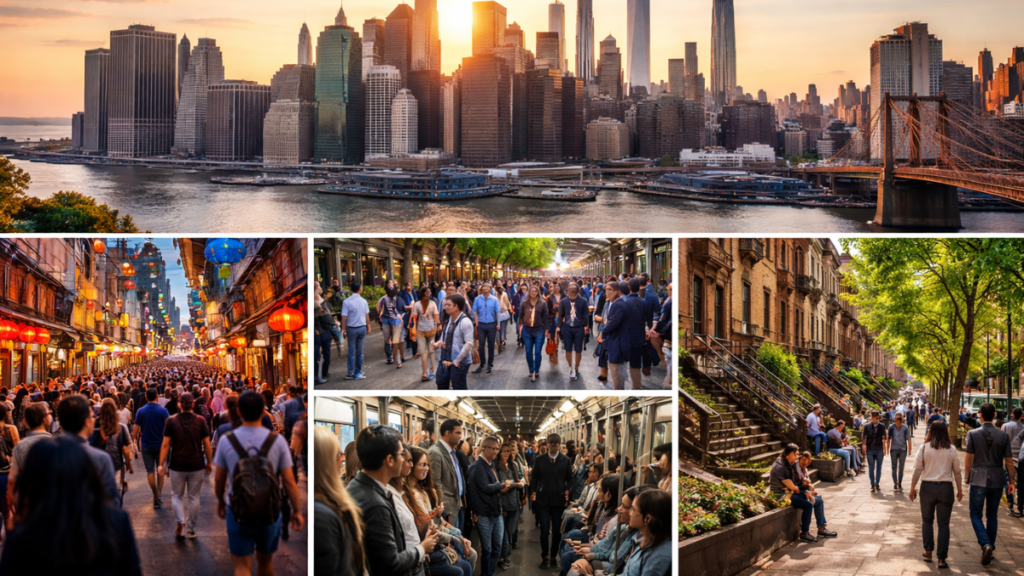
From a sociological perspective, globalization and immigration affect social structures, identities, community relations, labor markets, urban development, and cultural practices. Understanding these processes helps explain how New York has evolved into a global city and how its residents navigate the challenges and opportunities of diversity.
Historical Background of Immigration in New York
New York has been a major destination for immigrants since the nineteenth century. The city’s strategic location, economic opportunities, and international connections attracted millions of newcomers from Europe, Asia, Latin America, Africa, and the Caribbean.
The opening of the famous immigration processing center at Ellis Island in 1892 symbolized New York’s role as America’s primary gateway for immigrants. During the late nineteenth and early twentieth centuries, millions of Irish, Italian, Jewish, German, and Eastern European immigrants arrived in the city seeking better lives.
The Immigration and Nationality Act of 1965 transformed immigration patterns by removing national-origin quotas. This policy change increased immigration from Asia, Latin America, Africa, and the Caribbean, making New York one of the most ethnically diverse urban regions in the world. Today, immigrants constitute a significant portion of New York’s population, contributing to its cultural richness and economic vitality.
Understanding Globalization from a Sociological Perspective
Sociologists view globalization as a multidimensional process that affects economies, cultures, politics, and social relationships across national boundaries. The development of modern transportation systems, digital communication technologies, and international trade networks has made the movement of people, goods, and ideas easier than ever before.
Globalization influences migration in several ways. First, economic globalization creates labor demands in developed regions, attracting workers from other countries. Second, global communication allows individuals to learn about opportunities abroad. Third, international networks connect migrants with relatives and friends who have already settled in destination countries.
Sociological theories suggest that globalization reduces barriers between societies while simultaneously creating new forms of inequality. While some individuals benefit from global opportunities, others migrate because of economic hardship, political instability, environmental challenges, or limited prospects in their home countries.
New York exemplifies these global processes, functioning as a hub where international migration, finance, culture, and commerce intersect.
New York as a Global City
Urban sociologists often describe New York as a global city. A global city is a major urban center that plays a crucial role in international economic, cultural, and political networks.
The presence of multinational corporations, financial institutions, media organizations, universities, and international organizations has strengthened New York’s global significance. The city attracts professionals, entrepreneurs, students, artists, and workers from around the world.
The global city model explains why immigration remains central to New York’s development. Immigrants fill positions across all sectors of the economy, from high-skilled occupations in technology and finance to service jobs in hospitality, transportation, construction, and healthcare.
Globalization has transformed New York into a cosmopolitan environment where multiple languages, religions, traditions, and cultural practices coexist. This diversity contributes to innovation, creativity, and economic growth while also presenting challenges related to integration and social cohesion.
Demographic Diversity and Multiculturalism
One of the most visible effects of globalization and immigration in New York is demographic diversity. The city is home to residents from hundreds of countries and linguistic backgrounds.
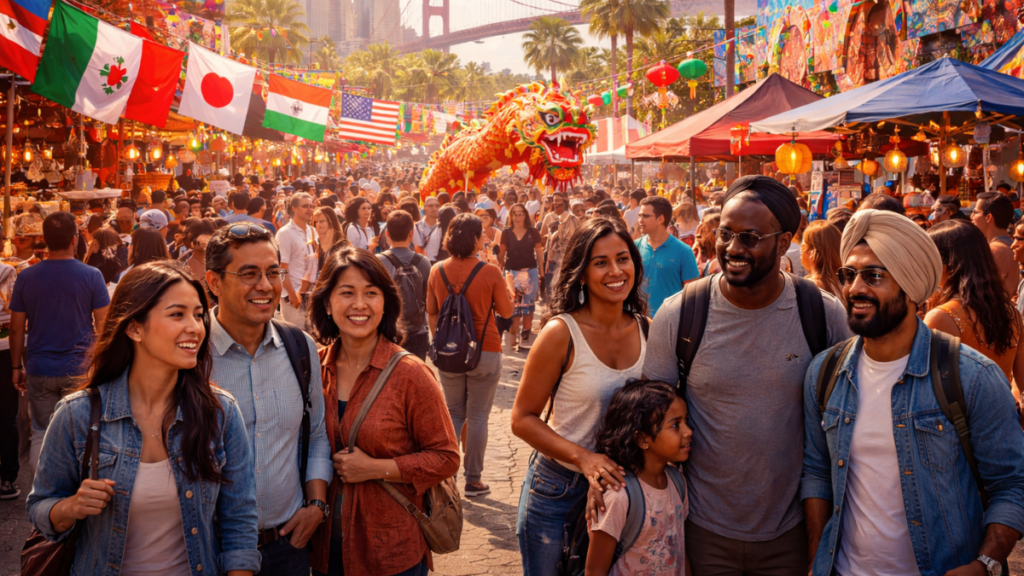
Neighborhoods throughout New York reflect the cultural heritage of immigrant populations. Distinct communities have emerged where immigrants maintain cultural traditions while adapting to American society. These communities often provide social support, economic opportunities, and cultural continuity for newcomers.
Sociologists use the concept of multiculturalism to describe societies that recognize and value cultural diversity. In New York, multiculturalism is evident in food, festivals, languages, religious institutions, educational programs, and community organizations.
Immigrant communities contribute to the city’s cultural landscape by introducing new artistic expressions, culinary traditions, business practices, and social customs. This cultural exchange enriches everyday life and promotes greater understanding among diverse groups.
However, multiculturalism also raises questions about identity, belonging, and social integration. Different groups may experience varying levels of acceptance and inclusion within broader society.
Economic Contributions of Immigrants
Immigrants play a vital role in New York’s economy. Sociological studies indicate that immigrant labor contributes significantly to economic productivity, entrepreneurship, and innovation.
Many immigrants establish small businesses that create employment opportunities and stimulate local economic development. Restaurants, grocery stores, transportation services, retail shops, and professional enterprises operated by immigrants are common throughout New York.
Globalization has increased demand for both highly skilled and low-skilled workers. Immigrants fill labor shortages in various sectors, including healthcare, education, technology, finance, construction, hospitality, and domestic services.
Highly educated immigrants contribute expertise in science, engineering, medicine, and business. At the same time, working-class immigrants support essential services that sustain urban life. This dual role highlights the complexity of immigrant participation in the labor market.
Sociologists emphasize that immigrant economic contributions extend beyond employment. Their spending, tax payments, investments, and entrepreneurial activities strengthen local and regional economies.
Social Networks and Transnationalism
Globalization has encouraged the development of transnational social networks. Transnationalism refers to the maintenance of social, economic, political, and cultural connections across national borders.
Many immigrants in New York remain connected to their countries of origin through communication technologies, financial remittances, travel, and community organizations. These connections allow migrants to participate in multiple social worlds simultaneously.
Modern technologies such as smartphones, social media platforms, and video communication services facilitate constant interaction between migrants and their families abroad. These tools reduce social distance and strengthen transnational relationships.
From a sociological perspective, transnationalism challenges traditional notions of citizenship and national identity. Individuals may develop hybrid identities that combine elements of both their homeland and host society.
New York’s immigrant communities often function as bridges linking local neighborhoods to global networks. These connections contribute to cultural exchange, international business activities, and the circulation of ideas across borders.
Immigration and Social Stratification
Although immigration creates opportunities, it also intersects with social inequality. Social stratification refers to the unequal distribution of resources, power, and opportunities within society.
Immigrants do not experience globalization in the same way. Factors such as education, language proficiency, legal status, race, ethnicity, and socioeconomic background influence their experiences.
Highly skilled immigrants often access well-paying jobs and professional opportunities. In contrast, many low-income immigrants face challenges including job insecurity, low wages, discrimination, and limited access to social services.
Housing inequality is another significant issue. Rising housing costs in New York create difficulties for many immigrant families. Some newcomers live in overcrowded conditions or struggle to secure affordable accommodation.
Sociologists argue that immigration should be examined within broader systems of inequality. Understanding these inequalities helps policymakers address barriers to social mobility and inclusion.
Cultural Identity and Assimilation
The interaction between globalization and immigration has transformed concepts of cultural identity in New York. Sociologists have developed several theories to explain how immigrants adapt to new societies.
Traditional assimilation theory suggests that immigrants gradually adopt the language, values, and customs of the host society. Over time, cultural differences may become less pronounced.
Contemporary sociologists argue that assimilation is more complex. Many immigrants maintain aspects of their original cultures while simultaneously participating in American society. This process is often described as cultural hybridity.
Second-generation immigrants frequently experience multiple cultural influences. They may navigate family traditions, community expectations, and mainstream social norms simultaneously.
New York provides a unique environment where cultural diversity is widely visible and accepted. This context allows individuals to develop multifaceted identities that reflect both local and global influences.
Challenges of Integration
Despite New York’s reputation for diversity, immigrant integration remains a complex social process. Integration involves participation in economic, social, political, and cultural institutions while maintaining a sense of belonging.
Language barriers can limit access to education, employment, healthcare, and public services. Immigrants who are not proficient in English may face additional challenges in daily life.
Discrimination and prejudice also affect integration experiences. Some immigrant groups encounter stereotypes, social exclusion, or unequal treatment based on race, ethnicity, religion, or national origin.
Legal status represents another important factor. Undocumented immigrants often experience uncertainty, vulnerability, and restricted access to resources.
Sociologists emphasize that successful integration requires both individual adaptation and institutional support. Educational programs, community organizations, legal assistance, and inclusive policies can promote social inclusion and reduce inequality.
Globalization, Technology, and Migration
Technological advancements have significantly altered migration patterns. Global communication systems provide potential migrants with information about employment opportunities, educational institutions, housing options, and migration procedures.
Digital technologies help immigrants maintain connections with family members, access services, and participate in community activities. Online platforms also facilitate entrepreneurship and economic participation.
The rise of remote work has created new migration possibilities. Professionals can increasingly work across geographic boundaries while maintaining connections to global labor markets.
For New York, technological globalization continues to attract international talent and investment. At the same time, digital connectivity enables immigrants to sustain transnational lifestyles that transcend traditional geographic limitations.
Policy Responses and Future Directions
Government policies play a crucial role in shaping immigration experiences. Policies related to visas, employment authorization, education, healthcare, housing, and social services influence immigrant integration outcomes.
New York has often adopted policies that support immigrant communities through language access services, educational initiatives, and community-based programs. These efforts aim to promote inclusion and social participation.
Future immigration patterns will likely be influenced by global economic changes, climate-related migration, political developments, and technological innovation. Sociologists predict that globalization will continue to encourage mobility while also generating new challenges related to inequality and social integration.
Policy responses must balance economic needs, human rights considerations, and social cohesion objectives. Effective approaches should recognize the contributions of immigrants while addressing structural barriers that limit opportunities.
Conclusion
Globalization and immigration have profoundly shaped New York’s social landscape. As one of the world’s most diverse and interconnected cities, New York illustrates how global forces influence population movement, cultural exchange, economic development, and social transformation.
From a sociological perspective, immigration is not merely a demographic phenomenon but a complex process involving identity formation, social integration, economic participation, and transnational connections. Globalization has expanded opportunities for mobility while simultaneously creating new forms of inequality and social differentiation.
Immigrants have contributed significantly to New York’s economic growth, cultural vitality, and global prominence. Their experiences reveal both the possibilities and challenges of living in an increasingly interconnected world. As globalization continues to evolve, New York will remain a critical site for understanding the relationship between migration, diversity, and social change.
The study of globalization and immigration in New York demonstrates that contemporary societies are shaped by complex interactions between local realities and global processes. By examining these dynamics through a sociological lens, scholars and policymakers can better understand the factors that promote inclusion, social cohesion, and equitable development in diverse urban communities.
Do you like this this Article ? You Can follow as on :-
Facebook – https://www.facebook.com/hubsociology
Whatsapp Channel – https://whatsapp.com/channel/0029Vb6D8vGKWEKpJpu5QP0O
Gmail – hubsociology@gmail.com
FAQs on Immigration in New York
1. What is Immigration in New York?
Immigration in New York refers to the movement of people from different countries to New York for employment, education, family reunification, business opportunities, or a better quality of life.
2. Why is Immigration in New York important from a sociological perspective?
Immigration in New York is important because it influences population diversity, social structures, cultural interactions, economic development, and community formation.
3. How has Immigration in New York shaped the city’s culture?
Immigration in New York has contributed to the city’s multicultural identity through diverse languages, cuisines, religions, festivals, arts, and traditions.
4. What are the major immigrant communities involved in Immigration in New York?
Immigration in New York includes significant communities from Latin America, Asia, the Caribbean, Africa, and Europe, creating one of the world’s most diverse urban populations.
5. How does Immigration in New York affect the labor market?
Immigration in New York provides workers for various sectors, including healthcare, construction, hospitality, technology, education, and financial services.
6. What role does globalization play in Immigration in New York?
Globalization facilitates Immigration in New York by increasing international mobility, communication, trade connections, and awareness of opportunities.
7. How does Immigration in New York contribute to economic growth?
Immigration in New York contributes through entrepreneurship, labor force participation, innovation, consumer spending, and business creation.
8. What challenges are associated with Immigration in New York?
Challenges related to Immigration in New York include housing affordability, language barriers, discrimination, employment inequality, and legal status concerns.
9. How does Immigration in New York influence education?
Immigration in New York increases cultural diversity in schools and encourages multilingual education, cultural exchange, and inclusive learning environments.
10. What is transnationalism in the context of Immigration in New York?
Transnationalism in Immigration in New York refers to immigrants maintaining social, economic, and cultural connections with their countries of origin while living in New York.
11. How does Immigration in New York impact urban neighborhoods?
Immigration in New York contributes to the development of culturally distinct neighborhoods that support social networks, local businesses, and community identity.
12. What sociological theories explain Immigration in New York?
Theories such as assimilation, multiculturalism, social network theory, and transnationalism help explain patterns of Immigration in New York.
13. How has Immigration in New York changed over time?
Immigration in New York has evolved from predominantly European migration in the nineteenth and early twentieth centuries to a more globally diverse pattern since the late twentieth century.
14. What role do immigrant businesses play in Immigration in New York?
Immigrant-owned businesses are a key feature of Immigration in New York, generating employment, supporting local economies, and enhancing cultural diversity.
15. What is the future of Immigration in New York?
The future of Immigration in New York will likely be influenced by globalization, technological advancements, economic trends, climate migration, and immigration policies.
1 thought on “Globalization and Immigration in New York: A Sociological Perspective”