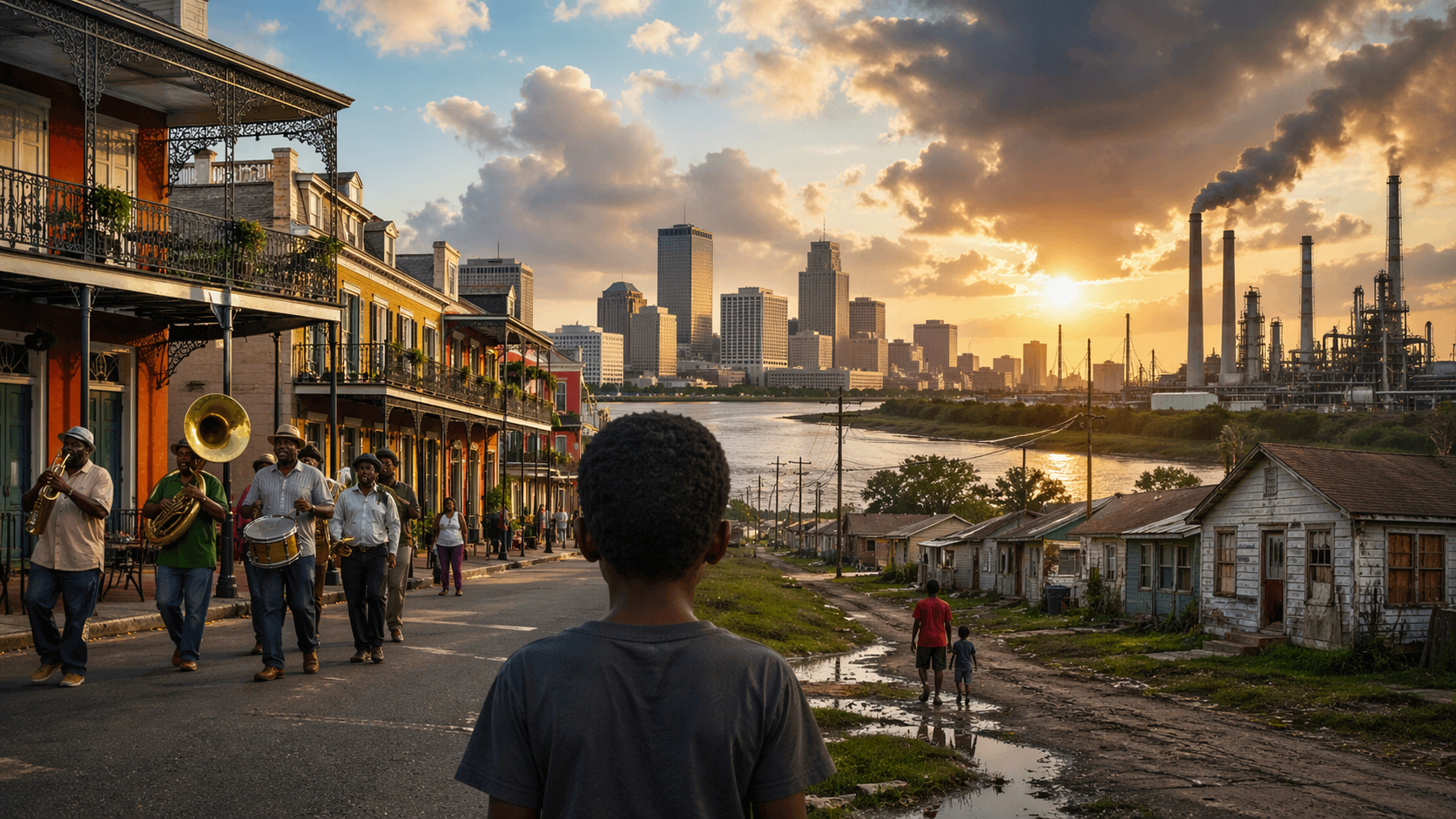
The U.S. state of Louisiana offers one of the most complex and historically layered social landscapes in the United States. Known for its vibrant cultural traditions—jazz music, Creole cuisine, Mardi Gras celebrations—Louisiana also stands as a site of persistent racial and economic inequality. A sociological analysis of Louisiana reveals how race, culture, and inequality are deeply intertwined, shaped by centuries of colonialism, slavery, segregation, and contemporary structural transformations.
This article explores these intersections by examining historical foundations, cultural identities, economic disparities, institutional inequalities, and emerging debates on race and justice.
Historical Foundations of Race in Louisiana
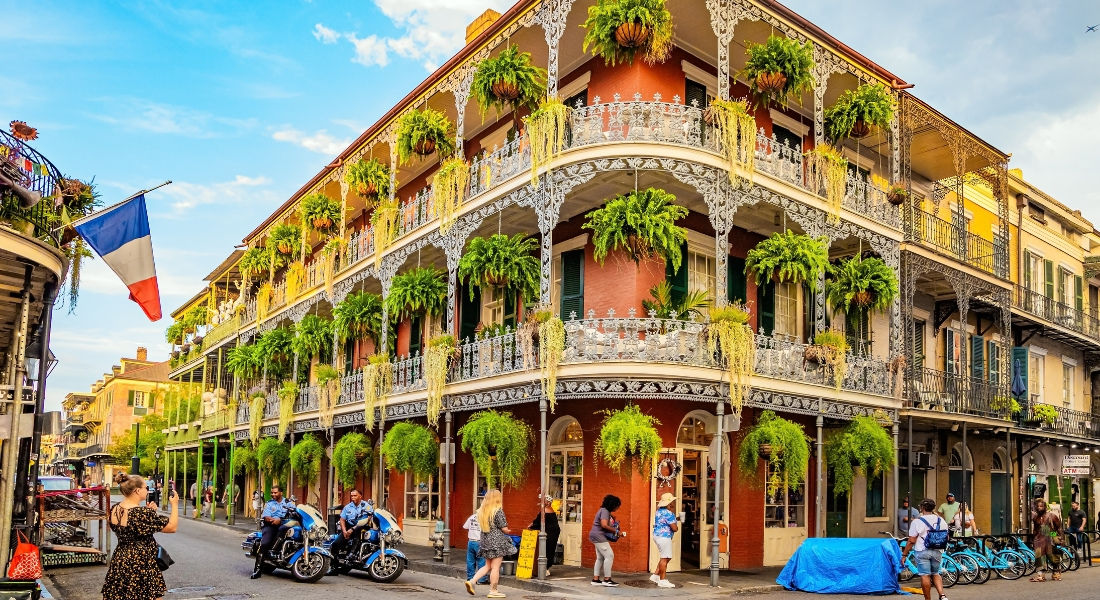
To understand inequality in Louisiana, one must begin with its colonial past. Louisiana was successively governed by France, Spain, and later the United States following the Louisiana Purchase. Each regime contributed to a distinct racial order.
Under French and Spanish rule, Louisiana developed a tripartite racial system consisting of:
- White Europeans
- Free people of color (often of mixed African and European descent)
- Enslaved Africans
This system differed from the binary racial hierarchy that later dominated Anglo-American societies. Free people of color in cities like New Orleans often held property, received education, and formed a unique cultural group.
However, after the U.S. annexation, racial boundaries hardened. The expansion of plantation slavery entrenched a rigid Black–White divide. The legacy of slavery was institutionalized through Jim Crow laws, segregation, and racial violence, leaving deep scars that continue to shape contemporary inequalities.
Cultural Diversity and Identity
Louisiana’s culture is one of its most celebrated features, yet it is also a site where inequality is reproduced.
Creole and Cajun Identities
Two prominent cultural groups in Louisiana are:
- Creoles: Often associated with French, Spanish, African, and Caribbean heritage
- Cajuns: Descendants of French-speaking Acadians
Creole identity, especially among people of African descent, has historically been marginalized. While celebrated in tourism and cuisine, Creole culture often faces erasure or simplification in mainstream narratives.
Cajun identity, on the other hand, has undergone a process of cultural revival and commodification, particularly in rural Louisiana. This contrast highlights how cultural recognition is unevenly distributed along racial lines.
Race and Economic Inequality
Economic disparities in Louisiana are among the highest in the United States. Sociological data consistently shows that African American communities face disproportionate poverty, unemployment, and limited access to wealth accumulation.

Structural Causes
- Legacy of Slavery and Segregation
Generations of exclusion from land ownership and education have limited economic mobility. - Labor Market Inequality
African Americans are overrepresented in low-wage sectors and underrepresented in high-paying industries. - Geographic Inequality
Rural parishes and urban neighborhoods with high Black populations often lack infrastructure and investment.
Case Example: The Mississippi River Corridor
The industrial corridor along the Mississippi River—often referred to as “Cancer Alley”—illustrates environmental and economic inequality. Predominantly Black communities live near petrochemical plants, facing both health risks and limited economic benefits.
Education and Social Mobility
Education plays a critical role in reproducing or challenging inequality. In Louisiana, racial disparities in education remain stark.
Unequal School Systems
- Schools in predominantly Black neighborhoods often suffer from underfunding
- Higher dropout rates and lower test scores are observed among marginalized communities
- Access to higher education remains uneven
Sociological Perspective
From the lens of conflict theory, education in Louisiana reflects broader power structures. Resources are distributed in ways that maintain existing inequalities rather than dismantle them.
Criminal Justice and Racial Disparities
Louisiana has one of the highest incarceration rates in the world. This phenomenon disproportionately affects African American men.
Key Issues
- Racial profiling and policing practices
- Harsh sentencing laws
- Limited access to legal representation
The criminal justice system functions as a mechanism of social control, reinforcing racial hierarchies established during earlier historical periods.
Health Inequality and Environmental Justice
Health disparities in Louisiana are closely linked to race and socioeconomic status.
Major Concerns
- Higher rates of chronic diseases among African Americans
- Limited access to healthcare in rural areas
- Exposure to environmental hazards
Environmental racism is particularly evident in industrial zones where minority communities face disproportionate pollution.
Culture as Resistance and Identity
Despite systemic inequalities, culture in Louisiana also serves as a form of resistance.
Music and Expression
Louisiana is the birthplace of jazz, a genre deeply rooted in African American experience. Artists like Louis Armstrong used music to express both joy and struggle.
Cultural practices such as Mardi Gras Indians, second-line parades, and gospel traditions provide spaces for community solidarity and identity formation.
Intersectionality: Race, Gender, and Class
A comprehensive sociological analysis must consider intersectionality—the overlapping nature of social identities.
Black Women in Louisiana
Black women face:
- Wage gaps
- Higher poverty rates
- Limited healthcare access
Their experiences cannot be understood solely through race or gender but through the interaction of both.
Urban Inequality: The Case of New Orleans
The city of New Orleans exemplifies urban inequality shaped by race and class.
Impact of Hurricane Katrina
The Hurricane Katrina exposed deep racial disparities:
- Black residents were disproportionately affected
- Recovery efforts favored wealthier, often white neighborhoods
- Displacement led to long-term demographic changes
Katrina revealed how structural inequality magnifies the impact of natural disasters.
Political Representation and Power
Political power in Louisiana has historically been unevenly distributed.
Voting and Representation
- Voter suppression and gerrymandering have limited minority representation
- African Americans remain underrepresented in leadership positions
However, grassroots movements and civil rights activism have led to gradual changes.
Contemporary Debates
Black Lives Matter and Racial Justice
Movements inspired by Black Lives Matter have gained traction in Louisiana, challenging police violence and systemic racism.
Cultural Commodification
There is ongoing debate about how Louisiana’s culture is marketed:
- Tourism often celebrates culture without addressing inequality
- Cultural symbols are commodified while communities remain marginalized
Environmental Activism
Local organizations are fighting against industrial pollution, linking environmental justice with racial justice.
Sociological Theoretical Perspectives
Functionalism
From a functionalist perspective, inequality is seen as a necessary part of social organization. However, in Louisiana, extreme disparities challenge this assumption.
Conflict Theory
Conflict theorists argue that inequality results from power struggles between groups. Louisiana’s history strongly supports this view, with racial inequality rooted in economic exploitation.
Symbolic Interactionism
This perspective examines how everyday interactions reinforce racial identities and stereotypes, shaping social experiences.
Pathways Toward Social Change
Addressing inequality in Louisiana requires multi-level interventions:
Policy Reforms
- Investment in education and healthcare
- Criminal justice reform
- Environmental regulation
Community Empowerment
- Support for local cultural initiatives
- Grassroots activism
- Economic development programs
Cultural Recognition
- Inclusive representation of Creole and African American heritage
- Ethical tourism practices
Conclusion
Louisiana represents a microcosm of broader American struggles with race, culture, and inequality. Its rich cultural heritage coexists with deep structural disparities, revealing the contradictions of a society that celebrates diversity while perpetuating inequality.
A sociological analysis shows that these issues are not accidental but are rooted in historical processes and institutional structures. Understanding Louisiana requires recognizing how race and culture shape access to resources, opportunities, and power.
At the same time, Louisiana’s vibrant cultural traditions and resilient communities offer hope. Through collective action, policy reform, and cultural recognition, it is possible to envision a more equitable future—one where the richness of Louisiana’s culture is matched by social justice and equality.
FAQs on Inequality in Louisiana
1. What is meant by Inequality in Louisiana?
Inequality in Louisiana refers to the uneven distribution of resources, opportunities, and social privileges across different racial, economic, and geographic groups within Louisiana.
2. Why is Inequality in Louisiana considered historically rooted?
Inequality in Louisiana is deeply connected to slavery, segregation, and post-Louisiana Purchase transformations that reinforced racial hierarchies and economic exclusion.
3. How does race influence Inequality in Louisiana?
Race plays a central role in Inequality in Louisiana, with African American communities facing higher poverty rates, lower access to education, and systemic discrimination.
4. What role does culture play in Inequality in Louisiana?
While Louisiana’s culture is widely celebrated, Inequality in Louisiana persists as marginalized groups often do not equally benefit from cultural recognition or tourism.
5. How is economic Inequality in Louisiana visible today?
Economic Inequality in Louisiana is evident through wage gaps, unemployment disparities, and limited wealth accumulation among minority populations.
6. What is “Cancer Alley” and how does it relate to Inequality in Louisiana?
“Cancer Alley” along the Mississippi River highlights environmental Inequality in Louisiana, where predominantly Black communities face high pollution and health risks.
7. How does education contribute to Inequality in Louisiana?
Unequal school funding and access contribute significantly to Inequality in Louisiana, limiting upward mobility for disadvantaged groups.
8. What is the link between incarceration and Inequality in Louisiana?
High incarceration rates, especially among African Americans, reinforce Inequality in Louisiana by restricting economic and social opportunities.
9. How did Hurricane Katrina expose Inequality in Louisiana?
The Hurricane Katrina revealed Inequality in Louisiana as marginalized communities suffered greater losses and slower recovery.
10. What are health disparities related to Inequality in Louisiana?
Inequality in Louisiana is reflected in healthcare access, with minority communities facing higher rates of chronic illness and limited medical facilities.
11. How does urbanization affect Inequality in Louisiana?
Urban centers like New Orleans show sharp contrasts in wealth, housing, and services, intensifying Inequality in Louisiana.
12. What is the role of political power in Inequality in Louisiana?
Limited minority representation and voter suppression have historically contributed to Inequality in Louisiana by restricting political influence.
13. How do gender and race intersect in Inequality in Louisiana?
Black women experience compounded Inequality in Louisiana due to both racial and gender discrimination in employment and healthcare.
14. Are there movements addressing Inequality in Louisiana?
Yes, movements like Black Lives Matter actively challenge racial injustice and highlight Inequality in Louisiana.
15. What are possible solutions to reduce Inequality in Louisiana?
Reducing Inequality in Louisiana requires policy reforms, community empowerment, better education systems, and equitable economic development.