Introduction
Climate change is no longer a distant environmental concern; it has become a deeply embedded social reality affecting human lives, cultures, and institutions. Nowhere is this transformation more visible than in Alaska, a region experiencing some of the fastest climatic changes on Earth. Situated within the Arctic, Alaska is warming at a rate far exceeding the global average due to a phenomenon known as polar amplification. Scientific research indicates that Arctic temperatures are rising more than four times faster than the global mean, leading to profound ecological and social consequences.
From a sociological perspective, climate change in Alaska is not simply about melting ice or rising temperatures—it is about social vulnerability, inequality, and the uneven distribution of risks. Communities differ in their capacity to adapt, cope, and recover. Indigenous populations, rural communities, and economically disadvantaged groups are disproportionately affected, making Alaska a crucial case study for understanding the intersection of environment and society.
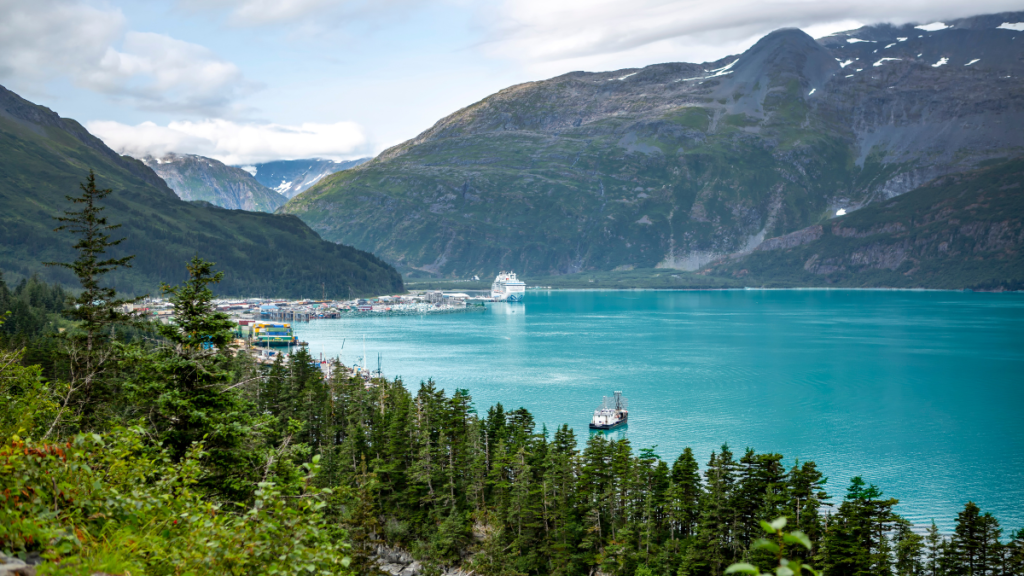
This article explores climate change in Alaska through a sociological lens, focusing on how environmental transformations intensify social vulnerability, reshape cultural systems, and challenge governance structures. Explore Social Vulnerability in Alaska through a sociological lens, examining how climate change, inequality, and Indigenous challenges shape resilience and adaptation.
Understanding Social Vulnerability in the Context of Climate Change
Social vulnerability refers to the susceptibility of social groups to harm from environmental hazards. It is shaped by factors such as income, geography, political power, cultural practices, and access to resources. Sociologists emphasize that vulnerability is not purely natural but socially constructed through systems of inequality.
In Alaska, vulnerability is heightened by geographic isolation, limited infrastructure, and dependence on natural resources. Rural communities often rely on subsistence lifestyles—hunting, fishing, and gathering—which are directly impacted by ecological changes. Moreover, Indigenous communities have historical experiences of marginalization that continue to shape their adaptive capacity.
Climate change exacerbates existing inequalities, making already vulnerable populations more exposed to risks such as food insecurity, displacement, and health crises.
Environmental Transformations in Alaska
Rapid Warming and Ice Loss
Alaska is witnessing unprecedented environmental changes. The melting of sea ice, glaciers, and permafrost is transforming landscapes and ecosystems. These changes disrupt weather patterns, destabilize land surfaces, and alter biodiversity.
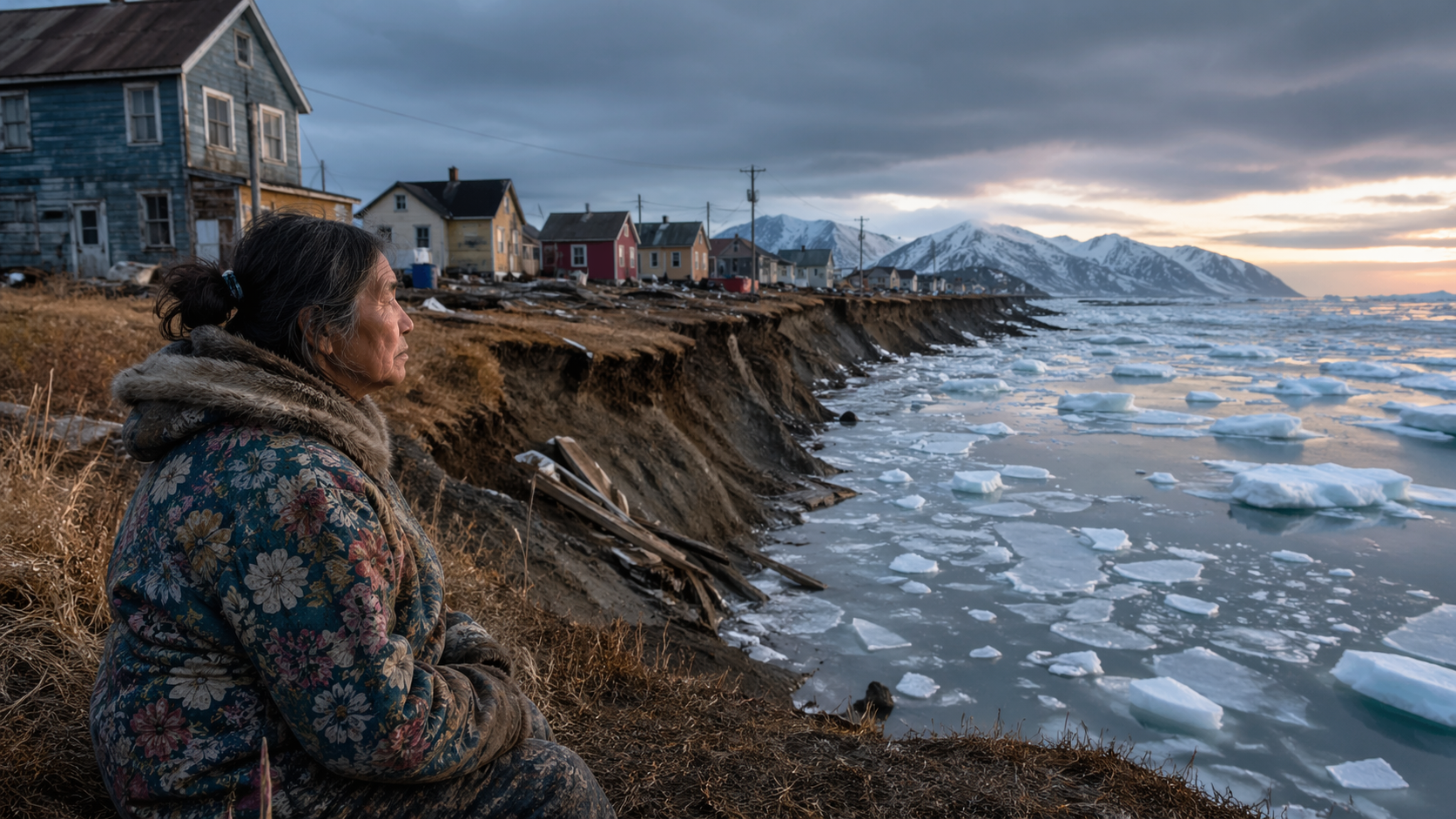
Permafrost thaw is particularly significant. It undermines infrastructure such as roads, homes, and pipelines, creating both economic and safety challenges. As the ground becomes unstable, entire communities face the risk of relocation.
Increased Natural Hazards
Climate change has intensified natural hazards in Alaska. Coastal erosion, flooding, and stronger storms are becoming more frequent. Studies show that many communities are already experiencing infrastructure damage due to these combined effects.
Wildfires are another growing threat. Warmer temperatures and drier conditions have led to longer fire seasons, increasing health risks and environmental degradation.
Ecological Disruptions
Changes in plant and animal species distribution affect traditional food systems. The loss of sea ice impacts marine mammals, while shifting vegetation patterns alter habitats for land animals. These ecological transformations have direct social consequences, particularly for communities dependent on subsistence practices.
Indigenous Communities and Disproportionate Vulnerability
Cultural and Economic Dependence on Nature
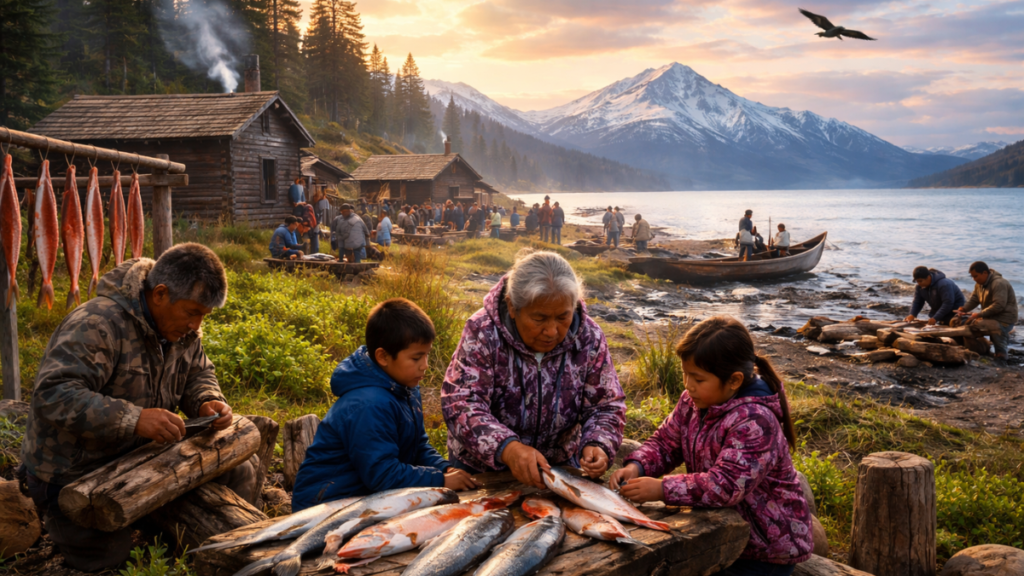
Indigenous communities in Alaska, including Alaska Native groups, maintain deep cultural and economic ties to the environment. Subsistence activities are not merely economic practices but are central to identity, spirituality, and social organization.
Climate change threatens these relationships by disrupting hunting patterns, reducing access to traditional foods, and altering seasonal cycles. As a result, cultural continuity is at risk.
Historical Marginalization and Structural Inequality
The vulnerability of Indigenous communities cannot be understood without considering historical and structural factors. Colonial policies, land dispossession, and limited access to resources have created long-standing inequalities.
Research shows that Indigenous populations are more likely to experience poverty and limited access to infrastructure, which reduces their capacity to adapt to climate change.
Climate-Induced Displacement
One of the most visible impacts of climate change in Alaska is the displacement of entire communities. Coastal villages are being forced to relocate due to erosion, flooding, and permafrost thaw.
Recent reports highlight that dozens of Alaska Native communities face severe risks, with many lacking adequate funding or institutional support for relocation.
Displacement is not just a physical process; it involves the loss of cultural heritage, social networks, and identity. Sociologically, it represents a form of “climate injustice,” where those least responsible for climate change bear its greatest burdens.
Health and Well-being in a Changing Climate
Physical Health Impacts
Climate change affects health in multiple ways. Increased wildfire activity leads to poor air quality, contributing to respiratory illnesses. Changing environmental conditions also influence the spread of diseases and access to clean water.
In rural areas, limited healthcare infrastructure further exacerbates these challenges, making populations more vulnerable to health crises.
Mental Health and Psychological Stress
The psychological impacts of climate change are significant but often overlooked. The loss of land, cultural practices, and traditional livelihoods creates emotional distress, anxiety, and a sense of uncertainty about the future.
For Indigenous communities, these impacts are deeply tied to identity and collective memory, making climate change a source of cultural trauma.
Economic Dimensions of Vulnerability
Dependence on Natural Resources
Alaska’s economy is closely linked to natural resources, including fishing, oil, and tourism. Climate change disrupts these sectors by altering ecosystems and increasing operational risks.
For example, declining fish populations and changing migration patterns affect both commercial fisheries and subsistence practices. Similarly, thawing permafrost increases maintenance costs for infrastructure, placing additional financial burdens on communities.
Inequality and Access to Resources
Economic inequality plays a crucial role in shaping vulnerability. Wealthier communities have greater access to resources, technology, and infrastructure, enabling them to adapt more effectively.
In contrast, low-income and rural communities face barriers such as high costs of living, limited employment opportunities, and inadequate public services. These factors reduce their resilience to climate impacts.
Governance, Policy, and Climate Justice
Institutional Challenges
Addressing climate change in Alaska requires coordinated efforts across local, state, and federal levels. However, governance structures often face challenges such as limited funding, bureaucratic inefficiencies, and conflicting priorities.
Relocation efforts, for example, involve complex legal and administrative processes, making them slow and difficult to implement.
Climate Justice and Equity
From a sociological perspective, climate change raises important questions about justice and equity. Indigenous communities contribute minimally to global greenhouse gas emissions but experience disproportionate impacts.
Climate justice emphasizes the need for policies that recognize these inequalities and ensure fair distribution of resources and support. It also highlights the importance of including Indigenous knowledge and perspectives in decision-making processes.
Adaptation and Resilience Strategies
Community-Based Adaptation
Local communities in Alaska are developing innovative adaptation strategies. These include building resilient infrastructure, modifying subsistence practices, and utilizing traditional ecological knowledge.
Collaborative efforts between scientists and communities are essential for understanding local conditions and developing effective solutions.
Role of Indigenous Knowledge
Indigenous knowledge systems provide valuable insights into environmental changes and sustainable practices. This knowledge, accumulated over generations, offers practical strategies for adaptation and resilience.

Integrating Indigenous knowledge with scientific research can enhance the effectiveness of climate policies.
Technological and Policy Innovations
Technological advancements, such as improved monitoring systems and renewable energy solutions, play a crucial role in adaptation. At the same time, policy innovations are needed to address funding gaps, streamline relocation processes, and promote equitable resource distribution.
Sociological Theoretical Perspectives
Political Economy Perspective
The political economy approach examines how economic systems and power relations shape climate vulnerability. In Alaska, global demand for resources, coupled with local inequalities, influences how communities experience and respond to climate change.
Cultural Ecology
Cultural ecology focuses on the relationship between culture and environment. It highlights how environmental changes disrupt cultural practices and social structures, particularly in Indigenous communities.
Risk Society Theory
According to Ulrich Beck’s concept of the “risk society,” modern societies are increasingly characterized by risks produced by human activities. Climate change in Alaska exemplifies this idea, as technological and industrial processes contribute to environmental hazards that disproportionately affect certain populations.
Future Outlook and Sociological Implications
The future of Alaska in the context of climate change is uncertain but deeply interconnected with global processes. As environmental changes accelerate, social inequalities are likely to intensify unless proactive measures are taken.
Sociologically, Alaska serves as a microcosm of global climate challenges. It highlights the importance of addressing not only environmental issues but also the social structures that shape vulnerability and resilience.
The experiences of Alaskan communities underscore the need for a holistic approach that integrates environmental science, social policy, and cultural understanding.
Conclusion
Climate change in Alaska is a profound sociological issue that extends beyond environmental degradation. It reveals the complex interplay between nature, society, and inequality. Social vulnerability in Alaska is shaped by historical marginalization, economic disparities, and cultural dependencies on the environment.
Indigenous communities, in particular, face disproportionate risks, including displacement, cultural loss, and health challenges. Addressing these issues requires a commitment to climate justice, inclusive governance, and community-based adaptation strategies.
Ultimately, the case of Alaska demonstrates that climate change is not just an environmental crisis but a social one. Understanding and addressing social vulnerability is essential for building a more equitable and resilient future.
FAQs on Social Vulnerability in Alaska
- What is Social Vulnerability in Alaska?
Social Vulnerability in Alaska refers to the susceptibility of communities—especially Indigenous and rural populations—to the adverse impacts of climate change due to social, economic, and geographic factors. - Why is Social Vulnerability in Alaska increasing?
It is increasing due to rapid climate change, melting permafrost, coastal erosion, and existing socio-economic inequalities that limit adaptive capacity. - Which communities face the highest Social Vulnerability in Alaska?
Indigenous Alaska Native communities, remote villages, and low-income populations experience the highest Social Vulnerability in Alaska. - How does climate change affect Social Vulnerability in Alaska?
Climate change intensifies risks like flooding, food insecurity, and displacement, thereby increasing Social Vulnerability in Alaska. - What role does geography play in Social Vulnerability in Alaska?
Remote locations with limited infrastructure and harsh environmental conditions significantly contribute to Social Vulnerability in Alaska. - How does Social Vulnerability in Alaska impact food security?
Changes in wildlife patterns and ecosystems disrupt subsistence hunting and fishing, leading to food insecurity. - Is Social Vulnerability in Alaska linked to economic inequality?
Yes, economic disparities limit access to resources, healthcare, and infrastructure, increasing vulnerability. - How does Social Vulnerability in Alaska affect health?
It leads to both physical health issues (respiratory diseases, water contamination) and mental stress due to environmental uncertainty. - What is the connection between Indigenous culture and Social Vulnerability in Alaska?
Indigenous cultures depend heavily on natural environments, making them more vulnerable to ecological disruptions. - How does displacement relate to Social Vulnerability in Alaska?
Climate-induced relocation threatens cultural identity, social networks, and economic stability. - What are the main environmental threats linked to Social Vulnerability in Alaska?
Permafrost thaw, sea-level rise, coastal erosion, wildfires, and extreme weather events. - Can Social Vulnerability in Alaska be reduced?
Yes, through community-based adaptation, better infrastructure, inclusive policies, and Indigenous knowledge integration. - What role does government policy play in Social Vulnerability in Alaska?
Policies influence funding, relocation support, and climate adaptation measures that can reduce vulnerability. - How does Social Vulnerability in Alaska relate to climate justice?
It highlights inequalities where communities least responsible for climate change suffer the most severe impacts. - Why is studying Social Vulnerability in Alaska important globally?
It provides insights into how climate change affects marginalized communities worldwide and informs equitable policy solutions.