Introduction
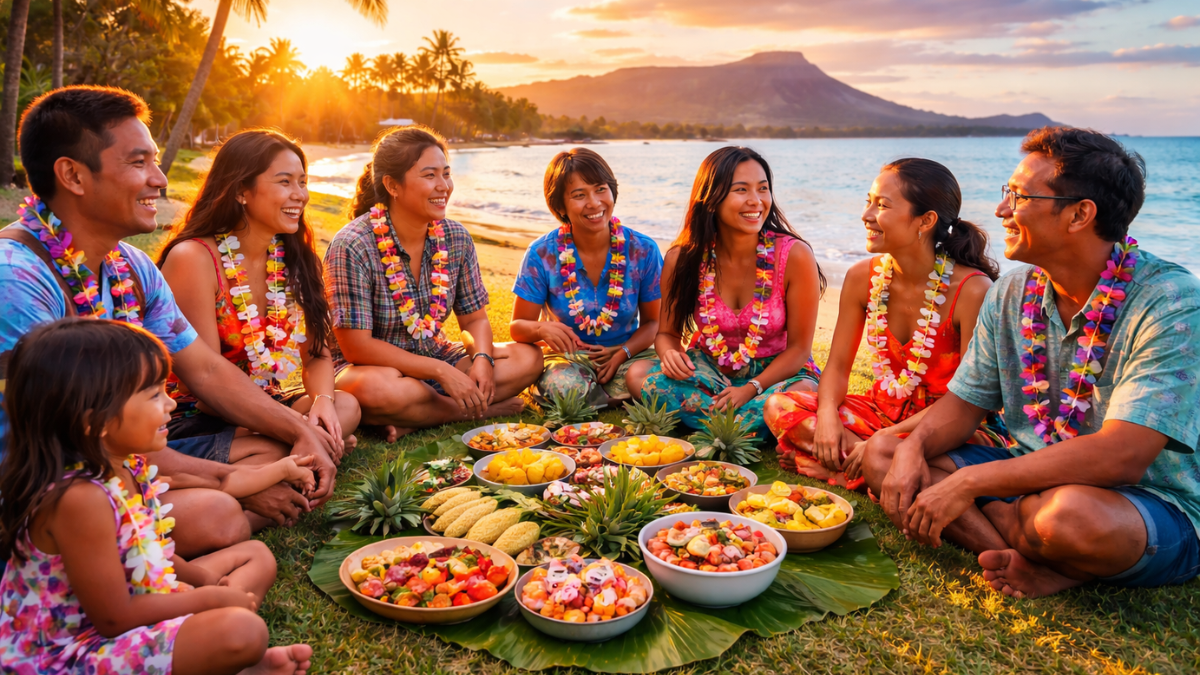
Hawaii represents one of the most unique social landscapes in the world, where migration has not only shaped demographic patterns but also deeply influenced cultural identity, social relations, and collective consciousness. Unlike many regions where migration leads to cultural tension or assimilation into a dominant culture, Hawaii presents a distinctive case of multicultural coexistence and hybrid identity formation. The islands serve as a living laboratory for sociologists to study how migration, colonial history, globalization, and indigenous resilience interact to produce a layered and dynamic multicultural identity.
The concept of multicultural identity in Hawaii cannot be understood without examining the historical patterns of migration that brought diverse populations to the islands. From indigenous Hawaiians to Asian laborers, American settlers, and contemporary migrants, each group has contributed to the evolving social fabric. This article explores the sociological dimensions of migration and multicultural identity in Hawaii, focusing on historical development, cultural integration, identity negotiation, social stratification, and contemporary challenges.
Historical Context of Migration in Hawaii
Migration in Hawaii has been shaped by several key historical phases, each contributing to the multicultural composition of the islands.
The earliest inhabitants were the Native Hawaiians, who arrived from Polynesia around 1,500 years ago. They developed a complex social system based on kinship, spirituality, and sustainable interaction with nature. Their identity was deeply rooted in land (‘āina), language, and cultural practices.
The arrival of Western explorers, particularly Captain James Cook in 1778, marked the beginning of profound social transformation. This contact initiated trade, missionary activity, and eventually colonization, which disrupted indigenous structures.
During the 19th century, Hawaii became a hub for plantation agriculture, particularly sugar and pineapple. Plantation owners brought laborers from China, Japan, the Philippines, Korea, and Portugal. These migrants formed the foundation of Hawaii’s multicultural society. Unlike typical migration patterns where one group dominates, Hawaii saw multiple ethnic groups coexisting in relatively balanced proportions.
By the late 19th century, the overthrow of the Hawaiian monarchy and eventual annexation by the United States intensified migration from the American mainland. This period introduced new forms of governance, economic systems, and cultural influences.
Theoretical Framework: Migration and Identity
From a sociological perspective, migration and identity are closely linked through processes such as acculturation, assimilation, and hybridization.
Classical assimilation theory suggests that migrants gradually adopt the dominant culture. However, Hawaii challenges this model. Instead of a single dominant culture, the islands exhibit cultural pluralism, where multiple cultures coexist and influence each other.
The concept of “melting pot” is also insufficient in explaining Hawaii’s case. Rather than blending into a homogeneous culture, Hawaii reflects what sociologists describe as a “salad bowl” or “cultural mosaic,” where distinct identities are maintained while contributing to a shared social space.
Another relevant framework is “creolization,” which refers to the blending of different cultural elements to create new, hybrid forms. In Hawaii, this is evident in language, food, and social practices.
Formation of Multicultural Identity
The multicultural identity of Hawaii is not merely the coexistence of different cultures but a deeply integrated and lived experience.
Language and Communication
One of the most significant markers of multicultural identity in Hawaii is language. Hawaiian Pidgin, or Hawaii Creole English, emerged as a lingua franca among plantation workers from diverse linguistic backgrounds. It reflects elements of English, Hawaiian, Japanese, Filipino, and Portuguese languages.
Pidgin is more than a means of communication; it is a symbol of local identity and solidarity. It represents shared experiences of migration, labor, and cultural interaction.
Food Culture
Hawaiian cuisine is another example of multicultural integration. Dishes such as poke, spam musubi, and plate lunches combine indigenous, Asian, and American influences. Food becomes a medium through which cultural exchange and adaptation occur.
Intermarriage and Social Integration
High rates of interethnic marriage in Hawaii have contributed significantly to the formation of multicultural identity. Unlike societies with rigid racial boundaries, Hawaii exhibits a fluid understanding of ethnicity. Many individuals identify with multiple cultural backgrounds, leading to a blended sense of self.
Indigenous Identity and Cultural Revival
While migration has enriched Hawaii’s cultural diversity, it has also posed challenges to indigenous identity.
Native Hawaiians experienced significant displacement, cultural suppression, and population decline following Western contact. The loss of land and political sovereignty deeply affected their social structure.
However, the late 20th century witnessed a cultural revival movement among Native Hawaiians. This movement emphasized the restoration of language, traditional practices, and political rights. Hawaiian language immersion schools, hula traditions, and cultural festivals have played a crucial role in strengthening indigenous identity.
This revival highlights a key sociological tension: the coexistence of multiculturalism with indigenous rights. While Hawaii celebrates diversity, it must also address historical injustices and ensure the preservation of Native Hawaiian culture.
Migration, Labor, and Social Stratification
Migration in Hawaii has been closely linked to labor and economic structures. Plantation labor created a stratified society where different ethnic groups occupied specific roles.
Initially, white American and European settlers held positions of power, while Asian and Pacific Islander laborers worked in plantations. This created a racial hierarchy that influenced social mobility.
Over time, however, Hawaii developed a more fluid class structure compared to mainland United States. Education, intermarriage, and economic diversification allowed many migrant communities to achieve upward mobility.

Nevertheless, inequalities persist. Native Hawaiians and Pacific Islanders often face higher rates of poverty, limited access to education, and health disparities. These issues reflect broader patterns of structural inequality.
Globalization and Contemporary Migration
In the modern era, Hawaii continues to experience migration, both from the U.S. mainland and international sources. Globalization has intensified cultural exchange, tourism, and economic interdependence.
Tourism plays a significant role in Hawaii’s economy, bringing millions of visitors each year. While tourism promotes cultural visibility, it also raises concerns about cultural commodification. Traditional practices may be altered or commercialized to meet tourist expectations.
Contemporary migrants include professionals, students, and workers in various sectors. This ongoing migration contributes to the dynamic nature of Hawaii’s multicultural identity.
However, globalization also introduces challenges such as rising living costs, housing shortages, and environmental pressures. These issues affect both migrants and local populations.
Identity Negotiation in a Multicultural Society
Individuals in Hawaii navigate complex identity dynamics shaped by ethnicity, history, and social context.
For many residents, identity is not fixed but situational. A person may emphasize different aspects of their cultural background depending on context. This flexibility reflects the fluid nature of multicultural identity.
The concept of “local identity” is particularly significant in Hawaii. Being “local” often transcends ethnic differences and is based on shared experiences, cultural practices, and a sense of belonging to the islands.
At the same time, there are ongoing debates about authenticity and cultural appropriation. Questions arise about who has the right to represent Hawaiian culture and how it should be preserved.
Education and Cultural Transmission
Education plays a crucial role in shaping multicultural identity in Hawaii.
Schools serve as spaces where cultural values, histories, and languages are transmitted. Multicultural education programs aim to promote understanding and respect among different ethnic groups.
The inclusion of Hawaiian history and language in the curriculum has been particularly important in fostering awareness of indigenous culture.
Higher education institutions in Hawaii also contribute to research and dialogue on migration, identity, and social change.
Challenges and Future Prospects
Despite its reputation as a multicultural paradise, Hawaii faces several challenges.
One major issue is economic inequality. The high cost of living disproportionately affects lower-income communities, including many migrants and Native Hawaiians.
Another challenge is cultural preservation. As globalization and tourism expand, there is a risk of losing authentic cultural practices.
Environmental sustainability is also a critical concern. Migration and tourism increase pressure on natural resources, threatening the ecological balance that is central to Hawaiian identity.
Looking ahead, Hawaii’s future depends on its ability to balance diversity with equity, globalization with sustainability, and multiculturalism with indigenous rights.
Conclusion
Migration has been the driving force behind the formation of Hawaii’s multicultural identity. Through centuries of movement, interaction, and adaptation, the islands have developed a unique social fabric characterized by diversity, hybridity, and resilience.
From a sociological perspective, Hawaii challenges traditional theories of assimilation and offers an alternative model of cultural coexistence. Its experience highlights the importance of recognizing multiple identities, fostering social integration, and addressing historical inequalities.
At the same time, the preservation of indigenous culture remains a critical priority. True multiculturalism must include respect for the original inhabitants and their rights.
In an increasingly globalized world, Hawaii stands as both an example and a cautionary tale. It demonstrates the potential for harmonious diversity while reminding us of the need for justice, sustainability, and cultural integrity.
FAQs on Multicultural Identity in Hawaii
- What is Multicultural Identity in Hawaii?
Multicultural Identity in Hawaii refers to the coexistence and blending of diverse cultural backgrounds, including Native Hawaiian, Asian, and Western influences, forming a unique social identity. - How did migration shape Multicultural Identity in Hawaii?
Migration brought different ethnic groups to Hawaii, whose interactions led to cultural exchange, hybrid traditions, and the development of a shared multicultural identity. - Why is Multicultural Identity in Hawaii considered unique?
It is unique because no single culture dominates; instead, multiple cultures coexist and integrate harmoniously, creating a balanced cultural mosaic. - What role do Native Hawaiians play in Multicultural Identity in Hawaii?
Native Hawaiians provide the foundational cultural and historical base, influencing language, traditions, and values within the multicultural framework. - How does language reflect Multicultural Identity in Hawaii?
Languages like Hawaiian Pidgin (Creole English) reflect the blending of multiple linguistic traditions, symbolizing shared cultural experiences. - What is the role of food in Multicultural Identity in Hawaii?
Food represents cultural fusion, combining indigenous, Asian, and Western culinary traditions, showcasing everyday multicultural interaction. - How does intermarriage influence Multicultural Identity in Hawaii?
High rates of interethnic marriage create blended families, strengthening multicultural identity and reducing rigid ethnic boundaries. - Is Multicultural Identity in Hawaii similar to the melting pot concept?
No, it is more like a “cultural mosaic” where distinct identities are preserved while contributing to a shared social environment. - What challenges affect Multicultural Identity in Hawaii?
Challenges include economic inequality, cultural commodification due to tourism, and the marginalization of Native Hawaiian communities. - How does globalization impact Multicultural Identity in Hawaii?
Globalization introduces new cultural influences and economic opportunities but also risks diluting traditional practices. - What is the significance of ‘local identity’ in Hawaii?
Local identity transcends ethnicity and emphasizes shared experiences, values, and a sense of belonging to the islands. - How is Multicultural Identity in Hawaii taught in schools?
Educational systems incorporate multicultural curricula, including Hawaiian history and language, to promote cultural awareness. - What role does tourism play in Multicultural Identity in Hawaii?
Tourism promotes cultural visibility but can also commercialize traditions, affecting authenticity. - How does Multicultural Identity in Hawaii affect social relations?
It fosters tolerance, cooperation, and mutual respect among different ethnic groups, reducing social conflict. - What is the future of Multicultural Identity in Hawaii?
Its future depends on balancing diversity with equity, preserving indigenous culture, and managing the impacts of globalization.
1 thought on “Migration and Multicultural Identity in Hawaii: A Sociological Perspective”