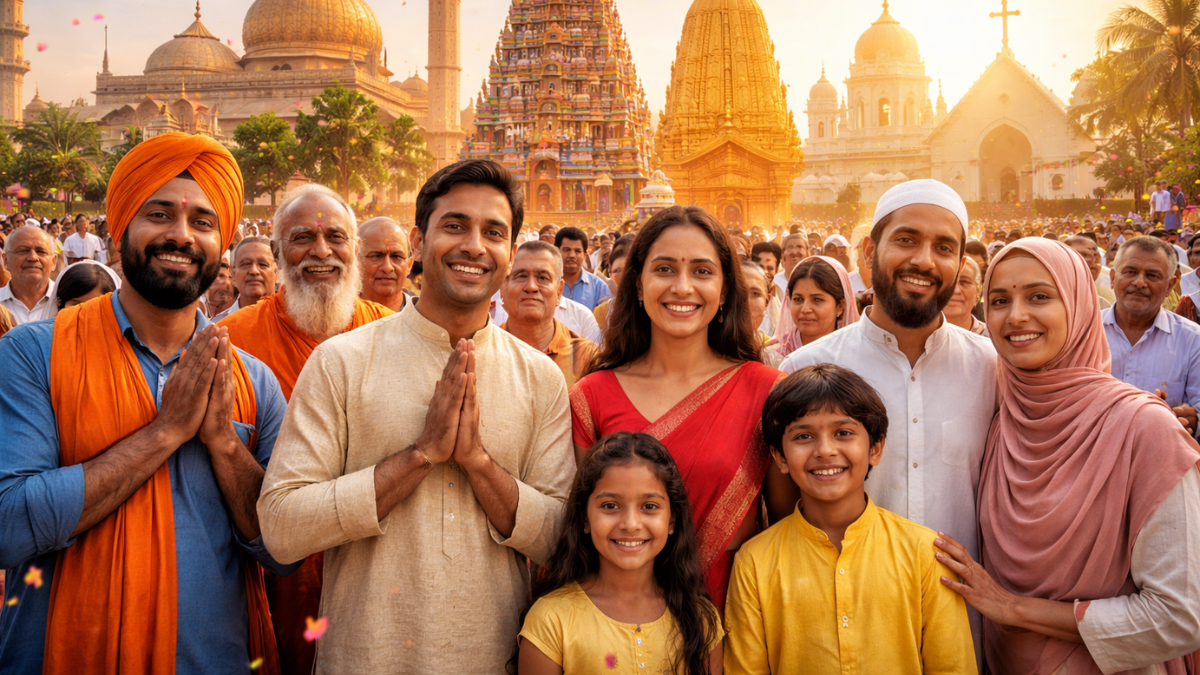
Religion has always been a foundational element of social organization in India. From village rituals to urban festivals, from family customs to political mobilization, religion shapes values, norms, institutions, and identities. In the Indian context, religion is not confined to personal belief; it is deeply embedded in everyday life, influencing marriage, food habits, kinship patterns, caste relations, economic behavior, and even state policies. A sociological understanding of religion and social life in India requires examining its historical roots, structural functions, and contemporary transformations.
India is often described as a land of diversity. Multiple religions coexist here, each contributing to the country’s social fabric. The major religions include Hinduism, Islam, Christianity, Sikhism, Buddhism, and Jainism. This pluralistic religious landscape has shaped social interactions, cultural practices, and collective identities across centuries.
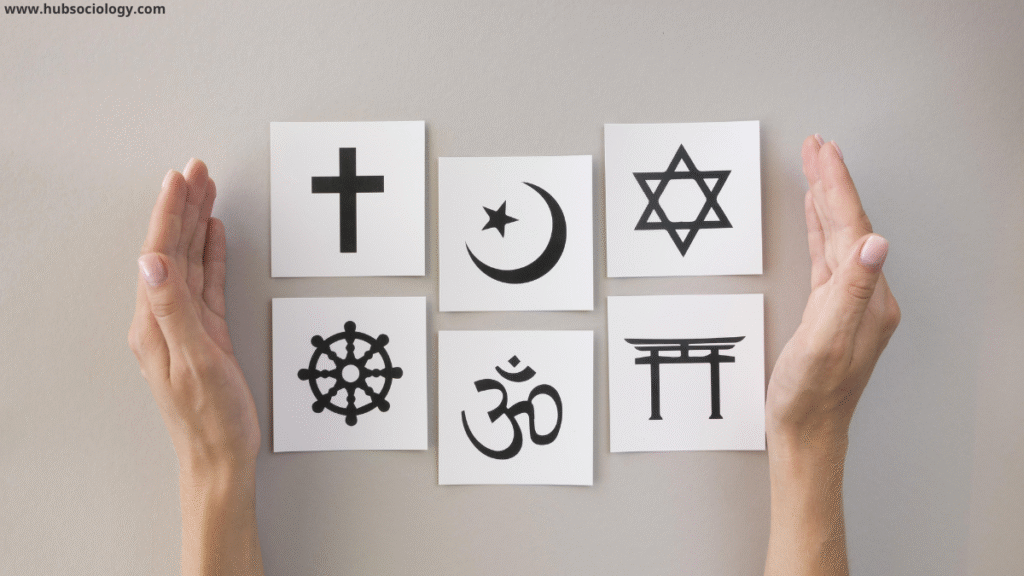
Explore the dynamics of Social Life in India through a sociological lens, focusing on religion, caste, family, and social change shaping everyday life and cultural diversity.
Conceptualizing Religion in Sociology
In sociology, religion is understood as a system of beliefs and practices related to the sacred, which unites people into a moral community. Émile Durkheim viewed religion as a source of social solidarity. Max Weber examined how religious ideas influence economic behavior and social change. Karl Marx critiqued religion as an ideology that can both console and control people. These theoretical perspectives help us analyze religion in India not merely as faith but as a social institution.
Religion performs several functions in society. It provides meaning to life, legitimizes social norms, strengthens community bonds, and regulates moral behavior. In India, these functions are visible in rituals, pilgrimages, temple organizations, mosques, churches, gurdwaras, and monasteries. Religious institutions often serve as centers of education, charity, and dispute resolution, thereby contributing to social stability.
Historical Evolution of Religion in Indian Society
Indian civilization has been shaped by religious traditions since ancient times. The Vedic period laid the foundation of ritualistic practices that later evolved into diverse forms of Hindu worship. The emergence of Buddhism and Jainism in the 6th century BCE reflected social protest against rigid rituals and caste hierarchy. Islam arrived through trade and conquest, influencing architecture, language, music, and administrative systems. Christianity entered through early missionaries and colonial expansion.
Over centuries, religious interactions produced syncretic traditions. Sufi and Bhakti movements promoted devotion and equality, challenging orthodox hierarchies. This blending of religious ideas contributed to a composite culture, especially in regions like Bengal, Punjab, and the Deccan. Thus, religion in India has never been static; it has evolved through dialogue, conflict, and adaptation.
Religion and the Caste System
One of the most significant sociological dimensions of religion in India is its connection with the caste system. The caste structure historically derived legitimacy from religious texts and rituals. Concepts such as purity and pollution were linked to occupational divisions and social hierarchy. Religious beliefs reinforced endogamy, hereditary professions, and restrictions on social mobility.
However, sociological analysis shows that religion has also been a site of resistance. Reform movements led by social leaders challenged caste discrimination. Bhakti saints preached equality before God. In modern times, constitutional provisions and social movements have weakened caste-based restrictions, though they continue to influence marriage patterns and political mobilization.
Religion thus acts both as a conservative force maintaining tradition and as a transformative force inspiring reform.
Religion and Family Life
Family life in India is deeply intertwined with religion. Birth, marriage, and death rituals are performed according to religious customs. Naming ceremonies, thread ceremonies, nikah, church weddings, and funeral rites reflect the integration of faith into domestic life. Religious festivals such as Diwali, Eid, Christmas, Vaisakhi, and Buddha Purnima bring families together and reinforce intergenerational bonds.
Religious norms influence gender roles within the family. Traditional expectations regarding women’s modesty, obedience, and domestic responsibilities often derive from religious interpretations. At the same time, modern reinterpretations of religious texts have encouraged gender equality and women’s participation in public life.
The joint family system, though declining in urban areas, historically found moral support in religious teachings emphasizing respect for elders and collective living. Even in nuclear families, religious rituals maintain continuity with ancestral traditions.
Religion and Economic Life
Max Weber argued that religious ethics shape economic behavior. In India, religious values influence work patterns, consumption habits, and charity. For example, concepts like “dharma” in Hinduism, “zakat” in Islam, and “seva” in Sikhism encourage ethical conduct and philanthropy.

Temples, mosques, and churches manage vast resources and provide employment. Pilgrimage centers such as Varanasi, Ajmer, Tirupati, Amritsar, and Bodh Gaya generate significant economic activity. Religious tourism has become an important sector, blending spirituality with market dynamics.
However, commercialization of religion has also raised concerns. The growth of “godmen,” spiritual markets, and televised sermons illustrates how religion adapts to capitalist structures. Sociologists analyze this as a process of rationalization and commodification of faith.
Religion and Politics
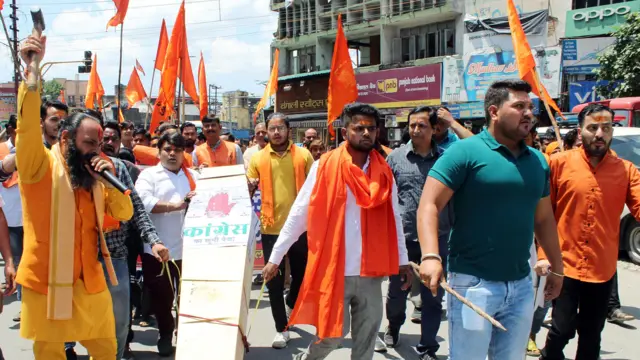
Religion and politics in India are closely interconnected. While the Constitution defines India as a secular state, religious identities often influence political behavior. Political parties may mobilize voters based on religious affiliation. Communal tensions sometimes arise from historical grievances, economic competition, or political manipulation.
Secularism in India differs from Western models. It does not imply strict separation of religion and state but rather equal respect for all religions. The state may intervene in religious matters to ensure social reform, such as banning untouchability or regulating temple administration.
Sociologically, religion in politics can foster unity through shared identity, but it can also deepen divisions when used for polarization. The challenge lies in balancing religious freedom with social harmony.
Religion and Education
Religious teachings have historically shaped education in India. Gurukuls, madrasas, and missionary schools were centers of learning. Today, religious organizations run thousands of schools and colleges. They often combine secular subjects with moral instruction.
At the same time, debates continue regarding curriculum content, religious symbols in institutions, and minority rights. Sociologists view education as a site where religious values interact with modern, scientific rationality. This interaction produces both conflict and synthesis.
Religion and Social Change
Religion is not merely a conservative force; it can also inspire social change. Reform movements such as Arya Samaj, Aligarh Movement, and various Christian missionary initiatives sought to modernize social practices. Leaders reinterpreted scriptures to promote education, widow remarriage, and abolition of child marriage.
In contemporary India, religious organizations participate in disaster relief, health campaigns, and environmental movements. Faith-based activism addresses issues like poverty and social injustice. Digital platforms have also transformed religious communication, enabling online sermons, virtual pilgrimages, and interfaith dialogue.
Globalization has intensified religious pluralism. Urban youth may adopt a more individualized spirituality rather than rigid institutional adherence. Interfaith marriages and cosmopolitan lifestyles challenge traditional boundaries. Thus, religion in India is undergoing negotiation between tradition and modernity.
Religion and Social Integration
Despite diversity, religion often promotes social cohesion. Festivals create shared spaces for celebration. Community kitchens in gurdwaras serve people regardless of caste or creed. Religious symbols and narratives foster collective memory and national identity.
However, integration requires tolerance and dialogue. Interfaith initiatives and constitutional safeguards aim to protect minority rights. Sociologists emphasize that pluralism is sustainable when supported by economic equality and democratic institutions.
Contemporary Challenges
Modern Indian society faces several religious challenges. Rapid urbanization weakens traditional community bonds. Social media can amplify religious misinformation. Economic inequality sometimes overlaps with religious identity, intensifying conflict.
At the same time, there is a rise of spiritual movements focusing on meditation, yoga, and ethical living. These trends reflect a search for meaning in a fast-changing society. Younger generations often reinterpret religion in personal rather than institutional terms.
The coexistence of scientific rationality and religious faith creates both tension and creative dialogue. Public debates on topics such as gender rights, dietary practices, and personal laws reveal ongoing negotiations between tradition and constitutional values.
Conclusion
Religion and social life in India are deeply interconnected. Religion shapes social institutions, cultural norms, and collective identities. It provides moral guidance, social solidarity, and emotional comfort. At the same time, it influences caste hierarchy, gender relations, political mobilization, and economic behavior.
From a sociological perspective, religion in India cannot be reduced to personal belief; it is a dynamic social force. It preserves traditions yet adapts to change. It unites communities yet sometimes generates conflict. Understanding religion in India requires recognizing its historical depth, institutional complexity, and contemporary transformations.
As India continues to modernize, religion will remain a powerful influence in shaping social life. The future of Indian society depends on promoting pluralism, equality, and dialogue while respecting the spiritual heritage that has long sustained its people.
FAQs on Social Life in India
1. What is the role of religion in Social Life in India?
Religion plays a central role in Social Life in India by shaping family values, festivals, moral norms, and community interactions. It influences daily routines, rituals, and social responsibilities across different communities.
2. How does caste influence Social Life in India?
Caste continues to affect marriage patterns, social networks, and political affiliations. Although legally abolished as a discriminatory system, caste identities still influence Social Life in India, especially in rural areas.
3. How do festivals shape Social Life in India?
Festivals such as Diwali, Eid, Christmas, and Vaisakhi strengthen family bonds and community solidarity. They create shared cultural spaces that enhance unity in Social Life in India.
4. What is the role of family in Social Life in India?
Family is the primary social institution. Whether joint or nuclear, families provide emotional, economic, and cultural support, making them central to Social Life in India.
5. How does urbanization affect Social Life in India?
Urbanization has led to nuclear families, individualism, and professional mobility. While traditional bonds may weaken, new forms of association and multicultural interactions are emerging in Social Life in India.
6. How does education impact Social Life in India?
Education promotes social mobility, gender equality, and awareness of rights. It reshapes traditional beliefs and contributes to modernization in Social Life in India.
7. What is the significance of secularism in Social Life in India?
Secularism ensures equal respect for all religions. It helps maintain harmony in the diverse Social Life in India by protecting minority rights and encouraging tolerance.
8. How do gender roles influence Social Life in India?
Traditional gender roles are changing due to education and employment opportunities. However, patriarchy still affects many aspects of Social Life in India, particularly in rural settings.
9. How does globalization shape Social Life in India?
Globalization introduces new lifestyles, consumer culture, and digital communication. It transforms youth culture and social interactions in Social Life in India.
10. What role does community play in Social Life in India?
Community networks provide support during festivals, crises, and social events. They strengthen solidarity and collective identity in Social Life in India.
11. How does religion contribute to social integration in Social Life in India?
Religious institutions organize charitable work, education, and community services that promote integration and shared moral values in Social Life in India.
12. How does migration affect Social Life in India?
Migration, both internal and international, diversifies urban spaces and reshapes kinship ties, leading to new cultural interactions within Social Life in India.
13. What challenges does Social Life in India face today?
Challenges include communal tensions, economic inequality, rapid urbanization, and digital misinformation, which impact harmony in Social Life in India.
14. How do youth influence Social Life in India?
Indian youth drive social change through activism, entrepreneurship, and digital culture, redefining traditions and modern values in Social Life in India.
15. Why is diversity important in Social Life in India?
Diversity strengthens tolerance, creativity, and democratic values. It allows multiple identities to coexist, making Social Life in India vibrant and dynamic.