Introduction
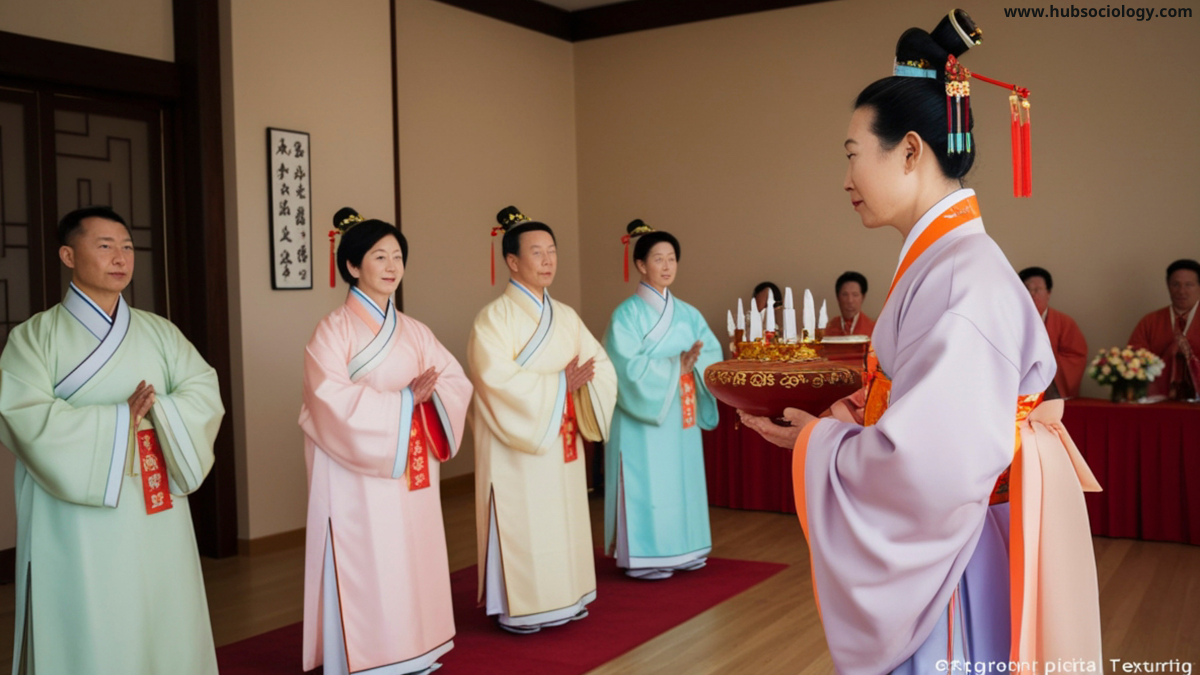
The role of women in Confucian cultures has been a central topic in sociological debates on gender, family, morality, and social order in East Asia. Confucianism, as a moral–philosophical system, has historically shaped social institutions, kinship patterns, education, governance, and everyday life across societies such as China, Japan, South Korea, and Vietnam. While often criticized for reinforcing patriarchy and gender inequality, Confucian cultures also demonstrate complexity, adaptability, and internal diversity in women’s lived experiences.
From a sociological perspective, women’s roles in Confucian societies cannot be understood only through philosophical texts; they must be analyzed within broader structures of family, economy, class, state power, education, and historical change. This article examines how Confucian values shaped women’s roles, how these roles functioned socially, and how modernization and feminist movements have reinterpreted women’s status in Confucian cultural contexts.
Confucianism as a Social System
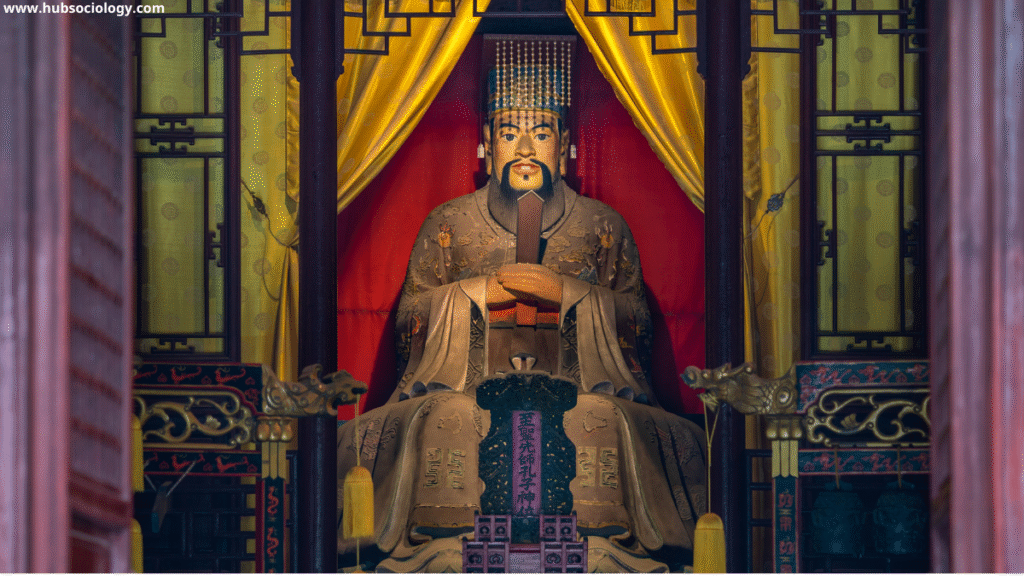
Confucianism is not merely a belief system but a comprehensive social order. It emphasizes harmony, hierarchy, duty, and moral cultivation. Society is seen as an extension of the family, with clearly defined roles based on age, gender, and status. The family functions as the primary institution for socialization, moral education, and economic cooperation.
From a sociological lens, Confucianism promotes structural functionalism, where social stability depends on individuals fulfilling prescribed roles. Women’s roles were historically defined in relation to men—fathers, husbands, and sons—rather than as autonomous individuals. Gender hierarchy was seen as necessary for social harmony, not as oppression in the modern sense.
However, this hierarchy was not chaotic or arbitrary. It was regulated by moral obligations. Men were expected to protect, provide, and act virtuously, while women were expected to nurture, manage households, and uphold family honor. This reciprocal obligation is crucial to understanding women’s roles beyond simplistic victimhood narratives.
Women in the Confucian Family Structure
The Confucian family is patrilineal and patriarchal. Lineage, inheritance, and ancestor worship traditionally passed through male lines. Women entered their husband’s family after marriage, often leaving their natal households permanently.
The “Three Obediences” and “Four Virtues”
Women’s expected conduct was summarized in moral guidelines:
- Obedience to father before marriage
- Obedience to husband after marriage
- Obedience to son in widowhood
The four virtues emphasized morality, proper speech, modest appearance, and diligence in domestic work. Sociologically, these norms functioned as mechanisms of social control, ensuring conformity and continuity of family structure.
Yet, within these constraints, women exercised informal power. Senior women, especially mothers-in-law, often wielded significant authority within households. This highlights a gendered hierarchy within patriarchy, where age and marital status could elevate women’s social power.
Marriage, Motherhood, and Social Reproduction
Marriage in Confucian cultures was not primarily about romantic love but about alliance-building, lineage continuity, and social stability. Women’s reproductive role was socially central. Bearing sons ensured family survival and ancestral continuity.
From a sociological standpoint, women were key agents of social reproduction—the transmission of values, norms, language, and moral discipline to children. Mothers were responsible for early education, moral instruction, and emotional regulation within families.
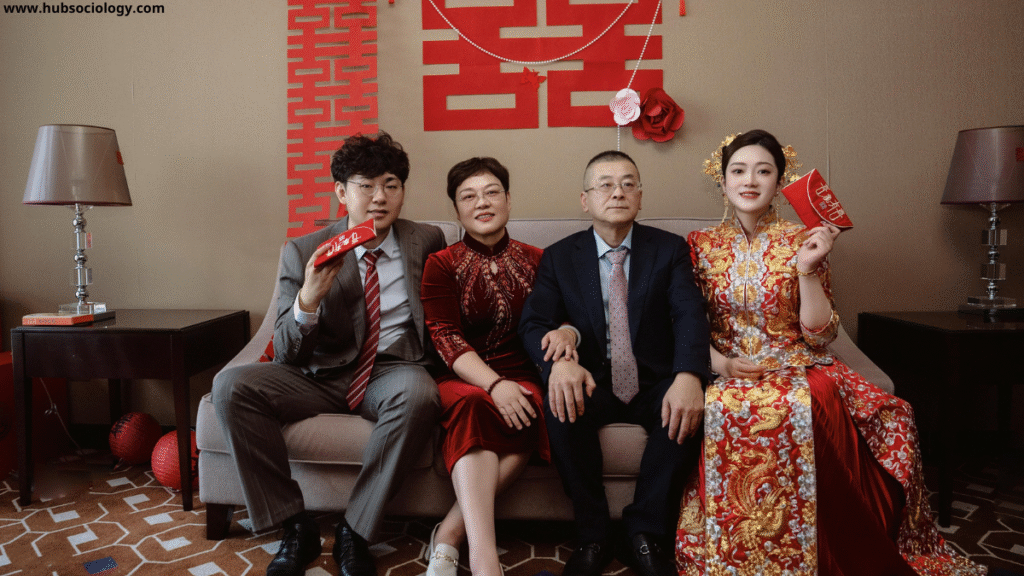
This role gave women symbolic importance, even if legal and political power remained limited. A “good mother” was praised as essential to producing virtuous citizens and loyal subjects. Thus, women’s domestic labor had public significance, linking family morality to state stability.
Education and Moral Training of Women
Historically, formal education prioritized men, especially for civil service and governance. Women’s education was usually domestic and moral rather than scholarly. Literacy among women varied by class; elite women were sometimes educated in poetry, calligraphy, and ethics.
Sociologically, this educational gap reinforced gender stratification. Knowledge became a form of cultural capital reserved for men, legitimizing male dominance in public life. However, educated women often became influential cultural figures, writers, and moral exemplars within private spheres.
In modern times, Confucian societies have witnessed dramatic expansion in women’s education. Ironically, Confucian emphasis on self-cultivation and learning has been reinterpreted to support women’s academic and professional advancement.
Women, Labor, and Economic Roles
Although Confucian ideology emphasized domesticity, women were always economically active. Rural women worked in agriculture, textile production, and family enterprises. Urban women participated in crafts, trade, and later industrial labor.
From a sociological viewpoint, the ideology of female domesticity often masked women’s economic contributions. Their labor was undervalued because it occurred within households or informal sectors. This aligns with feminist critiques of unpaid labor and gendered economies.
With industrialization and globalization, women in Confucian cultures increasingly entered wage labor. However, traditional expectations of caregiving persisted, creating a “double burden” of paid work and domestic responsibility.
Gender Hierarchy and Patriarchy
Confucian cultures institutionalized patriarchy through family law, inheritance rules, and social customs. Men dominated political authority, religious rituals, and public decision-making. Women’s identities were relational rather than individual.
Sociologically, this reflects patriarchal ideology embedded in cultural norms, not merely personal prejudice. Gender inequality was normalized through rituals, language, and moral education.
However, Confucian patriarchy differed from some Western patriarchal forms by emphasizing moral restraint on male authority. A tyrannical husband or abusive father was seen as morally deviant, even if structural inequality remained intact.
Women and Confucianism in Modern Societies
Modernization, colonization, capitalism, and feminist movements have profoundly transformed women’s roles in Confucian cultures. Legal reforms expanded women’s rights to education, property, divorce, and employment.
In contemporary East Asia, women participate actively in politics, academia, business, and culture. Yet Confucian gender norms continue to influence expectations around marriage, motherhood, and filial duty.
Sociologists observe a cultural lag—while legal equality has advanced, social attitudes often change more slowly. Women face pressure to excel professionally while fulfilling traditional family roles, leading to declining marriage rates and low fertility in many Confucian societies.
Feminist Critiques and Reinterpretations
Feminist scholars have criticized Confucianism for legitimizing gender inequality. However, others argue that Confucianism is not inherently anti-women but historically interpreted through male-dominated institutions.
Contemporary scholars and activists reinterpret Confucian values such as reciprocity, care, and moral responsibility to support gender equality. Concepts like filial piety are being reimagined as mutual care rather than unilateral female sacrifice.

From a sociological perspective, this reflects cultural negotiation, where traditions are not abandoned but transformed to align with changing social realities.
Comparative Perspective: Confucian Women and Global Gender Systems
Compared to Western liberal individualism, Confucian cultures emphasize relational identity. Women are often judged not as independent actors but as relational beings embedded in families and communities.
This does not automatically imply lower status but produces different forms of agency. Women may exercise influence indirectly through family networks rather than formal institutions. Sociologists describe this as informal power within formal subordination.
Understanding these differences is essential to avoid ethnocentric judgments and to appreciate the diversity of women’s experiences across cultures.
Conclusion
The role of women in Confucian cultures is complex, historically rooted, and socially constructed. Confucianism shaped women’s lives through family structures, moral expectations, education, and economic roles. While it institutionalized patriarchy and gender hierarchy, it also recognized women’s central role in social reproduction and moral order.
From a sociological perspective, women in Confucian societies have never been passive recipients of tradition. They have negotiated, adapted, resisted, and reinterpreted cultural norms across generations. In the modern era, Confucian cultures are witnessing ongoing transformations, where tradition and gender equality coexist in tension.
Understanding women’s roles in Confucian cultures requires moving beyond simplistic binaries of oppression and empowerment. It demands a nuanced analysis of structure, agency, history, and culture—an approach that sociology is uniquely positioned to provide.
FAQs on The Role of Women in Confucian Cultures
1. What are Confucian cultures?
Confucian cultures refer to societies historically influenced by Confucian philosophy, mainly in East Asia, where social life is organized around family hierarchy, moral duty, harmony, and respect for authority.
2. How did Confucian cultures define women’s roles traditionally?
In Confucian cultures, women were primarily assigned domestic roles such as managing households, raising children, and supporting family harmony under patriarchal family structures.
3. Why is family central to women’s status in Confucian cultures?
In Confucian cultures, the family is the foundation of society, and women play a crucial role in maintaining moral values, lineage continuity, and social order through family life.
4. What is the sociological significance of women in Confucian cultures?
From a sociological perspective, women in Confucian cultures are key agents of socialization and social reproduction, transmitting values, norms, and discipline to future generations.
5. Did Confucian cultures allow women any form of power?
Yes, within Confucian cultures, women—especially mothers and elderly women—often exercised informal authority inside households despite limited formal power in public institutions.
6. How did Confucian cultures affect women’s education?
Traditionally, Confucian cultures limited women’s education to moral and domestic training, although elite women sometimes received literary education within private spheres.
7. Are Confucian cultures inherently anti-women?
Sociologists argue that Confucian cultures are not inherently anti-women but historically interpreted through patriarchal systems that favored male authority.
8. How did marriage shape women’s lives in Confucian cultures?
In Confucian cultures, marriage was a social institution focused on family alliance and lineage, where women were expected to prioritize family duty over individual choice.
9. What role did motherhood play in Confucian cultures?
Motherhood was highly valued in Confucian cultures, as women were responsible for moral upbringing and early education of children, especially sons.
10. How have modern changes affected women in Confucian cultures?
Modernization, education, and legal reforms have expanded opportunities for women in Confucian cultures, though traditional gender expectations still influence social life.
11. What challenges do women face today in Confucian cultures?
Women in Confucian cultures often experience a double burden—balancing professional careers with traditional expectations of caregiving and family responsibility.
12. How do feminist scholars view Confucian cultures?
Feminist critiques highlight gender inequality in Confucian cultures, while some scholars advocate reinterpretation of Confucian values to support gender equality.
13. How do Confucian cultures differ from Western gender systems?
Unlike Western individualism, Confucian cultures emphasize relational identity, where women’s roles are defined within family and community networks.
14. Can Confucian values support gender equality?
Many scholars believe Confucian cultures can support gender equality by reinterpreting values such as reciprocity, care, and mutual responsibility.
15. Why is studying women in Confucian cultures important for sociology?
Studying women in Confucian cultures helps sociologists understand how culture, tradition, and social structure shape gender roles across different civilizations.