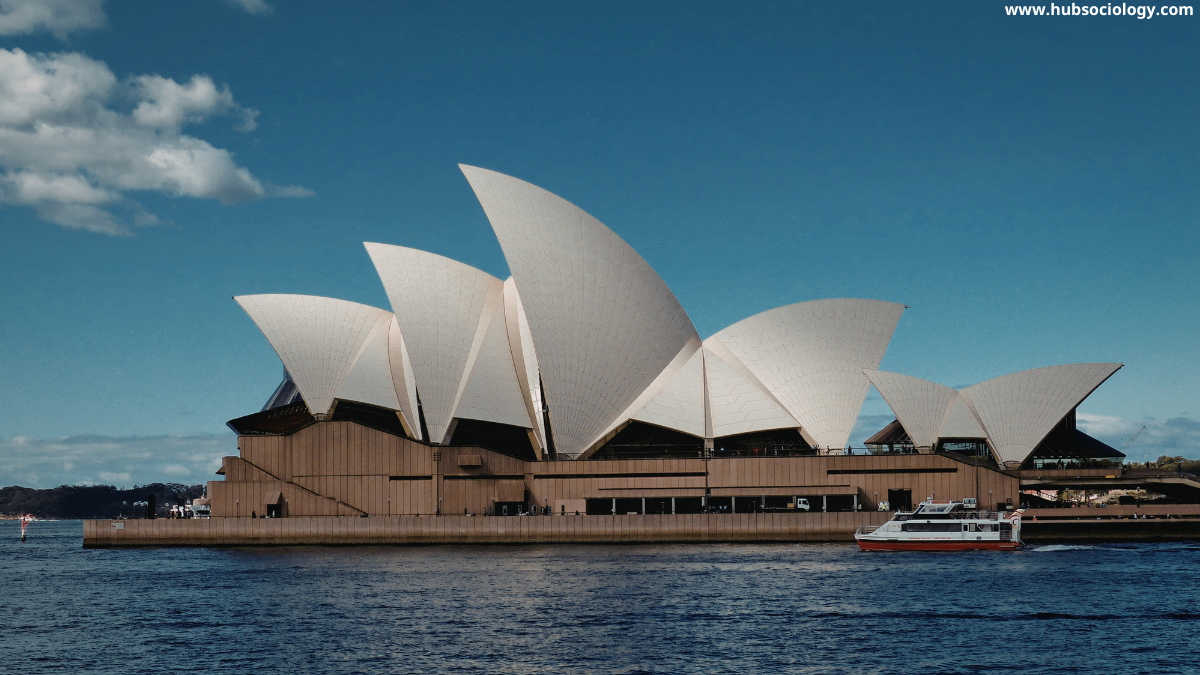
Urban sociology examines how social life is shaped by city spaces, institutions, economies, and cultural patterns. In Australia, rapid urbanisation has produced a unique urban landscape where colonial history, Indigenous presence, global migration, neoliberal economic policies, and environmental challenges intersect. More than 85% of Australians live in cities, making urban sociology central to understanding Australian society.
This article explores the urban sociology of Australian cities through a comparative analysis of Sydney, Melbourne, and Brisbane. Each city represents distinct trajectories of urban development, social stratification, governance, and cultural identity, while also sharing common challenges such as housing inequality, spatial segregation, and sustainability.
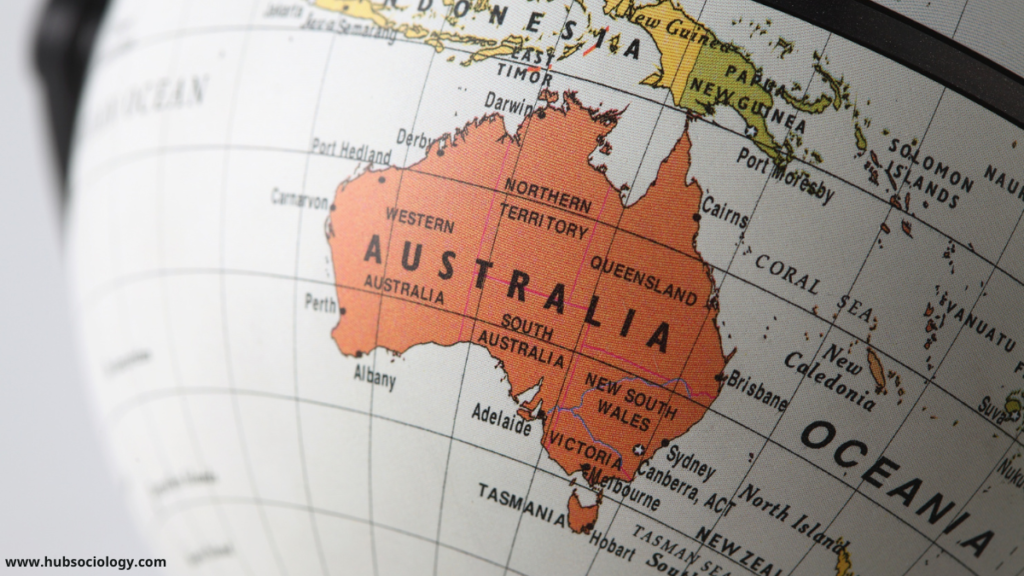
Understanding Urban Sociology in the Australian Context
Urban sociology focuses on:
- Patterns of urbanisation and migration
- Social inequality and class formation
- Spatial segregation and gentrification
- Urban governance and policy
- Cultural diversity and identity
- Environmental sustainability
Australian cities developed within a settler-colonial framework, often marginalising Indigenous populations while privileging capitalist urban growth. Post–World War II immigration, particularly from Europe and later Asia, transformed cities into multicultural hubs. Today, Australian cities are globalised urban centres shaped by finance, real estate, education, and service economies.
Sydney: Global City, Inequality, and Urban Fragmentation

Urban Growth and Globalisation
Sydney is Australia’s largest and most globally connected city. As a financial and economic hub, it exemplifies the characteristics of a global city, integrating international capital, tourism, and migration. This global positioning has intensified socio-economic inequalities within the urban space.
Spatial Inequality and Housing Crisis
Urban sociology highlights Sydney’s stark east–west divide. Eastern and coastal suburbs concentrate wealth, while Western Sydney accommodates working-class populations, recent migrants, and ethnic minorities.
Key sociological issues include:
- Escalating housing prices and rental stress
- Suburban displacement due to gentrification
- Long commute times reinforcing class divisions
Housing has become a major axis of inequality, where access to secure shelter determines social mobility and wellbeing.
Multiculturalism and Social Diversity
Sydney is one of the most multicultural cities in the world. Suburbs such as Parramatta and Auburn illustrate ethnic clustering shaped by migration networks and labour markets. While multiculturalism promotes diversity, sociologists note persistent issues of:
- Racial discrimination
- Unequal access to services
- Over-policing in marginalised communities
Urban Governance and Neoliberalism
Urban governance in Sydney reflects neoliberal priorities—privatisation, infrastructure-led development, and public–private partnerships. Critics argue that these policies prioritise investors over residents, deepening social exclusion.
Melbourne: Cultural Capital, Planning, and Social Innovation
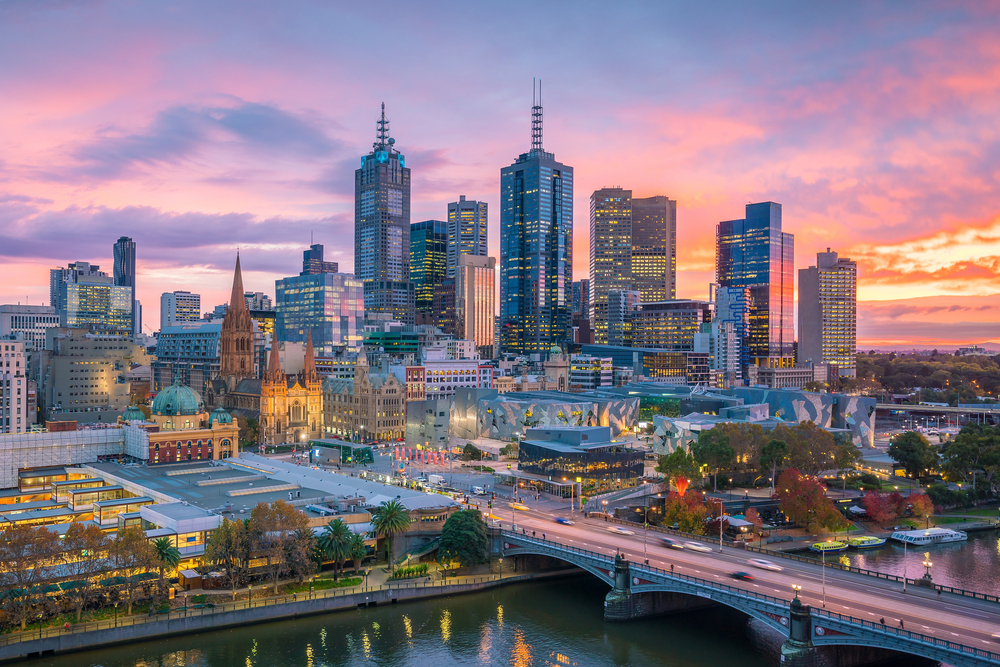
Urban Identity and Cultural Life
Melbourne is often described as Australia’s cultural capital, known for its arts, cafés, laneways, and sporting culture. From a sociological perspective, culture plays a key role in shaping urban identity and social cohesion.
Urban Planning and Liveability
Melbourne’s reputation as a “liveable city” stems from:
- Planned public transport networks
- Mixed-use urban design
- Investment in public spaces
However, urban sociologists caution that “liveability” often masks underlying inequalities, particularly in outer suburbs with limited services.
Gentrification and Class Restructuring
Inner-city areas such as Fitzroy and Collingwood have experienced intense gentrification. Working-class and migrant communities have been displaced by affluent professionals, reshaping class structures and neighbourhood identities.
Sociological consequences include:
- Loss of affordable housing
- Cultural commodification
- Transformation of community networks
Migration and Super-Diversity
Melbourne is one of the most ethnically diverse cities globally. The concept of super-diversity applies here, as differences are not only ethnic but also linguistic, religious, and socio-economic. Urban sociology studies how institutions such as schools and local councils adapt to this complexity.
Brisbane: Emerging Metropolis and Uneven Development

Urban Expansion and Growth
Brisbane represents a rapidly expanding urban centre transitioning from a regional city to a metropolitan hub. Population growth driven by internal migration and affordability pressures in southern cities has reshaped Brisbane’s urban form.
Suburbanisation and Social Segregation
Unlike Sydney and Melbourne, Brisbane has historically favoured low-density suburban living. Urban sociologists note that suburbanisation has contributed to:
- Car dependency
- Spatial isolation
- Unequal access to employment and education
Gentrification and River-City Development
Inner-city redevelopment along the Brisbane River has led to gentrification. While urban renewal projects promise economic growth, they also displace low-income residents and reshape social relations.
Climate and Environmental Sociology
Brisbane’s urban sociology is closely tied to environmental concerns. Flooding, heatwaves, and climate vulnerability disproportionately affect lower-income communities, highlighting the intersection of urban inequality and environmental risk.
Comparative Sociological Analysis of Australian Cities
1. Social Inequality
All three cities exhibit widening gaps between rich and poor, primarily driven by housing markets and labour precarity. Sydney shows the sharpest inequalities, Melbourne balances cultural inclusion with class restructuring, while Brisbane reflects emerging uneven development.
2. Migration and Multiculturalism
Migration shapes urban identities across cities, but experiences differ:
- Sydney: Ethnic clustering and global city dynamics
- Melbourne: Institutional multiculturalism and cultural hybridity
- Brisbane: Growing diversity with limited institutional readiness
3. Urban Governance
Neoliberal urban governance dominates all three cities, emphasising growth, infrastructure, and global competitiveness. Sociologists critique this model for sidelining social justice and community participation.
4. Indigenous Urban Presence
Urban sociology increasingly recognises Indigenous Australians as urban residents, not just rural or remote populations. Issues of land rights, cultural recognition, and urban displacement remain critical across cities.
Urban Sociology and Contemporary Challenges
Housing Affordability
Housing inequality is the most pressing urban issue in Australia. Cities have become investment assets rather than social spaces, undermining the right to housing.
Transport and Mobility
Access to transport shapes employment opportunities and social inclusion. Peripheral suburbs face mobility disadvantages, reinforcing class divisions.
Digital and Economic Inequality
The rise of digital economies benefits skilled urban professionals while marginalising precarious workers, intensifying socio-economic stratification.
Sustainability and Climate Change
Urban sustainability policies often fail to address social inequality, placing environmental burdens on vulnerable populations.
Future Directions for Urban Sociology in Australia
Urban sociology must move beyond growth-focused narratives to prioritise:
- Inclusive housing policies
- Participatory urban governance
- Recognition of Indigenous urban rights
- Climate justice frameworks
- Equitable urban infrastructure
Cities are not just economic engines but lived social spaces where power, identity, and inequality are constantly negotiated.
Conclusion
The urban sociology of Australian cities reveals how Sydney, Melbourne, and Brisbane reflect both shared national trends and distinct urban trajectories. While Sydney embodies global-city inequality, Melbourne highlights cultural dynamism and gentrification, and Brisbane represents emerging metropolitan challenges.
Understanding these cities sociologically allows us to see urban spaces not merely as physical environments, but as social systems shaped by history, policy, culture, and power. For Australia’s urban future to be just and sustainable, sociological insights must guide urban planning and governance.
FAQs: Urban Sociology of Australian Cities (Sydney, Melbourne, Brisbane)
- What is urban sociology in the Australian context?
Urban sociology in Australia studies how cities shape social life, inequality, culture, governance, and everyday interactions within urban spaces. - Why are Australian cities important for sociological study?
Because over 85% of Australians live in cities, making urban areas central to understanding social stratification, migration, and public policy. - How does Sydney reflect urban inequality?
Sydney shows sharp housing inequality, spatial segregation between east and west, and strong effects of global capitalism on everyday life. - What makes Sydney a ‘global city’ sociologically?
Its integration into global finance, migration networks, and real-estate markets creates both economic growth and deep social divides. - How is Melbourne different from Sydney in urban sociology?
Melbourne is known for cultural life, planned urban spaces, and multicultural institutions, but still faces gentrification and class restructuring. - What is gentrification and how does it affect Melbourne?
Gentrification involves middle-class settlement in working-class areas, leading to rising rents, displacement, and changing neighbourhood identities. - Why is Melbourne often called a ‘liveable city’?
Due to public transport, cultural spaces, and urban design—though sociologists argue liveability is unevenly distributed. - How is Brisbane emerging as a major urban centre?
Brisbane is growing rapidly due to internal migration, affordability pressures, and infrastructure-led development. - What urban problems are unique to Brisbane?
Suburban sprawl, car dependency, uneven development, and climate vulnerability such as floods and heat stress. - How does migration shape Australian cities sociologically?
Migration produces multicultural and super-diverse cities, influencing labour markets, housing patterns, and cultural life. - What role does housing play in urban inequality?
Housing determines access to security, mobility, education, and health, making it a core issue in Australian urban sociology. - How does urban governance affect city life?
Neoliberal governance prioritises economic growth and private investment, often sidelining social equity and community needs. - What is the role of Indigenous people in Australian urban sociology?
Indigenous Australians are significant urban residents facing issues of displacement, cultural recognition, and spatial injustice. - How does climate change intersect with urban sociology?
Environmental risks disproportionately affect low-income urban populations, highlighting climate inequality in cities. - Why is urban sociology important for Australia’s future?
It helps design inclusive, sustainable, and socially just cities by addressing inequality, governance, and environmental challenges.
1 thought on “Urban Sociology of Australian Cities: Sydney, Melbourne, Brisbane”