Introduction
The relationship between race and policing in the United States has been one of the most enduring and contested issues in American social life. From slave patrols in the colonial era to contemporary debates around police violence, racial profiling, and mass incarceration, policing has been deeply intertwined with systems of racial hierarchy. Sociologically, policing cannot be understood merely as a neutral mechanism for maintaining law and order. Rather, it operates within broader structures of power, inequality, and historical legacies that shape who is policed, how policing is carried out, and whose lives are most affected by state violence.
This article examines the sociology of race and policing in the United States by exploring historical roots, theoretical perspectives, patterns of racialized policing, institutional practices, community impacts, and ongoing reform debates. By applying sociological frameworks, we can better understand how race continues to influence policing outcomes and why this issue remains central to discussions of justice, democracy, and social equality.

Historical Foundations of Racialized Policing
The origins of American policing are inseparable from race. In the southern colonies, early policing institutions emerged in the form of slave patrols whose primary function was to control enslaved African populations, prevent rebellion, and protect white property interests. These patrols laid the groundwork for formal police departments in the 19th century.
After the abolition of slavery, policing played a crucial role in enforcing Jim Crow laws and maintaining racial segregation. Vagrancy laws, Black Codes, and later segregation statutes allowed police to criminalize everyday activities of Black Americans, reinforcing racial subordination through legal means. Sociologically, this period demonstrates how law enforcement served as an instrument of social control designed to preserve racial hierarchies rather than ensure equal justice.
During the civil rights movement of the 1950s and 1960s, police forces were frequently deployed to suppress protests, arrest activists, and protect segregationist institutions. Images of police dogs, batons, and fire hoses used against peaceful demonstrators remain powerful symbols of the racialized nature of state power. These historical experiences have contributed to deep mistrust between police and many minority communities that persists today.
Sociological Theories on Race and Policing
Sociologists analyze race and policing through several theoretical lenses. Conflict theory argues that policing reflects the interests of dominant social groups. From this perspective, law enforcement prioritizes the protection of property and privilege, disproportionately targeting marginalized racial communities perceived as threats to social order.
Critical race theory (CRT) emphasizes that racism is not merely a matter of individual prejudice but is embedded within institutions, laws, and policies. Applied to policing, CRT highlights how practices such as stop-and-frisk, sentencing disparities, and surveillance technologies systematically disadvantage racial minorities, even without explicitly racist intent.
Labeling theory focuses on how individuals and groups are socially defined as deviant. Minority communities, particularly Black and Latino populations, are often stereotyped as criminal, leading to heightened surveillance and police contact. Once labeled, individuals are more likely to experience repeated encounters with the criminal justice system, reinforcing cycles of marginalization.
Structural racism theory further explains how historical inequalities in housing, education, employment, and healthcare intersect with policing. Concentrated poverty, residential segregation, and underinvestment in minority neighborhoods increase police presence, making these communities more vulnerable to criminalization.
Patterns of Racial Disparities in Policing

Empirical research consistently shows racial disparities at nearly every stage of policing. Black Americans are more likely to be stopped, searched, arrested, and subjected to force than white Americans. Latino communities also experience disproportionate levels of police scrutiny, particularly in relation to immigration enforcement.
Traffic stops provide a clear example of racialized policing. Studies have found that Black drivers are more likely to be stopped and searched, despite being less likely to be found with contraband. This phenomenon, often referred to as “driving while Black,” illustrates how racial profiling operates as a routine practice rather than an exceptional one.
Use-of-force statistics further reveal stark inequalities. High-profile cases involving the deaths of unarmed Black individuals have sparked nationwide protests and renewed scrutiny of police violence. Sociologically, these incidents are not isolated events but manifestations of systemic patterns shaped by racial bias, institutional culture, and unequal power relations.
Policing, Media, and Public Perception
Media representations play a significant role in shaping public perceptions of race and crime. News coverage often overrepresents people of color as criminal suspects while underrepresenting them as victims. This selective portrayal reinforces stereotypes that legitimize aggressive policing in minority communities.
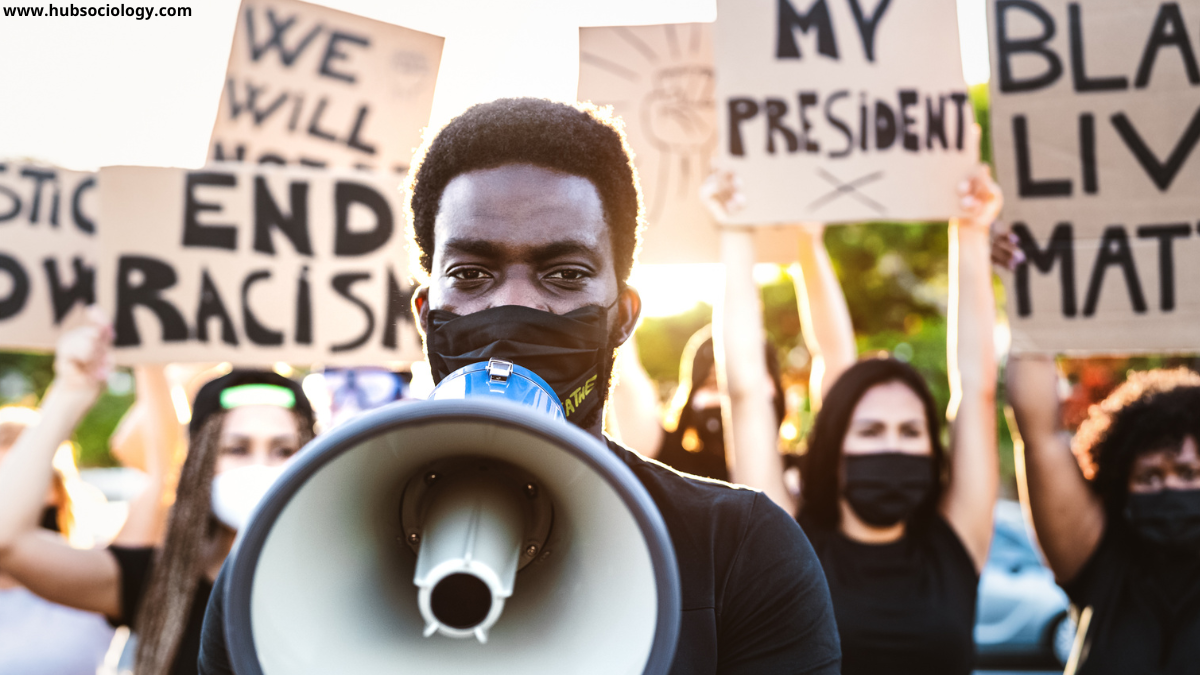
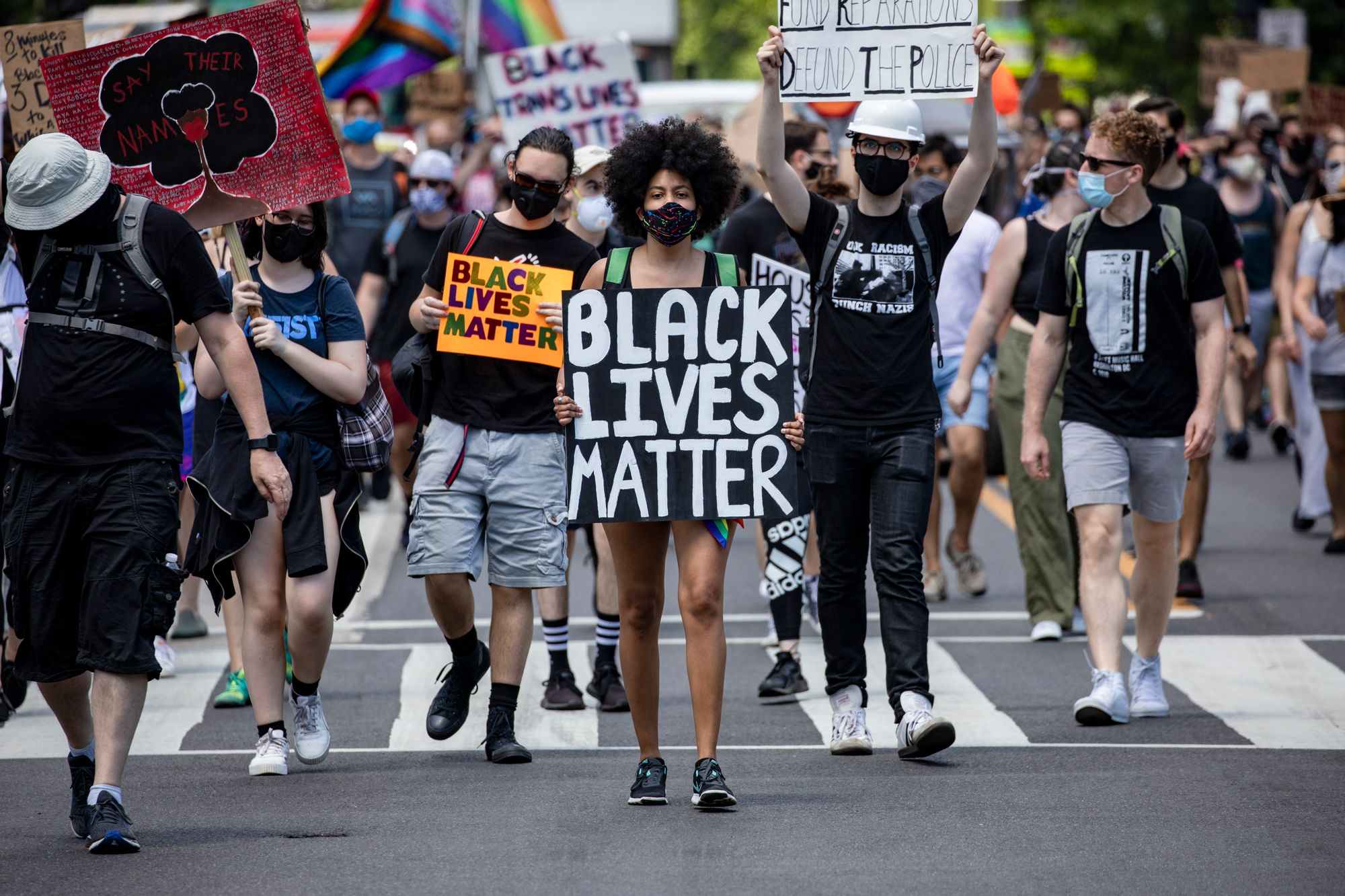
Social media has transformed the dynamics of visibility and accountability. The widespread circulation of videos documenting police violence has challenged official narratives and amplified marginalized voices. Movements such as Black Lives Matter have used digital platforms to mobilize protest, frame policing as a racial justice issue, and demand systemic change.
However, media can also deepen polarization. Competing narratives around “law and order” versus “racial justice” reflect broader ideological divides in American society, influencing policy debates and public trust in institutions.
Community Impact and Social Consequences
The sociological impact of racialized policing extends beyond individual encounters. High levels of police surveillance and violence contribute to collective trauma, fear, and alienation within minority communities. Children growing up in heavily policed neighborhoods often internalize expectations of criminalization, affecting their sense of identity and citizenship.
Frequent police contact can weaken community cohesion and undermine informal social control. When residents distrust law enforcement, they are less likely to report crimes or cooperate with investigations, creating a cycle that reinforces both crime and aggressive policing.
Mass incarceration represents another profound consequence. Policing practices that disproportionately target racial minorities feed into a criminal justice system that incarcerates Black Americans at significantly higher rates than whites. Sociologists argue that this system functions as a form of racialized social control, limiting economic mobility, political participation, and family stability.
Policing, the State and Power
From a sociological perspective, policing is a key mechanism through which the state exercises power. Decisions about where to patrol, whom to stop, and how much force to use reflect political priorities and social values. Racialized policing thus reveals how state authority is unevenly distributed across populations.
Militarization of the police, particularly in response to protests and urban unrest, has intensified concerns about democratic accountability. The use of military-grade equipment and aggressive crowd-control tactics disproportionately affects communities of color, reinforcing perceptions of police as an occupying force rather than public servants.
This dynamic raises fundamental questions about citizenship and belonging. Who is protected by the state, and who is policed as a threat? Sociological analysis suggests that racial minorities often experience the state more as a coercive force than a source of protection.
Reform, Resistance and the Future of Policing
In response to widespread criticism, numerous reforms have been proposed, including body cameras, implicit bias training, civilian oversight boards, and changes to use-of-force policies. While these measures aim to increase transparency and accountability, sociologists caution that reforms focused solely on individual behavior may fail to address deeper structural issues.
Calls to “defund the police” reflect a broader sociological argument that social problems such as poverty, mental illness, and substance abuse are better addressed through social services rather than law enforcement. Advocates argue that reallocating resources toward education, housing, and healthcare could reduce crime and diminish the need for aggressive policing.
Community-based policing models emphasize partnership, trust-building, and local engagement. When implemented meaningfully, these approaches can improve relationships between police and residents. However, without addressing systemic racism and inequality, community policing risks becoming symbolic rather than transformative.
Conclusion
The sociology of race and policing in the United States reveals a complex interplay of history, power, inequality, and social control. Policing has never operated in a racial vacuum; it has been shaped by legacies of slavery, segregation, and structural racism that continue to influence contemporary practices.
Understanding racialized policing sociologically allows us to move beyond individual incidents and examine the broader systems that produce unequal outcomes. It highlights the need for structural change that addresses not only policing itself but also the social conditions that make certain communities more vulnerable to criminalization.
As debates over justice, reform, and public safety continue, sociological insight remains essential. By situating policing within the larger context of race relations and social inequality, we can better imagine pathways toward a more equitable and democratic system of law enforcement—one that serves all communities with fairness, dignity, and respect.
FAQs on Race and Policing (Sociological Focus)
- What does race and policing mean in sociology?
In sociology, race and policing refers to how racial identities influence law enforcement practices, police behavior, and criminal justice outcomes within unequal social structures. - Why is race and policing a major issue in the United States?
Race and policing is significant due to historical legacies of slavery, segregation, and systemic racism that continue to shape policing patterns and racial disparities today. - How does sociology explain racial bias in policing?
Sociology explains racial bias in policing through theories like conflict theory, structural racism, and critical race theory, which highlight institutional power and inequality. - What is racial profiling in the context of race and policing?
Racial profiling is a policing practice where individuals are suspected, stopped, or searched primarily based on their race rather than evidence or behavior. - How does race affect police stop-and-search practices?
Sociological studies show that racial minorities, especially Black and Latino individuals, are stopped and searched more frequently than whites despite similar crime rates. - What role does history play in race and policing?
Historical practices such as slave patrols, Jim Crow laws, and segregation shaped modern policing institutions and racialized forms of social control. - How is police violence linked to race and policing?
Police violence is linked to race and policing through disproportionate use of force against racial minorities, reflecting systemic inequality rather than isolated misconduct. - What is the sociological meaning of over-policing?
Over-policing refers to excessive police surveillance and intervention in minority communities, often leading to criminalization of everyday activities. - How does race and policing affect community trust?
Racialized policing reduces trust in law enforcement, making communities less likely to cooperate with police and weakening social cohesion. - What is the relationship between race, policing, and mass incarceration?
Discriminatory policing practices contribute to higher arrest rates among minorities, feeding into mass incarceration and reinforcing racial inequality. - How does media influence perceptions of race and policing?
Media often portrays racial minorities as criminals, which legitimizes aggressive policing and shapes public support for punitive policies. - What is the role of structural racism in policing?
Structural racism embeds racial inequality within laws, institutions, and policies, leading to unequal policing outcomes even without explicit racism. - Can police reforms address race and policing issues?
Reforms like body cameras and bias training help, but sociology argues that deeper structural and social reforms are necessary for lasting change. - What does community policing mean in race and policing debates?
Community policing emphasizes collaboration between police and residents to reduce racial tensions and improve mutual trust. - Why is race and policing a key topic in sociology education?
Race and policing helps students understand power, inequality, state control, and social justice, making it central to sociological analysis.