Introduction
Political sociology examines the relationship between society and political institutions, focusing on how power, authority, and governance are shaped by social structures. In the Australian context, political sociology offers valuable insights into how democracy functions within a multicultural, settler-colonial society shaped by class divisions, Indigenous struggles, global capitalism, and evolving state policies. Australia is often presented as a stable liberal democracy with strong institutions, yet sociological analysis reveals complex power dynamics beneath this surface.
This article explores the political sociology of Australia by analyzing democracy, public policy, and power relations through sociological theories and contemporary realities.

Theoretical Foundations of Political Sociology
Political sociology bridges sociology and political science by emphasizing social forces behind political behavior. Classical sociologists such as Max Weber, Karl Marx, and Émile Durkheim provide foundational tools to understand Australian politics.
From a Weberian perspective, Australian politics can be understood through rational-legal authority, bureaucratic governance, and institutional legitimacy. The country’s parliamentary democracy relies heavily on bureaucratic systems and rule-based administration.
Marxist political sociology highlights class relations, economic power, and the role of capitalism in shaping state policies. In Australia, mining corporations, financial institutions, and multinational companies exert significant influence over political decision-making.
Pluralist theory, often applied to liberal democracies, suggests that power is dispersed among competing interest groups. While Australia has strong civil society organizations and trade unions, sociologists question whether power is truly evenly distributed or structurally unequal.
These theoretical lenses help explain the interaction between democracy, policy-making, and power in Australia.
Evolution of Australian Democracy
Australia’s democratic system emerged from British colonial rule, with the establishment of a federal parliamentary democracy in 1901. It adopted Westminster-style institutions, including a bicameral parliament, constitutional monarchy, and an independent judiciary.
A distinctive feature of Australian democracy is compulsory voting, introduced in 1924. Sociologically, compulsory voting has increased political participation and reduced class-based voter turnout inequalities. Unlike many liberal democracies, political disengagement among lower-income groups is comparatively limited.
However, democracy in Australia has historically excluded certain groups. Indigenous Australians were denied voting rights at the federal level until 1962. This exclusion reflects the settler-colonial nature of Australian democracy, where political institutions were built without Indigenous consent or representation.
In recent decades, democracy has expanded through multicultural inclusion, gender equality reforms, and recognition of minority rights. Yet, sociologists argue that formal democratic equality does not necessarily translate into substantive equality.
Indigenous Politics and the Limits of Democracy
One of the most critical issues in Australian political sociology is the position of Aboriginal and Torres Strait Islander peoples. Australia remains the only Commonwealth country without a formal treaty with its Indigenous population.
The 1967 referendum marked a turning point by allowing Indigenous Australians to be counted in the census and enabling federal legislation on Indigenous affairs. However, sociologists argue that symbolic inclusion has not dismantled structural inequalities.
Contemporary debates around the Uluru Statement from the Heart, constitutional recognition, and Indigenous Voice to Parliament highlight tensions between liberal democratic frameworks and Indigenous self-determination. Political sociology emphasizes that democracy in Australia operates within a power structure that continues to marginalize Indigenous communities through policy decisions, policing, land rights, and welfare systems.
Class, Inequality, and Political Power
Class remains a significant factor in Australian politics, even though the country often portrays itself as egalitarian. Economic restructuring, neoliberal reforms, and globalization have transformed class relations since the 1980s.
The decline of manufacturing and the rise of service and mining sectors have reshaped labor markets. Trade unions, once central to Australian political life, have experienced declining membership and reduced influence. From a sociological perspective, this shift has weakened working-class political power.
Wealth concentration and housing inequality have increased, particularly in urban areas like Sydney and Melbourne. Sociological studies show that policy decisions on taxation, housing, and welfare often favor middle- and upper-class interests, reinforcing class-based power imbalances.
Political parties, especially major ones, increasingly rely on corporate donations and lobbying, raising concerns about the erosion of democratic accountability.
Political Parties and Ideological Shifts
Australia’s political system is dominated by two major blocs: the Australian Labor Party (ALP) and the Liberal-National Coalition. Traditionally, Labor represented working-class interests, while the Coalition aligned with business and rural elites.
However, political sociology highlights ideological convergence between major parties, particularly under neoliberalism. Both sides have supported market-oriented policies such as privatization, deregulation, and welfare restructuring.
This convergence has contributed to voter disillusionment and the rise of minor parties and independents. The growth of the Greens reflects changing social values around climate change, gender equality, and social justice. Populist and right-wing parties, meanwhile, draw support from groups feeling economically or culturally marginalized.
These trends illustrate how social change reshapes political alignments and challenges traditional party structures.
Policy-Making and the Power of the State
Public policy in Australia reflects the interaction between state institutions, economic interests, and social movements. Sociologists analyze policy-making not as a neutral process but as one shaped by power relations.
Neoliberal policies since the late twentieth century have reduced the welfare state, emphasized individual responsibility, and expanded market mechanisms in education, health, and social services. While framed as efficiency-driven reforms, sociological analysis reveals their unequal social impacts.
For example, welfare policies often stigmatize unemployed individuals, particularly Indigenous Australians and migrants. Education policies increasingly reflect class stratification, with private schooling receiving significant public funding.
The Australian state thus operates as both a regulator and facilitator of capitalism, balancing democratic legitimacy with economic power.
Media, Political Communication, and Public Opinion

Media plays a crucial role in shaping political discourse in Australia. Concentration of media ownership, particularly the dominance of corporate media, has sociological implications for democracy.
Political sociology emphasizes how media frames influence public understanding of issues such as immigration, crime, and national security. Moral panics around asylum seekers and “law and order” politics have been used to justify restrictive policies.
Social media has transformed political participation, enabling grassroots mobilization while also spreading misinformation and polarization. The digital public sphere reflects broader social inequalities in access, education, and political voice.
Thus, media operates as a key site of power where ideology and consent are produced.
Migration, Multiculturalism, and Political Inclusion
Australia is one of the world’s most multicultural societies, shaped by post-war migration and official multicultural policies. Political sociology examines how migration influences citizenship, identity, and political participation.
While multiculturalism has expanded cultural recognition, migrants often face barriers to political representation. Parliament remains disproportionately white and elite, despite demographic diversity.
Debates over immigration policy, border control, and asylum seekers reveal tensions between humanitarian values and nationalist politics. Sociologically, these debates reflect struggles over national identity and social cohesion.
Multicultural democracy in Australia remains an ongoing project rather than a completed achievement.
Gender, Power, and Political Representation
Gender inequality persists in Australian politics, despite progress in women’s representation. Feminist political sociology highlights how political institutions reproduce patriarchal norms.
Women remain underrepresented in senior leadership positions, and policy debates on childcare, reproductive rights, and gender-based violence often face political resistance. Intersectional analysis further reveals that Indigenous women and migrant women face compounded marginalization.
Movements advocating gender equality have influenced policy reforms, demonstrating the role of social movements in reshaping political power.
Civil Society, Social Movements, and Resistance
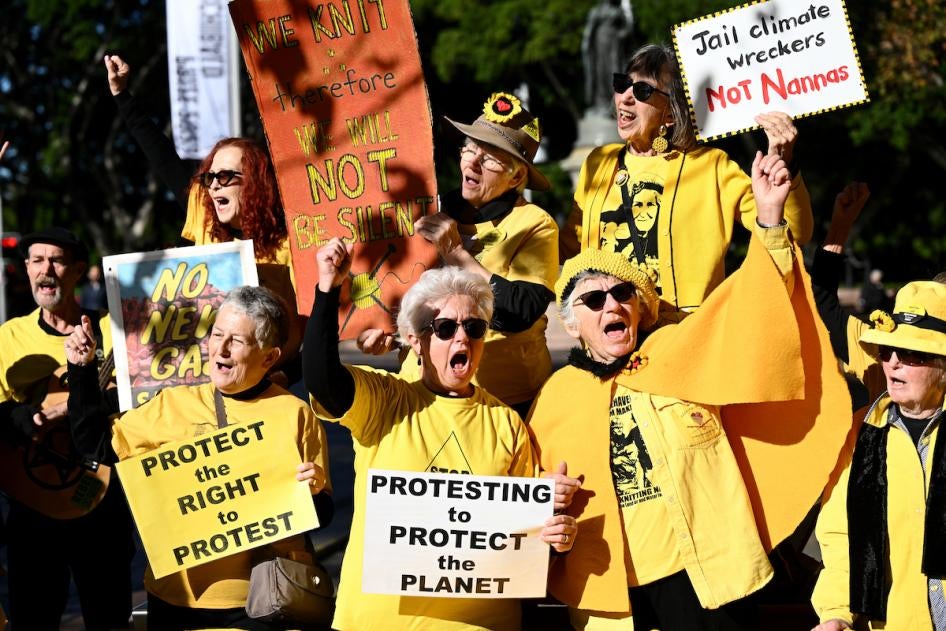
Civil society plays a vital role in Australian democracy. Trade unions, environmental groups, Indigenous movements, and human rights organizations act as counterbalances to state and corporate power.
Environmental activism, particularly around climate change and mining, illustrates the conflict between economic interests and social sustainability. Indigenous land rights movements challenge colonial power structures and demand political recognition.
Political sociology views these movements as essential to democratic vitality, even when they face state repression or political marginalization.
Globalization and Australia’s Political Power
Australia’s political system is deeply influenced by global forces. International trade, security alliances, and global institutions shape domestic policy choices.
The country’s alignment with Western powers affects foreign policy, defense spending, and migration controls. Sociologists argue that globalization limits national policy autonomy, shifting power toward transnational corporations and global markets.
This raises questions about the future of democratic sovereignty in an interconnected world.
Conclusion
The political sociology of Australia reveals a complex interplay between democracy, policy, and power. While Australia is often celebrated as a successful liberal democracy, sociological analysis exposes underlying inequalities rooted in class, race, gender, and economic structures.
Democracy in Australia is both inclusive and exclusionary—expanded through compulsory voting and multiculturalism, yet constrained by corporate influence, colonial legacies, and social stratification. Public policies reflect not only democratic ideals but also the interests of powerful actors.
Understanding Australian politics sociologically allows us to move beyond surface-level descriptions and engage critically with questions of power, justice, and social change. In an era of globalization, environmental crisis, and political transformation, political sociology remains essential for evaluating the strengths and limitations of Australian democracy.
FAQs on Political Sociology of Australia
1. What is meant by Political Sociology of Australia?
Political Sociology of Australia refers to the sociological study of how power, political institutions, democracy, and public policies interact with social structures such as class, race, gender, and ethnicity in Australian society.
2. Why is Political Sociology of Australia important for sociological study?
The Political Sociology of Australia is important because it helps understand how democracy functions in a multicultural and settler-colonial society, revealing hidden power relations and social inequalities.
3. How does democracy function in the Political Sociology of Australia?
In the Political Sociology of Australia, democracy functions through parliamentary institutions, compulsory voting, and federalism, but sociologists argue that social inequalities still limit equal political influence.
4. What role does class play in the Political Sociology of Australia?
Class plays a major role in the Political Sociology of Australia, as economic inequality, corporate power, and labor market changes influence political participation and policy outcomes.
5. How does Indigenous politics shape the Political Sociology of Australia?
Indigenous politics is central to the Political Sociology of Australia, highlighting the exclusion of Aboriginal and Torres Strait Islander peoples from political power and ongoing struggles for recognition and self-determination.
6. What is the impact of neoliberalism in the Political Sociology of Australia?
Neoliberalism in the Political Sociology of Australia has reshaped state policies by promoting privatization, welfare reform, and market-oriented governance, often increasing social inequality.
7. How do political parties influence the Political Sociology of Australia?
Political parties influence the Political Sociology of Australia by shaping policy agendas, representing social interests, and mediating power between citizens, the state, and economic elites.
8. What is the role of the state in the Political Sociology of Australia?
In the Political Sociology of Australia, the state acts as a regulator of society and economy, balancing democratic legitimacy with capitalist interests and global pressures.
9. How does media affect the Political Sociology of Australia?
Media plays a significant role in the Political Sociology of Australia by shaping political discourse, public opinion, and ideological narratives, often reflecting elite power structures.
10. How does migration influence the Political Sociology of Australia?
Migration influences the Political Sociology of Australia by reshaping national identity, multicultural policies, and debates on citizenship, inclusion, and political representation.
11. What is the relationship between gender and power in the Political Sociology of Australia?
The Political Sociology of Australia shows that gender inequality persists in political leadership and policy-making, despite increasing participation of women in democratic institutions.
12. How do social movements contribute to the Political Sociology of Australia?
Social movements contribute to the Political Sociology of Australia by challenging state authority, resisting inequality, and advocating for environmental justice, Indigenous rights, and social reform.
13. What is the significance of compulsory voting in the Political Sociology of Australia?
Compulsory voting is significant in the Political Sociology of Australia because it increases political participation and reduces class-based disparities in voter turnout.
14. How does globalization affect the Political Sociology of Australia?
Globalization affects the Political Sociology of Australia by limiting national policy autonomy and increasing the influence of transnational corporations and global institutions.
15. What are the major challenges in the Political Sociology of Australia today?
Major challenges in the Political Sociology of Australia include rising inequality, Indigenous exclusion, climate politics, corporate influence, and maintaining democratic accountability.
1 thought on “Political Sociology of Australia: Democracy, Policy, and Power”