
Rural poverty and social exclusion in Arkansas represent one of the most persistent and complex social issues in the United States. Although America is often portrayed as a land of opportunity, regional inequalities reveal a different reality. In southern states like Arkansas, rural communities experience high poverty rates, limited access to education and healthcare, and structural barriers that perpetuate marginalization across generations. Understanding this issue sociologically requires looking beyond income levels and examining historical, cultural, institutional, and structural dimensions.
Arkansas, located in the southern United States, has long struggled with economic disparities, particularly in its rural counties. The state’s agricultural legacy, racial history, industrial shifts, and limited urbanization patterns all contribute to the persistence of rural poverty. Social exclusion in this context does not simply mean financial deprivation; it also involves exclusion from political participation, social networks, quality education, healthcare services, and digital access.

This article analyzes rural poverty and social exclusion in Arkansas through major sociological perspectives, focusing on historical roots, structural inequalities, racial dynamics, educational barriers, healthcare gaps, and the role of policy interventions.
Historical Foundations of Rural Poverty in Arkansas
To understand rural poverty in Arkansas, it is essential to consider its historical background. Arkansas developed primarily as an agricultural state, with cotton cultivation dominating the economy in the 19th and early 20th centuries. The plantation system, built on slavery, shaped social hierarchies and racial inequality. After the Civil War, sharecropping and tenant farming continued to exploit poor white and Black farmers alike.
The legacy of racial segregation and economic exploitation had lasting consequences. Even after the Civil Rights Movement, economic opportunities remained unevenly distributed. Mechanization in agriculture during the 20th century reduced labor demand, leading to job losses in rural areas. Many individuals migrated to urban centers, but those who remained often faced unemployment or low-wage work.
From a structural functionalist perspective, rural poverty can be seen as a dysfunction of economic institutions failing to provide adequate roles and opportunities. However, conflict theory offers a more critical explanation: rural poverty in Arkansas is rooted in power imbalances and historical exploitation that continue to shape resource distribution.
Structural Causes of Rural Poverty
Rural poverty in Arkansas is not merely an outcome of individual failure or lack of effort. Sociologically, it is best understood as structurally produced. Several key factors contribute to its persistence:
First, economic restructuring has reduced employment opportunities. Manufacturing decline and agricultural automation have limited stable jobs. Many rural counties rely on low-wage sectors such as poultry processing, retail, and service work.
Second, geographic isolation intensifies economic vulnerability. Rural communities often lack transportation infrastructure, making it difficult for residents to access employment centers. This spatial disadvantage reinforces economic marginalization.

Third, limited investment in rural development exacerbates inequality. Urban areas typically receive more public and private investment, leading to better schools, healthcare facilities, and business growth. Rural Arkansas, by contrast, experiences chronic underinvestment.
From a sociological standpoint, these structural barriers illustrate how inequality is embedded in institutions and geography, not simply in personal characteristics.
Social Exclusion: Beyond Economic Poverty
Social exclusion refers to the processes that prevent individuals or groups from fully participating in social, economic, and political life. In rural Arkansas, poverty and exclusion are deeply interconnected.
Residents experiencing poverty often face stigmatization. They may be perceived as lazy or dependent, reinforcing social distance between socioeconomic groups. This symbolic exclusion, as explained by symbolic interactionism, shapes identity and self-perception.
Political exclusion also plays a role. Rural populations may have limited representation in decision-making processes. Voter suppression, limited civic engagement, and distrust of institutions contribute to a sense of alienation.
Additionally, digital exclusion is increasingly significant. Lack of broadband access in rural Arkansas prevents residents from accessing online education, telehealth services, and remote employment opportunities. In a digital age, internet access is a form of social inclusion, and its absence deepens inequality.
Racial Dimensions of Rural Poverty
Rural poverty in Arkansas cannot be understood without acknowledging race. African American communities in the Arkansas Delta region face disproportionately high poverty rates. Historical segregation, discriminatory housing practices, and unequal schooling have reinforced racial disparities.
Conflict theory emphasizes how dominant groups maintain economic and social power through institutional mechanisms. In Arkansas, racial inequality remains visible in employment patterns, health outcomes, and educational attainment.
Latino immigrant communities, particularly those employed in poultry industries, also experience social exclusion. Language barriers, precarious work conditions, and limited legal protections contribute to vulnerability.
The intersection of race, class, and geography creates layered disadvantage. Sociologists describe this as intersectionality—where multiple forms of inequality overlap, intensifying exclusion.
Education and Intergenerational Poverty
Education plays a crucial role in shaping life chances. In many rural Arkansas counties, schools face underfunding, teacher shortages, and limited extracurricular opportunities. Students in impoverished areas often lack access to advanced coursework and technological resources.
Pierre Bourdieu’s concept of cultural capital is relevant here. Middle-class families often provide resources, knowledge, and networks that support academic success. In contrast, children in rural poverty may lack exposure to such capital, limiting upward mobility.
Intergenerational poverty emerges when economic disadvantage is transmitted from parents to children. Limited educational opportunities reduce employment prospects, reinforcing the poverty cycle. Without structural reforms, mobility remains constrained.
Healthcare Inequality and Social Marginalization
Healthcare access is another dimension of rural poverty and social exclusion in Arkansas. Many rural counties have limited hospitals and clinics. Residents must travel long distances for specialized care, which is particularly challenging for low-income individuals.
Health disparities are pronounced. Chronic illnesses such as diabetes, obesity, and heart disease are prevalent in impoverished rural areas. Mental health services are scarce, contributing to untreated depression and substance abuse disorders.
From a sociological perspective, health inequality reflects structural determinants—income, education, housing, and environment. The closure of rural hospitals not only reduces medical access but also removes key employers, further weakening local economies.
The Role of Gender in Rural Poverty
Gender shapes experiences of rural poverty. Women, especially single mothers, face higher poverty rates. Limited childcare services in rural Arkansas restrict employment opportunities for mothers.
Traditional gender norms may also influence labor participation. Women often work in low-paying service or caregiving roles, reinforcing economic vulnerability.
At the same time, masculinity norms in rural communities can discourage men from seeking assistance or retraining programs, particularly after job loss in traditional sectors such as manufacturing or agriculture. These cultural patterns intersect with economic structures to deepen hardship.
Community, Social Capital, and Resilience
Despite structural disadvantages, rural communities in Arkansas often exhibit strong social bonds. Social capital—networks of trust and mutual support—can mitigate some effects of poverty.
Churches, local associations, and family networks provide informal assistance. Community solidarity fosters resilience during economic hardship.
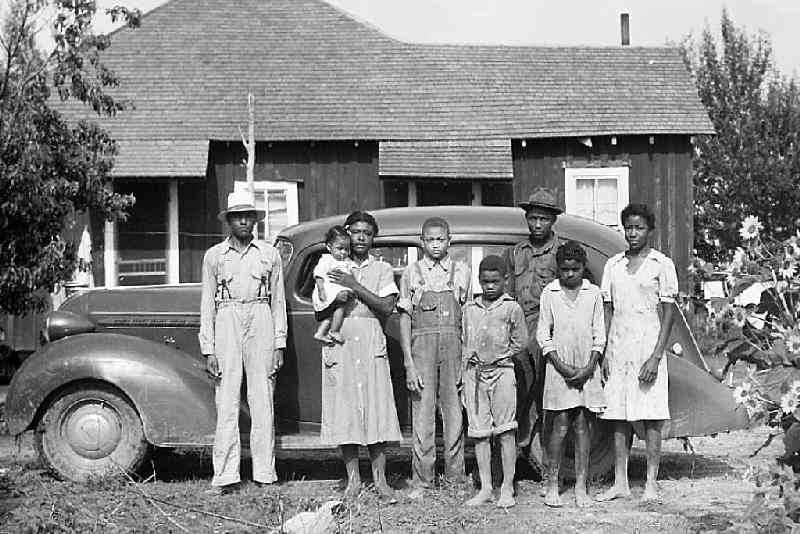
However, bonding social capital within close-knit groups may not translate into bridging social capital that connects communities to external resources. Without connections to broader economic and political networks, rural areas may remain isolated.
Public Policy and Rural Development
Government policies play a central role in shaping rural poverty outcomes. Federal and state programs such as food assistance, Medicaid expansion, and rural development grants aim to reduce inequality.
However, policy implementation often faces challenges. Political polarization and limited funding can restrict the effectiveness of social programs.
Investment in broadband infrastructure, education reform, healthcare expansion, and job training initiatives could significantly improve rural inclusion. Sociologically, policy must address structural inequalities rather than focusing solely on individual behavior.
Theoretical Perspectives on Rural Poverty
Different sociological theories offer insights into rural poverty and social exclusion in Arkansas:
Structural functionalism views poverty as a dysfunction that disrupts social stability.
Conflict theory highlights power imbalances and exploitation that produce inequality.
Symbolic interactionism examines stigma and identity formation among impoverished populations.
Feminist theory focuses on gendered dimensions of economic hardship.
Intersectionality underscores how race, class, and gender intersect in rural contexts.
Together, these frameworks provide a comprehensive understanding of how poverty operates at multiple levels—economic, cultural, political, and symbolic.
Future Prospects and Sociological Implications
The future of rural Arkansas depends on addressing structural barriers and promoting inclusive development. Technological innovation, renewable energy projects, and sustainable agriculture may offer economic opportunities. However, without equitable investment, benefits may bypass marginalized communities.
Sociologically, reducing rural poverty requires:
- Expanding access to quality education.
- Strengthening healthcare infrastructure.
- Promoting racial equity.
- Enhancing digital connectivity.
- Supporting small businesses and local entrepreneurship.
Addressing social exclusion involves empowering communities politically and economically. Participation in civic life fosters inclusion and democratic engagement.
Conclusion
Rural poverty and social exclusion in Arkansas reflect historical legacies, structural inequalities, and intersecting forms of disadvantage. Poverty in this context is not merely a lack of income but a condition shaped by institutional barriers, racial disparities, geographic isolation, and limited social mobility.
A sociological approach reveals that sustainable solutions must go beyond charity or short-term assistance. Structural transformation, inclusive policies, and community empowerment are essential for meaningful change.
Understanding rural poverty in Arkansas helps illuminate broader patterns of inequality in the United States. It challenges simplistic narratives and emphasizes the need for systemic reform to ensure that rural communities are not left behind in an increasingly urbanized and digital society.
Only through comprehensive and inclusive development strategies can Arkansas move toward reducing poverty and promoting genuine social inclusion for its rural populations.
FAQs on Social Exclusion in Arkansas
1. What is meant by social exclusion in Arkansas?
Social exclusion in Arkansas refers to the processes that prevent individuals or communities—especially in rural areas—from fully participating in economic, social, political, and cultural life due to poverty, discrimination, or lack of access to resources.
2. How is social exclusion in Arkansas connected to rural poverty?
Social exclusion in Arkansas is closely linked to rural poverty because limited job opportunities, weak infrastructure, and underfunded public services isolate communities from broader economic and social participation.
3. Which regions experience the highest levels of social exclusion in Arkansas?
The Arkansas Delta and other rural counties experience higher levels of social exclusion in Arkansas due to persistent poverty, racial disparities, and limited economic development.
4. How does race influence social exclusion in Arkansas?
Racial inequality plays a significant role in social exclusion in Arkansas, particularly affecting African American communities through historical segregation, limited educational opportunities, and employment discrimination.
5. What role does education play in social exclusion in Arkansas?
Limited access to quality education contributes to social exclusion in Arkansas by restricting upward mobility and reinforcing intergenerational poverty.
6. How does healthcare inequality contribute to social exclusion in Arkansas?
Inadequate healthcare facilities in rural areas increase social exclusion in Arkansas by limiting access to essential medical services, especially for low-income residents.
7. Is digital inequality part of social exclusion in Arkansas?
Yes, lack of broadband access in rural communities intensifies social exclusion in Arkansas by restricting access to online education, telehealth, and remote employment opportunities.
8. How does unemployment affect social exclusion in Arkansas?
High unemployment and low-wage work in rural sectors deepen social exclusion in Arkansas by reducing economic stability and limiting social mobility.
9. What is the impact of gender on social exclusion in Arkansas?
Women, particularly single mothers, face higher poverty rates, making gender a key factor in social exclusion in Arkansas.
10. How does geographic isolation increase social exclusion in Arkansas?
Remote rural locations limit access to transportation, employment, and public services, reinforcing social exclusion in Arkansas.
11. Can social capital reduce social exclusion in Arkansas?
Strong community networks and local support systems can partially reduce social exclusion in Arkansas, though they may not fully overcome structural inequalities.
12. What government programs address social exclusion in Arkansas?
Programs like Medicaid, food assistance, and rural development initiatives aim to reduce social exclusion in Arkansas by improving access to basic services.
13. How does intergenerational poverty relate to social exclusion in Arkansas?
Intergenerational poverty reinforces social exclusion in Arkansas when limited opportunities are passed from parents to children, restricting long-term mobility.
14. Why is political participation important in reducing social exclusion in Arkansas?
Greater civic engagement helps marginalized groups influence policies, reducing social exclusion in Arkansas through representation and advocacy.
15. What are the long-term solutions to social exclusion in Arkansas?
Long-term solutions include investment in education, healthcare, infrastructure, and inclusive economic policies to reduce structural causes of social exclusion in Arkansas.
1 thought on “Rural Poverty and Social Exclusion in Arkansas: A Sociological Analysis”