Introduction
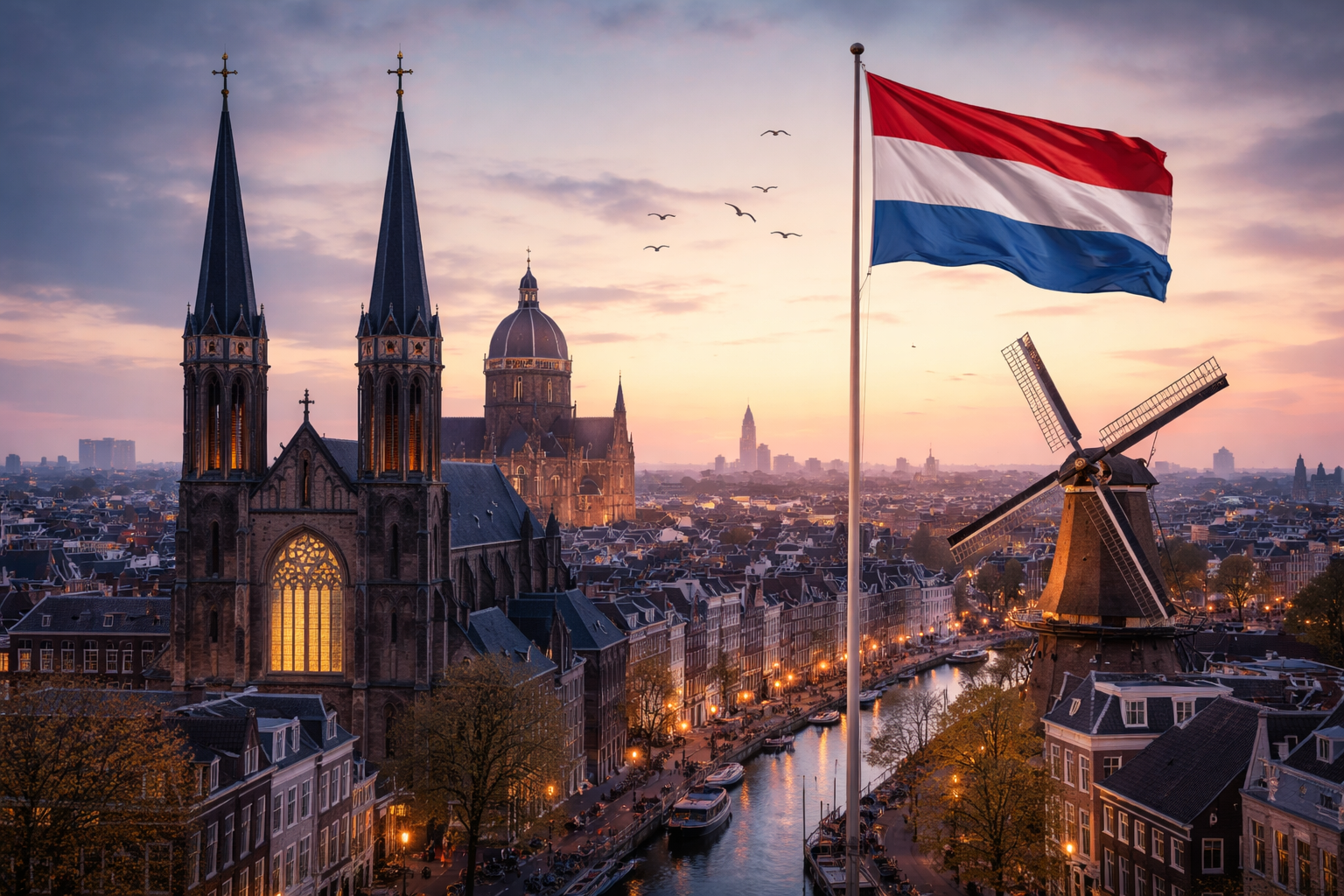
Religion has long played a significant role in shaping European societies, influencing culture, politics, morality, and social institutions. Among European nations, the Netherlands presents a particularly fascinating case in the study of religion and secularization. Historically known for its strong religious institutions and denominational divisions, Dutch society has undergone one of the most rapid and profound processes of secularization in the modern world. From a deeply religious and “pillarized” society in the nineteenth and early twentieth centuries, the Netherlands has transformed into one of the most secular societies globally.
From a sociological perspective, the Dutch experience offers important insights into how religion adapts, declines, or transforms under conditions of modernization, individualization, and cultural pluralism. This article explores the historical roots of religion in the Netherlands, the structure of religious life, the process of secularization, and the contemporary religious landscape, while engaging with key sociological theories and debates.
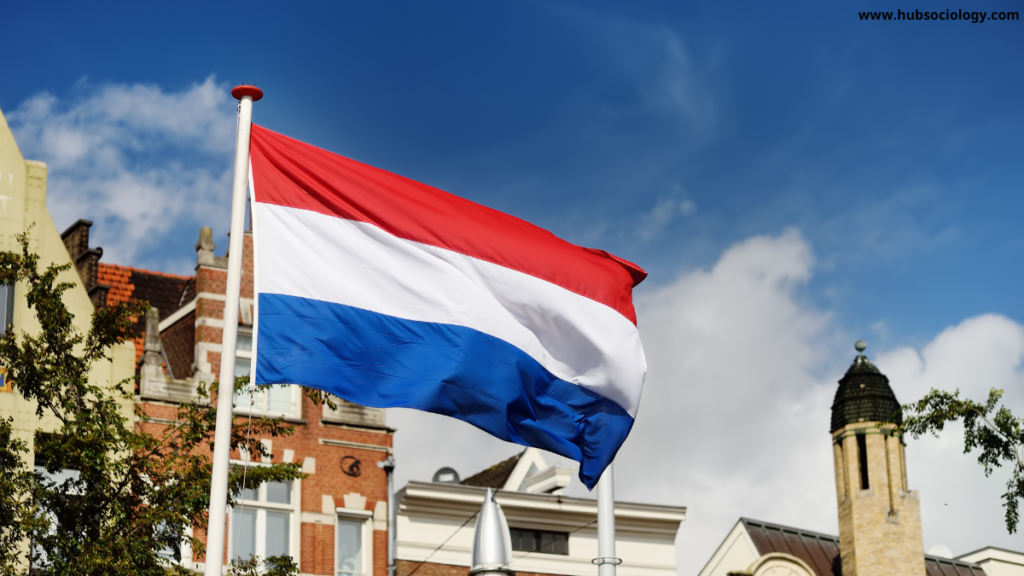
Secularization in Netherlands explains the rapid decline of religious influence in Dutch society. Explore its causes, history, and sociological significance in modern Europe.
Historical Foundations of Religion in Dutch Society
Religion in the Netherlands has deep historical roots shaped by Christianity, particularly Protestantism and Catholicism. The Protestant Reformation of the sixteenth century had a profound impact on Dutch society, leading to the dominance of Calvinism, especially through the Dutch Reformed tradition. Protestant ethics and values influenced Dutch political culture, education, and social norms for centuries.
At the same time, Catholicism remained strong in certain regions, especially in the southern provinces. Unlike many European countries that pursued strict religious uniformity, the Netherlands developed a tradition of relative religious tolerance. Jewish communities, Catholics, and later other religious minorities were allowed to coexist, though not always on equal terms.
This coexistence did not mean religious unity. Instead, Dutch society became segmented along religious lines, a structure that would later be described sociologically as “pillarization.”
Pillarization: Religion as Social Organization
One of the most distinctive features of Dutch religious history is the system of pillarization (verzuiling). From the late nineteenth century until the mid-twentieth century, Dutch society was organized into separate “pillars” based on religious and ideological affiliation. The major pillars included Protestant, Catholic, socialist, and liberal groups.
Each pillar had its own institutions, such as schools, newspapers, political parties, labor unions, hospitals, and social organizations. Religion was not merely a matter of private belief but a comprehensive framework that structured everyday life, social networks, and political loyalties.
From a sociological viewpoint, pillarization illustrates how religion can function as a powerful mechanism of social integration and control. It provided individuals with identity, belonging, and moral guidance, while also regulating social behavior. At the same time, it limited interaction between groups, reinforcing boundaries and collective identities.
The Onset of Secularization
The process of secularization in the Netherlands accelerated dramatically after the Second World War. By the 1960s and 1970s, religious authority began to decline rapidly, and traditional church structures lost their central role in social life.
Several sociological factors contributed to this shift. Rapid economic development and urbanization weakened traditional community ties. Higher levels of education encouraged critical thinking and reduced dependence on religious explanations of the world. The expansion of the welfare state reduced the church’s role in providing social services, while mass media and globalization exposed individuals to diverse worldviews.
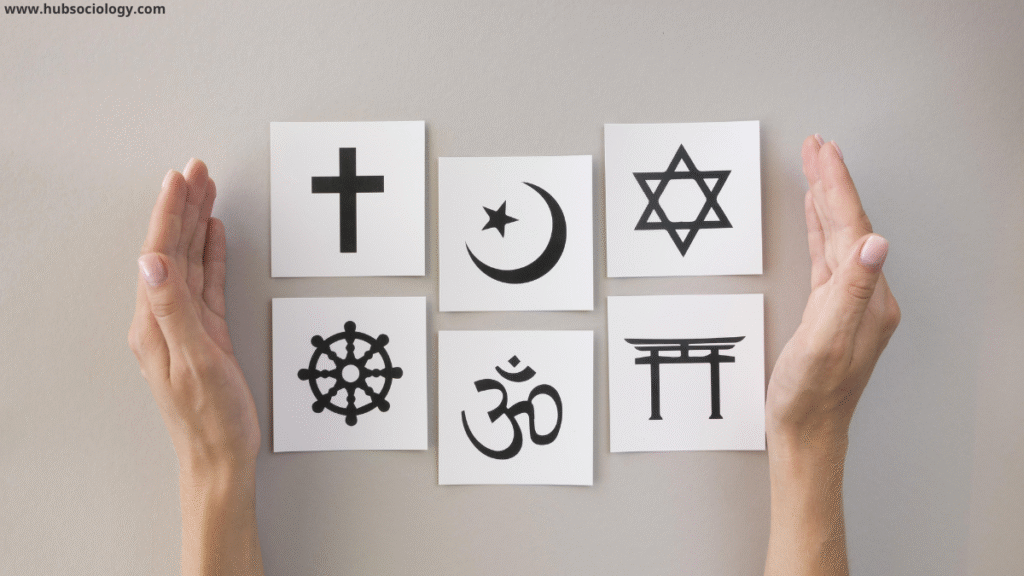
Importantly, secularization in the Netherlands was not a slow or gradual process. Church attendance, religious affiliation, and adherence to religious doctrines declined sharply within a single generation. This makes the Dutch case particularly significant for sociologists studying religious change.
Secularization Theory and the Dutch Case
Classical secularization theory argues that modernization leads to the decline of religion in public life and individual consciousness. Thinkers such as Max Weber emphasized processes like rationalization and disenchantment as forces that weaken religious authority.
The Netherlands appears, at first glance, to strongly support secularization theory. Church membership has declined dramatically, religious rituals have lost their social significance, and moral authority has shifted from religious institutions to secular values such as individual freedom and human rights.
However, sociologists also note that secularization does not necessarily mean the complete disappearance of religion. Instead, it often involves the transformation of religious beliefs into more individualized and less institutionalized forms. In the Dutch context, many people describe themselves as “spiritual but not religious,” reflecting a shift from organized religion to personal meaning-making.
Decline of Institutional Religion
One of the most striking features of religion in contemporary Dutch society is the decline of institutional Christianity. Protestant and Catholic churches have experienced falling membership, aging congregations, and the closure or repurposing of church buildings.
From a sociological perspective, this decline reflects the weakening of traditional authority structures. Churches no longer have the power to regulate morality, family life, or political behavior. Issues such as divorce, contraception, abortion, euthanasia, and same-sex marriage have been widely accepted in Dutch society, often in direct contrast to traditional Christian teachings.
This shift highlights the separation between religious norms and social values, a key indicator of secularization. Moral regulation has increasingly moved from religious institutions to legal frameworks and individual choice.
Religion, Individualization, and Choice
Modern Dutch society is characterized by a high degree of individualization. Sociologists argue that individuals are increasingly expected to construct their own identities, values, and life paths rather than relying on tradition or authority.
In this context, religion becomes a matter of personal choice rather than inherited obligation. Many Dutch citizens may engage selectively with religious practices, such as celebrating religious festivals or participating in rituals for cultural rather than spiritual reasons.
This individualized approach to religion challenges the idea that secularization is simply about disbelief. Instead, it suggests a transformation in how religion is experienced and practiced. Belief becomes privatized, flexible, and detached from institutional control.
Religious Diversity and Immigration
While traditional Christianity has declined, religious diversity in the Netherlands has increased due to immigration and globalization. Muslim, Hindu, Buddhist, and other religious communities have become more visible, particularly in urban areas.
From a sociological standpoint, this pluralization complicates the secularization narrative. The public presence of Islam, in particular, has sparked debates about national identity, integration, and secular values. Headscarves, religious schools, and mosque construction have become symbols of broader cultural tensions.
These debates reveal that secularization does not eliminate religion from public discourse. Instead, religion re-enters public life in new and sometimes controversial ways, challenging the assumption that modern societies become entirely secular.
Religion and the Secular State
The Netherlands is often described as a secular state, but its model of secularism differs from strict separation systems. The Dutch approach emphasizes neutrality and pluralism rather than exclusion of religion from public life.
Religious organizations continue to operate schools, media outlets, and social services, often with state support. This reflects a pragmatic understanding of secularism that allows religious expression while maintaining the dominance of secular legal and political principles.
Sociologically, this arrangement demonstrates how secularization can coexist with institutional accommodation of religion. The state does not promote religion, but it does not aggressively suppress it either.
Generational Change and Religious Socialization
Generational differences play a crucial role in understanding secularization in the Netherlands. Older generations are more likely to have been socialized within religious institutions, while younger generations often grow up with little or no formal religious education.

This shift in socialization patterns has long-term consequences. Without regular exposure to religious rituals, narratives, and communities, religion becomes less relevant in everyday life. Sociologists emphasize that secularization is reinforced through intergenerational transmission, or the lack thereof.
At the same time, younger generations may explore spirituality through alternative means, such as mindfulness, environmental ethics, or ethical humanism, indicating new forms of meaning-making beyond traditional religion.
Critiques of the Secularization Thesis
Although the Dutch case strongly supports many aspects of secularization theory, sociologists caution against overly simplistic interpretations. Religion has not vanished entirely, nor has it lost all social significance.
Some scholars argue that what appears as secularization is actually religious transformation. New religious movements, spiritual practices, and moral discourses continue to address existential questions about life, death, and purpose.
Moreover, global events and cultural anxieties can sometimes lead to renewed interest in religion, especially as a source of identity or community. Thus, secularization should be understood as a complex, uneven, and reversible process rather than a linear decline.
Conclusion
The Netherlands offers one of the most compelling examples of religious change in the modern world. From a deeply pillarized society structured around religious institutions, it has evolved into a highly secular, individualized, and pluralistic society. This transformation reflects broader sociological processes such as modernization, rationalization, and cultural change.
Yet, religion has not disappeared. Instead, it has been reshaped, privatized, and diversified. The Dutch experience demonstrates that secularization is not simply the end of religion, but a reconfiguration of its social role and meaning.
For sociologists, the study of religion and secularization in the Netherlands highlights the dynamic relationship between belief, institutions, and social change. It reminds us that religion remains a vital lens through which to understand identity, morality, and the evolving nature of modern societies.
Frequently Asked Questions (FAQs): Secularization in Netherlands
1. What is meant by secularization in Netherlands?
Secularization in Netherlands refers to the gradual decline of religious authority, church attendance, and religious influence on social, cultural, and political life in Dutch society.
2. When did secularization in Netherlands begin?
Secularization in Netherlands began slowly in the late nineteenth century but accelerated rapidly after World War II, especially during the 1960s and 1970s.
3. Why did secularization in Netherlands happen so rapidly?
Secularization in Netherlands was driven by modernization, higher education, urbanization, welfare state expansion, and growing individual freedom that reduced dependence on religious institutions.
4. How did pillarization affect secularization in Netherlands?
Pillarization initially strengthened religion by organizing society along religious lines, but its collapse later accelerated secularization in Netherlands by weakening collective religious identity.
5. Is the Netherlands one of the most secular countries in the world?
Yes, sociologists often consider the Netherlands among the most secular societies due to low church attendance and declining religious affiliation.
6. Does secularization in Netherlands mean religion has disappeared?
No, secularization in Netherlands does not mean the complete disappearance of religion; rather, it indicates a shift toward privatized and individualized forms of belief.
7. How has secularization in Netherlands affected Christianity?
Secularization in Netherlands has led to a sharp decline in Protestant and Catholic church membership, reduced influence of clergy, and closure of many churches.
8. What role does education play in secularization in Netherlands?
Education plays a major role in secularization in Netherlands by encouraging rational thinking, scientific explanations, and critical attitudes toward religious authority.
9. How does immigration challenge secularization in Netherlands?
Immigration introduces new religious traditions, especially Islam, which adds religious diversity and complicates the secularization process in Netherlands.
10. Is secularization in Netherlands linked to individualization?
Yes, secularization in Netherlands is closely linked to individualization, where personal choice replaces traditional religious obligations.
11. How has secularization in Netherlands influenced moral values?
Secularization in Netherlands has shifted moral authority from religious teachings to secular ethics, law, and individual rights.
12. What is the relationship between the state and religion under secularization in Netherlands?
Under secularization in Netherlands, the state maintains neutrality, allowing religious freedom while prioritizing secular legal principles.
13. Do younger generations support secularization in Netherlands more than older ones?
Yes, younger generations generally show stronger support for secularization in Netherlands due to weaker religious socialization.
14. Can secularization in Netherlands be reversed?
Most sociologists believe secularization in Netherlands is long-term, but religious revival or transformation remains possible under certain social conditions.
15. Why is secularization in Netherlands important for sociological study?
Secularization in Netherlands provides a key sociological case for understanding how religion changes in modern, highly developed societies.