Introduction on Media in Contemporary Times
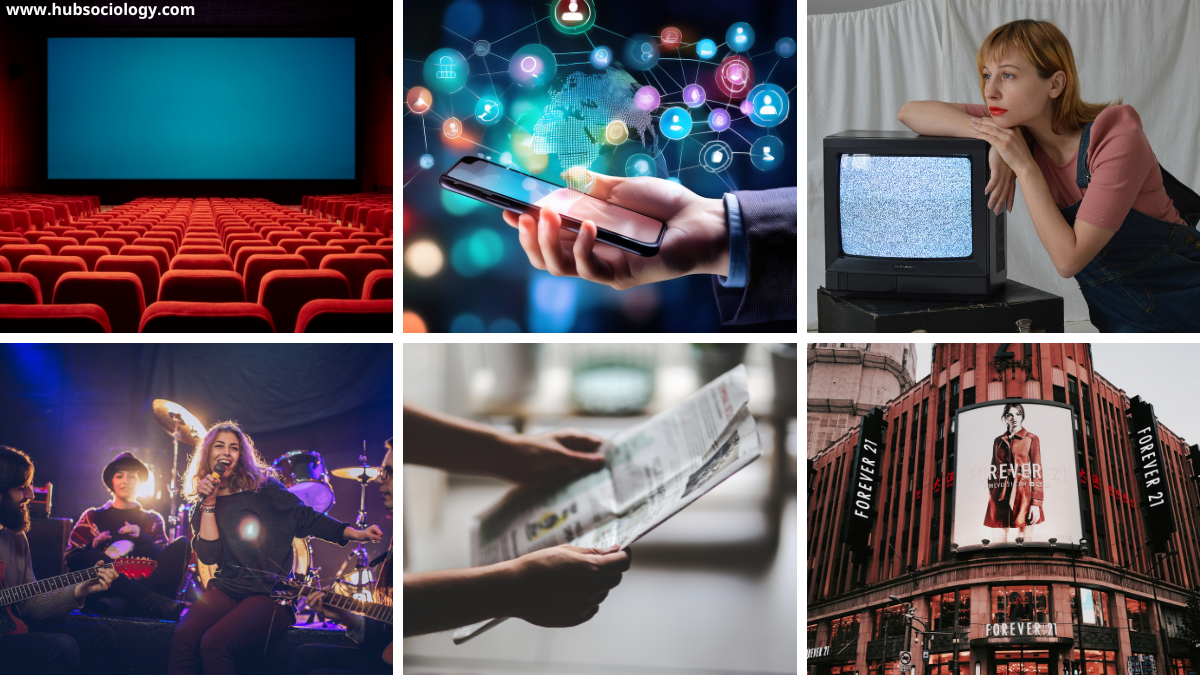
In contemporary society, media has evolved into one of the most influential social institutions, shaping identities, relationships, political consciousness, cultural patterns, and economic behavior. From traditional newspapers to digital social networking sites, each media form plays a distinct yet interconnected role in constructing social reality. Sociology views media not simply as a channel for information but as a powerful agent of socialization, ideology formation, cultural reproduction, and social control. As societies transition from industrial to post-industrial and now digitally networked phases, the role of media has become more pervasive and complex.
This article explores the sociological relevance of five major media forms—social networking sites, film, television, music, and newspapers—in contemporary times, highlighting how these media influence social structures, public discourse, power relations, and everyday life.
Media as a Social Institution
Sociologically, media functions as a social institution that provides frameworks of meaning, legitimizes cultural norms, and distributes symbolic resources. It constructs narratives that influence how individuals understand themselves and the world. According to symbolic interactionism, media shapes meanings and interactions; from the conflict perspective, it becomes a platform through which dominant groups maintain cultural hegemony; functionalism highlights its role in ensuring social cohesion by disseminating shared values. These theoretical perspectives help explain the varied effects of media in modern society.
1. Social Networking Sites: Transforming Interaction and Identity
Digital Socialization and the Construction of Self
Social networking sites (SNS) such as Facebook, Instagram, X (Twitter), WhatsApp, and TikTok have fundamentally transformed how people interact. They serve as spaces where individuals craft digital identities through photos, posts, and curated personal narratives. Through Goffman’s theory of dramaturgy, the online persona can be seen as a performance on a virtual stage, where users manage impressions to gain social approval. SNS thus function as arenas for identity construction and negotiation.
Community Formation in the Digital Age
Unlike traditional communities defined by geography, digital communities transcend boundaries. Individuals form interest-based groups, fan cultures, political collectives, and even activist networks. These groups often produce a sense of belonging, reinforcing Benedict Anderson’s concept of “imagined communities.” Digitally mediated solidarity can mobilize protests, spread awareness, and generate global movements—as seen in #BlackLivesMatter, #MeToo, and climate activism.
Algorithmic Influence and Power
SNS operate within algorithm-driven ecosystems that influence what individuals see, share, or believe. These algorithms promote echo chambers, filter bubbles, and ideological polarization by reinforcing pre-existing views. From a conflict theory perspective, control over data and algorithms becomes a new form of power, allowing corporations to shape political opinion, consumer behavior, and cultural values. The commodification of user data raises ethical concerns, highlighting how digital capitalism infiltrates everyday communication.
Social Problems Generated by SNS
Despite their benefits, SNS contribute to significant social issues including cyberbullying, misinformation, surveillance, digital addiction, and the decline of face-to-face communication. Baudrillard’s theory of hyperreality is relevant here—digital representations often overshadow real experiences, blurring distinctions between truth and illusion. Thus, SNS represent both empowerment and vulnerability in contemporary societies.
2. Film: Cultural Narratives and Ideological Power
Film as a Cultural Text
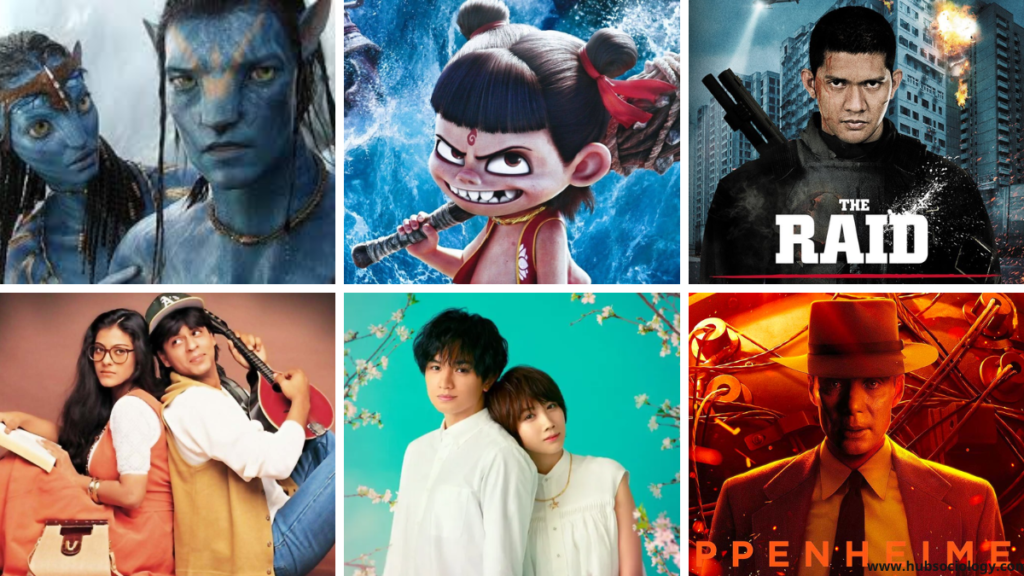
Cinema remains a dominant cultural force, producing stories that reflect societal values, anxieties, and aspirations. From a sociological perspective, film is more than entertainment; it is a cultural text that encodes ideologies about gender, race, class, nation, and morality. Films help create collective memory and national identity—Bollywood, Hollywood, and global cinema industries contribute to powerful narratives that shape cultural consciousness.
Representation and Social Inequality
Film plays a crucial role in constructing social representations. Feminist scholars critique the male gaze in cinema, where women are positioned as objects of visual pleasure. Similarly, critical race theory highlights racial stereotypes and unequal screen representation of minority communities. Sociologically, cinema both challenges and reproduces inequalities.
Contemporary cinema has increasingly diversified its storytelling, portraying LGBTQ+ identities, marginalized communities, and social injustices. However, unequal access to production, funding, and global distribution still restricts balanced representation.
Film as a Tool for Social Change
Cinema has long been an instrument of political messaging and social transformation. Documentary films, biopics, and socially relevant cinema raise awareness about issues such as inequality, environmental degradation, corruption, and human rights. Movements like feminist cinema and parallel cinema use film as a medium for critical engagement and public discourse.
Globalization of Film Culture
Digital streaming platforms such as Netflix, Amazon Prime, and Disney+ have globalized film consumption, creating hybrid media cultures. Audiences now access diverse films across national borders, reshaping global cultural flows as described by Arjun Appadurai’s concept of mediascapes. This globalization democratizes access but also spreads Western cultural dominance, raising questions about cultural homogenization.
3. Television: Mass Communication and Social Control
Television as a Household Institution
Television has long been a central part of family life, influencing behavior, attitudes, and political views. In many societies, television news shapes public opinion about governance, elections, crime, and economic conditions. Television serials, reality shows, and entertainment programs influence cultural norms related to family, gender relations, fashion, and lifestyle.
Agenda-Setting and Framing
The agenda-setting theory emphasizes that media may not tell people what to think, but it tells them what to think about. Television determines which issues become socially significant. Framing theory further explains how television constructs meanings by emphasizing certain aspects of reality while ignoring others.
Through selective narratives, television channels can shape ideologies, create fear or reassurance, and influence democratic processes. In politically polarized societies, television often aligns with specific political parties, contributing to ideological conflicts and misinformation.
Television and Social Stratification
Different social classes consume television differently. High-income groups may prefer global streaming platforms, while low-income households rely on free-to-air or national channels. Access to diverse content reflects existing socioeconomic inequalities. Television advertisements also reinforce consumer capitalism by promoting material aspirations.
Cultural Integration and Social Solidarity
Despite criticisms, television has historically provided shared experiences—national events, sports tournaments, elections, and cultural festivals—that create a sense of collective identity. Sociologically, such shared moments strengthen social cohesion and national belonging.
4. Music: Identity, Emotion, and Cultural Expression
Music as a Cultural Language
Music transcends linguistic boundaries and serves as a key aspect of cultural expression. In sociological terms, music helps shape individual and group identities. Genres such as hip-hop, pop, classical, folk, and rock reflect different social realities and historical struggles. Music communicates stories of resistance, joy, oppression, and cultural pride.
Music and Youth Culture
Youth cultures often use music to express rebellion, freedom, and identity. Subcultures—punk, hip-hop, K-pop fandoms—are built around musical styles and aesthetics. According to Birmingham School cultural theorists, music becomes a form of symbolic resistance, helping youth negotiate their position in society.
Industry, Commodification, and Globalization
The music industry commodifies creativity, transforming artists into marketable products. Streaming platforms have globalized music consumption, allowing cross-border cultural exchange. However, economic inequalities persist as only a small percentage of artists benefit financially, while corporations dominate revenue distribution.

Music as Social Commentary
Throughout history, music has been a tool for political expression—protest songs during civil rights movements, anti-war music, feminist anthems, and contemporary rap addressing police violence. Music thus shapes collective consciousness and mobilizes social action.
5. Newspapers: Traditional Media in the Digital Age
Role of Newspapers in Democratic Discourse
Newspapers have been vital for promoting public debate, political accountability, and civic participation. Even in the digital age, newspapers (print and online) play a critical role in investigative journalism, fact-checking, and providing in-depth analyses.
Decline of Print and Rise of Digital News
Digitalization has transformed newspaper consumption patterns. Online news offers instant updates, multimedia formats, and interactivity. However, print newspapers face declining readership and revenue, leading to job losses and media consolidation. Sociologically, this affects the diversity of voices and reduces editorial independence.
Objectivity, Bias, and Ownership
Newspapers are often perceived as authoritative sources, yet sociologists argue that news is a socially constructed product shaped by institutional constraints, ownership patterns, and ideological biases. Concentrated media ownership raises concerns over democratic pluralism, as a few powerful corporations shape public opinion.
Newspapers and Literacy Culture
Despite challenges, newspapers contribute to literacy, informed citizenship, and cultural education. In rural and developing regions, they remain a crucial medium for information dissemination.
Media, Power, and Society
Across all forms—social networking sites, film, television, music, and newspapers—media functions as both a reflection of society and a mechanism of social power. Theories of media highlight this duality:
- Marxist and neo-Marxist approaches emphasize how media reinforces dominant class ideologies.
- Foucault’s theory of power highlights surveillance and disciplinary effects, particularly relevant for digital media.
- Postmodern theorists such as Baudrillard discuss how media simulations distort reality.
- Cultural studies emphasize audience agency and interpretive diversity, showing that viewers actively negotiate meanings rather than passively absorb messages.
Media thus shapes social norms, influences political consciousness, constructs identities, and mediates power relations.
Conclusion
Media in contemporary times is a dynamic and complex institution that permeates every aspect of social life. Social networking sites reshape interpersonal interactions and identity; film narrates cultural stories and ideological struggles; television influences political opinion and everyday norms; music expresses emotion, identity, and resistance; newspapers maintain democratic accountability despite digital disruption.
A sociological understanding of media reveals that it not only reflects society but actively creates it. In an era dominated by digital platforms, algorithms, and global networks, media’s influence on democracy, culture, and social inequality is more profound than ever. To navigate contemporary society effectively, individuals and communities must engage critically with media, understanding its power, possibilities, and limitations.
20 FAQs on Media in Contemporary Times
1. What does the term Media in Contemporary Times mean in sociology?
Media in Contemporary Times refers to modern communication platforms—social media, film, television, music, and newspapers—that shape social behavior and cultural patterns.
2. Why is Media in Contemporary Times important for understanding society?
Because Media in Contemporary Times influences identity formation, socialization, political views, and cultural values, it becomes central to sociological analysis.
3. How does Media in Contemporary Times impact youth behavior?
Young people rely heavily on digital platforms, and Media in Contemporary Times shapes their identity, lifestyle, interactions, and worldviews.
4. What role does social media play in Media in Contemporary Times?
Social networking sites dominate Media in Contemporary Times by enabling instant communication, digital communities, and global information exchange.
5. How does Media in Contemporary Times shape cultural norms?
Through films, TV shows, music, and online content, Media in Contemporary Times normalizes certain behaviors, gender roles, beauty standards, and social values.
6. What are the challenges posed by Media in Contemporary Times?
Issues such as misinformation, cyberbullying, digital addiction, polarization, and privacy concerns are major challenges in Media in Contemporary Times.
7. How does Media in Contemporary Times influence political opinions?
Television news, online platforms, and viral content in Media in Contemporary Times shape political narratives and public attitudes through framing and agenda-setting.
8. How do films contribute to Media in Contemporary Times?
Films are a vital part of Media in Contemporary Times as they represent social issues, portray cultural identities, and influence ideological perspectives.
9. What is the sociological significance of music in Media in Contemporary Times?
Music in Media in Contemporary Times expresses collective emotions, resistance, identity, and cultural heritage, influencing individual and group behavior.
10. How do newspapers fit into Media in Contemporary Times?
Despite digital dominance, newspapers remain essential in Media in Contemporary Times for credible reporting, analysis, and democratic accountability.
11. How does Media in Contemporary Times affect social relationships?
It transforms communication patterns, enabling virtual interactions that reshape friendships, family connections, and community structures.
12. How does globalization shape Media in Contemporary Times?
Global platforms and streaming services spread cultural content worldwide, making Media in Contemporary Times increasingly transnational.
13. What role do algorithms play in Media in Contemporary Times?
Algorithms personalize content and influence what users see, making them central to controlling information flows in Media in Contemporary Times.
14. Is Media in Contemporary Times responsible for social inequality?
Yes, Media in Contemporary Times can reproduce stereotypes, unequal representation, and digital divides that reinforce social inequality.
15. How does Media in Contemporary Times influence consumer behavior?
Advertising and influencer culture within Media in Contemporary Times shape purchasing habits, aspirations, and lifestyle choices.
16. Does Media in Contemporary Times impact mental health?
Yes, Media in Contemporary Times contributes to stress, comparison anxiety, digital burnout, and low self-esteem, especially among youth.
17. How do social movements use Media in Contemporary Times?
Activists leverage Media in Contemporary Times to mobilize supporters, spread awareness, document injustices, and build global solidarity.
18. How is education shaped by Media in Contemporary Times?
Digital learning tools, educational videos, and online resources show how Media in Contemporary Times transforms teaching and learning.
19. Are traditional media still relevant in Media in Contemporary Times?
Yes, television and newspapers remain influential in Media in Contemporary Times, especially for news credibility and mass communication.
20. Why is media literacy essential in Media in Contemporary Times?
Media literacy helps people critically analyze content, detect misinformation, and understand ideological influences in Media in Contemporary Times.