Introduction
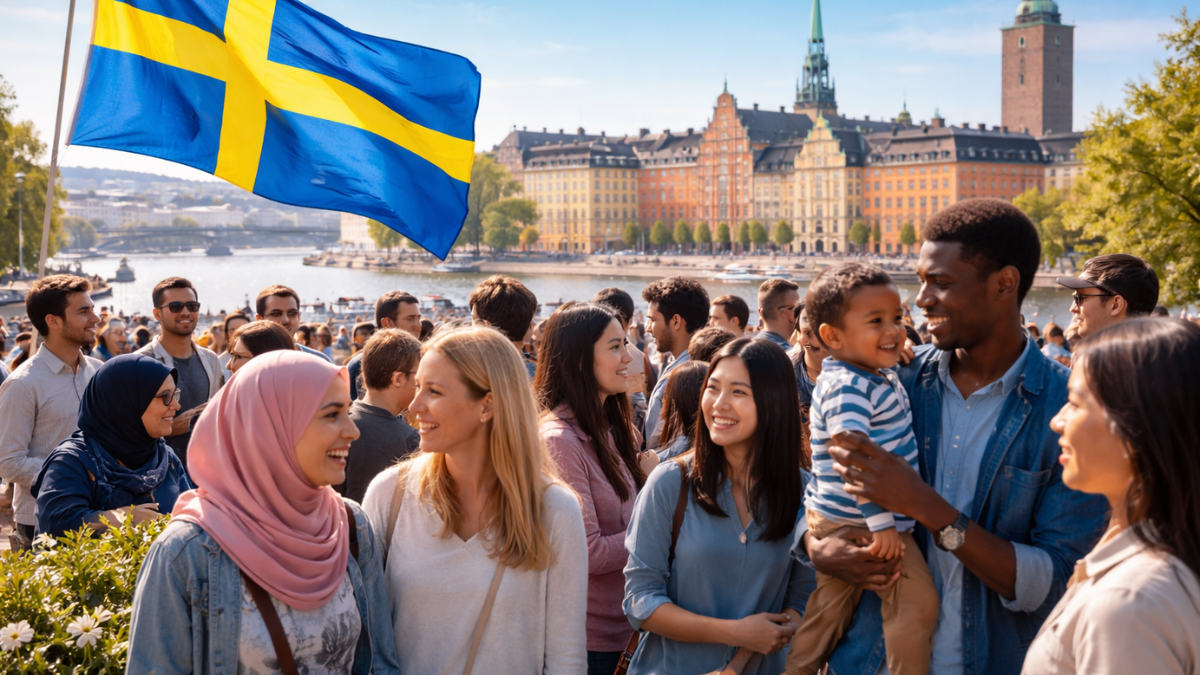
Immigration and social integration in Sweden have become central themes in contemporary European sociology. Over the past century, Sweden has transformed from a relatively homogeneous society into one of the most multicultural countries in Europe. This transformation has raised important sociological questions about identity, citizenship, welfare, labor markets, education, and social cohesion.
From a sociological perspective, immigration is not merely the movement of people across borders; it is a complex process involving cultural negotiation, structural adjustment, institutional adaptation, and identity formation. Social integration, likewise, is not limited to economic participation. It includes cultural belonging, political inclusion, social trust, and recognition within the broader national community.
This article examines immigration and social integration in Sweden through classical and contemporary sociological theories, empirical developments, policy frameworks, and the lived realities of immigrants and host communities.

Historical Background of Immigration in Sweden
Sweden was historically a country of emigration rather than immigration. During the late 19th and early 20th centuries, many Swedes migrated to the United States due to economic hardship. However, after the Second World War, Sweden’s growing industrial economy required labor, leading to labor migration from Finland, Italy, Greece, Turkey, and Yugoslavia during the 1950s and 1960s.
The character of immigration changed in the 1970s when Sweden shifted from labor recruitment to refugee reception. Refugees arrived from Chile, Iran, Iraq, Somalia, Bosnia, and later Syria. A significant number of asylum seekers came during the European refugee crisis of 2015.
This historical shift from labor migration to humanitarian migration reshaped debates about immigration and social integration in Sweden, particularly concerning welfare sustainability, cultural pluralism, and social cohesion.
Theoretical Framework: Sociological Perspectives
Assimilation Theory
Classical assimilation theory suggests that immigrants gradually adopt the cultural norms, language, and values of the host society. In Sweden, early labor migrants often integrated into industrial workplaces and adopted Swedish language and social norms over time. However, assimilation theory has been criticized for assuming a one-way adaptation process, ignoring structural inequalities and discrimination.
Multiculturalism
Sweden is widely recognized for its multicultural policy approach. In 1975, the Swedish Parliament adopted a multicultural policy emphasizing equality, freedom of choice, and partnership. Rather than demanding full cultural assimilation, the state encouraged immigrants to maintain their cultural identity while participating in Swedish society.
This approach positioned Sweden as one of the most inclusive welfare states in Europe. However, debates have emerged about whether multicultural policies have sufficiently promoted integration or unintentionally encouraged segregation.
Social Capital Theory
Drawing from sociologists like Pierre Bourdieu and Robert Putnam, social capital theory emphasizes networks, trust, and social participation. Immigration can initially reduce generalized social trust if communities are segregated. However, strong bridging social capital—connections between immigrant and native communities—can foster long-term integration.
In Sweden, levels of social trust have historically been high, but concerns have emerged about declining trust in areas with concentrated socioeconomic disadvantage.
The Swedish Welfare State and Integration
Sweden’s welfare state model plays a crucial role in immigration and social integration. The universal welfare system provides healthcare, education, unemployment benefits, housing support, and child allowances regardless of ethnic origin.
The Swedish integration model is built on three pillars:
- Access to the labor market
- Equal access to welfare institutions
- Civic and political participation
New immigrants are enrolled in introduction programs that include Swedish language courses (SFI – Svenska för invandrare), civic orientation, and employment support.
From a sociological perspective, welfare universalism reduces marginalization by preventing extreme poverty. However, critics argue that welfare dependence without labor market integration may create parallel societies.
Labor Market Integration
Labor market participation is a key indicator of social integration. Sweden’s labor market is highly regulated, with strong unions and high skill requirements. While this model protects workers, it also creates barriers for immigrants with limited Swedish language skills or unrecognized foreign qualifications.
Unemployment rates among foreign-born individuals have historically been higher than among native-born Swedes. Refugees, especially women, face particular challenges due to interrupted education, trauma, or limited networks.
However, second-generation immigrants often perform significantly better than first-generation migrants, demonstrating gradual structural integration over time. Sociologically, this reflects segmented assimilation, where outcomes vary depending on education, neighborhood, and family resources.
Education and Intergenerational Mobility
Education is central to immigration and social integration in Sweden. The Swedish school system promotes equality and inclusion, but residential segregation has led to school segregation in certain urban areas such as Stockholm, Malmö, and Gothenburg.
Children of immigrants often face linguistic challenges in early schooling. However, many demonstrate high educational aspirations, particularly in families where migration was driven by a desire for upward mobility.

Sociological research indicates that educational outcomes are strongly influenced by parental socioeconomic status rather than ethnicity alone. The intersection of class and migration background plays a decisive role in shaping life chances.
Residential Segregation and Urban Sociology
Urban segregation remains one of the most debated aspects of immigration and social integration in Sweden. Certain suburban areas, often referred to as “vulnerable areas,” have high concentrations of immigrant populations, lower income levels, and higher unemployment rates.
From an urban sociological perspective, segregation is not solely an immigrant issue. It is shaped by housing policy, labor market inequality, and urban planning. Sweden’s housing shortage and regulated rental market contribute to spatial concentration.
Segregation can weaken bridging social capital and reinforce stereotypes. However, it can also provide community solidarity and ethnic networks that support new arrivals.
Cultural Identity and Belonging
Identity formation is central to social integration. Many immigrants in Sweden navigate hybrid identities—being both Swedish and connected to their heritage culture.
Second-generation youth often experience identity negotiation. They may feel Swedish in language and education but encounter discrimination that marks them as “foreign.” Sociologically, this can lead to marginalization or, alternatively, to strong bicultural competence.
Cultural debates about religion, gender equality, and freedom of expression have influenced public discourse. Sweden’s strong emphasis on gender equality sometimes intersects with cultural practices from more patriarchal societies, generating tension but also transformation.
Political Participation and Citizenship
Sweden offers relatively accessible pathways to permanent residence and citizenship. Immigrants with residence permits can vote in local elections after a few years of residence.
Political participation is an important dimension of integration. Representation of foreign-born individuals in municipal councils and the national parliament has gradually increased.
However, the rise of anti-immigration political movements has also reshaped the political landscape, reflecting tensions around immigration and social integration in Sweden. Public debates often revolve around crime, welfare costs, and national identity.
Media Representation and Public Discourse
Media plays a crucial role in shaping perceptions of immigrants. Sociologically, moral panics can emerge when isolated incidents are generalized to entire communities.
Swedish media discourse has oscillated between humanitarian narratives and securitization narratives. This dual framing influences public opinion and policy decisions.
Public trust in institutions remains comparatively high in Sweden, which helps prevent extreme polarization. Nevertheless, digital media has amplified ideological divides.
Gender and Integration
Gender is a critical dimension of immigration and social integration in Sweden. Immigrant women often face a double disadvantage: as migrants and as women. However, Sweden’s gender-equal labor policies, parental leave system, and childcare support provide opportunities for empowerment.
Participation in the labor force significantly enhances integration outcomes for immigrant women. Educational programs targeting newly arrived women have shown positive results in fostering independence and social inclusion.
Crime, Deviance, and Social Marginality
Crime debates are often central to discussions about immigration. Sociological analysis emphasizes structural factors—poverty, exclusion, lack of opportunity—rather than ethnicity itself.
Marginalization in segregated neighborhoods can increase vulnerability to gang recruitment. However, the vast majority of immigrants in Sweden are law-abiding and contribute economically and culturally.
Labeling theory suggests that stigmatizing entire communities can reinforce exclusion rather than solve social problems.
Comparative European Context
Compared to other European countries, Sweden has accepted a relatively high number of refugees per capita. Its welfare model provides more comprehensive support than many countries.
However, the scale of migration in recent decades has placed pressure on housing, schools, and local municipalities. Balancing humanitarian commitments with integration capacity remains a central policy challenge.
Contemporary Policy Shifts
Since 2015, Sweden has tightened asylum policies and introduced stricter residency requirements. These changes reflect both domestic political pressures and broader European Union dynamics.
Integration policy increasingly emphasizes employment as the primary pathway to belonging. Language requirements and civic integration measures have gained prominence.
Sociologically, this reflects a shift from multiculturalism toward conditional integration, where rights are increasingly tied to labor market participation.
Challenges in Immigration and Social Integration in Sweden
Several structural challenges persist:
- Labor market barriers
- Educational inequality
- Residential segregation
- Discrimination and racism
- Political polarization
Despite these challenges, Sweden maintains strong institutional capacity, high levels of social trust, and a commitment to equality. These factors provide a foundation for long-term integration.
Future Prospects
The future of immigration and social integration in Sweden depends on inclusive economic growth, equitable education, and policies that foster bridging social capital.
Second-generation integration outcomes will be particularly important. If upward mobility increases and segregation declines, Sweden may strengthen its multicultural democracy.
From a sociological perspective, integration is a dynamic, multi-generational process rather than an immediate outcome. Sweden’s experience offers valuable lessons for other countries navigating diversity in the 21st century.
Conclusion
Immigration and social integration in Sweden represent a complex interplay between welfare institutions, labor markets, cultural identity, and political discourse. Sweden’s model combines humanitarian commitment with universal welfare, yet it faces structural and political challenges.
Sociologically, integration is shaped not only by immigrant adaptation but also by institutional openness, economic opportunity, and social trust. Sweden’s high-trust society and strong welfare state provide a robust foundation, but addressing segregation, inequality, and discrimination remains essential.
Ultimately, immigration and social integration in Sweden reflect broader global questions about diversity, citizenship, and the future of democratic societies.
FAQs on Social Integration in Sweden
- What is meant by Social Integration in Sweden?
Social Integration in Sweden refers to the process through which immigrants participate fully in Swedish economic, social, cultural, and political life. - Why is Social Integration in Sweden important?
Social Integration in Sweden promotes equality, reduces segregation, and strengthens social trust within a multicultural society. - How does the welfare state influence Social Integration in Sweden?
The universal welfare system supports Social Integration in Sweden by providing healthcare, education, language training, and employment assistance. - What role does language play in Social Integration in Sweden?
Swedish language proficiency is central to Social Integration in Sweden, as it enables employment, education access, and civic participation. - How does employment affect Social Integration in Sweden?
Stable employment enhances Social Integration in Sweden by fostering economic independence and social interaction. - Does education improve Social Integration in Sweden?
Yes, equal access to education significantly strengthens Social Integration in Sweden, especially for second-generation immigrants. - How does residential segregation impact Social Integration in Sweden?
Residential segregation can slow Social Integration in Sweden by limiting social interaction between immigrant and native communities. - What challenges hinder Social Integration in Sweden?
Labor market barriers, discrimination, housing shortages, and political polarization can obstruct Social Integration in Sweden. - How does citizenship affect Social Integration in Sweden?
Obtaining citizenship strengthens Social Integration in Sweden by granting full political rights and a stronger sense of belonging. - What is the role of gender in Social Integration in Sweden?
Gender equality policies promote Social Integration in Sweden by encouraging labor force participation among immigrant women. - How does social trust relate to Social Integration in Sweden?
High social trust supports Social Integration in Sweden by encouraging cooperation and institutional confidence. - Has public opinion influenced Social Integration in Sweden?
Yes, political debates and media narratives shape policies and public attitudes toward Social Integration in Sweden. - How do second-generation immigrants experience Social Integration in Sweden?
Second-generation immigrants often achieve better educational and employment outcomes, reflecting gradual Social Integration in Sweden. - What policies support Social Integration in Sweden?
Language programs, employment initiatives, civic education, and anti-discrimination laws strengthen Social Integration in Sweden. - What is the future of Social Integration in Sweden?
The future of Social Integration in Sweden depends on inclusive economic growth, reduced segregation, and equitable education opportunities.