Introduction
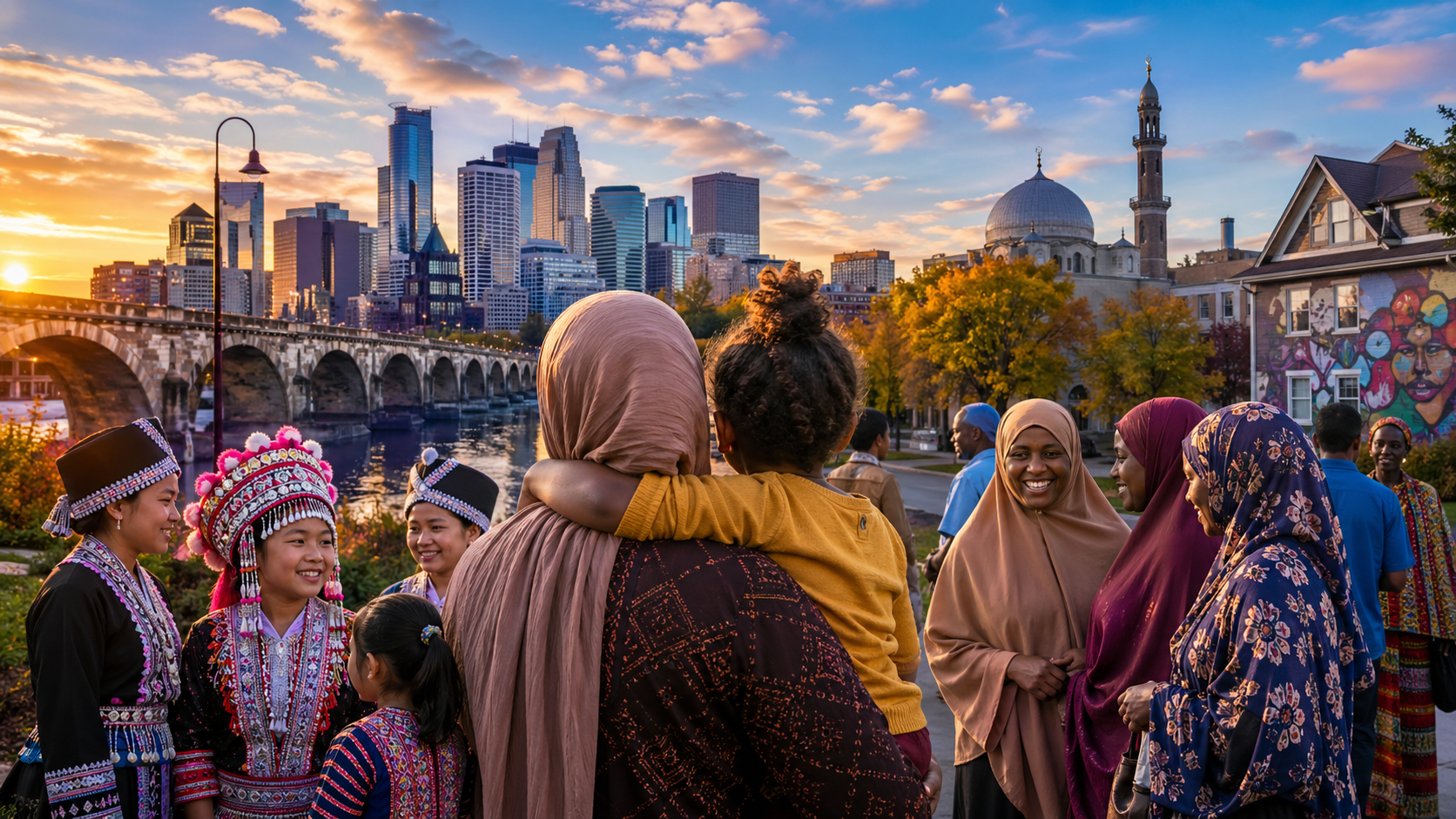
Immigration and refugee resettlement have played a central role in shaping the social, cultural, and economic fabric of the U.S. state of Minnesota. Known for its relatively welcoming policies and strong institutional support systems, Minnesota has emerged as one of the most significant destinations for immigrants and refugees in the United States. From early European settlers in the nineteenth century to contemporary arrivals from Africa, Asia, and Latin America, the state’s demographic landscape reflects multiple waves of migration.
In recent decades, Minnesota has become especially notable for its large refugee populations, including the Hmong people and Somali people communities. These groups have not only contributed to demographic diversity but have also reshaped urban life, labor markets, and political participation. From a sociological perspective, Minnesota offers a compelling case study of integration, multiculturalism, and the challenges of inequality in a globalizing world.
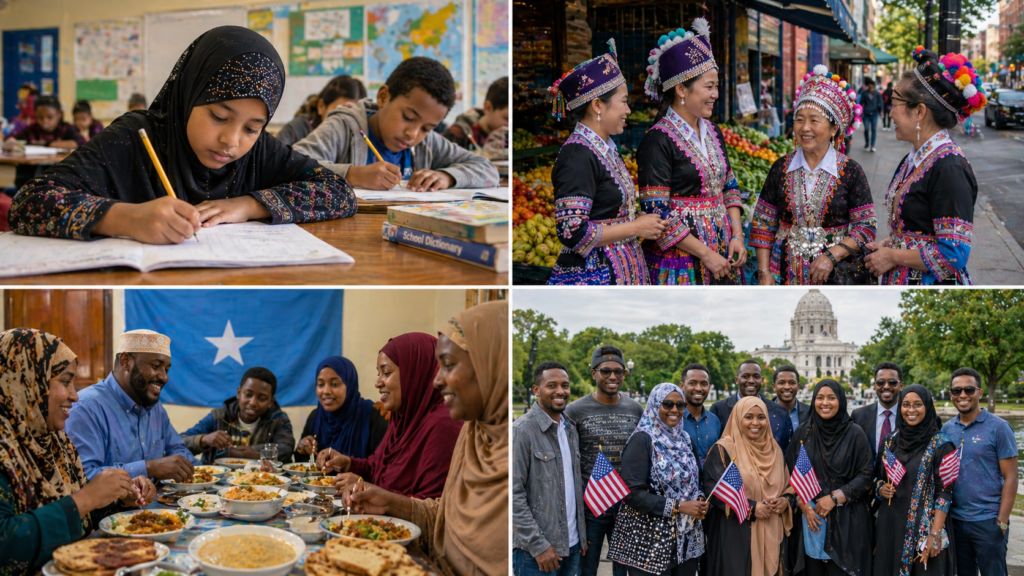
This article examines immigration and refugee communities in Minnesota through sociological lenses such as structural functionalism, conflict theory, and symbolic interactionism, focusing on historical development, demographic trends, integration processes, and contemporary issues.
Historical Background of Immigration in Minnesota
Early Immigration Patterns
Immigration to Minnesota began in the mid-19th century, largely driven by European settlers from countries such as Germany, Sweden, and Norway. By the 1890s, immigrants constituted nearly 40% of the state’s population, reflecting the importance of migration in early state formation.
These early immigrants were primarily labor migrants who contributed to agriculture, mining, and industrial development. Over time, they assimilated into American society, forming the dominant cultural identity of the state.
Post-1970s Refugee Waves
A significant transformation occurred after the 1970s, when Minnesota began receiving large numbers of refugees from Southeast Asia following the Vietnam War. Thousands of Hmong refugees arrived, fleeing political persecution and war-related violence.
Later, in the 1990s, civil war and state collapse in Somalia led to a new wave of refugees. Minnesota became a primary destination due to its established refugee support infrastructure and employment opportunities.
These refugee waves marked a shift from European to non-European immigration, fundamentally altering Minnesota’s ethnic composition.
Demographic Composition and Diversity
Minnesota today is home to a highly diverse immigrant population. Approximately 8–9% of the state’s population is foreign-born, with over 400,000 immigrants residing in the state.
Major Immigrant Groups
Key immigrant communities include:
- Mexicans (largest group)
- Somalis (second largest)
- Indians
- Hmong (from Laos)
- Vietnamese and Ethiopians
Minnesota is unique in having a disproportionately high number of African and Asian immigrants compared to the national average.
Linguistic and Cultural Diversity
More than 230 languages are spoken in Minnesota households, reflecting extraordinary cultural diversity.
The most common non-English languages include Spanish, Somali, Hmong, and Vietnamese.
Urban Concentration
Most immigrants and refugees live in the Twin Cities—Minneapolis and Saint Paul—making these urban centers hubs of multicultural interaction.
Refugee Communities: Case Studies
The Hmong Community
The Hmong community represents one of the earliest refugee groups in Minnesota. Many arrived in the 1970s and 1980s after assisting U.S. forces during the Vietnam War.
Over time, the Hmong population has established strong economic and cultural institutions, including markets, community centers, and businesses. Despite initial challenges such as poverty and language barriers, the community has shown upward mobility, including increased homeownership and entrepreneurship.
Sociologically, the Hmong experience illustrates segmented assimilation, where different generations integrate into society at varying rates.
The Somali Community
Minnesota hosts the largest Somali population in the United States, estimated between 80,000 and 100,000 people.
Somali migration began in the early 1990s due to civil war and humanitarian crises. Many arrived as refugees after living in camps in neighboring countries.
The Somali community has developed vibrant neighborhoods, particularly in Minneapolis, sometimes referred to as “Little Mogadishu.” These areas feature mosques, businesses, and cultural institutions.
From a sociological perspective, Somali communities demonstrate ethnic enclave formation, where immigrants create supportive networks that facilitate economic survival and cultural preservation.
Sociological Theories and Immigration
Structural Functionalism
From a functionalist perspective, immigration contributes to societal stability by fulfilling labor shortages and enhancing cultural diversity. In Minnesota, immigrants play a significant role in sectors such as healthcare, manufacturing, and service industries.
Approximately 77% of immigrants in Minnesota are employed, highlighting their economic contribution.
Conflict Theory
Conflict theorists emphasize inequalities and tensions arising from immigration. Issues such as job competition, racial discrimination, and policy debates often create social conflict.
Recent political tensions and immigration enforcement actions have disproportionately affected certain communities, particularly Somali immigrants, leading to fear and activism.
This reflects broader struggles over power, resources, and identity in American society.
Symbolic Interactionism
Symbolic interactionism focuses on everyday interactions and identity formation. Immigrants in Minnesota negotiate multiple identities—ethnic, national, and religious—through social interactions.
For example:
- Language use in public spaces
- Cultural festivals (e.g., Hmong New Year)
- Religious practices in mosques and temples
These interactions shape perceptions of belonging and social acceptance.
Integration and Assimilation
Economic Integration
Immigrants in Minnesota contribute significantly to the workforce. Many initially work in low-wage sectors but gradually move into professional occupations.
Entrepreneurship is also notable, particularly among Somali and Hmong communities, which have established small businesses that contribute to local economies.
Educational Integration
Education plays a crucial role in integration. Second-generation immigrants often achieve higher educational attainment than their parents, reflecting upward mobility.
However, challenges such as language barriers and cultural differences persist, especially for first-generation refugees.
Political Participation
Immigrant communities in Minnesota have increasingly engaged in politics. Somali Americans, for example, have achieved representation in local and national politics, reflecting successful civic integration.
Social Challenges and Inequalities
Despite successes, immigrant and refugee communities face several challenges:
Poverty and Economic Inequality
Some groups, particularly early Hmong refugees, experienced high poverty rates, though conditions have improved over time.
Discrimination and Racism
Racial and religious discrimination, especially against Muslim communities, remains a significant issue.
Language Barriers
Limited English proficiency can hinder access to education, employment, and healthcare.
Legal and Policy Challenges
Immigration policies and enforcement actions create uncertainty and stress for many families.
Cultural Contributions and Multiculturalism
Immigrants have enriched Minnesota’s cultural landscape through:
- Cuisine (Somali, Mexican, Hmong foods)
- Festivals and cultural events
- Religious diversity
- Arts and music
These contributions promote multiculturalism and broaden societal perspectives.
Urban Sociology and Community Formation
The concentration of immigrants in urban areas like Minneapolis has transformed neighborhoods into multicultural spaces.
Ethnic Enclaves
Neighborhoods such as Cedar-Riverside serve as cultural and economic hubs for Somali immigrants.
Social Networks
Community organizations provide support in areas such as employment, education, and healthcare.
Urban Revitalization
Immigrants have contributed to the revitalization of declining urban areas through business development and population growth.
Policy and Institutional Support
Minnesota’s success in refugee resettlement is partly due to strong institutional support, including:
- Refugee resettlement agencies
- Non-profit organizations
- Community-based initiatives
These institutions facilitate integration and provide essential services.
Globalization and Transnationalism
Immigrant communities maintain connections with their home countries through:
- Remittances
- Digital communication
- Cultural exchange
This creates transnational identities, where individuals belong to multiple social worlds simultaneously.
Future Trends and Prospects
Minnesota’s immigrant population is expected to continue growing, contributing to:
- Economic development
- Cultural diversity
- Demographic sustainability
However, challenges such as political polarization, climate migration, and economic inequality will shape future trajectories.
Conclusion
Immigration and refugee communities in Minnesota represent a dynamic and evolving social phenomenon. From European settlers to contemporary Somali and Hmong refugees, migration has continuously reshaped the state’s identity.
From a sociological perspective, Minnesota illustrates the complexities of integration, multiculturalism, and inequality. While immigrant communities have contributed significantly to economic growth and cultural diversity, they also face structural challenges that require policy attention and social support.
Ultimately, Minnesota stands as a microcosm of global migration processes, demonstrating both the opportunities and tensions inherent in diverse societies.
FAQs: Refugee Communities in Minnesota
- What are refugee communities in Minnesota?
Refugee communities in Minnesota refer to groups of people who have resettled in the state after fleeing war, persecution, or humanitarian crises in their home countries. - Why is Minnesota a major destination for refugee communities?
Minnesota has strong resettlement programs, employment opportunities, and established immigrant networks that attract refugee communities. - Which are the largest refugee communities in Minnesota?
The largest refugee communities in Minnesota include Somali, Hmong, Karen, and Ethiopian populations. - When did refugee communities begin settling in Minnesota?
Refugee communities in Minnesota began arriving in significant numbers after the 1970s, especially following the Vietnam War. - How do refugee communities in Minnesota contribute to the economy?
Refugee communities in Minnesota contribute through labor participation, entrepreneurship, and small business development. - What challenges do refugee communities in Minnesota face?
Common challenges include language barriers, unemployment, discrimination, and access to healthcare and education. - How do refugee communities in Minnesota preserve their culture?
They maintain cultural identity through festivals, religious institutions, language use, and community organizations. - What role do schools play for refugee communities in Minnesota?
Schools support integration by providing language assistance, cultural inclusion programs, and educational opportunities for children of refugee families. - Are refugee communities in Minnesota politically active?
Yes, many refugee communities in Minnesota have become increasingly involved in local and national politics. - What is the role of NGOs in supporting refugee communities in Minnesota?
Non-governmental organizations help refugee communities with housing, employment, legal aid, and social services. - How do refugee communities in Minnesota impact urban areas?
They contribute to urban diversity, revitalize neighborhoods, and create ethnic business hubs. - What is meant by ethnic enclaves in refugee communities in Minnesota?
Ethnic enclaves are neighborhoods where refugee communities cluster, providing social and economic support systems. - How does globalization affect refugee communities in Minnesota?
Globalization enables refugee communities to maintain transnational ties through remittances, communication, and cultural exchange. - What policies affect refugee communities in Minnesota?
Federal immigration laws and state-level integration policies significantly influence the lives of refugee communities. - What is the future of refugee communities in Minnesota?
Refugee communities in Minnesota are expected to grow, contributing to cultural diversity and economic development despite ongoing challenges.