Introduction
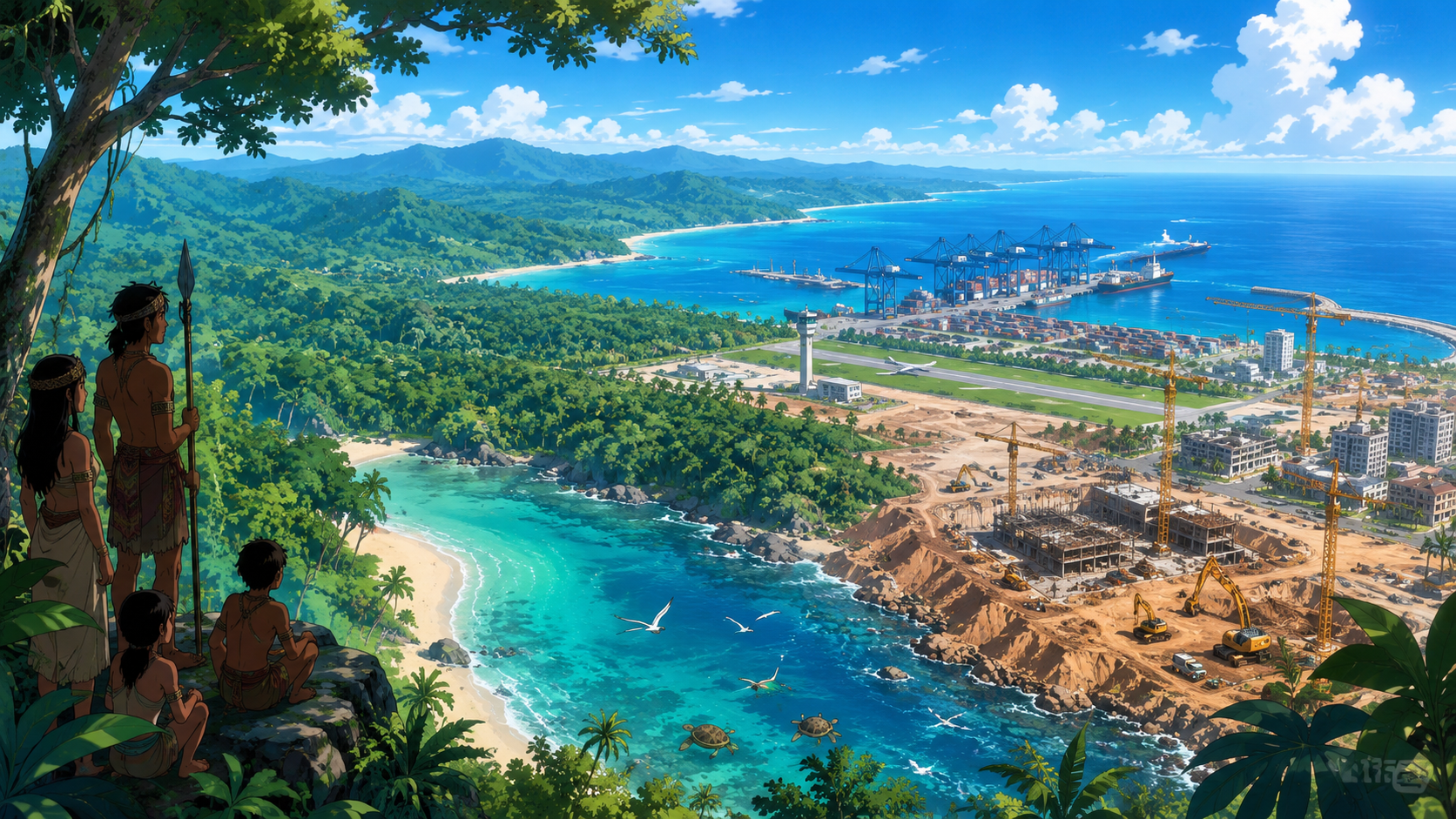
The Great Nicobar Project has emerged as one of the most debated development initiatives in contemporary India. Located in the southernmost part of the Andaman and Nicobar Islands, Great Nicobar Island occupies a strategically important position near the Malacca Strait, one of the busiest maritime trade routes in the world. The Government of India has proposed a large-scale infrastructure project that includes a transshipment port, an international airport, a township, and power generation facilities. Supporters view the project as a transformative step toward economic growth and national security, while critics warn of severe ecological damage and threats to indigenous communities.
From a sociological perspective, the Great Nicobar Project represents more than a developmental initiative. It embodies the broader tensions between modernization and conservation, economic growth and social justice, state power and indigenous rights. The project offers an important case study for understanding how development policies affect local communities, cultural identities, and environmental sustainability.

Understanding Great Nicobar Island
Great Nicobar is the largest island in the Nicobar group and is known for its rich biodiversity and ecological significance. The island contains dense tropical rainforests, mangrove ecosystems, coral reefs, and numerous endemic species. It is also home to indigenous communities such as the Shompen and Nicobarese people.
The island remained relatively isolated for centuries, allowing unique ecological and cultural systems to develop. However, globalization, strategic concerns, and economic ambitions have increasingly drawn attention to this remote region.
Sociologists often study such regions as examples of peripheral societies that experience rapid social transformation when integrated into national and global development frameworks.
Development and Modernization Theory
One of the most relevant sociological perspectives for analyzing the Great Nicobar Project is Modernization Theory. This theory argues that societies progress through industrialization, technological advancement, urbanization, and economic growth.
Supporters of the project often adopt this perspective. They argue that infrastructure development will:
- Create employment opportunities.
- Improve transportation and connectivity.
- Strengthen India’s maritime trade.
- Enhance national security.
- Promote regional economic development.
According to modernization theorists, infrastructure projects can transform isolated regions into economically productive spaces. Roads, ports, airports, and urban centers are viewed as essential components of progress.
However, critics argue that modernization often ignores cultural diversity and local realities. Development may benefit national economies while marginalizing vulnerable populations.
The Sociology of Development
Development sociology examines who benefits from development and who bears its costs.
Large-scale development projects frequently create uneven outcomes. While governments and corporations emphasize economic gains, local communities may experience displacement, cultural disruption, and environmental degradation.
The Great Nicobar Project illustrates this dilemma. Questions arise regarding:
- Distribution of economic benefits.
- Participation of local communities in decision-making.
- Protection of traditional livelihoods.
- Long-term environmental consequences.
Sociologists argue that development should not be measured solely by economic indicators such as GDP or investment figures. Social well-being, cultural preservation, and environmental sustainability are equally important dimensions of development.
Indigenous Communities and Social Change
One of the most significant sociological concerns surrounding the project is its impact on indigenous populations.
The Shompen Community
The Shompen are among the most isolated indigenous groups in India. They traditionally depend on hunting, gathering, and forest resources for survival.
Anthropologists have documented their unique cultural practices, social structures, and relationship with the natural environment. Their way of life reflects centuries of adaptation to the island ecosystem.
Rapid development can introduce several challenges:
- Cultural assimilation.
- Loss of traditional knowledge.
- Increased exposure to external diseases.
- Reduction of forest resources.
- Social marginalization.
From a sociological perspective, indigenous communities often possess limited political power compared to state institutions and corporate actors. As a result, their interests may be overlooked during development planning.
The Nicobarese Community
The Nicobarese have experienced greater interaction with mainstream society than the Shompen. However, they continue to maintain distinct cultural identities, traditions, and community structures.
Large infrastructure projects may alter:
- Traditional land-use patterns.
- Social relationships.
- Economic activities.
- Community cohesion.
Sociologists emphasize that development should respect the principle of cultural autonomy, allowing communities to preserve their identities while participating in broader economic processes.
Environmental Sociology and the Great Nicobar Project
Environmental sociology examines the relationship between society and nature.
The Great Nicobar Project has become a major subject of environmental concern due to the island’s ecological significance.
The proposed development may affect:
- Tropical rainforests.
- Mangrove ecosystems.
- Coral reefs.
- Wildlife habitats.
- Marine biodiversity.
Environmental sociologists argue that environmental problems are not merely scientific issues but also social issues. Decisions regarding resource use often reflect power relations, political priorities, and economic interests.
The debate surrounding Great Nicobar highlights a broader question:
Should economic development take precedence over ecological preservation?
Many sociologists advocate sustainable development, which seeks to balance economic growth with environmental protection.
Conflict Theory and Development
Conflict Theory, associated with sociologist Karl Marx, provides another useful framework.
According to this perspective, society consists of groups competing for resources and power. Development projects often reflect the interests of dominant groups rather than marginalized communities.
In the context of Great Nicobar:
- Government agencies seek strategic and economic advantages.
- Investors anticipate commercial opportunities.
- Indigenous communities seek protection of land and culture.
- Environmental groups advocate conservation.
The project can therefore be viewed as a site of social conflict involving competing visions of development.
Conflict theorists argue that marginalized groups often have limited influence in policy decisions, even when they bear the greatest costs.
National Security and Strategic Interests
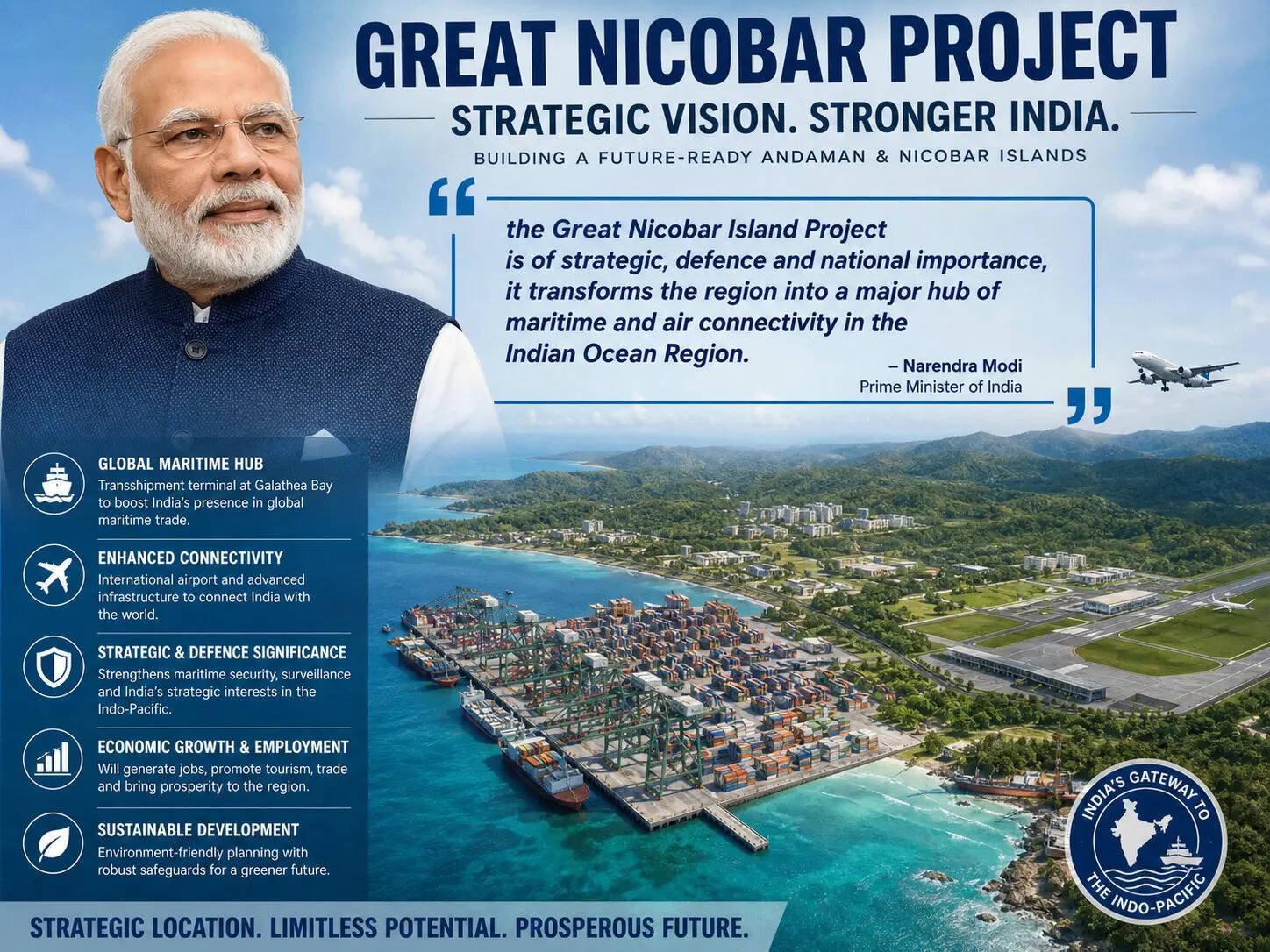
Supporters of the project emphasize its geopolitical importance.
Great Nicobar’s location near the Malacca Strait provides strategic advantages for India. The proposed transshipment port could strengthen maritime trade and security operations.
From a sociological perspective, this reflects the relationship between the nation-state and development.
Governments often justify large projects using narratives of:
- National interest.
- Economic competitiveness.
- Security concerns.
- Global influence.
These narratives can generate public support while reducing attention to local social impacts.
The sociological challenge lies in balancing national objectives with local rights and environmental responsibilities.
Urbanization and Social Transformation
The proposed township component of the project is expected to attract workers, businesses, and government institutions.
Urbanization can produce significant social changes:
Positive Effects
- Increased employment opportunities.
- Better educational facilities.
- Improved healthcare services.
- Enhanced communication networks.
Negative Effects
- Social inequality.
- Rising cost of living.
- Cultural erosion.
- Pressure on local resources.
- Community fragmentation.
Urban sociologists note that rapid urban growth often creates new forms of inequality if development is not inclusive.
Risk Society and Environmental Uncertainty
German sociologist Ulrich Beck introduced the concept of the Risk Society.
According to Beck, modern societies increasingly face risks created by technological and industrial development.
Examples include:
- Climate change.
- Environmental degradation.
- Biodiversity loss.
- Industrial accidents.
The Great Nicobar Project can be analyzed through this framework because it involves uncertainty regarding long-term ecological consequences.
While economic benefits may be immediate and visible, environmental damage could emerge gradually and affect future generations.
Risk Society theory encourages policymakers to consider precaution and sustainability when making development decisions.
Sustainable Development: A Sociological Alternative
Many sociologists advocate sustainable development as a middle path between economic growth and environmental protection.
Sustainable development seeks to:
- Promote economic opportunities.
- Protect ecosystems.
- Respect indigenous rights.
- Ensure intergenerational equity.
For Great Nicobar, sustainable development could involve:
- Greater community participation.
- Independent environmental assessments.
- Protection of tribal territories.
- Conservation-based economic activities.
- Long-term ecological monitoring.
Such approaches aim to create development models that are socially inclusive and environmentally responsible.
Global Comparisons
The Great Nicobar debate resembles similar controversies around the world.
Examples include:
- Indigenous land struggles in the Amazon rainforest.
- Pipeline projects affecting Native American communities in North America.
- Mining projects in Australia impacting Aboriginal populations.
- Hydroelectric dams affecting tribal populations in Southeast Asia.
These cases demonstrate that tensions between development and indigenous rights are global phenomena.
Comparative sociology shows that successful development projects often involve meaningful consultation, transparency, and community participation.
Social Justice and Development
The concept of social justice is central to sociological analysis.
Social justice requires that development benefits be distributed fairly and that vulnerable groups are protected from disproportionate harm.
Key questions include:
- Who gains from the project?
- Who loses access to resources?
- Who participates in decision-making?
- How are environmental costs distributed?
These questions highlight the ethical dimensions of development planning.
Conclusion
The Great Nicobar Project represents one of the most significant development debates in contemporary India. While the project promises economic growth, strategic advantages, and infrastructural modernization, it also raises serious concerns regarding environmental sustainability, indigenous rights, and social justice.
From a sociological perspective, the project is not simply about building ports, airports, and townships. It reflects broader questions about the meaning of development, the role of the state, the rights of indigenous communities, and the relationship between society and nature.
The challenge for policymakers lies in creating a development model that balances national aspirations with ecological preservation and social inclusion. The future of Great Nicobar will likely serve as an important example for understanding how societies negotiate the complex relationship between modernization and sustainability in the twenty-first century.
FAQs on Great Nicobar Project
1. What is the Great Nicobar Project?
The Great Nicobar Project is a large-scale infrastructure initiative that includes a transshipment port, international airport, township, and power facilities on Great Nicobar Island.
2. Why is the Great Nicobar Project important for India?
The Great Nicobar Project is considered strategically important because of the island’s location near major international shipping routes in the Indian Ocean.
3. What are the main objectives of the Great Nicobar Project?
The primary objectives of the Great Nicobar Project are economic development, improved connectivity, maritime trade expansion, and enhanced national security.
4. How does the Great Nicobar Project affect indigenous communities?
The Great Nicobar Project may impact indigenous groups such as the Shompen and Nicobarese communities through changes in land use, culture, and access to natural resources.
5. What environmental concerns are associated with the Great Nicobar Project?
Critics argue that the Great Nicobar Project could lead to deforestation, biodiversity loss, coral reef damage, and disruption of fragile ecosystems.
6. How is the Great Nicobar Project related to sustainable development?
The Great Nicobar Project raises questions about balancing economic growth with environmental conservation and the protection of indigenous rights.
7. What is the sociological significance of the Great Nicobar Project?
The Great Nicobar Project serves as a case study in development sociology, environmental sociology, and indigenous studies.
8. Who are the Shompen people affected by the Great Nicobar Project?
The Shompen are an indigenous tribal community living in Great Nicobar whose traditional lifestyle may be influenced by the project’s implementation.
9. How could the Great Nicobar Project contribute to economic growth?
The Great Nicobar Project could create employment opportunities, increase trade activity, and attract investment to the region.
10. What role does urbanization play in the Great Nicobar Project?
Urbanization is a key component of the Great Nicobar Project through the planned development of a township and supporting infrastructure.
11. How does the Great Nicobar Project reflect modernization theory?
The Great Nicobar Project reflects modernization theory by emphasizing infrastructure development, technological advancement, and economic expansion.
12. Why is biodiversity important in discussions about the Great Nicobar Project?
Biodiversity is important because Great Nicobar Island contains unique flora and fauna that could be affected by large-scale construction and land-use changes.
13. What are the potential social challenges of the Great Nicobar Project?
Potential challenges include cultural disruption, social inequality, displacement concerns, and conflicts between development goals and local interests.
14. How does the Great Nicobar Project relate to national security?
The Great Nicobar Project is viewed as strategically significant for strengthening India’s maritime presence and security in the Indian Ocean region.
15. What lessons can policymakers learn from the Great Nicobar Project?
The Great Nicobar Project highlights the need for inclusive planning, environmental responsibility, community participation, and sustainable development practices.