Introduction
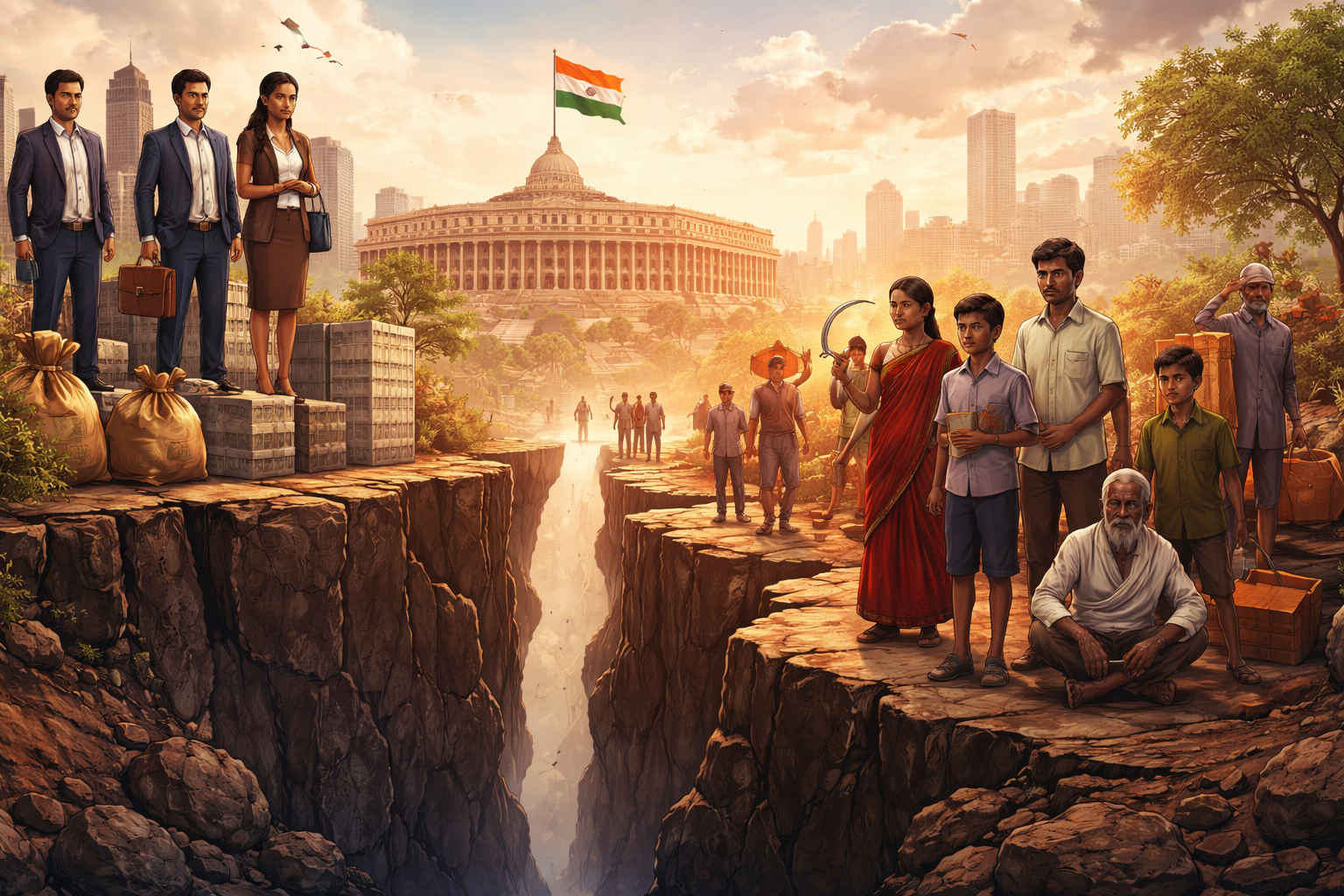
India is often celebrated as the world’s largest democracy, marked by universal adult franchise, periodic elections, constitutional guarantees, and a vibrant public sphere. From a sociological perspective, however, democracy is not merely a political system defined by voting and representation; it is also a social process shaped by historical inequalities, power relations, and structural hierarchies. In India, democratic institutions coexist with deep and persistent forms of social inequality based on caste, class, gender, religion, region, and ethnicity. This coexistence raises critical sociological questions: To what extent has democracy reduced social inequality in India? Has political equality translated into social and economic equality? Or has democracy been constrained and reshaped by entrenched social structures?
This article examines the relationship between democracy and social inequality in India from a sociological standpoint. It explores how democratic ideals interact with social stratification, how marginalized groups engage with democratic processes, and how inequality both challenges and transforms Indian democracy.
Democracy as a Social System
Sociologically, democracy is more than a set of political institutions; it is embedded in social relations. Political sociologists argue that democracy requires not only formal equality before the law but also substantive social conditions such as access to education, economic resources, and social dignity. In societies marked by extreme inequality, democratic participation often becomes uneven and symbolic rather than transformative.
In India, democracy was introduced in a deeply stratified society emerging from colonial rule. Universal adult franchise was granted at independence, even though the majority of the population was poor, illiterate, and socially marginalized. This was a radical experiment in democratic inclusion, but it also meant that democracy had to function within pre-existing social hierarchies rather than replacing them overnight.
Historical Roots of Social Inequality in India
To understand the democratic experience in India, it is essential to examine the historical foundations of inequality. Indian society has long been structured by the caste system, which institutionalized hierarchy, exclusion, and unequal access to resources. Alongside caste, patriarchy shaped gender relations, while colonial policies reinforced class inequalities and regional disparities.
The colonial economy created a small elite class while impoverishing large sections of peasants and workers. Education, administrative power, and economic opportunities were concentrated among upper castes and urban groups. When democracy arrived after independence, it inherited these inequalities, making social justice a central challenge for the new nation-state.
Constitutional Democracy and Social Justice
The Indian Constitution represents a sociological attempt to reconcile democracy with social equality. It not only guarantees political rights such as voting and freedom of expression but also incorporates principles of social justice, equality, and dignity. Fundamental Rights, Directive Principles of State Policy, and affirmative action provisions reflect an understanding that democracy must actively address social inequality.
Reservation policies for Scheduled Castes, Scheduled Tribes, and later Other Backward Classes were designed to correct historical disadvantages and ensure representation in education, employment, and political institutions. From a sociological perspective, these measures recognize that formal equality is insufficient in a society marked by structural inequality.
Caste, Democracy, and Political Mobilization
One of the most significant sociological developments in Indian democracy has been the political mobilization of caste groups. While caste was traditionally a system of social domination, democratic politics transformed it into a basis for collective identity and political assertion. Lower caste and marginalized communities began to use electoral politics as a means to demand recognition, resources, and power.
This process has been interpreted in two contrasting ways. Some sociologists argue that caste-based politics undermines democratic ideals by promoting identity over merit and national unity. Others contend that caste mobilization democratizes power by giving voice to historically excluded groups. Empirical evidence suggests that democracy in India has not eliminated caste but has reshaped it, turning a rigid hierarchy into a contested political field.
Class Inequality and Economic Democracy
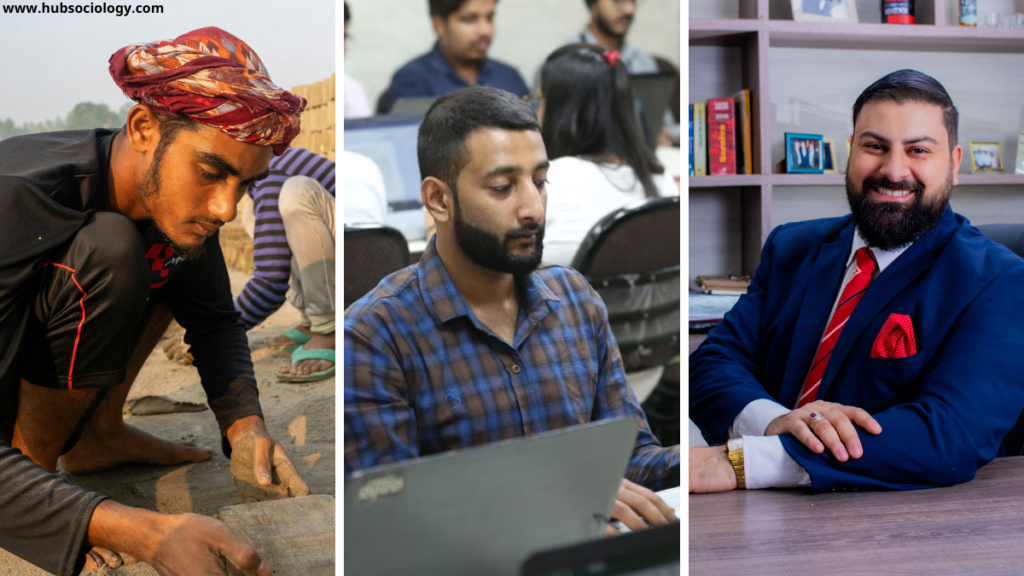
Despite political inclusion, economic inequality in India has widened in recent decades. Liberalization and market-oriented reforms have generated economic growth but also intensified class divisions. Wealth and income are increasingly concentrated among a small elite, while large sections of the population remain in informal, insecure, and low-paid employment.
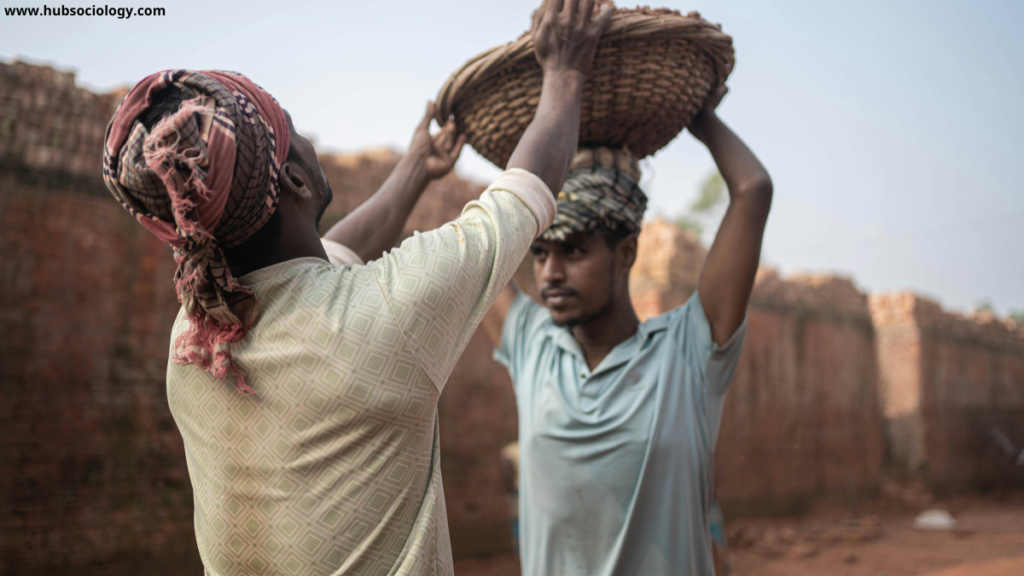
From a sociological perspective, this raises concerns about the quality of democracy. Economic inequality limits democratic participation by restricting access to education, information, and political influence. Poor and working-class citizens may possess the right to vote, but their ability to shape policy is often constrained by economic vulnerability and dependence on elite networks.
Democracy and Rural–Urban Inequality
Indian democracy also reflects sharp spatial inequalities. Urban areas enjoy better infrastructure, education, healthcare, and employment opportunities, while many rural regions struggle with poverty, agrarian distress, and limited public services. These disparities influence political participation and representation.
Rural voters often engage with democracy through local power structures, patron-client relations, and identity-based mobilization. While democratic decentralization through Panchayati Raj institutions has improved local participation, sociologists note that local democracy is frequently shaped by caste dominance, gender exclusion, and economic inequality.
Gender Inequality and Democratic Participation
Gender inequality remains a major challenge for Indian democracy. Although women have equal voting rights and increasing electoral participation, their representation in legislative bodies remains low. Patriarchal norms, unpaid care work, limited access to education, and political violence restrict women’s effective participation in democratic life.

Sociologically, the gap between formal political rights and lived social realities highlights the limitations of democracy in addressing gender inequality. Reservation for women in local governance has improved representation at the grassroots level, but broader structural changes in social attitudes and economic relations are necessary for substantive gender equality.
Religion, Minority Rights, and Democratic Inclusion
India’s democratic framework is constitutionally secular, yet social inequality among religious communities persists. Religious minorities often face discrimination in employment, housing, and political representation. Sociologists emphasize that democracy must protect minority rights to prevent the “tyranny of the majority.”
When democratic politics becomes intertwined with majoritarian nationalism, social inequality can deepen. The marginalization of minority voices weakens democratic pluralism and undermines social cohesion. A sociological approach stresses that democracy is sustainable only when diversity is accommodated and protected within the political system.
Education, Awareness, and Democratic Capacity
Education plays a crucial role in linking democracy and social equality. Higher levels of education enhance political awareness, critical thinking, and participation. However, unequal access to quality education reproduces social inequality across generations.
In India, disparities in schooling between public and private institutions, rural and urban areas, and social groups limit the democratizing potential of education. Sociologists argue that without educational equality, democracy risks becoming procedural rather than participatory.
Media, Civil Society, and Inequality
Media and civil society institutions are central to democratic functioning, but they are also shaped by social inequality. Access to mainstream media platforms is often dominated by elite groups, while marginalized voices struggle for visibility. Digital media has expanded participation but has also created new inequalities based on language, literacy, and technology access.
Civil society organizations have played a vital role in advocating for social justice, transparency, and accountability. From a sociological perspective, these organizations act as intermediaries between the state and society, helping marginalized groups articulate their demands within democratic frameworks.
Democracy as an Ongoing Social Process
Indian democracy should be understood not as a finished project but as an ongoing social process. It reflects continuous negotiation between equality and hierarchy, inclusion and exclusion, rights and power. Democracy has provided a platform for marginalized groups to assert themselves, yet it has not fully dismantled structural inequalities.
Sociologists emphasize that democracy’s transformative potential depends on sustained social movements, institutional reforms, and changes in everyday social relations. Political equality can open doors, but social and economic equality require deeper structural interventions.
Conclusion
The relationship between democracy and social inequality in India is complex and dynamic. Democracy has expanded political participation and provided mechanisms for representation and redress, particularly for historically marginalized groups. At the same time, deep-rooted inequalities of caste, class, gender, and religion continue to shape who benefits most from democratic processes.
From a sociological perspective, Indian democracy represents both achievement and challenge. It demonstrates that political equality can exist even in highly unequal societies, but it also shows that democracy alone cannot eliminate social inequality. The future of democracy in India depends on its ability to move beyond formal rights toward substantive social justice, where equality is not only promised in law but experienced in everyday life.
FAQs on Social Inequality in India
1. What is meant by Social Inequality in India?
Social Inequality in India refers to unequal access to resources, opportunities, rights, and social status among different groups based on caste, class, gender, religion, region, and education.
2. How is Social Inequality in India linked to democracy?
Democracy in India provides political equality through voting rights, but Social Inequality in India limits equal participation by creating economic, educational, and social barriers for marginalized groups.
3. What are the main causes of Social Inequality in India?
The major causes of Social Inequality in India include the caste system, patriarchy, economic class divisions, unequal education, regional disparities, and historical colonial impacts.
4. Does caste still contribute to Social Inequality in India?
Yes, caste remains a major factor in Social Inequality in India, influencing occupation, marriage, social status, political power, and access to education and resources.
5. How does economic inequality intensify Social Inequality in India?
Economic inequality widens Social Inequality in India by limiting access to quality education, healthcare, housing, and political influence for poorer sections of society.
6. What role does the Constitution play in reducing Social Inequality in India?
The Indian Constitution aims to reduce Social Inequality in India through Fundamental Rights, affirmative action, reservation policies, and principles of social justice and equality.
7. Has democracy reduced Social Inequality in India?
Democracy has reduced political exclusion but has not fully eliminated Social Inequality in India, as deep-rooted social and economic hierarchies continue to persist.
8. How does gender inequality reflect Social Inequality in India?
Gender-based discrimination in education, employment, health, and political representation is a major dimension of Social Inequality in India.
9. What is the role of education in addressing Social Inequality in India?
Education can reduce Social Inequality in India by promoting awareness and mobility, but unequal access to quality education often reproduces existing inequalities.
10. How does rural–urban divide contribute to Social Inequality in India?
The rural–urban divide deepens Social Inequality in India through unequal access to infrastructure, employment opportunities, healthcare, and political influence.
11. Are religious minorities affected by Social Inequality in India?
Yes, religious minorities often face discrimination and exclusion, making religious identity an important dimension of Social Inequality in India.
12. How does reservation policy address Social Inequality in India?
Reservation policies aim to correct historical injustices and reduce Social Inequality in India by ensuring representation in education, jobs, and political institutions.
13. What is the sociological view of Social Inequality in India?
Sociologists view Social Inequality in India as a structural problem rooted in social institutions, power relations, and historical patterns of domination.
14. Can social movements reduce Social Inequality in India?
Yes, social movements play a crucial role in challenging Social Inequality in India by mobilizing marginalized groups and demanding policy reforms and social change.
15. Why is Social Inequality in India a challenge to democratic values?
Social Inequality in India undermines democratic ideals by creating unequal participation, limiting freedom, and weakening the principle of social justice and equal opportunity.