Introduction
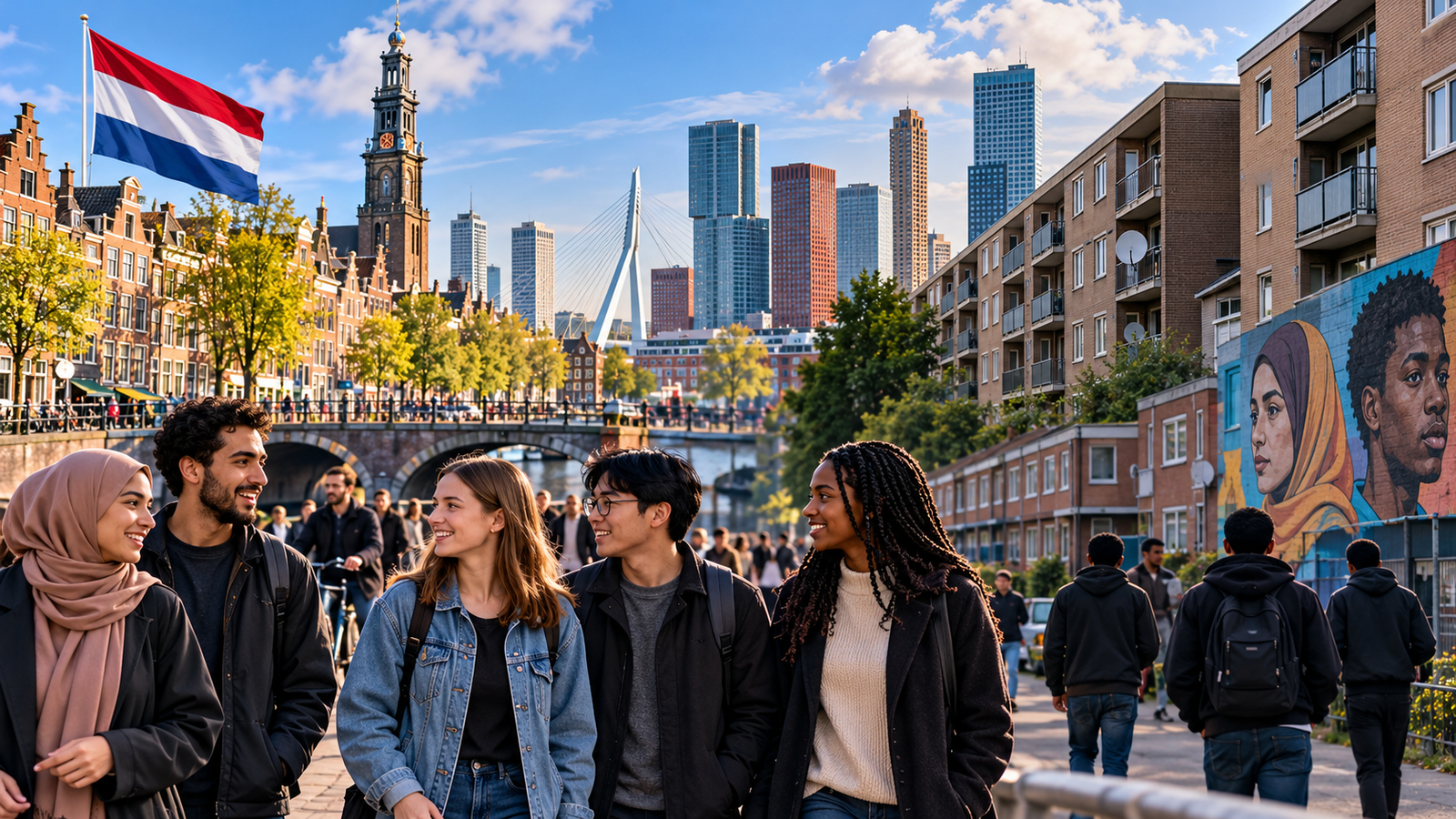
Immigration and urban segregation are important sociological issues in contemporary Dutch Society. The Netherlands is widely known for its democratic institutions, developed welfare system, urban infrastructure, and multicultural population. Over several decades, immigration has transformed the country’s demographic structure, cultural life, labor market, educational institutions, and urban neighborhoods. Cities such as Amsterdam, Rotterdam, The Hague, and Utrecht have become important centers of cultural diversity, economic activity, and international migration.
However, immigration has also raised questions about social integration, residential inequality, discrimination, and the unequal distribution of opportunities. In Dutch Society, people from different ethnic, religious, and national backgrounds live together, but they do not always experience equal access to housing, employment, education, and social mobility. Some neighborhoods have become culturally diverse while remaining economically disadvantaged, creating concerns about urban segregation and social exclusion.

From a sociological perspective, immigration and urban segregation cannot be understood simply as questions of where people live or where they come from. They are connected to broader social structures, government policies, housing markets, labor relations, and historical patterns of inequality. Understanding these processes is essential for examining how Dutch Society balances cultural diversity with social cohesion.
Historical Development of Immigration in Dutch Society
The history of immigration in Dutch Society reflects the Netherlands’ colonial past, international economic relationships, and changing labor requirements. Migration has occurred in different periods and for different reasons, including colonial connections, labor recruitment, family reunification, education, and humanitarian protection.
After the Second World War, migration from former Dutch colonial territories became particularly significant. People arrived from Indonesia, Suriname, and the Dutch Caribbean, contributing to the development of a more diverse population. These migration patterns were shaped by historical relationships, political changes, and the reorganization of colonial territories.
During the 1960s and early 1970s, the Netherlands recruited foreign workers to support industrial expansion and economic growth. Many workers arrived from countries including Turkey and Morocco. Initially, migration was frequently understood as temporary labor mobility. However, many migrants settled permanently, brought family members, and established communities.
These developments changed Dutch Society in lasting ways. Migrant communities contributed to manufacturing, transportation, construction, services, and other economic sectors. Their presence also influenced cultural practices, religious institutions, food, language, and everyday social interactions.
Later, asylum migration and international mobility further diversified the population. Political conflicts, economic opportunities, family connections, and European mobility all influenced migration patterns. Consequently, Dutch Society developed into a multicultural social environment in which different migration histories intersect.
This historical background is important because contemporary urban segregation is not simply the result of recent immigration. It also reflects decades of settlement, changing housing policies, economic restructuring, and unequal access to social resources.
Understanding Urban Segregation in Dutch Society

Urban segregation refers to the uneven spatial distribution of social groups across urban areas. It can occur according to income, occupation, ethnicity, migration background, religion, or other social characteristics. In Dutch Society, urban segregation is particularly relevant when examining the relationship between migrant communities, housing affordability, and neighborhood inequality.
Residential segregation occurs when particular groups become concentrated in specific neighborhoods. Such concentration may result from personal preferences, family networks, cultural familiarity, housing prices, discrimination, or limited access to alternative residential areas.
It is important to distinguish voluntary community formation from structural exclusion. People may choose to live near relatives, cultural organizations, religious institutions, or familiar businesses. These networks can provide emotional support, employment information, childcare, and a sense of belonging. Therefore, ethnic concentration does not automatically indicate social isolation.
However, segregation becomes more problematic when residents have limited opportunities to move elsewhere or when neighborhoods lack adequate public services, employment connections, educational resources, and affordable housing. Under these conditions, residential concentration can reinforce existing social disadvantages.
In Dutch Society, segregation should therefore be understood as a multidimensional process. Ethnic diversity, economic inequality, and neighborhood disadvantage can overlap, but they are not identical. A culturally diverse neighborhood may have strong social networks and good public services, while a less diverse neighborhood may still experience economic hardship.
Sociologists examine these differences to determine whether urban patterns reflect individual choices, institutional arrangements, or unequal opportunities within Dutch Society.
Immigration and the Changing Urban Landscape
Immigration has played a major role in shaping the social and cultural landscape of Dutch cities. Amsterdam, Rotterdam, The Hague, and Utrecht contain residents with diverse national origins, languages, religions, and cultural traditions. These cities illustrate how migration influences urban identities and social relationships.
In Amsterdam, international migration has contributed to cultural diversity, entrepreneurship, restaurants, community organizations, and artistic life. Rotterdam, historically connected to international trade and port employment, has also developed a highly diverse population. The Hague combines international institutions with communities shaped by migration, while Utrecht reflects the relationship between urban growth, education, and population mobility.
These transformations have produced new opportunities for cultural exchange and social innovation. Migrant entrepreneurs establish businesses, workers contribute to essential services, and younger generations participate in education, politics, sports, and cultural activities.
Nevertheless, urban development has not benefited every group equally. Rising housing costs, neighborhood redevelopment, and competition for affordable accommodation can disproportionately affect households with lower incomes. In some areas, long-term residents face pressure to relocate as property values and rents increase.
The experience of Dutch Society demonstrates that urban diversity and urban inequality can exist simultaneously. A city may become more multicultural while remaining socially divided according to income, education, and residential location.
Consequently, immigration should not be treated as the sole cause of urban segregation. Housing market conditions, income disparities, public investment, and institutional decisions are also important factors in determining where people live and what opportunities they can access.
Housing Inequality and Residential Segregation in Dutch Society
Housing is one of the most important factors influencing urban segregation in Dutch Society. Access to affordable, suitable housing determines where families can live, which schools children attend, and how easily residents reach employment opportunities. When housing options are restricted by income or discrimination, residential patterns can become socially unequal.
According to Statistics Netherlands (CBS), people with a non-Dutch origin are more likely than the population average to live in rented accommodation, multifamily housing, and relatively small homes. The differences are generally smaller among some second-generation groups than among migrants born abroad, although experiences vary considerably by background and age. Source: CBS, Report on Integration and Society 2024.
These patterns reveal that residential inequality in Dutch Society is connected to economic resources and the structure of the housing market. Households with lower incomes may have fewer opportunities to purchase property or rent homes in expensive neighborhoods. New arrivals can face additional difficulties because they may lack established employment, savings, local networks, or knowledge of the housing system.
Discrimination can create another barrier. Research on housing access has raised concerns about unequal treatment of prospective tenants with different names or migration backgrounds. Such practices can restrict residential choice even when applicants have similar financial circumstances.
The Netherlands’ social housing system can help protect households from some market pressures, but demand, waiting lists, and differences between local housing markets complicate access. As a result, the relationship between immigration and urban segregation cannot be explained without examining housing policy, income inequality, and discriminatory practices.
A sociological analysis of Dutch Society therefore emphasizes the importance of affordable housing, transparent allocation procedures, and equal treatment in rental and property markets.
Ethnic Diversity, Social Networks, and Community Formation
Social networks are essential for understanding immigration and integration in Dutch Society. Migrants often rely on relatives, friends, religious organizations, and community associations when settling in a new country. These relationships provide practical assistance, emotional security, childcare, information about employment, and opportunities to preserve cultural traditions.
Ethnic neighborhoods can consequently function as important sources of social capital. Local shops, restaurants, cultural centers, and religious institutions help residents maintain connections with their heritage while participating in urban life. Such communities can also support entrepreneurship and provide services that respond to the needs of local residents.
However, social networks can become limiting when opportunities are concentrated within a narrow circle. If residents have few connections to other social groups, they may have reduced access to information about jobs, education, or professional advancement. This is particularly important when community networks reflect existing economic disadvantages.
Research published by CBS examines segregation through connections involving household members, relatives, neighbors, colleagues, and classmates. Its approach highlights that social separation extends beyond residential geography into everyday relationships. Source: CBS origin-segregation dashboard.
In Dutch Society, the strength of these networks depends on individual circumstances, institutional opportunities, and the availability of meaningful contact between groups. Cultural similarity does not necessarily prevent integration, just as living in a diverse neighborhood does not guarantee close social relationships.
Successful integration requires opportunities for interaction in workplaces, schools, sports clubs, neighborhood organizations, and public institutions. These settings can create relationships that cross ethnic and socioeconomic boundaries.
Education, Employment, and Intergenerational Inequality
Education and employment strongly influence the social position of immigrant communities in Dutch Society. Schools help children develop language skills, academic knowledge, and relationships with peers from different backgrounds. Employment provides income, independence, social recognition, and opportunities for participation in wider society.
Nevertheless, differences in family resources and neighborhood conditions can influence educational outcomes. Children growing up in households experiencing financial pressure may have fewer opportunities for private tutoring, quiet study spaces, or extracurricular activities. Language barriers can also create challenges for some newly arrived students.

These factors should not be interpreted as evidence of lower ability among particular ethnic groups. Educational achievement reflects a combination of individual effort, family circumstances, school resources, language support, and institutional practices.
The labor market presents similar complexities. Migrants may face difficulties obtaining qualifications recognized by employers, building professional networks, or securing employment that matches their skills. Discrimination in recruitment and promotion can further restrict opportunities.
For Dutch Society, these inequalities matter because employment and education are closely connected to residential mobility. Stable employment makes it easier to afford housing in a wider range of neighborhoods, while insecure work can reinforce dependence on cheaper accommodation.
Second-generation residents may benefit from education in the Netherlands, familiarity with local institutions, and broader social networks. However, being born and educated in the country does not automatically eliminate discrimination or differences in economic opportunity.
Reducing inequality therefore requires accessible language education, fair recruitment, effective vocational training, inclusive schools, and support for qualifications obtained abroad. These measures can improve social mobility and strengthen participation throughout Dutch Society.
Cultural Identity, Multiculturalism, and Social Integration
Multiculturalism is a central feature of modern Dutch Society. Immigration has contributed to a variety of languages, religious traditions, cuisines, artistic expressions, and family practices. These cultural influences have become part of everyday life in many Dutch cities.
Integration, however, is often debated in relation to language acquisition, employment, national identity, religious expression, and civic participation. Some perspectives emphasize the importance of a shared language and common civic institutions, while others stress the need to recognize cultural diversity and challenge discrimination.
From a sociological standpoint, integration should not mean that immigrants must abandon their cultural identities. Rather, it involves the ability to participate fully in social, economic, political, and cultural life while enjoying equal rights.
Dutch Society contains people whose experiences of belonging differ according to generation, education, religion, socioeconomic position, and personal history. Some individuals maintain strong transnational connections, while others develop identities that combine Dutch belonging with family heritage.
These identities are not necessarily contradictory. A person may identify with Dutch society while also maintaining Turkish, Moroccan, Surinamese, Indonesian, or another cultural background.
Urban segregation becomes more concerning when cultural differences are interpreted through stereotypes or when groups have limited opportunities to interact. Political rhetoric that treats migrants as a single homogeneous population can overlook differences in migration history, social class, and individual experience.
A balanced understanding of Dutch Society recognizes both the benefits of cultural diversity and the need to address exclusion. Social cohesion depends on mutual respect, equal citizenship, and institutions that enable people from different backgrounds to participate in common public life.
Sociological Theories Explaining Urban Segregation
Several sociological theories help explain immigration and urban segregation in Dutch Society.
Social Stratification Theory
Social stratification theory examines how society distributes resources, status, and opportunities unequally. From this perspective, residential segregation develops partly because households occupy different positions in the income and employment hierarchy.
People with greater economic resources can often choose from a wider range of housing options, while lower-income households face stronger constraints. Where migration background overlaps with labor-market disadvantage, inequalities can become visible in residential patterns.
Social Capital Theory
Social capital theory emphasizes the resources people gain through social relationships. Strong community networks can support newcomers, provide practical assistance, and facilitate employment.
However, social capital is not distributed equally across networks. Connections within a community may provide essential support without necessarily offering access to influential employers or institutions. Dutch Society can reduce this gap by creating opportunities for interaction across social groups.
Conflict Theory
Conflict theory focuses on competition over scarce resources, including housing, employment, education, and political influence. From this perspective, tensions surrounding immigration may reflect concerns about unequal resource distribution rather than cultural differences alone.
When affordable housing is limited, public debates can frame migrants as competitors for resources. A sociological approach examines the broader causes of scarcity, including housing supply, public investment, labor-market conditions, and policy decisions.
Urban Sociology
Urban sociology studies how cities organize social life through neighborhoods, institutions, infrastructure, and economic activities. It explains how residential location affects access to public transport, schools, healthcare, employment, and community services.
In Dutch Society, this perspective highlights the importance of inclusive urban planning. Housing developments, public spaces, transport connections, and neighborhood investment can influence whether different groups share urban opportunities.
Together, these theories demonstrate that urban segregation is not merely a geographical phenomenon. It is connected to power, social relationships, economic inequality, and institutional arrangements.
Government Policies and Possible Solutions
Addressing urban segregation in Dutch Society requires coordinated action across housing, education, employment, and urban development. Policies that focus only on changing the ethnic composition of neighborhoods may overlook the structural inequalities that produce segregation.
First, expanding access to affordable housing is essential. Increasing suitable housing supply, improving social housing access, and enforcing protections against discrimination can help residents exercise greater choice over where they live.
Second, schools and educational institutions should receive resources to support students with different language needs and socioeconomic circumstances. Inclusive education can encourage meaningful interaction while ensuring that all students receive high-quality learning opportunities.
Third, employment policies should address discriminatory recruitment, improve recognition of foreign qualifications, and expand access to professional networks. Fair employment opportunities can strengthen household incomes and reduce barriers to residential mobility.
Fourth, local governments can encourage social participation through accessible public spaces, community projects, sports programs, and neighborhood activities. These initiatives can create opportunities for residents to build relationships across cultural and economic boundaries.
Finally, policymakers should evaluate integration outcomes using reliable evidence rather than assumptions about ethnic groups. Statistics on housing, income, education, and social networks can help identify inequalities and assess whether interventions are effective.
The challenge for Dutch Society is to combine respect for cultural diversity with equal access to resources and institutions. Long-term progress depends on cooperation among national government, municipalities, schools, employers, housing organizations, and local communities.
Conclusion
Immigration and urban segregation reveal important aspects of social change in Dutch Society. Migration has transformed the demographic and cultural character of Dutch cities, creating opportunities for entrepreneurship, cultural exchange, and international connections. At the same time, unequal access to housing, employment, education, and social networks can produce persistent patterns of exclusion.
A sociological perspective demonstrates that segregation cannot be attributed to immigration alone. Housing-market pressures, economic inequality, discrimination, historical settlement patterns, and institutional arrangements all influence where people live and how they participate in society.
The experiences of Amsterdam, Rotterdam, The Hague, and Utrecht show that cultural diversity and social inequality can coexist. The central task is therefore not simply to eliminate neighborhood differences, but to ensure that residential location and migration background do not determine access to opportunities.
A more inclusive Dutch Society requires affordable housing, equal treatment, effective education, fair employment, and opportunities for meaningful social interaction. By addressing structural inequalities while recognizing the value of cultural diversity, the Netherlands can strengthen social cohesion and create more equitable urban communities.
Ultimately, the relationship between immigration and urban segregation offers a valuable case study for sociology. It demonstrates how migration reshapes modern societies and why inclusive institutions are essential for ensuring that diversity becomes a foundation for shared social progress.
References
- Statistics Netherlands (CBS). (2024). Report on Integration and Society 2024. https://www.cbs.nl/en-gb/publication/2024/47/report-on-integration-and-society-2024
- Statistics Netherlands (CBS). Integration and Society: Housing. https://longreads.cbs.nl/integratie-en-samenleven-2024/wonen/
- Statistics Netherlands (CBS). Origin Segregation Dashboard. https://dashboards.cbs.nl/v6/herkomst_segregatie/
- Statistics Netherlands (CBS). Asylum and Integration 2026. https://longreads.cbs.nl/asielenintegratie-2026/