Introduction on Social Change in Oklahoma
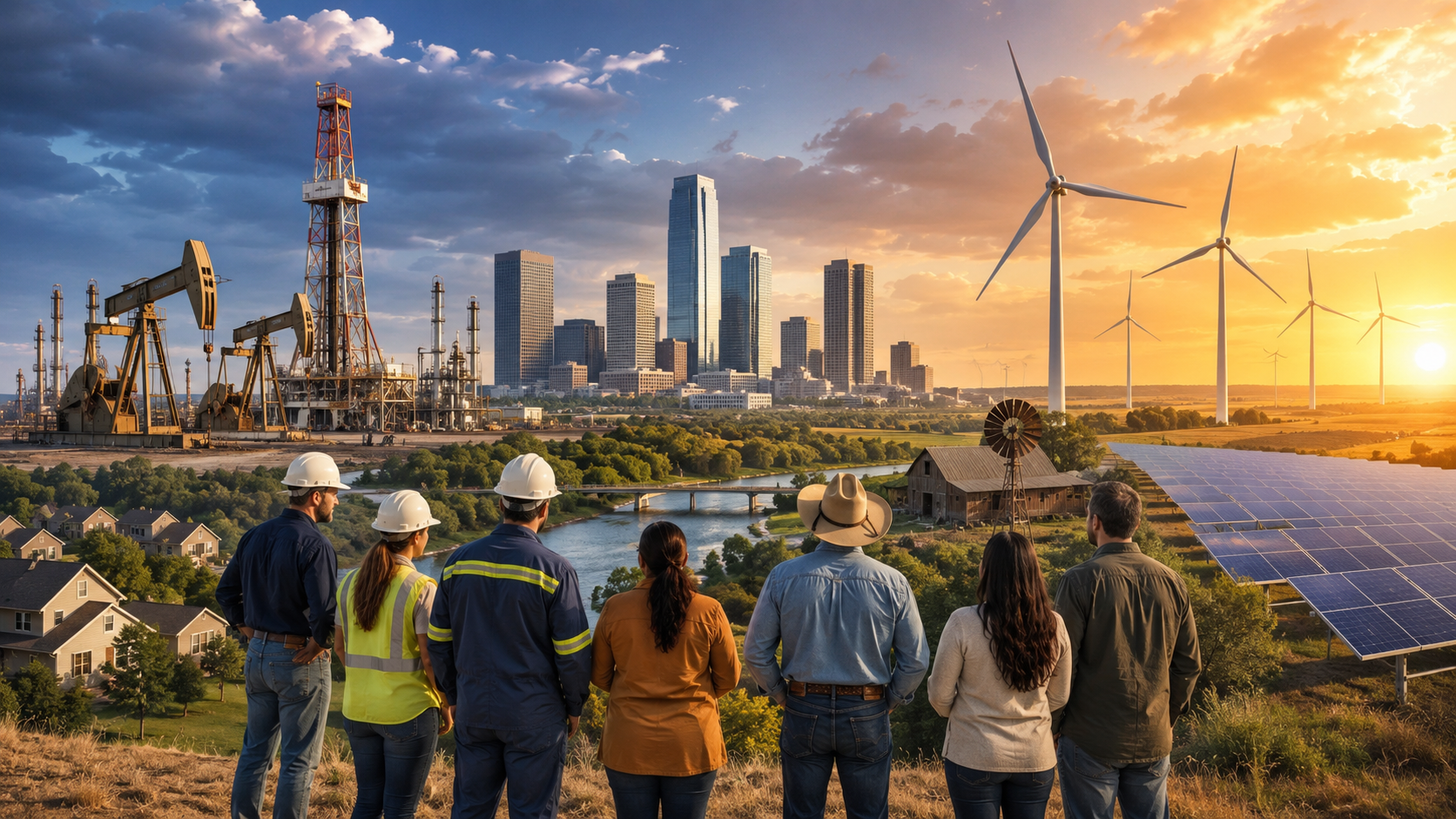
Oklahoma occupies a unique position in the economic and social landscape of the United States because of its deep historical connection with energy production. Oil, natural gas, wind power, and, increasingly, renewable energy have shaped the state’s identity, economy, settlement patterns, political culture, and social institutions for more than a century. Unlike many regions where industrialization emerged from manufacturing, Oklahoma’s modernization has been closely tied to the extraction and distribution of energy resources. The state’s cities, rural communities, educational institutions, labor markets, and public policies have all evolved alongside fluctuations in global energy markets.
From a sociological perspective, the energy economy is not merely an economic sector but a powerful social institution that influences social stratification, migration, employment, family structures, community development, environmental justice, political decision-making, and cultural identity. The boom-and-bust cycles associated with oil and gas production have repeatedly transformed Oklahoma’s social fabric, creating periods of prosperity followed by unemployment, population decline, and economic uncertainty.
In recent years, Oklahoma has entered a new phase characterized by energy diversification. While oil and natural gas remain central pillars of the state’s economy, wind energy, solar investments, hydrogen technology, carbon capture initiatives, and sustainable energy policies are gradually reshaping both economic opportunities and social relations. These developments present significant sociological questions regarding inequality, labor transformation, environmental sustainability, Indigenous rights, rural development, and community resilience.
This article explores the relationship between Oklahoma’s energy economy and social change through various sociological perspectives, highlighting how energy production influences everyday life, social institutions, economic development, and future societal transformation.
Table of Contents
Historical Development of Oklahoma’s Energy Economy
The discovery of oil in the late nineteenth century fundamentally transformed Oklahoma from an agricultural territory into one of America’s major energy-producing states. During the early twentieth century, numerous oil fields attracted investors, entrepreneurs, engineers, and workers from across the country.
Oil towns expanded rapidly, creating new employment opportunities and stimulating the growth of infrastructure, transportation networks, schools, hospitals, and financial institutions. Cities such as Tulsa earned the nickname “Oil Capital of the World,” reflecting the enormous influence of petroleum industries on regional development.
Sociologically, this transformation illustrates modernization theory, where industrial growth stimulates urbanization, occupational specialization, technological innovation, and institutional development. However, modernization also generated new forms of social inequality, class divisions, and environmental challenges.
The energy economy soon became embedded within Oklahoma’s collective identity, shaping educational priorities, political institutions, and local cultures for generations.
Energy Production and Economic Development
Energy remains one of Oklahoma’s largest economic sectors. Oil drilling, natural gas extraction, petroleum refining, pipeline transportation, electricity generation, and renewable energy collectively contribute billions of dollars annually to the state’s economy.
Energy industries create both direct and indirect employment opportunities. Engineers, geologists, construction workers, equipment manufacturers, environmental scientists, transportation companies, software developers, accountants, educators, and healthcare professionals all benefit from the broader economic ecosystem created by the energy sector.
High-paying energy jobs have historically increased household incomes, supported local businesses, and expanded tax revenues for schools, infrastructure, and public services.
However, economic dependence on energy also creates structural vulnerability. Global fluctuations in oil prices frequently influence state revenues, employment levels, investment patterns, and public spending. During downturns, layoffs and reduced drilling activity affect not only energy workers but also restaurants, retail stores, real estate markets, and local governments.
This illustrates the sociological concept of economic interdependence, where one dominant industry influences multiple social institutions throughout society.
Boom-and-Bust Cycles and Social Change
Perhaps the most distinctive feature of Oklahoma’s energy economy is its recurring boom-and-bust cycle.
During periods of high energy prices, employment expands rapidly. Workers migrate into energy-producing regions, housing demand increases, wages rise, and local economies flourish. Communities often experience population growth, increased consumer spending, and infrastructure expansion.
:max_bytes(150000):strip_icc()/Boom-and-bust-cycle_final-f1fd6edb328149e3bcb983651ea42253.png)
Conversely, declining oil prices result in layoffs, business closures, reduced public revenues, and population outmigration.
These cycles significantly affect family stability, educational continuity, housing markets, mental health, and community cohesion.
Sociologists describe such instability as economic uncertainty, where fluctuations in employment influence social relationships and community resilience.
Families often postpone higher education, home purchases, or business investments due to unpredictable employment conditions. Children may experience educational disruption when parents relocate in search of work.
Repeated economic cycles also shape cultural attitudes toward risk, entrepreneurship, and financial planning within Oklahoma communities.
Urbanization and Regional Development on Social Change in Oklahoma
Energy production has significantly influenced Oklahoma’s urban geography.
Cities such as Oklahoma City and Tulsa developed into regional economic centers because of investments generated by oil and natural gas industries. Corporate headquarters, financial institutions, universities, research centers, and healthcare facilities expanded alongside energy-related economic growth.
Urban sociology suggests that industrial concentration encourages population density, occupational diversity, innovation, and social mobility.
Meanwhile, many rural communities remain heavily dependent on energy production for employment and local government revenues.
Energy infrastructure—including pipelines, refineries, storage facilities, wind farms, and transmission lines—continues to reshape rural landscapes.
Although these projects generate economic opportunities, they also create debates regarding land ownership, environmental protection, taxation, and community participation.
Labor Markets and Occupational Transformation

Oklahoma’s labor market has evolved considerably alongside technological innovation.
Traditional energy employment centered on manual drilling, equipment operation, transportation, and refinery work.
Today, automation, artificial intelligence, digital monitoring systems, robotics, geographic information systems, and data analytics have transformed workforce requirements.
Energy companies increasingly seek employees with expertise in engineering, cybersecurity, environmental science, computer programming, renewable energy systems, and advanced manufacturing.
This occupational transformation reflects post-industrial sociology, where knowledge-based skills become increasingly valuable.
Educational institutions across Oklahoma now emphasize STEM education, vocational training, technical certification, and university research partnerships to prepare future workers.
However, technological change also creates displacement for workers whose traditional skills become less relevant.
Renewable Energy and Social Transformation
Although Oklahoma remains closely associated with fossil fuels, renewable energy has become an increasingly important component of the state’s economy.
Oklahoma ranks among America’s leading producers of wind-generated electricity due to favorable geographic conditions.
Wind farms have generated employment, attracted investment, diversified local tax bases, and provided additional income for landowners leasing property to renewable energy companies.
Solar projects, battery storage, hydrogen technology, and carbon capture initiatives are also gradually expanding.
From a sociological perspective, renewable energy represents more than technological change. It signifies changing social values regarding sustainability, environmental responsibility, and intergenerational equity.
Communities increasingly debate balancing economic development with environmental protection.
Renewable energy also encourages new educational programs, research initiatives, and entrepreneurial opportunities throughout the state.
Indigenous Communities and Energy Development
Oklahoma has one of the largest Native American populations in the United States, making Indigenous perspectives central to discussions about energy development.
Many energy projects occur on or near tribal lands, requiring cooperation between state governments, tribal governments, federal agencies, and private corporations.
Energy development offers opportunities for employment, infrastructure investment, and economic diversification within tribal communities.
At the same time, concerns arise regarding environmental protection, cultural preservation, water resources, sacred sites, and long-term sustainability.
Sociologists emphasize that inclusive decision-making strengthens democratic governance and social trust by ensuring affected communities participate in planning processes.
Many tribes have also invested in renewable energy projects, illustrating how traditional values and modern technology can coexist.
Environmental Sociology and Sustainability on Social Change in Oklahoma
Energy production inevitably raises environmental questions.
Oil spills, methane emissions, groundwater contamination, seismic activity associated with wastewater injection, habitat disruption, and air pollution have generated public concern in Oklahoma.
Environmental sociology examines how industrial development influences relationships between society and nature.
Different social groups often experience environmental impacts unevenly.
Lower-income communities may possess fewer resources to respond to environmental hazards, while wealthier communities often have greater political influence over development decisions.
The concept of environmental justice argues that environmental risks and economic benefits should be distributed fairly across society.
Increasing attention to sustainability encourages stronger environmental regulation, cleaner technologies, corporate accountability, and public participation in environmental decision-making.
Social Inequality and Economic Opportunity
The energy economy has created both prosperity and inequality.
Highly skilled professionals often receive substantial salaries, while contract workers, temporary employees, and service-sector workers experience less economic security.
Income inequality may increase during energy booms because wealth concentrates among landowners, investors, executives, and specialized professionals.
Rural communities without significant energy resources may experience slower development than energy-rich regions.
Educational inequality also influences access to high-paying technical careers.
Functionalist sociologists argue that specialized education helps allocate skilled workers efficiently.
Conflict theorists, however, contend that unequal access to education and economic resources reinforces existing class inequalities.
Public investment in education, workforce development, and affordable training programs can reduce these disparities.
Gender and Workforce Participation on Social Change in Oklahoma
Historically, Oklahoma’s energy industry has been male-dominated, particularly in drilling, pipeline construction, and heavy equipment operation.
However, increasing technological sophistication has expanded opportunities for women in engineering, environmental science, finance, project management, information technology, geology, legal services, and executive leadership.
Universities, industry organizations, and government agencies increasingly promote diversity and inclusion within energy careers.
Greater gender participation contributes to broader economic growth, innovation, and workplace equality.
Sociologists view these developments as part of larger transformations in gender roles accompanying modernization and educational expansion.
Migration and Demographic Change on Social Change in Oklahoma
Energy industries significantly influence migration patterns.
Economic booms attract domestic and international workers seeking employment.
Population growth stimulates housing construction, educational expansion, healthcare demand, retail development, and cultural diversity.
Economic downturns often produce outmigration, particularly among younger workers searching for stable employment elsewhere.
These migration patterns affect age structures, community identity, family networks, and local political priorities.
Urban areas generally attract more educated professionals, while some rural communities experience population aging due to youth migration.
Managing these demographic transitions remains an important challenge for policymakers.
Education and Human Capital on Social Change in Oklahoma
Universities and technical colleges play increasingly important roles in supporting Oklahoma’s evolving energy economy.
Programs in petroleum engineering, renewable energy technology, environmental science, geology, computer science, business administration, and public policy prepare students for emerging careers.
Industry partnerships encourage internships, research collaborations, and workforce training.
Human capital theory suggests that investment in education enhances productivity, innovation, and long-term economic competitiveness.
As renewable technologies expand, lifelong learning and professional retraining become increasingly important for adapting to changing labor market demands.
Political Economy of Energy
Energy has long influenced Oklahoma’s political landscape.
Government policies regarding taxation, environmental regulation, land use, infrastructure investment, and economic incentives significantly affect industry development.
Energy companies often collaborate with policymakers, universities, business organizations, and local governments to encourage investment and innovation.
Political sociology examines how economic interests influence public policy while balancing environmental protection, economic growth, and public welfare.
Citizens increasingly participate in debates concerning renewable energy incentives, pipeline construction, carbon reduction strategies, and sustainable development.
These democratic discussions illustrate the growing importance of civic engagement within modern energy governance.
Community Resilience and Future Development on Social Change in Oklahoma
Oklahoma’s future depends on its ability to balance economic growth with environmental sustainability and social inclusion.
Diversification beyond fossil fuels reduces vulnerability to global commodity price fluctuations.
Investment in renewable energy, advanced manufacturing, biotechnology, digital industries, and higher education strengthens long-term resilience.
Community resilience involves the capacity of individuals, institutions, businesses, and governments to adapt successfully to economic and environmental change.
Strong local leadership, social trust, educational investment, technological innovation, and collaborative governance enhance resilience during periods of uncertainty.
Sociologically, resilient communities possess strong social networks that enable cooperation during both prosperity and crisis.
Conclusion on Social Change in Oklahoma
Oklahoma’s energy economy has shaped nearly every aspect of the state’s social development. From the discovery of oil to the expansion of wind energy and emerging clean technologies, energy has influenced employment, migration, education, urbanization, political institutions, environmental policies, and community life. The state’s history demonstrates that economic growth generated by natural resources brings both remarkable opportunities and significant social challenges.
The recurring boom-and-bust cycles highlight the importance of economic diversification, while technological innovation demands continuous workforce adaptation through education and skill development. Renewable energy, sustainability initiatives, and collaborative governance offer promising pathways toward a more resilient future that balances economic prosperity with environmental responsibility.
From a sociological perspective, Oklahoma illustrates how natural resources shape social institutions, influence power relations, transform cultural identities, and redefine community structures over time. As the global energy transition accelerates, Oklahoma’s ability to integrate traditional energy strengths with renewable innovation, social equity, Indigenous participation, and environmental stewardship will determine the character of its future development. Understanding the relationship between energy, economy, and society remains essential for building an inclusive, sustainable, and resilient Oklahoma in the twenty-first century.
References
- U.S. Energy Information Administration. (2024). Oklahoma State Energy Profile. https://www.eia.gov/state/?sid=OK
- Oklahoma Department of Commerce. (2024). Economic Development Reports. https://www.okcommerce.gov/
- United States Census Bureau. (2024). QuickFacts: Oklahoma. https://www.census.gov/quickfacts/
- United States Department of Energy. (2024). Office of Energy Efficiency and Renewable Energy. https://www.energy.gov/eere
FAQs on Social Change in Oklahoma
1. What is Social Change in Oklahoma?
Social Change in Oklahoma refers to the transformation of society, economy, culture, and communities influenced by factors such as energy development, technology, education, and migration.
2. How has the energy industry influenced Social Change in Oklahoma?
The oil, natural gas, and renewable energy industries have created jobs, encouraged urbanization, improved infrastructure, and reshaped local communities across Oklahoma.
3. Why is Oklahoma’s energy economy important?
The energy economy contributes significantly to employment, state revenue, exports, infrastructure development, and economic growth while influencing social institutions.
4. How do oil price fluctuations affect Social Change in Oklahoma?
Oil price changes impact employment, household income, migration, public spending, and community stability, leading to noticeable social and economic shifts.
5. What role does renewable energy play in Social Change in Oklahoma?
Renewable energy, especially wind power, is creating new employment opportunities, supporting rural economies, and promoting sustainable development.
6. How has urbanization contributed to Social Change in Oklahoma?
Cities like Oklahoma City and Tulsa have expanded through energy-driven economic growth, attracting businesses, educational institutions, and skilled workers.
7. How does Social Change in Oklahoma affect rural communities?
Energy projects provide employment and infrastructure improvements but also create challenges related to environmental protection, population changes, and economic dependence.
8. What are the environmental challenges linked to Social Change in Oklahoma?
Major challenges include air pollution, water management, seismic activity, land use changes, and balancing economic development with environmental sustainability.
9. How has technology transformed Oklahoma’s energy workforce?
Automation, digital technologies, artificial intelligence, and advanced engineering have increased demand for highly skilled professionals while reducing some traditional jobs.
10. How does education support Social Change in Oklahoma?
Universities and technical institutions prepare students with skills needed for petroleum, renewable energy, engineering, environmental science, and technology careers.
11. What is the relationship between migration and Social Change in Oklahoma?
Energy booms attract workers from other regions, while economic downturns often lead to population outmigration and demographic changes.
12. How do Native American communities contribute to Social Change in Oklahoma?
Many tribal governments participate in energy development, renewable energy projects, and environmental stewardship while protecting cultural heritage.
13. Does Social Change in Oklahoma reduce inequality?
It creates new economic opportunities but can also widen income disparities between skilled workers, rural communities, and lower-income households if inclusive policies are absent.
14. What sociological theories explain Social Change in Oklahoma?
Modernization theory, conflict theory, functionalism, environmental sociology, and political economy all help explain Oklahoma’s evolving energy-based society.
15. What is the future of Social Change in Oklahoma?
The future depends on renewable energy expansion, economic diversification, technological innovation, workforce development, and sustainable public policies.