
Introduction
Labor migration has been one of the defining forces shaping modern economies across the United States, and Kansas presents an especially interesting case for sociological analysis. Located in the heart of the American Midwest, Kansas has historically relied on agriculture, manufacturing, transportation, meat processing, healthcare, and service industries that depend heavily on both domestic and international labor migration. Over time, labor migration has transformed the state’s demographic composition, social institutions, economic productivity, and community relationships.
Understanding Labor Migration and Economy in Kansas requires more than examining employment statistics or economic output. Sociology highlights how migration influences social structures, family life, cultural diversity, inequality, education, political participation, and community integration. Migrants do not merely supply labor; they reshape neighborhoods, schools, businesses, and local identities while simultaneously responding to economic opportunities and structural constraints.
Kansas has experienced different forms of labor migration throughout its history. Earlier waves involved European settlers and internal migrants moving westward during the nineteenth century. In the twentieth century, industrialization and agricultural expansion attracted workers from neighboring states. More recently, immigrants from Latin America, Asia, Africa, and other parts of the world have become integral to Kansas’s workforce, especially in labor-intensive industries.

This article explores Labor Migration and Economy in Kansas from a sociological perspective by examining migration patterns, labor markets, economic contributions, social integration, challenges, theoretical interpretations, and future prospects.
Understanding Labor Migration
Labor migration refers to the movement of individuals from one location to another primarily for employment opportunities. Migration may occur within a country or across international borders.
Sociologists recognize that labor migration is rarely an individual decision alone. Instead, it reflects interactions among economic structures, government policies, labor market demands, social networks, educational opportunities, and family strategies.
In Kansas, labor migration occurs through several forms:
- Domestic migration from neighboring states
- Seasonal agricultural migration
- International immigration
- Skilled professional migration
- Student migration leading to employment
- Rural-to-urban migration within Kansas
Each type contributes differently to economic development and social transformation.
Historical Development of Labor Migration in Kansas
Kansas has long depended upon migration for population growth and economic expansion.
During the nineteenth century, settlers moved into Kansas seeking farmland and economic opportunity. The expansion of railroads encouraged migration while opening agricultural markets.
By the early twentieth century, industrial employment expanded in manufacturing, transportation, and food processing. Labor shortages encouraged employers to recruit workers from different regions.
Following immigration reforms during the late twentieth century, Kansas witnessed increasing international migration. Meatpacking plants, agricultural businesses, construction firms, and service industries increasingly recruited immigrant workers.
Today, Kansas continues to experience labor mobility driven by changing economic conditions, demographic aging, technological development, and globalization.
Economic Structure of Kansas
The economy of Kansas provides multiple employment opportunities that attract migrants.
Major sectors include:
- Agriculture
- Food processing
- Manufacturing
- Aerospace
- Healthcare
- Transportation
- Logistics
- Education
- Construction
- Retail services
- Renewable energy
Agriculture remains an important employer despite technological modernization. Kansas is well known for wheat production, cattle ranching, and grain processing.
Food processing industries employ thousands of migrant workers who perform physically demanding jobs requiring continuous labor availability.
Healthcare increasingly depends on migrant professionals, particularly nurses, physicians, technicians, and caregivers.
Sociological Theories Explaining Labor Migration
Structural Functionalism
Structural functionalists argue that migration helps societies allocate labor efficiently. Workers move toward regions where labor shortages exist, improving economic productivity.
Kansas benefits because migrants fill essential positions that local labor markets cannot adequately supply.
Migration therefore contributes to the stability of economic institutions.
Conflict Theory
Conflict theorists emphasize inequality.
Employers often benefit from lower labor costs while migrant workers may experience:
- Wage disparities
- Limited bargaining power
- Occupational segregation
- Poor housing
- Unequal access to healthcare
Conflict theory argues that labor migration reflects broader inequalities within capitalist economic systems.
Symbolic Interactionism
Symbolic interactionists focus on everyday experiences.
Migrants negotiate new identities through interactions at workplaces, schools, neighborhoods, and community organizations.
Social acceptance depends upon communication, shared meanings, and cultural adaptation.
World Systems Theory

World Systems Theory argues that global economic inequalities encourage migration from less-developed regions toward economically stronger labor markets.
Kansas participates in global labor networks through international recruitment, agricultural trade, and industrial production.
International Migration and the Kansas Economy
International migrants have become increasingly significant contributors to Kansas’s economic development.
Many immigrants work in:
- Meatpacking plants
- Agriculture
- Hospitality
- Manufacturing
- Healthcare
- Transportation
- Construction
Their labor helps industries remain competitive despite local labor shortages.
Immigrant entrepreneurship has also expanded.
Small businesses including grocery stores, restaurants, repair services, transportation companies, and retail shops contribute to local economic vitality while creating employment opportunities for others.
International migration has therefore become both an economic and social resource.
Domestic Labor Migration
Domestic migration also influences Kansas significantly.
Workers relocate from neighboring states seeking:
- Affordable housing
- Stable employment
- Better quality of life
- Educational opportunities
- Lower living costs
Young graduates frequently migrate toward urban centers including Wichita, Kansas City, Topeka, and Manhattan for professional employment.
Conversely, some rural communities experience population decline due to youth outmigration.
This uneven migration creates regional inequalities within the state.
Agriculture and Seasonal Migration
Agriculture remains one of Kansas’s defining industries.
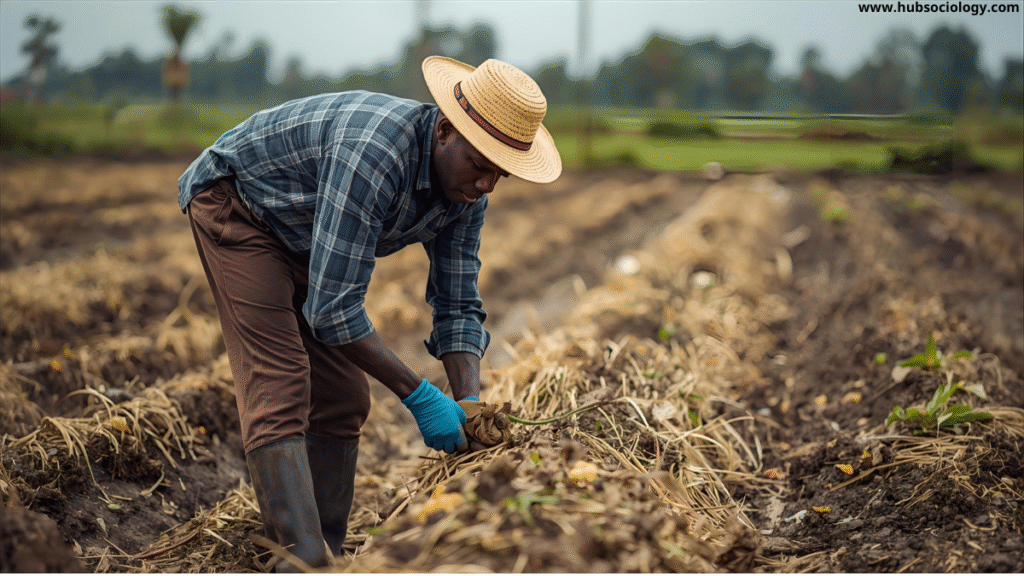
Seasonal labor migration is especially important during planting, harvesting, livestock management, and food processing.
Seasonal workers often travel repeatedly according to agricultural production cycles.
Their contributions help maintain food supply chains and agricultural productivity.
However, seasonal workers frequently encounter challenges such as temporary housing, unstable employment, transportation limitations, and limited social services.
These issues demonstrate the intersection between economic necessity and social vulnerability.
Meat Processing Industry and Migration
Kansas’s meat processing industry depends heavily upon migrant labor.
These facilities require continuous staffing due to demanding physical conditions.
Migrants frequently accept positions involving:
- Food processing
- Packaging
- Quality control
- Equipment operation
- Cleaning and sanitation
The industry’s growth has encouraged population increases in several Kansas communities.
Schools, healthcare providers, housing markets, and local governments have adapted to increasingly multicultural populations.
Skilled Migration and Knowledge Economy
Kansas increasingly competes for highly skilled migrants.
Healthcare professionals, engineers, researchers, educators, software developers, and technical specialists contribute to innovation and economic diversification.
Universities attract international students who often transition into skilled employment.
Highly educated migrants contribute through:
- Scientific research
- Healthcare delivery
- Entrepreneurship
- Technology development
- Higher education
- Advanced manufacturing
Their presence strengthens Kansas’s knowledge-based economy.
Labor Migration and Demographic Change
Migration significantly influences Kansas’s demographic structure.
Many rural counties face aging populations.
Migrants help offset declining birth rates by increasing the working-age population.
Population diversity has increased through:
- Ethnic diversity
- Linguistic diversity
- Religious diversity
- Cultural diversity
Communities now include residents from numerous national backgrounds, creating multicultural social environments.
Demographic change influences schools, housing demand, consumer markets, and public services.
Economic Contributions of Migrants
Migrants contribute to Kansas’s economy in multiple ways.
First, they increase labor force participation.
Second, they support consumer spending through housing, transportation, healthcare, education, and retail purchases.
Third, they pay taxes that support public infrastructure.
Fourth, entrepreneurs establish businesses generating employment.
Fifth, migrants strengthen innovation through new skills and international experiences.
These contributions extend beyond individual workplaces and stimulate regional economic growth.
Social Integration and Community Development
Economic participation alone does not ensure successful integration.
Communities play an essential role in helping migrants become active members of society.
Integration occurs through:
- Schools
- Religious institutions
- Community organizations
- Local governments
- Cultural associations
- Volunteer programs
Positive social integration encourages trust, civic participation, and long-term settlement.
Communities with stronger social cohesion often experience better educational outcomes and lower social conflict.
Challenges Facing Migrant Workers
Despite their contributions, migrant workers often face structural barriers.
These include language differences, limited access to affordable housing, healthcare disparities, transportation difficulties, workplace safety concerns, and legal uncertainties for some immigrant populations.
Social discrimination may also affect employment opportunities and community participation.
Women migrants may encounter additional challenges involving childcare, wage inequality, and occupational segregation.
Addressing these issues requires coordinated policy interventions and inclusive institutional practices.
Labor Shortages and Economic Sustainability
Kansas faces labor shortages due to demographic aging and declining rural populations.
Migration partially addresses these shortages by supplying workers across essential industries.
Without continued labor mobility, several sectors could experience reduced productivity.
Healthcare, agriculture, manufacturing, logistics, and construction particularly depend upon stable labor supplies.
From a sociological perspective, migration supports institutional continuity while reducing workforce gaps.
Education and Human Capital
Educational institutions contribute significantly to labor migration.
Community colleges, universities, vocational schools, and technical training centers prepare both local residents and migrants for evolving labor markets.
International students represent an important source of future skilled workers.
Educational investment enhances human capital while supporting economic competitiveness.
Language education, workforce development, and professional certification programs further improve labor market integration.
Technology, Automation, and Migration
Automation is reshaping Kansas’s labor market.
Agricultural machinery, robotics, artificial intelligence, and advanced manufacturing reduce demand for certain manual occupations while increasing demand for technical expertise.
Rather than eliminating migration, technological change shifts labor demand toward higher-skilled occupations.
Workers increasingly require continuous education and reskilling throughout their careers.
Migration therefore becomes linked not only to physical labor but also to knowledge-intensive industries.
Rural Communities and Migration
Many rural Kansas communities struggle with declining populations.
Migrants often revitalize these communities by:
- Reopening local businesses
- Supporting schools
- Purchasing homes
- Maintaining local services
- Increasing cultural diversity
Communities experiencing successful integration frequently become more economically resilient.
However, adequate infrastructure remains necessary to support long-term settlement.
Public Policy and Labor Migration
Government policies significantly influence migration outcomes.
Effective policies may include:
- Workforce development initiatives
- Affordable housing programs
- Language assistance services
- Occupational safety protections
- Healthcare accessibility
- Educational support
- Small business assistance
Balanced immigration and labor policies can simultaneously address economic needs and social inclusion.
Sociologists argue that policy effectiveness depends upon collaboration among governments, employers, educational institutions, and civil society organizations.
Future of Labor Migration and Economy in Kansas
Several trends will shape the future of Labor Migration and Economy in Kansas.
Population aging will increase labor demand.
Climate change may influence agricultural employment patterns.
Technological innovation will reshape occupational structures.
Global economic integration will continue connecting Kansas to international labor markets.
Remote work may attract highly skilled professionals seeking affordable living environments.
Universities and research institutions will likely play increasingly important roles in retaining educated migrants.
Kansas’s future economic resilience will depend upon successfully integrating diverse labor populations while promoting equitable opportunities.
Conclusion
The relationship between Labor Migration and Economy in Kansas extends far beyond workforce statistics. From a sociological perspective, migration is a dynamic process that transforms economic institutions, demographic structures, cultural identities, and community relationships.
Kansas’s agriculture, manufacturing, healthcare, transportation, and service sectors all depend upon labor mobility. Migrants contribute not only through employment but also through entrepreneurship, innovation, tax revenue, cultural diversity, and community development. At the same time, persistent challenges—including inequality, discrimination, labor protections, housing access, and educational opportunities—require thoughtful policy responses.
Sociological theories demonstrate that labor migration is influenced by structural economic forces, social networks, institutional arrangements, and global inequalities. As Kansas adapts to technological change, demographic aging, and evolving labor demands, migration will remain central to its economic sustainability and social transformation.
Ultimately, understanding Labor Migration and Economy in Kansas requires recognizing migrants as active participants in shaping the state’s future. Their experiences reveal how economic development and social inclusion are deeply interconnected, making labor migration one of the most significant sociological forces influencing contemporary Kansas.
FAQs on Economy in Kansas
1. What is the economy in Kansas primarily based on?
The economy in Kansas is primarily driven by agriculture, manufacturing, aerospace, healthcare, transportation, logistics, and the growing renewable energy sector.
2. How does labor migration affect the economy in Kansas?
Labor migration helps fill workforce shortages, increases productivity, supports business growth, and contributes to economic development across multiple industries in Kansas.
3. Why is agriculture important to the economy in Kansas?
Agriculture is a major contributor to the economy in Kansas, with wheat, cattle, corn, and soybeans playing significant roles in employment, exports, and rural development.
4. What are the major industries supporting the economy in Kansas?
Key industries include agriculture, aerospace manufacturing, food processing, healthcare, education, transportation, logistics, construction, and renewable energy.
5. How do immigrant workers contribute to the economy in Kansas?
Immigrant workers support essential industries, address labor shortages, start businesses, pay taxes, and enhance cultural and economic diversity in Kansas.
6. What challenges does the economy in Kansas face?
The economy in Kansas faces challenges such as labor shortages, rural population decline, workforce aging, housing affordability, and adapting to technological changes.
7. How does education influence the economy in Kansas?
Universities, community colleges, and technical schools develop skilled workers, promote innovation, and prepare the workforce for emerging industries.
8. What role does manufacturing play in the economy in Kansas?
Manufacturing contributes significantly through aerospace production, machinery, food processing, and industrial goods, creating thousands of jobs and supporting exports.
9. How is technology changing the economy in Kansas?
Automation, artificial intelligence, precision agriculture, and advanced manufacturing are increasing productivity while creating demand for highly skilled workers.
10. Why is Kansas considered an important transportation hub?
Kansas has a central geographic location with extensive highways, railroads, and freight networks that facilitate national and international trade.
11. How does rural development impact the economy in Kansas?
Strong rural communities support agricultural production, local businesses, employment opportunities, and regional economic stability throughout Kansas.
12. What is the role of entrepreneurship in the economy in Kansas?
Entrepreneurs create jobs, encourage innovation, attract investment, and diversify local economies through small businesses and startups.
13. How does population change influence the economy in Kansas?
Population growth supports consumer demand and labor availability, while population decline can reduce economic activity and strain local communities.
14. What future trends are expected for the economy in Kansas?
Future trends include increased automation, expansion of renewable energy, workforce diversification, healthcare growth, and continued demand for skilled labor.
15. Why is the economy in Kansas important from a sociological perspective?
The economy in Kansas shapes migration, employment, social mobility, inequality, community development, and cultural diversity, making it an important subject of sociological study.
1 thought on “Labor Migration and Economy in Kansas: A Sociological Analysis of Work, Mobility, and Regional Development”