Introduction
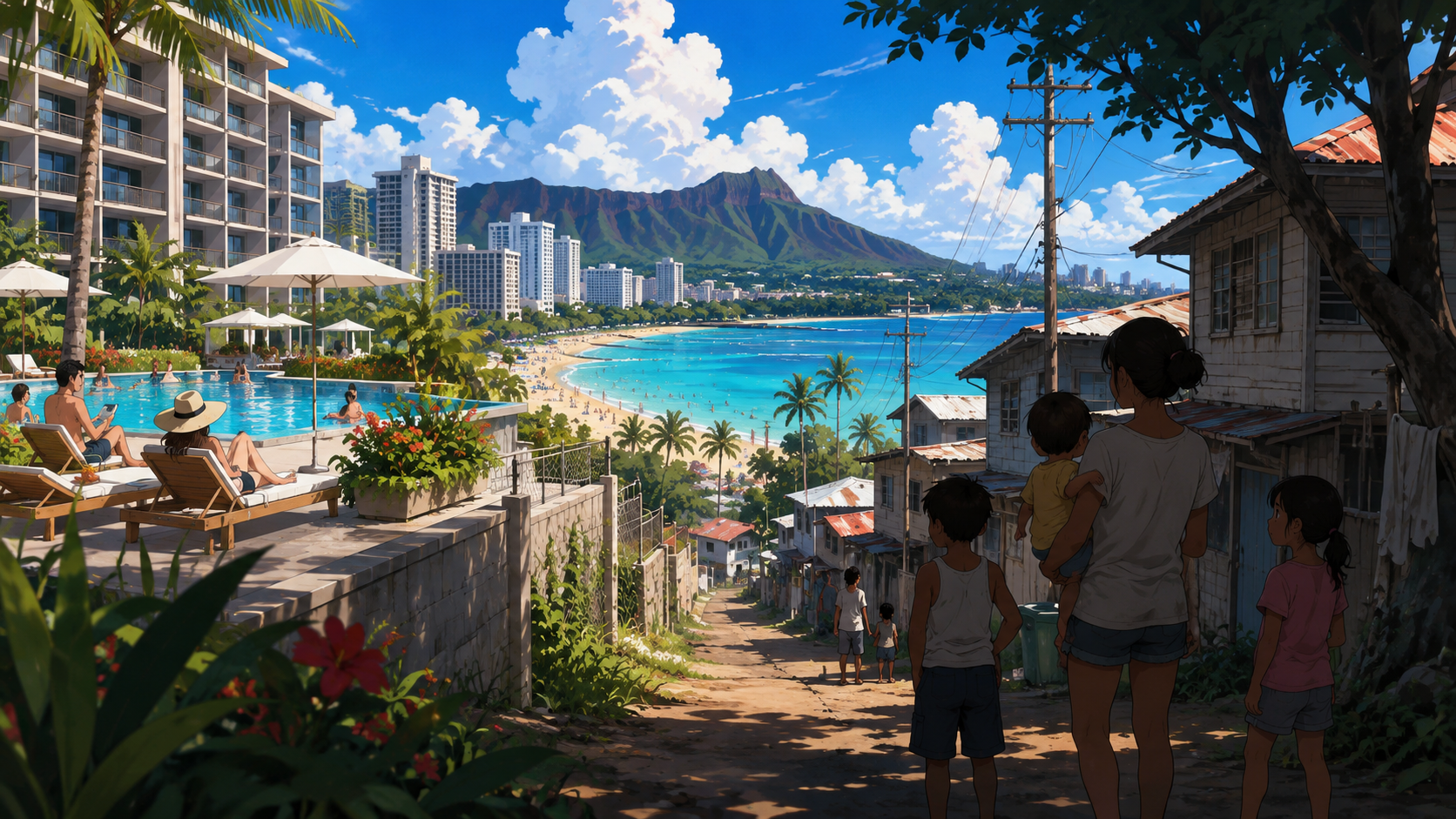
Hawaii is often portrayed as a tropical paradise characterized by beautiful beaches, volcanic landscapes, luxury resorts, and a rich cultural heritage. Every year millions of tourists visit the islands, making tourism the backbone of Hawaii’s economy. Tourism generates employment, supports local businesses, and contributes significantly to state revenue. However, beneath the image of paradise lies a complex social reality. The rapid expansion of tourism has also produced significant social inequalities affecting Native Hawaiians, local residents, workers, and communities.
From a sociological perspective, tourism is not merely an economic activity; it is a social institution that shapes power relations, cultural identities, social stratification, and access to resources. In Hawaii, tourism has become intertwined with issues such as housing affordability, income inequality, land ownership, cultural commodification, environmental justice, and indigenous rights. While tourists enjoy the benefits of Hawaii’s natural beauty, many local residents face rising living costs and social displacement.

This article explores tourism and social inequality in Hawaii through sociological theories and empirical observations. It examines how tourism contributes to economic growth while simultaneously creating and reinforcing various forms of inequality within Hawaiian society.
Historical Background of Tourism in Hawaii
Understanding tourism-related inequality requires examining Hawaii’s historical development. Before Western contact, Native Hawaiians maintained a complex social and political system based on communal relationships with land and natural resources. Land was not treated as a commodity but as a collective resource connected to cultural and spiritual life.
The arrival of European explorers in the eighteenth century initiated significant social transformation. Colonization, missionary influence, plantation agriculture, and eventual annexation by the United States altered Hawaii’s economic and social structure. Native Hawaiians lost substantial portions of their land and political autonomy.
Following World War II, tourism emerged as Hawaii’s dominant economic sector. Improvements in air transportation made the islands accessible to millions of visitors. Hotels, resorts, shopping centers, and tourism infrastructure expanded rapidly.
Although tourism generated wealth, much of the economic control remained in the hands of external investors, corporations, and mainland businesses. This historical context created conditions in which economic benefits were unevenly distributed among social groups.
Sociology of Tourism: Theoretical Perspectives
Functionalist Perspective
Functionalist sociologists view tourism as a social institution that contributes to social stability and economic development. Tourism creates jobs, stimulates investment, supports public services, and promotes cultural exchange.
In Hawaii, tourism provides employment in hospitality, transportation, retail, food services, and entertainment industries. The industry also generates tax revenue used for infrastructure, education, and public services.
From this perspective, tourism serves important functions that help maintain the state’s economy and social order.
Conflict Perspective
Conflict theory provides a more critical understanding of tourism. According to theorists such as Karl Marx, societies are characterized by unequal distributions of power and resources.
Applied to Hawaii, conflict theory suggests that tourism benefits powerful economic groups while marginalized populations bear many of the costs. Resort owners, multinational corporations, and wealthy investors often accumulate profits, whereas workers receive comparatively low wages despite high living expenses.
The conflict perspective highlights how tourism can deepen class divisions and reinforce social inequalities.
Symbolic Interactionism
Symbolic interactionists focus on everyday interactions and the meanings people attach to social experiences. Tourism influences how Hawaii and Hawaiian culture are represented and perceived.
Tourists often encounter idealized images of Hawaii featuring beaches, hula performances, and traditional symbols. These representations may simplify or stereotype Native Hawaiian culture.
This perspective helps explain how tourism shapes cultural identities and social interactions between visitors and local communities.
Economic Benefits of Tourism

Tourism remains Hawaii’s largest economic sector. Millions of visitors spend billions of dollars annually on accommodations, transportation, dining, shopping, and recreational activities.
The industry provides employment opportunities across various skill levels. Hotels, restaurants, tour companies, airlines, and retail businesses depend heavily on tourist spending. Tourism also supports secondary industries such as agriculture, construction, and transportation.
For many residents, tourism represents a primary source of income. The industry contributes significantly to government revenues through taxes and fees.
Economic growth generated by tourism has improved infrastructure, airports, roads, and public facilities throughout the islands. These developments demonstrate the positive contributions of tourism to Hawaiian society.
However, sociologists argue that economic growth alone does not guarantee equitable distribution of benefits.
Income Inequality in Hawaii
One of the most significant social consequences of tourism is income inequality.
Tourism creates a dual economy. On one side are wealthy investors, hotel owners, and corporate executives who receive substantial profits. On the other side are hospitality workers, housekeeping staff, restaurant employees, and service workers who often earn relatively low wages.
Many tourism-related jobs are seasonal, unstable, or dependent on fluctuating visitor numbers. Workers may struggle to meet living expenses despite being employed full-time.
Hawaii consistently ranks among the most expensive places to live in the United States. Housing, food, transportation, and healthcare costs are extremely high. Consequently, many tourism workers experience economic insecurity despite contributing directly to the industry’s success.
This unequal distribution of economic rewards reflects broader patterns of social stratification.
Housing Crisis and Social Displacement
Tourism has significantly influenced Hawaii’s housing market.
The growth of luxury resorts, vacation rentals, and second-home ownership has increased demand for property. Wealthy investors and nonresident buyers often purchase homes for investment purposes or vacation use.
As property values rise, local residents face increasing difficulties in purchasing or renting homes. Housing shortages have become particularly severe in popular tourist destinations.
Many families spend large portions of their income on housing. Some residents are forced to relocate from their communities due to rising rents and property taxes.
Native Hawaiians have been disproportionately affected by displacement. Historical land loss combined with contemporary housing pressures has contributed to ongoing inequalities.
Sociologists describe this process as tourism-driven gentrification, where economic development benefits outsiders while long-term residents experience exclusion.
Native Hawaiians and Structural Inequality
Native Hawaiians occupy a unique position within discussions of tourism and inequality.
Despite being the indigenous people of Hawaii, Native Hawaiians often experience lower income levels, higher poverty rates, poorer health outcomes, and reduced access to resources compared to other populations.
Tourism development frequently occurs on lands with cultural, historical, or spiritual significance to Native Hawaiians. Many indigenous activists argue that commercial development prioritizes profit over cultural preservation.
The historical legacy of colonization continues to shape contemporary inequalities. Tourism sometimes reproduces colonial relationships by allowing external actors to profit from Hawaiian culture and land while indigenous communities receive limited benefits.
Sociological analysis emphasizes that these inequalities are not accidental but rooted in historical power structures and institutional arrangements.
Cultural Commodification and Identity
Another important sociological issue is cultural commodification.
Commodification occurs when cultural practices, traditions, and symbols are transformed into products for commercial consumption. In Hawaii, elements of Native Hawaiian culture are frequently incorporated into tourism experiences.
Traditional dances, ceremonies, clothing, music, and language may be presented primarily as entertainment for visitors. While cultural tourism can increase awareness and appreciation, it may also simplify complex traditions.
Many scholars argue that tourism sometimes creates “staged authenticity,” where cultural performances are modified to meet tourist expectations rather than reflect genuine cultural practices.
This process can affect how Native Hawaiians perceive their own identity and how outsiders understand Hawaiian culture.
The tension between cultural preservation and economic opportunity remains a significant social issue.
Labor Exploitation in the Tourism Industry
Tourism relies heavily on service-sector labor.
Hotel workers, cleaners, restaurant staff, tour guides, and retail employees perform essential functions that support visitor experiences. Despite their importance, many workers face challenging conditions.
Long working hours, limited job security, low wages, and high living costs contribute to economic vulnerability. Workers may hold multiple jobs to support their families.
Sociologists note that tourism often depends on emotional labor, where employees are expected to display friendliness, hospitality, and positive emotions regardless of personal circumstances.
The contrast between luxury tourist experiences and worker struggles highlights broader inequalities within the tourism economy.
Labor unions and worker advocacy groups have played important roles in seeking fair wages and improved working conditions throughout Hawaii.
Environmental Justice and Social Inequality

Tourism’s environmental impacts are closely connected to social inequality.
Large-scale tourism development increases pressure on water resources, coastal ecosystems, coral reefs, and public spaces. Environmental degradation affects local communities that depend on these resources.
Luxury resorts may consume substantial amounts of water while nearby communities face resource constraints. Increased waste production and pollution can also create environmental challenges.
Environmental justice scholars argue that environmental costs are often disproportionately borne by marginalized groups.
In Hawaii, Native Hawaiians frequently emphasize the cultural and spiritual importance of environmental stewardship. Environmental degradation therefore represents both an ecological and cultural issue.
The unequal distribution of environmental benefits and burdens illustrates the intersection between ecological and social inequalities.
Tourism, Globalization, and Dependency
Tourism in Hawaii is closely linked to globalization.
The state’s economy depends heavily on international and domestic visitors. While globalization facilitates economic growth, it can also create dependency.
During economic crises, pandemics, or natural disasters, tourism revenues can decline dramatically. The COVID-19 pandemic demonstrated Hawaii’s vulnerability to disruptions in global travel.
Communities dependent on tourism experienced widespread job losses and economic hardship during the pandemic.
Dependency theory suggests that economies reliant on external markets may face structural vulnerabilities. Hawaii’s tourism-based economy illustrates how dependence on visitor spending can create economic instability.
Diversification of the economy remains an important topic in policy discussions about Hawaii’s future.
Social Class and Tourism Experiences
Tourism itself reflects social class inequalities.
Visitors to Hawaii often possess greater economic resources than many local residents. Luxury tourism caters primarily to affluent travelers who can afford high-end accommodations and exclusive experiences.
Class differences become visible in everyday interactions between tourists and workers. Service relationships may reinforce social hierarchies based on wealth and economic status.
At the same time, many local residents cannot afford recreational experiences marketed to visitors, despite living near tourist attractions.
This paradox highlights how access to resources and opportunities is shaped by social class.
Gender and Tourism Employment
Gender also influences experiences within Hawaii’s tourism industry.
Women are heavily represented in hospitality and service occupations. Many work in housekeeping, customer service, and food service positions.
These jobs often involve lower wages and limited advancement opportunities compared to managerial roles.
Gender inequalities intersect with race, ethnicity, and class to shape employment outcomes. Native Hawaiian and Pacific Islander women may face multiple forms of disadvantage within the labor market.
A sociological analysis of tourism therefore requires attention to the interconnected nature of social inequalities.
Community Resistance and Social Movements
In response to tourism-related inequalities, various community organizations and social movements have emerged throughout Hawaii.
Activists advocate for affordable housing, environmental protection, indigenous rights, and responsible tourism policies. Many groups seek greater community participation in development decisions.
Native Hawaiian movements emphasize sovereignty, cultural preservation, and land rights. Environmental organizations work to protect ecosystems threatened by excessive development.
These social movements demonstrate how communities actively resist inequality rather than passively accepting existing conditions.
Collective action plays a significant role in shaping debates about Hawaii’s future.
Toward Sustainable and Equitable Tourism
Sociologists increasingly advocate for sustainable tourism models that balance economic development with social justice.
Equitable tourism requires policies that ensure local communities benefit from tourism revenues. This may include affordable housing initiatives, fair labor standards, community-based tourism, and stronger environmental protections.
Supporting Native Hawaiian cultural programs and increasing indigenous participation in tourism decision-making can help address historical inequalities.
Sustainable tourism also involves reducing environmental impacts and promoting responsible visitor behavior.
The goal is not necessarily to eliminate tourism but to create a system that distributes benefits more fairly and respects local communities and ecosystems.
Conclusion
Tourism has profoundly shaped Hawaii’s social, cultural, and economic landscape. While the industry generates employment, investment, and government revenue, it also contributes to significant social inequalities. Rising housing costs, income disparities, cultural commodification, labor exploitation, environmental pressures, and indigenous marginalization reveal the complex consequences of tourism development.
From a sociological perspective, tourism is more than an economic activity; it is a powerful social force that influences relationships between classes, ethnic groups, communities, and institutions. The case of Hawaii demonstrates how economic growth can coexist with social inequality when benefits and costs are distributed unevenly.
Understanding tourism through sociological theories such as functionalism, conflict theory, and symbolic interactionism provides valuable insights into these dynamics. Ultimately, the challenge facing Hawaii is to develop tourism in ways that promote social justice, cultural respect, environmental sustainability, and community well-being.
A more equitable tourism system would not only enhance the quality of life for local residents but also preserve the unique cultural and environmental heritage that makes Hawaii one of the world’s most celebrated destinations.
FAQs on Social Inequality in Hawaii
1. What is Social Inequality in Hawaii?
Social Inequality in Hawaii refers to the unequal distribution of wealth, housing, education, healthcare, and economic opportunities among different social groups, particularly affecting Native Hawaiians and low-income residents.
2. How does tourism contribute to Social Inequality in Hawaii?
Tourism contributes to Social Inequality in Hawaii by increasing property prices, creating low-wage service jobs, and concentrating economic benefits among corporations, investors, and resort owners.
3. Why are housing costs linked to Social Inequality in Hawaii?
Rising housing costs force many local residents to spend a large portion of their income on rent or mortgages, making affordable housing a major factor in Social Inequality in Hawaii.
4. How are Native Hawaiians affected by Social Inequality in Hawaii?
Native Hawaiians often experience higher poverty rates, lower homeownership levels, and reduced access to economic opportunities due to historical and structural inequalities.
5. What role does colonization play in Social Inequality in Hawaii?
Colonization led to land dispossession, cultural marginalization, and economic exclusion, which continue to influence Social Inequality in Hawaii today.
6. How does income inequality reflect Social Inequality in Hawaii?
Income inequality is evident when tourism executives and investors earn significantly more than hospitality workers and service employees who support the industry.
7. What is cultural commodification in the context of Social Inequality in Hawaii?
Cultural commodification occurs when Hawaiian traditions and cultural practices are marketed primarily for tourist consumption, often benefiting businesses more than local communities.
8. How does Social Inequality in Hawaii affect education?
Families facing economic hardship may have fewer educational resources, creating unequal opportunities and reinforcing long-term Social Inequality in Hawaii.
9. What is the connection between environmental justice and Social Inequality in Hawaii?
Environmental degradation caused by tourism development often disproportionately affects local and Indigenous communities, contributing to Social Inequality in Hawaii.
10. How did the COVID-19 pandemic expose Social Inequality in Hawaii?
The pandemic highlighted economic vulnerabilities as many tourism-dependent workers lost jobs while wealthier groups were better able to withstand financial disruptions.
11. How does tourism-driven gentrification increase Social Inequality in Hawaii?
Gentrification raises property values and living costs, often displacing long-term residents and deepening Social Inequality in Hawaii.
12. What sociological theories explain Social Inequality in Hawaii?
Conflict theory, functionalism, and symbolic interactionism help explain how power, resources, and cultural representations shape Social Inequality in Hawaii.
13. How does gender influence Social Inequality in Hawaii?
Women, particularly those employed in hospitality and service sectors, often face lower wages and limited career advancement opportunities, contributing to Social Inequality in Hawaii.
14. What solutions can reduce Social Inequality in Hawaii?
Affordable housing programs, fair labor policies, Indigenous participation in decision-making, and sustainable tourism practices can help reduce Social Inequality in Hawaii.
15. Why is studying Social Inequality in Hawaii important?
Studying Social Inequality in Hawaii helps policymakers, researchers, and communities understand the social impacts of tourism and develop more equitable development strategies.