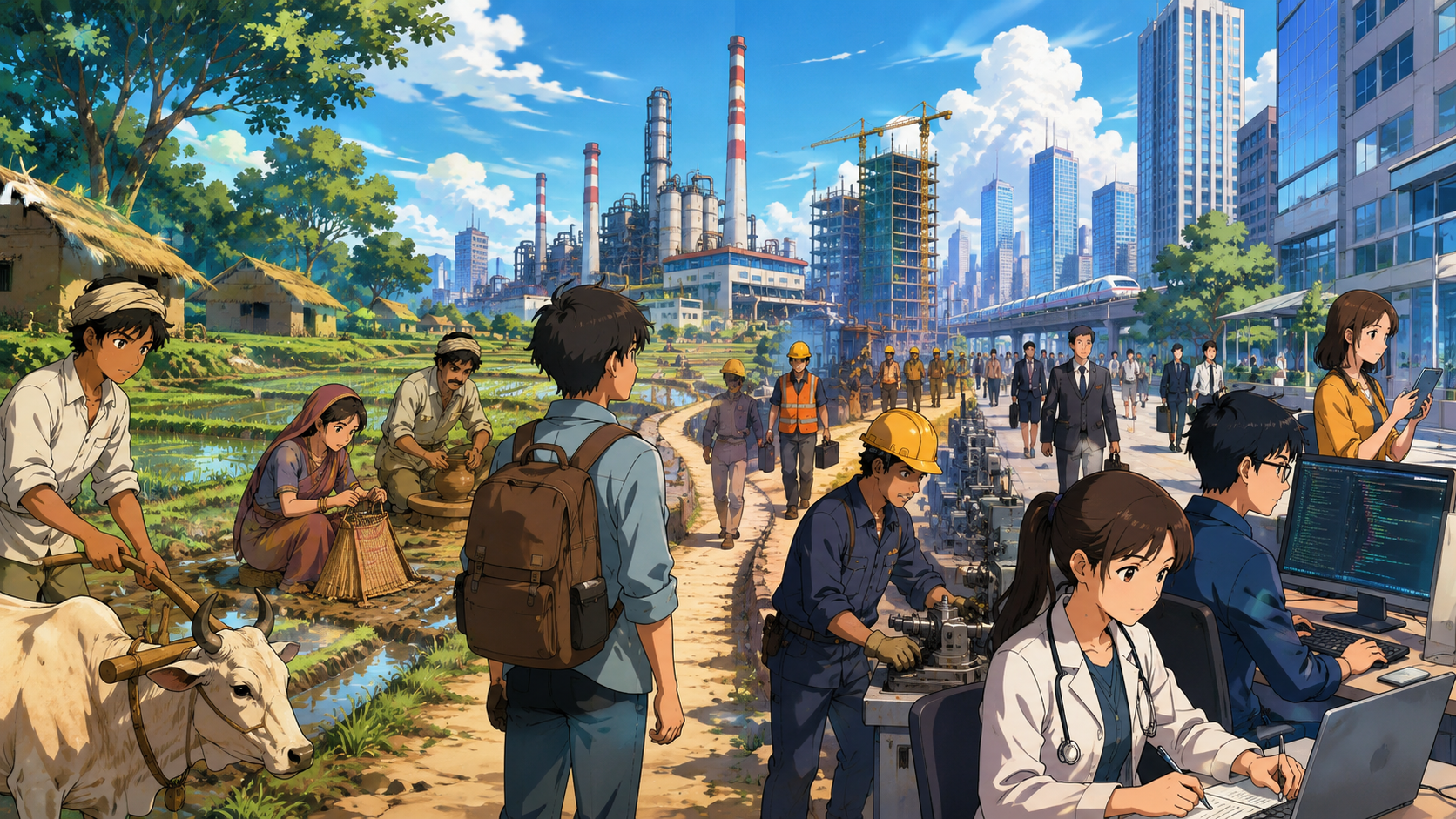
Introduction on Changing Occupational Structure in India
The occupational structure of a society reflects the distribution of its workforce across different economic activities and professions. It is one of the most important indicators of social and economic transformation. In India, the occupational structure has undergone major changes since independence due to industrialization, urbanization, globalization, technological advancement, educational expansion, and economic liberalization. These changes are deeply connected with broader social transformations involving caste, class, gender, migration, family patterns, and regional development.
Traditionally, Indian society was predominantly agrarian. A large section of the population depended on agriculture and allied activities for survival. Occupational roles were closely linked with the caste system, where hereditary occupations shaped social identity and social hierarchy. However, over time, India has witnessed a gradual shift from agriculture toward industry and services. New occupations have emerged in sectors such as information technology, banking, education, healthcare, transportation, tourism, media, and digital platforms. This transformation has altered not only the economy but also social relations and lifestyles.
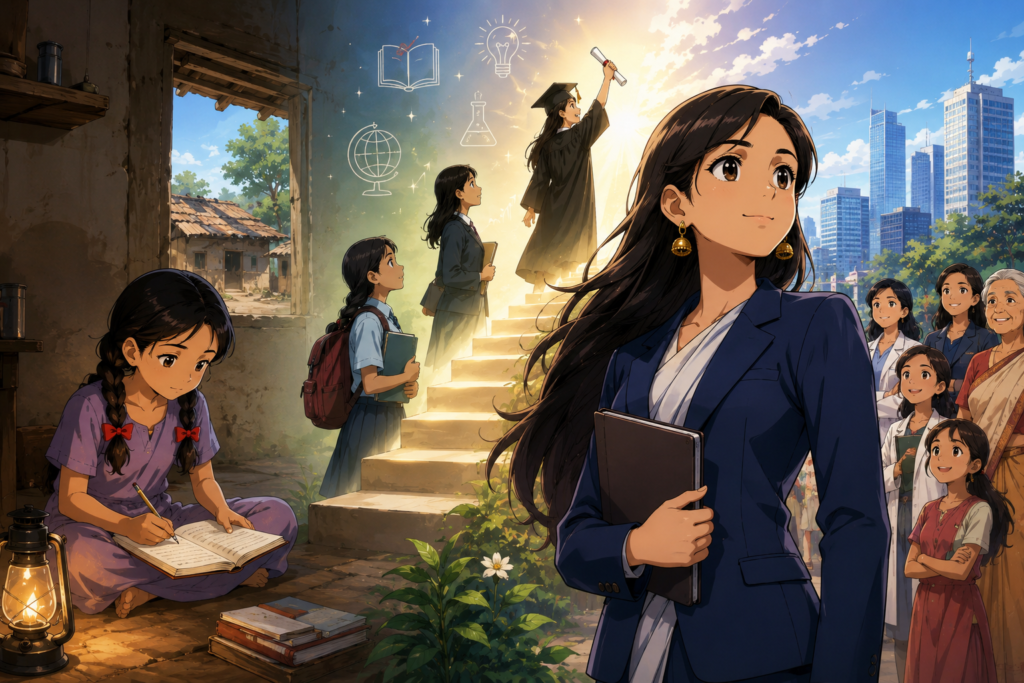
From a sociological perspective, the changing occupational structure in India reveals the movement from a traditional society toward a modern and globalized society. It also highlights persistent inequalities, unemployment, informal labor conditions, and regional disparities. Understanding these occupational changes helps explain the evolving nature of Indian society and the challenges of development in the twenty-first century.
Table of Contents
Meaning of Occupational Structure
Occupational structure refers to the composition and distribution of working people across different occupations and sectors of the economy. It generally includes three sectors:
- Primary Sector – agriculture, forestry, fishing, mining, and other extraction activities.
- Secondary Sector – manufacturing, construction, and industrial production.
- Tertiary Sector – services such as education, healthcare, banking, trade, communication, transport, and information technology.
In sociological terms, occupational structure also refers to the organization of labor within society and its relationship with social stratification, mobility, power, and status. Occupation is not only an economic activity but also a source of identity, prestige, and social position.
Traditional Occupational Structure in India
Historically, India’s occupational structure was dominated by agriculture and caste-based occupations. Before industrialization, most people lived in villages and worked in farming or traditional crafts. Occupations were hereditary and closely connected to caste identity.
Features of Traditional Occupational Structure
- Dominance of agriculture
- Limited industrial activities
- Caste-based division of labor
- Hereditary occupations
- Low occupational mobility
- Dependence on family labor
- Rural-centered economic activities
For example, blacksmiths, potters, weavers, carpenters, barbers, priests, and leather workers belonged to specific caste groups. This system created occupational rigidity because individuals were expected to follow the occupation of their family or caste. Social mobility was restricted, and economic opportunities were unequal.
Village economies were relatively self-sufficient, and occupational relationships were regulated through systems like the Jajmani system. Under this arrangement, service-providing castes exchanged labor and services with landowning castes in return for grain or other benefits.
Factors Responsible for Changing Occupational Structure
Several social, economic, political, and technological factors have contributed to the transformation of occupational patterns in India.
Industrialization
Industrialization introduced factory-based production and urban employment opportunities. After independence, the Indian government emphasized industrial development through Five-Year Plans. Large industries, public sector enterprises, and manufacturing centers emerged in urban regions.
Industrialization reduced dependence on agriculture and encouraged migration from rural areas to cities. New occupations appeared in engineering, factory labor, transportation, administration, and technical services.
Urbanization
Urbanization has significantly changed occupational patterns. Cities provide employment in industries, trade, services, construction, and technology sectors. Rural migrants often move to urban centers in search of better wages and living conditions.
Urban occupations differ from rural occupations because they involve specialization, contractual employment, and market-oriented activities. Urban growth has increased employment in retail business, hospitality, communication, finance, and entertainment industries.
Green Revolution
The Green Revolution during the 1960s and 1970s modernized agriculture through irrigation, fertilizers, high-yield seeds, and mechanization. While agricultural productivity increased, mechanization reduced the demand for manual labor in many regions.
As a result, many rural workers shifted toward non-agricultural occupations such as transport, trade, construction, and small industries. Rural diversification became more common.
Economic Liberalization
Economic reforms introduced in 1991 transformed the Indian economy. Liberalization, privatization, and globalization expanded private enterprise and foreign investment. Service sectors such as information technology, telecommunications, banking, and finance grew rapidly.

This period saw the rise of white-collar occupations, multinational corporations, business process outsourcing, and digital employment. India became globally connected, creating new opportunities for educated youth.
Educational Expansion
The spread of education has played a major role in occupational change. Higher education, technical training, and professional courses have enabled individuals to enter modern occupations.
Educated youth increasingly seek employment in government services, corporate sectors, healthcare, teaching, engineering, law, and digital industries instead of traditional occupations.
Education has also weakened the hereditary nature of occupations and increased social mobility.
Technological Advancement
Technology has reshaped labor markets and occupational skills. Automation, computers, internet services, and artificial intelligence have created new professions while reducing demand for some traditional jobs.
Digital platforms now provide employment opportunities in online business, freelancing, digital marketing, content creation, app-based transportation, and e-commerce.
Globalization
Globalization has connected India with international markets and global labor systems. International companies operate in India, and Indian professionals work across the world.
Globalization has increased employment in export industries, information technology, tourism, aviation, and communication sectors. It has also changed work culture, lifestyles, and consumption patterns.
Sectoral Changes in Occupational Structure
One of the most visible changes in India’s occupational structure is the movement of labor from agriculture toward industry and services.
Decline of Agricultural Employment
Agriculture once employed more than 70 percent of India’s workforce. However, its share has gradually declined due to modernization, fragmentation of landholdings, low income, and population pressure.
Although agriculture still employs a large number of people, many workers are underemployed or disguised unemployed. Younger generations increasingly prefer non-farm occupations because agriculture often provides uncertain income.
This shift reflects structural transformation, where societies gradually move from agrarian economies to industrial and service economies.
Growth of Industrial Employment
Industrial employment has expanded in manufacturing, construction, mining, and infrastructure development. Industrial corridors, urban expansion, and government initiatives such as “Make in India” have encouraged industrial growth.
Construction work has become a major source of employment for migrant laborers. Small-scale industries and informal manufacturing units also absorb a large workforce.
However, industrial employment in India faces challenges such as job insecurity, poor working conditions, low wages, and labor exploitation.
Expansion of Service Sector
The service sector has emerged as the largest contributor to India’s GDP. Employment opportunities in education, healthcare, banking, tourism, media, software, telecommunications, retail, and hospitality have increased rapidly.
India’s IT industry has become globally recognized, especially in cities like Bengaluru, Hyderabad, Pune, and Gurugram. Call centers, software development, online education, and digital businesses employ millions of young people.
The service sector represents the transition toward a knowledge-based economy. It has increased the demand for skilled and educated workers.
Sociological Dimensions of Changing Occupational Structure in India
Occupational transformation affects social institutions, identities, and relationships. Sociology examines how occupational change influences class formation, caste mobility, gender roles, migration, and social inequality.
Occupational Mobility and Social Mobility
Occupational change has increased opportunities for upward social mobility. People from lower castes and economically weaker backgrounds can improve their status through education and employment.
Government policies such as reservation in education and public employment have enabled marginalized communities to enter professional occupations.
Occupational mobility has weakened some traditional caste barriers, especially in urban areas. However, caste networks still influence access to jobs, business opportunities, and social capital.
Changing Role of Caste
Traditional caste-based occupations are gradually declining. Many individuals no longer follow hereditary occupations. For example, members of artisan castes may become teachers, engineers, government employees, or entrepreneurs.
Urbanization and education have weakened caste restrictions in occupational choice. Nevertheless, caste discrimination continues in some sectors, especially in rural areas and informal labor markets.
Certain occupations remain socially stigmatized, particularly sanitation work and manual scavenging, which are disproportionately associated with marginalized castes.
Rise of Middle Class
The expansion of professional and service-sector occupations has contributed to the growth of the Indian middle class. Teachers, software engineers, doctors, bankers, administrators, and business professionals form an important part of this class.
The middle class has influenced consumer culture, education patterns, family aspirations, and political attitudes. Increased income and urban lifestyles have transformed social values and consumption habits.
Women and Occupational Change
Women’s participation in the workforce has changed significantly over time. More women now work in education, healthcare, administration, banking, media, IT, and retail sectors.
Education and urbanization have expanded opportunities for women’s employment. Economic independence has improved women’s social status and decision-making power within families.
However, gender inequality persists in wages, promotions, and workplace conditions. Many women face double burdens of paid work and domestic responsibilities. Female labor force participation in India remains relatively low compared to many countries.
Migration and Occupational Change
Occupational transformation has increased migration within India. Rural workers migrate to cities in search of industrial and service-sector employment. Interstate migration has become common in construction, domestic work, factories, and transport sectors.
Migration influences family structure, cultural exchange, urban growth, and social adaptation. Migrant workers often face housing insecurity, poor living conditions, and lack of social protection.
The COVID-19 pandemic exposed the vulnerability of migrant laborers in India, especially those working in informal sectors.
Informalization of Labor
A major feature of India’s occupational structure is the dominance of informal employment. A large proportion of workers are employed without job security, social security, or legal protection.
Street vendors, domestic workers, daily wage laborers, gig workers, and small traders form part of the informal economy. Even modern sectors increasingly rely on contract-based employment.
The rise of app-based work such as food delivery and ride-sharing has created flexible employment opportunities but also raised concerns regarding labor rights and social security.
Rural Occupational Diversification
Rural India is no longer dependent only on agriculture. Many rural households now combine farming with non-farm occupations such as transportation, handicrafts, construction, dairy farming, trade, and small businesses.
Government schemes, road connectivity, microfinance, and digital technology have encouraged rural entrepreneurship. Rural diversification reduces dependence on agriculture and increases income opportunities.
However, regional inequalities remain significant. Some rural areas experience rapid development while others continue to face poverty and unemployment.
Impact of Occupational Change on Family and Society

Occupational changes have influenced family structure and social relationships.
Decline of Joint Family System
Urban employment and migration have encouraged nuclear families. Individuals often move away from villages for education and employment, reducing dependence on extended family systems.
Changing Lifestyle and Consumption
Modern occupations increase income and exposure to global culture. Consumerism, digital lifestyles, and individual aspirations have become more common among urban workers.
Education-Oriented Society
Occupational competition has increased the importance of education and skill development. Families invest heavily in schooling, coaching, and professional training to secure better employment opportunities.
Individualism
Modern occupational systems emphasize personal achievement rather than hereditary status. Merit-based employment encourages individualism and career orientation.
Challenges in Changing Occupational Structure in India
Despite progress, India faces several challenges in transforming its occupational structure.
Unemployment and Underemployment
Rapid population growth and limited formal-sector jobs create unemployment, especially among educated youth. Many workers remain underemployed in low-paying or insecure occupations.
Skill Gap
There is often a mismatch between educational qualifications and market demands. Many graduates lack technical or practical skills required by industries.
Regional Disparities
Occupational opportunities are concentrated in urban and developed states. Backward regions continue to depend heavily on agriculture and informal labor.
Informal Employment
The majority of Indian workers lack job security, pensions, health insurance, and labor protection. Informalization increases economic vulnerability.
Gender Inequality
Women continue to face barriers related to safety, discrimination, unequal wages, and work-life balance.
Agrarian Crisis
Farmers face low income, debt, climate uncertainty, and land fragmentation. This creates distress migration and occupational insecurity.
Future Trends in Changing Occupational Structure in India
India’s occupational structure will continue evolving due to digitalization, automation, artificial intelligence, and green economy initiatives.
Growth of Digital Economy
Online businesses, remote work, freelancing, and digital services will expand employment opportunities.
Rise of Knowledge-Based Occupations
Professional skills in technology, research, healthcare, and education will become increasingly important.
Green Jobs
Environmental sustainability and renewable energy sectors may create new occupations related to solar power, waste management, and climate adaptation.
Gig Economy Expansion
Flexible and platform-based employment will continue growing, though labor regulations will become necessary to protect workers.
Skill Development
Government initiatives such as Skill India aim to improve employability and vocational training for youth.
Conclusion on Changing Occupational Structure in India
The changing occupational structure in India reflects the broader transformation of Indian society from a traditional agrarian system toward a modern industrial and service-oriented economy. Industrialization, urbanization, globalization, education, and technological advancement have altered employment patterns and social relationships.
From a sociological perspective, occupational change is not merely an economic process but also a social process that affects caste, class, gender, migration, family, and identity. While traditional caste-based occupations have weakened, inequalities and labor exploitation continue in many sectors. The rise of the service economy, urban middle class, and digital employment demonstrates the emergence of new social realities.
At the same time, India faces challenges such as unemployment, informal labor, regional disparities, and skill gaps. Inclusive development requires policies that generate secure employment, improve education and skills, ensure gender equality, and protect workers’ rights.
The future of India’s occupational structure will depend on how effectively the country balances economic growth with social justice. A socially inclusive and technologically advanced occupational system can contribute significantly to national development and human well-being.
FAQs on Changing Occupational Structure in India
1. What is meant by Changing Occupational Structure in India?
Changing Occupational Structure in India refers to the shift of workers from traditional agricultural occupations to industrial and service-sector jobs due to modernization, industrialization, urbanization, and technological development.
2. Why is the Changing Occupational Structure in India important in sociology?
The Changing Occupational Structure in India is important because it reflects social transformation, class mobility, caste changes, urban migration, and evolving family and work patterns in Indian society.
3. What were the traditional occupations in India?
Traditional occupations in India were mainly agriculture, handicrafts, weaving, pottery, carpentry, blacksmithing, and caste-based hereditary professions.
4. How has industrialization affected the Changing Occupational Structure in India?
Industrialization has created factory jobs, technical employment, and urban occupations, reducing dependence on agriculture and increasing industrial labor participation.
5. What role does urbanization play in the Changing Occupational Structure in India?
Urbanization encourages people to migrate from villages to cities for better employment opportunities in industries, services, transport, trade, and information technology sectors.
6. How has globalization influenced the Changing Occupational Structure in India?
Globalization has expanded employment in IT, telecommunications, tourism, banking, and multinational companies, creating modern professional occupations.
7. What is the impact of education on the Changing Occupational Structure in India?
Education has increased occupational mobility by enabling people to enter professional and skilled jobs rather than depending on hereditary occupations.
8. How has the service sector contributed to the Changing Occupational Structure in India?
The service sector has become the largest source of economic growth and employment in fields such as healthcare, banking, education, media, and software industries.
9. What is occupational mobility in the context of Changing Occupational Structure in India?
Occupational mobility refers to the movement of individuals from one occupation or social status to another, often resulting in improved social and economic conditions.
10. How has the caste system changed due to the Changing Occupational Structure in India?
The caste system has weakened in occupational matters because many people now choose professions based on education and skills instead of hereditary caste occupations.
11. What challenges exist in the Changing Occupational Structure in India?
Major challenges include unemployment, underemployment, informal labor, regional inequality, skill gaps, and lack of job security.
12. How has technology affected the Changing Occupational Structure in India?
Technology has created new digital occupations, online businesses, and IT-related jobs while reducing the importance of some traditional manual occupations.
13. What is the role of women in the Changing Occupational Structure in India?
Women are increasingly participating in education, healthcare, banking, administration, retail, and IT sectors, contributing to social and economic transformation.
14. How does migration relate to the Changing Occupational Structure in India?
Migration occurs when people move from rural to urban areas in search of better employment opportunities in industries and service sectors.
15. What is the future of the Changing Occupational Structure in India?
The future of the Changing Occupational Structure in India will likely involve growth in digital employment, green jobs, automation, skill-based professions, and the gig economy.