
Introduction on Crime and Social Control
Crime and social control are central concerns of sociology because they reveal how societies define acceptable behavior, enforce norms, and manage deviance. In modern Australia, crime is not only a legal issue but also a deeply social phenomenon shaped by inequality, power relations, cultural diversity, globalization, and technological change. Australian society has witnessed significant transformations over the last few decades—urbanization, migration, economic restructuring, and digitalization—which have influenced both patterns of crime and methods of social control.
From traditional crimes such as theft and assault to contemporary challenges like cybercrime, terrorism-related offenses, and domestic violence, crime in Australia reflects broader social tensions. At the same time, mechanisms of social control—ranging from formal institutions like police, courts, and prisons to informal controls exercised by families, schools, and communities—have evolved in response. This article explores crime and social control in modern Australia from a sociological perspective, focusing on theories of crime, patterns and trends, state responses, inequalities in justice, and emerging challenges.
Understanding Crime Sociologically
Crime as a Social Construction
Sociologists argue that crime is socially constructed. Acts become “criminal” not because they are inherently wrong, but because societies label them as such through laws and norms. In Australia, behaviors considered criminal today—such as certain drug-related activities or online piracy—have changed over time, reflecting shifting moral values and political priorities.
This perspective highlights the role of power in defining crime. Laws are often shaped by dominant social groups, meaning that the interests of marginalized communities may be underrepresented. For example, corporate crimes such as tax evasion or environmental damage often receive less public attention than street crimes, despite their significant social harm.
Sociological Theories of Crime
Several sociological theories help explain crime in the Australian context:
- Functionalist theories (Émile Durkheim) view crime as a normal and inevitable part of society that can promote social cohesion by clarifying moral boundaries.
- Strain theory (Robert K. Merton) suggests that crime results when individuals are unable to achieve socially approved goals (such as wealth or success) through legitimate means.
- Conflict theory emphasizes how laws reflect the interests of powerful groups and how marginalized populations are more likely to be criminalized.
- Labeling theory focuses on how being labeled as “criminal” can reinforce deviant identities and increase reoffending.
Together, these theories reveal that crime in Australia cannot be understood solely in terms of individual choice; it is deeply connected to social structure and inequality.
Patterns of Crime in Modern Australia
Conventional and Violent Crime
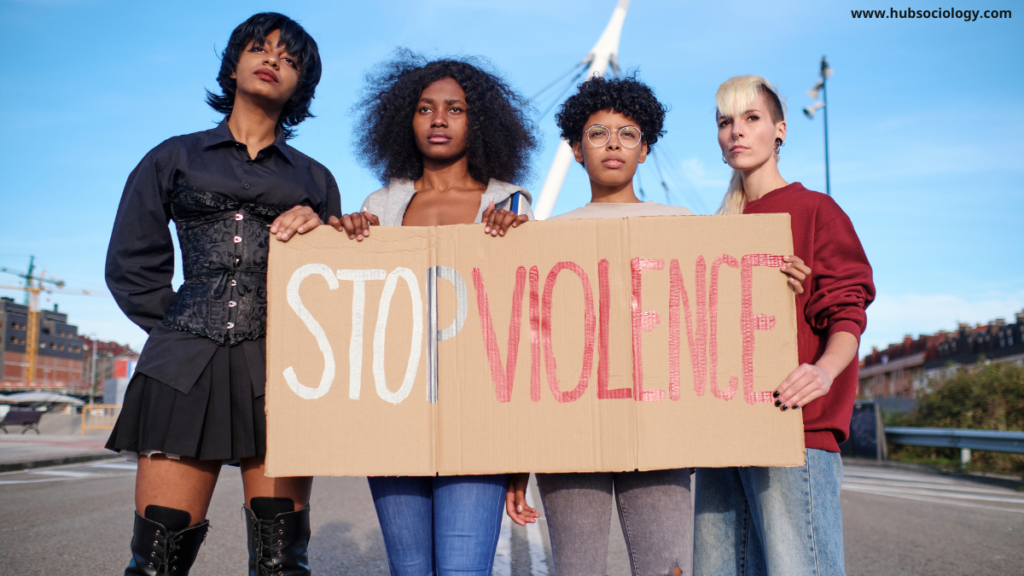
Australia generally reports lower levels of violent crime compared to many countries, yet offenses such as assault, sexual violence, and domestic abuse remain significant social problems. Domestic and family violence, in particular, has gained increased attention due to advocacy movements and public awareness campaigns. Sociologically, such crimes are linked to gender inequality, power imbalances, and cultural norms surrounding masculinity.

Property crimes like burglary and theft have fluctuated over time, often influenced by economic conditions, unemployment, and urban development.
Cybercrime and Technology
One of the most significant changes in modern Australia is the rise of cybercrime. Online fraud, identity theft, cyberstalking, and hacking have expanded rapidly with digitalization. These crimes challenge traditional models of policing and highlight the global nature of contemporary deviance, as offenders and victims may be located in different countries.
Cybercrime also raises sociological questions about surveillance, privacy, and the balance between security and civil liberties.
White-Collar and Corporate Crime
White-collar crime—committed by professionals and corporations—includes financial fraud, insider trading, and environmental violations. While these crimes cause extensive economic and social harm, they often receive less punitive responses compared to street crime. Sociologists argue that this reflects class bias within the criminal justice system, where powerful actors are better able to avoid severe punishment.
Social Inequality and Crime
Indigenous Australians and Over-Representation
One of the most critical issues in Australian criminology is the over-representation of Indigenous peoples in the criminal justice system. Australian Institute of Criminology reports consistently show that Indigenous Australians are far more likely to be arrested, imprisoned, and subjected to police surveillance than non-Indigenous Australians.
Sociologically, this pattern is linked to historical dispossession, intergenerational trauma, socioeconomic disadvantage, and systemic discrimination. Crime, in this context, cannot be separated from colonial history and ongoing structural inequality.
Class, Gender, and Ethnicity
Lower socioeconomic groups are more likely to experience both victimization and criminalization. Limited access to education, employment, and social support increases vulnerability to crime and deviant behavior. Gender also plays a significant role: men are more likely to commit violent crimes, while women are disproportionately affected by domestic and sexual violence.
Ethnic minority communities sometimes experience over-policing and racial profiling, contributing to mistrust between communities and law enforcement agencies.
Mechanisms of Social Control in Australia
Formal Social Control
Formal social control refers to institutions that enforce laws and regulations. In Australia, this includes the police, courts, and correctional systems.
- Australian Federal Police and state police forces play a key role in maintaining public order.
- Courts interpret and apply laws, while prisons and correctional programs aim to punish, deter, and rehabilitate offenders.
From a sociological perspective, formal control is not neutral; it reflects social values and power relations. Policies such as mandatory sentencing have been criticized for disproportionately affecting marginalized groups.
Informal Social Control
Informal social control operates through families, schools, peer groups, religious institutions, and communities. Socialization teaches individuals norms and values, reducing the likelihood of deviant behavior.
Community-based initiatives, such as neighborhood watch programs and restorative justice practices, emphasize cooperation, dialogue, and reintegration rather than punishment. These approaches align with sociological theories that stress social bonds and collective responsibility.
Policing and Surveillance
Modern Australian policing increasingly relies on surveillance technologies, including CCTV cameras, data analytics, and biometric identification. While these tools can enhance crime prevention, sociologists warn of potential risks, such as the erosion of privacy and the targeting of specific social groups.

Community policing models aim to build trust between police and local communities by emphasizing cooperation and problem-solving. Sociologically, this approach recognizes that effective social control depends not only on enforcement but also on legitimacy and public consent.
Punishment, Rehabilitation, and Restorative Justice
The Prison System
Australia’s prison population has grown over recent decades, raising concerns about overcrowding and the effectiveness of incarceration. Critics argue that prisons often fail to address the root causes of crime, such as poverty, addiction, and mental health issues.
From a sociological standpoint, imprisonment can reinforce social exclusion, making reintegration into society more difficult and increasing the risk of reoffending.
Restorative Justice
Restorative justice programs seek to repair harm by bringing together offenders, victims, and communities. These programs focus on accountability, reconciliation, and healing rather than retribution. In Australia, restorative justice has been particularly influential in youth justice systems and Indigenous community initiatives.
Media, Public Opinion, and Moral Panic
The media plays a powerful role in shaping public perceptions of crime. Sensational reporting can create moral panics, exaggerating the threat posed by certain crimes or groups. Sociologists argue that such narratives often influence policy, leading to harsher laws and increased surveillance, even when crime rates are stable or declining.
Globalization and Transnational Crime
As a globalized nation, Australia faces transnational crimes such as human trafficking, drug smuggling, and terrorism-related activities. These crimes require international cooperation and highlight the limitations of nation-based social control mechanisms.
Globalization also affects labor markets and migration, influencing patterns of crime and victimization in complex ways.
Contemporary Challenges and Future Directions
Modern Australia faces several emerging challenges in crime and social control:
- Balancing security with human rights in an era of surveillance
- Addressing Indigenous over-representation through structural reform
- Responding to cybercrime and digital deviance
- Expanding rehabilitative and restorative approaches
- Building trust between law enforcement and diverse communities
Sociologists emphasize that effective crime control must address social inequality, strengthen community bonds, and promote social justice rather than relying solely on punishment.
Conclusion on Crime and Social Control
Crime and social control in modern Australia are deeply intertwined with social structures, cultural norms, and power relations. A sociological perspective reveals that crime is not merely an individual failing but a reflection of broader social conditions, including inequality, historical injustice, and rapid social change.
Understanding crime sociologically allows policymakers, scholars, and citizens to move beyond punitive responses and toward more inclusive, preventive, and restorative approaches. For Australia, the challenge lies in creating a system of social control that ensures safety while upholding fairness, dignity, and social cohesion in an increasingly complex society.
Frequently Asked Questions (FAQs) on Crime and Social Control
- What is meant by crime and social control in sociology?
Crime and social control refer to how societies define deviant behavior and use formal and informal mechanisms to regulate individual actions and maintain social order. - How is crime socially constructed in Australia?
From a sociological perspective, crime in Australia is defined through laws shaped by political power, cultural values, and historical contexts, making crime a social construct rather than a fixed concept. - What are the main forms of social control in Australia?
The two main forms are formal social control (police, courts, prisons) and informal social control (family, education, community norms). - How do sociologists explain crime and social control?
Sociologists use theories such as functionalism, strain theory, conflict theory, and labeling theory to explain crime and social control in society. - Why is crime and social control linked to social inequality?
Inequality affects access to resources, opportunities, and justice, making marginalized groups more vulnerable to both crime and excessive social control. - What role does policing play in crime and social control?
Policing enforces laws, deters crime, and maintains public order, but sociologists also examine issues like over-policing and surveillance. - How does media influence crime and social control?
Media coverage can create fear, moral panic, and public pressure, often leading to stricter laws and expanded social control mechanisms. - Why are Indigenous Australians overrepresented in crime statistics?
Sociologists link this to historical dispossession, systemic discrimination, poverty, and intergenerational trauma rather than individual criminality. - What is the relationship between crime and social control and gender?
Men are more likely to commit violent crimes, while women are disproportionately affected by domestic violence and sexual offenses. - How has technology changed crime and social control?
Digital technologies have led to cybercrime while also expanding surveillance, data policing, and online monitoring as tools of social control. - What is white-collar crime and how is it controlled?
White-collar crime involves financial and corporate offenses, which often receive less severe punishment, reflecting class bias in social control. - How effective is imprisonment as a method of social control?
Sociologists argue imprisonment often fails to address root causes of crime and may reinforce social exclusion and recidivism. - What is restorative justice in crime and social control?
Restorative justice focuses on repairing harm through dialogue between offenders, victims, and communities rather than punishment. - How does globalization affect crime and social control in Australia?
Globalization increases transnational crimes like cyber fraud and trafficking, requiring international cooperation for effective social control. - Why is a sociological understanding of crime and social control important?
It helps policymakers and society address the social causes of crime and develop fair, preventive, and inclusive control strategies.
1 thought on “Crime and Social Control in Modern Australia: A Sociological Perspective”