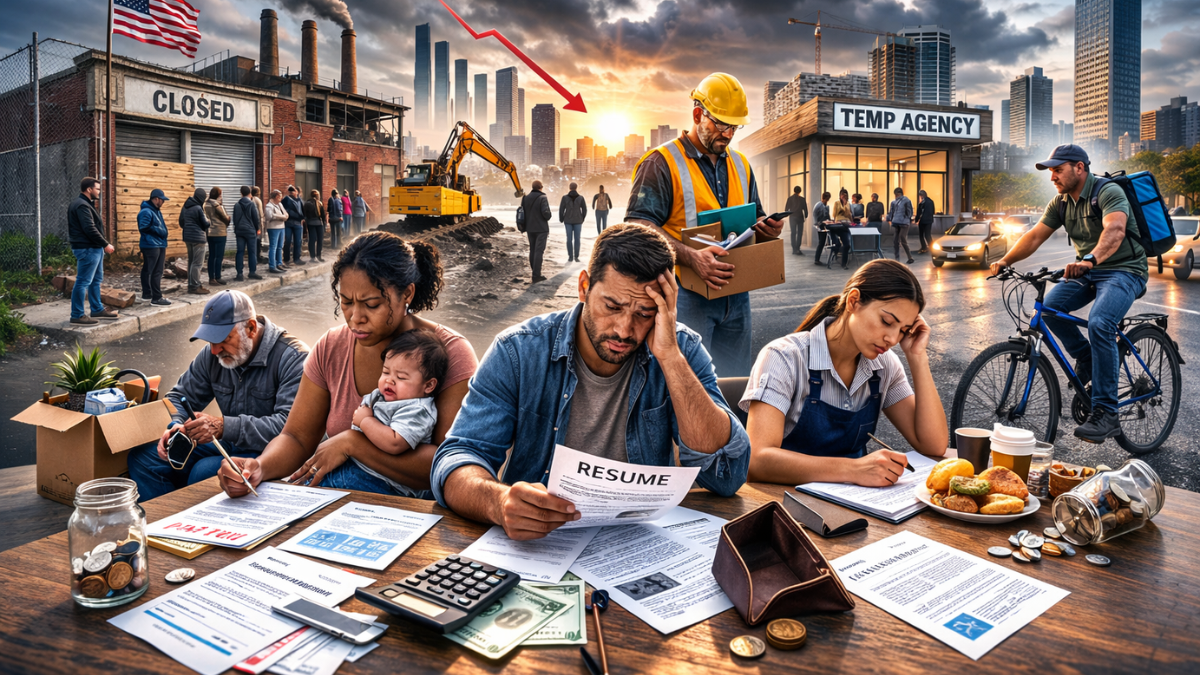
Unemployment and underemployment in America are not merely economic conditions; they are deeply social phenomena that shape identities, families, communities, and institutions. While economists often measure unemployment through rates, labor force participation, and GDP growth, sociology examines how joblessness and precarious work reflect broader structures of inequality, power, and social organization. In the United States, employment has long been tied to citizenship, dignity, and the “American Dream.” Therefore, when individuals face unemployment or underemployment, the consequences extend beyond income loss to affect social status, mental health, and collective stability.
This article explores unemployment and underemployment in America from a sociological perspective, analyzing their structural roots, demographic patterns, cultural meanings, and social consequences.

Understanding Unemployment and Underemployment
Unemployment refers to individuals who are actively seeking work but cannot find employment. Underemployment, however, describes people who are working fewer hours than they desire, working in jobs that do not match their qualifications, or earning wages insufficient for a stable livelihood.
In sociological terms, both conditions represent disruptions in the social contract between individuals and society. Employment is not simply a means of survival; it is a primary source of identity, social integration, and social mobility. When stable employment becomes inaccessible, it signals deeper structural tensions within capitalism, education systems, and labor markets.
Historical Context of Unemployment in America
Unemployment has played a defining role in American history. During the Great Depression, millions lost jobs, revealing the vulnerabilities of industrial capitalism. The crisis reshaped public attitudes toward government intervention and led to the establishment of social safety nets under the New Deal.
Post–World War II America experienced economic expansion, rising unionization, and industrial growth. Stable manufacturing jobs supported the middle class. However, beginning in the 1970s, deindustrialization, automation, and globalization led to factory closures and job displacement. Rust Belt cities such as Detroit and Cleveland became symbols of industrial decline.
The late twentieth and early twenty-first centuries introduced a new labor regime characterized by service-sector growth, gig work, and technological disruption. The 2008 financial crisis and the COVID-19 pandemic further exposed structural fragilities in the labor market.
Structural Causes of Unemployment and Underemployment
From a sociological perspective, unemployment is rarely the result of individual failure alone. Instead, it emerges from structural forces.
1. Deindustrialization and Globalization
The relocation of manufacturing jobs to countries with lower labor costs has significantly reduced stable blue-collar employment. Global trade agreements and technological automation have restructured American industries, disproportionately affecting working-class communities.
2. Technological Change
Automation and artificial intelligence have replaced routine labor in manufacturing, retail, and administrative sectors. While technology creates new opportunities, it often demands advanced skills, leaving low-skilled workers vulnerable to displacement.
3. Educational Mismatch
The American education system does not always align with labor market demands. Many graduates face underemployment, working in positions unrelated to their degrees. Student debt intensifies economic insecurity when educational investments fail to yield stable careers.
4. Precarious Labor and the Gig Economy
The rise of freelance platforms and contract work has normalized unstable employment. Companies increasingly avoid long-term contracts, benefits, and job security. Workers in gig sectors may technically be employed but remain economically insecure.
Theoretical Perspectives
Functionalist Perspective
Functionalists argue that unemployment may serve certain systemic functions, such as motivating workers to remain productive. However, persistent unemployment can destabilize social order by increasing poverty and crime.
Conflict Theory
Rooted in the ideas of Karl Marx, conflict theory views unemployment as inherent to capitalism. Marx described a “reserve army of labor,” a surplus workforce that employers can draw upon to suppress wages and maintain control. From this perspective, unemployment is not accidental but structurally embedded.
Symbolic Interactionism
At the micro level, unemployment affects identity and self-perception. Work provides routine, recognition, and meaning. Losing a job can result in stigma, shame, and altered social interactions.
Demographic Inequalities in Unemployment
Unemployment in America is unevenly distributed across race, gender, age, and class.

Racial Disparities
African Americans and Hispanic Americans consistently experience higher unemployment rates compared to White Americans. Structural racism, residential segregation, and unequal educational access contribute to these disparities. Discriminatory hiring practices further reinforce inequality.
Gender Dynamics
While women’s labor force participation has increased over decades, gender wage gaps and caregiving responsibilities continue to shape employment outcomes. Women are more likely to experience part-time or underpaid work.
Youth Unemployment
Young adults face higher unemployment rates, particularly during economic downturns. Limited work experience and rising educational costs exacerbate vulnerability.
Older Workers
Workers over 50 who lose jobs often struggle to re-enter the labor market. Age discrimination and skill mismatches contribute to long-term unemployment among older populations.
Regional and Urban-Rural Differences
Unemployment patterns vary geographically. Industrial decline has severely impacted Midwestern states, while rural communities face limited job diversity and infrastructure challenges. Urban centers may offer more employment opportunities but also exhibit sharp inequalities.
Sun Belt states have seen population growth and job expansion in service industries, yet many of these jobs are low-paying and lack stability. Thus, regional economic growth does not necessarily eliminate underemployment.
Underemployment: The Hidden Crisis
Underemployment is often overlooked because official statistics focus on unemployment rates. However, millions of Americans work in positions below their skill level or in part-time jobs due to a lack of full-time opportunities.
College graduates working in retail or food service exemplify skill underutilization. This mismatch reduces long-term earning potential and social mobility. Underemployment also affects immigrants whose foreign credentials may not be recognized in the United States.
Psychological and Social Consequences
Unemployment and underemployment have profound social consequences.

Mental Health
Joblessness is strongly linked to depression, anxiety, and reduced self-esteem. The stigma of unemployment can isolate individuals socially.
Family Stress
Economic insecurity increases marital conflict, domestic instability, and child poverty. Families may postpone major life decisions such as marriage or homeownership.
Community Impact
High unemployment correlates with increased crime rates, substance abuse, and declining civic participation. Communities experiencing prolonged job loss may suffer collective demoralization.
The Role of Government and Policy
Government interventions significantly shape employment outcomes.
Unemployment Insurance
Unemployment benefits provide temporary income support. However, eligibility requirements and benefit duration vary across states.
Minimum Wage and Labor Laws
Debates over minimum wage reflect broader ideological conflicts about labor rights and market freedom. Advocates argue that higher wages reduce underemployment poverty.
Workforce Development Programs
Job training initiatives aim to reskill displaced workers. However, effectiveness depends on program quality and labor market alignment.
The COVID-19 Pandemic and Labor Market Transformation
The COVID-19 pandemic triggered historic job losses, particularly in hospitality, retail, and travel industries. Remote work expanded dramatically, reshaping workplace culture. While some sectors recovered, others permanently transformed, accelerating automation and digitalization.
The pandemic also exposed essential workers’ vulnerabilities, highlighting inequalities in healthcare access and job security.
Immigration and Employment
Immigrants contribute significantly to the American labor force. However, they often face underemployment due to language barriers, credential recognition issues, and legal status limitations. Undocumented workers remain particularly vulnerable to exploitation.
Education, Debt, and Economic Insecurity
Higher education is often promoted as the pathway to stable employment. Yet rising tuition costs and student loan debt complicate this narrative. Many graduates struggle to secure jobs matching their degrees, leading to financial strain and delayed life transitions.
Social Mobility and the American Dream
Employment is central to the ideology of the American Dream. When stable work becomes scarce, faith in upward mobility declines. Sociologically, persistent unemployment undermines trust in institutions and increases political polarization.
Digital Economy and Future Trends
The expansion of remote work, e-commerce, and artificial intelligence is reshaping employment patterns. While new industries emerge, they often demand specialized skills. Lifelong learning is becoming essential.
However, technological progress may widen inequality if access to education and digital resources remains unequal.
Policy Debates and Sociological Solutions
Some sociologists advocate universal basic income (UBI) to address structural unemployment caused by automation. Others emphasize stronger labor unions and collective bargaining rights. Expanding public sector employment and investing in green energy industries may also create sustainable jobs.
Addressing unemployment requires systemic solutions rather than individual blame.
Conclusion
Unemployment and underemployment in America are not isolated economic problems but deeply embedded social issues. They reflect structural inequalities shaped by race, gender, class, technology, and globalization. Sociological analysis reveals how employment influences identity, family stability, community cohesion, and democratic participation.
While economic growth may reduce headline unemployment rates, underemployment and precarious labor remain persistent challenges. A just society must ensure not only access to work but access to meaningful, secure, and fairly compensated employment. Only then can the promise of social mobility and dignity through labor be realized.
Do you like this this Article ? You Can follow as on :-
Facebook – https://www.facebook.com/hubsociology
Whatsapp Channel – https://whatsapp.com/channel/0029Vb6D8vGKWEKpJpu5QP0O
FAQs on Underemployment in America
1. What is Underemployment in America?
Underemployment in America refers to a situation where individuals work in jobs that do not fully utilize their skills, education, or availability, such as part-time work when full-time employment is desired.
2. How is Underemployment in America different from unemployment?
While unemployment involves not having a job but actively seeking one, Underemployment in America includes those who are employed but in low-wage, part-time, or skill-mismatched positions.
3. What are the main causes of Underemployment in America?
Major causes include technological automation, globalization, educational mismatch, economic recessions, and the expansion of the gig economy.
4. How does Underemployment in America affect college graduates?
Many graduates experience Underemployment in America by working in jobs that do not require a degree, reducing long-term earning potential and delaying career growth.
5. Is Underemployment in America more common among young adults?
Yes, Underemployment in America is particularly high among young adults due to limited work experience, internships without pay, and competitive labor markets.
6. How does Underemployment in America impact income levels?
Underemployment in America often results in lower wages, fewer benefits, and limited financial stability, contributing to economic insecurity.
7. Does Underemployment in America affect mental health?
Yes, Underemployment in America can lead to stress, frustration, reduced self-esteem, and anxiety due to unfulfilled career expectations.
8. How does Underemployment in America influence social mobility?
Underemployment in America slows upward mobility because workers earn less and struggle to build savings, assets, or professional advancement.
9. Which sectors show high levels of Underemployment in America?
Retail, hospitality, food services, and gig-based sectors often show higher rates of Underemployment in America.
10. How does Underemployment in America affect older workers?
Older workers facing job displacement may accept lower-paying or part-time roles, increasing Underemployment in America among aging populations.
11. Is Underemployment in America linked to student debt?
Yes, Underemployment in America creates difficulties for graduates with student loans, as low wages make repayment challenging.
12. How does Underemployment in America affect families?
Underemployment in America can create financial strain, delay home ownership, and increase family stress due to unstable income.
13. What role does technology play in Underemployment in America?
Automation and digital transformation contribute to Underemployment in America by replacing mid-skill jobs while creating demand for high-skill positions.
14. How is Underemployment in America measured?
Underemployment in America is often measured using broader labor statistics, such as the U-6 unemployment rate, which includes discouraged and part-time workers seeking full-time jobs.
15. What are possible solutions to Underemployment in America?
Solutions to Underemployment in America include workforce training programs, higher minimum wages, stronger labor protections, investment in new industries, and improved education–employment alignment.
1 thought on “Unemployment and Underemployment in America: A Sociological Perspective”