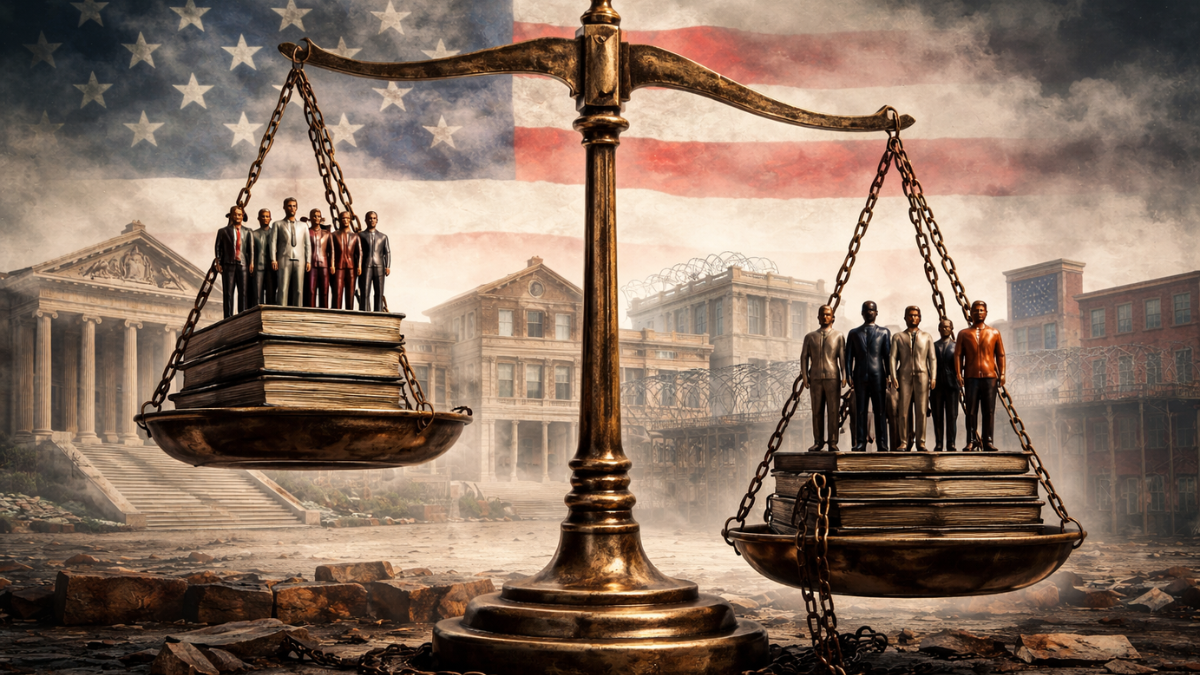
Systemic racism in American institutions is one of the most debated and researched themes in contemporary sociology. Unlike individual prejudice, systemic racism refers to the structured, historically rooted, and institutionally embedded patterns of inequality that shape life chances along racial lines. It is not merely about personal bias or isolated discriminatory acts; rather, it is about how laws, policies, norms, and organizational practices cumulatively produce unequal outcomes for different racial groups.
In sociological terms, systemic racism is closely connected to the concepts of social structure, power, inequality, and institutionalization. American society, as sociologists argue, was built within specific historical contexts—colonialism, slavery, segregation, and immigration control—that continue to shape contemporary institutions. From education and housing to criminal justice and healthcare, racial disparities persist in measurable and patterned ways.
This article examines systemic racism in American institutions from a sociological standpoint, focusing on its historical roots, theoretical explanations, institutional manifestations, and contemporary debates.
Understanding Systemic Racism: A Sociological Framework
Systemic racism refers to the normalization and legitimization of racial hierarchies through institutional policies and practices. It is embedded in the “rules of the game” that govern society. Sociologists differentiate systemic racism from individual racism by emphasizing structure over intention. Even when individuals do not hold overtly racist beliefs, institutions can still reproduce racial inequality.
Three major sociological perspectives help explain systemic racism:
Structural Functionalism views society as a system of interrelated parts. From this lens, racial inequality may be seen as historically embedded in institutional arrangements that were once justified to maintain economic and social order. For example, the plantation economy during slavery was considered “functional” for the dominant group, even though it was exploitative and oppressive.
Conflict Theory, inspired by thinkers like Karl Marx and later adapted by critical race scholars, emphasizes power and domination. According to this perspective, systemic racism is a mechanism through which dominant racial groups maintain economic, political, and cultural control.
Symbolic Interactionism focuses on everyday interactions and meanings. It highlights how stereotypes, racial profiling, and implicit biases shape institutional decisions at the micro level, reinforcing macro-level inequalities.
In contemporary sociology, Critical Race Theory (CRT) has become central to analyzing systemic racism. CRT argues that racism is not an aberration but a normal feature of American society, deeply embedded in legal and institutional systems.
Historical Foundations of Systemic Racism
To understand systemic racism, one must examine American history. Institutions do not emerge in a vacuum; they are shaped by political, economic, and cultural forces.
Slavery and Racial Hierarchy
The transatlantic slave trade and chattel slavery created a racial caste system that legally defined African Americans as property. This system was codified in law and reinforced through violence. Even after the abolition of slavery in 1865, racial hierarchies persisted.
Jim Crow and Legal Segregation
Following Reconstruction, Southern states implemented Jim Crow laws that mandated racial segregation in public facilities, schools, and transportation. The doctrine of “separate but equal,” upheld in Plessy v. Ferguson, legitimized segregation until it was overturned by Brown v. Board of Education.
These legal decisions show how racism was embedded within the judicial system itself. The state actively structured racial inequality through policy.
Redlining and Housing Discrimination
In the 20th century, federal housing policies institutionalized racial segregation. The Home Owners’ Loan Corporation created maps that labeled predominantly Black neighborhoods as “high-risk,” denying residents access to mortgages. This practice, known as redlining, restricted wealth accumulation for Black families while subsidizing white homeownership.
The racial wealth gap today cannot be understood without acknowledging these policies. Wealth in America is strongly tied to homeownership, and systemic barriers limited access for generations of non-white families.
Systemic Racism in the Criminal Justice System
The criminal justice system is one of the most studied sites of systemic racism.
Policing and Racial Profiling
Sociological research shows that Black and Latino individuals are disproportionately stopped, searched, and arrested compared to white individuals. These disparities cannot be explained solely by crime rates. Rather, they reflect institutional practices and implicit biases.
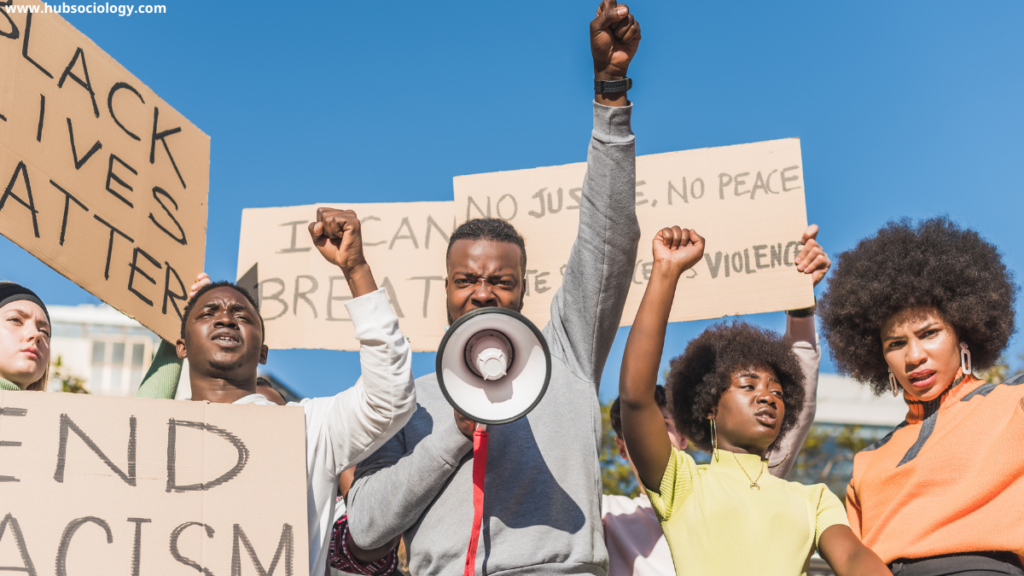
High-profile cases and movements such as Black Lives Matter have brought attention to police brutality and racial profiling. The sociological debate focuses on how policing strategies—such as “stop-and-frisk”—target minority communities.
Mass Incarceration
The United States has one of the highest incarceration rates in the world. Policies like mandatory minimum sentencing and the “War on Drugs” disproportionately affected Black communities. Sociologist Michelle Alexander famously described this system as a “new Jim Crow,” arguing that mass incarceration functions as a racial caste system.
Even after release, formerly incarcerated individuals face barriers to employment, housing, and voting, perpetuating cycles of marginalization.

Systemic Racism in Education
Education is often seen as a pathway to social mobility. However, systemic inequalities shape educational opportunities.
School Segregation
Despite the ruling in Brown v. Board of Education, schools remain highly segregated due to residential patterns and funding structures tied to property taxes. Predominantly minority schools often receive fewer resources, experienced teachers, and advanced placement courses.
Discipline and the School-to-Prison Pipeline
Black students are more likely to face suspension or expulsion compared to white students for similar behaviors. This contributes to the “school-to-prison pipeline,” where disciplinary policies push students out of school and into the criminal justice system.
Curriculum and Representation
Systemic racism also appears in the content of education. Historically, textbooks centered Eurocentric narratives while marginalizing contributions of other racial groups. Representation affects identity formation and academic engagement.
Healthcare and Racial Inequality
Healthcare disparities illustrate how systemic racism affects life expectancy and quality of life.
Studies show that Black Americans face higher rates of maternal mortality, chronic diseases, and lower access to quality healthcare. These disparities are not solely due to genetic differences but are linked to socioeconomic conditions, environmental racism, and unequal medical treatment.
The COVID-19 pandemic revealed stark racial disparities in infection and mortality rates. Sociologists argue that structural factors—such as employment in essential jobs, crowded housing, and limited healthcare access—explain these outcomes.
Economic Institutions and Labor Markets
Systemic racism shapes labor markets through hiring practices, wage gaps, and occupational segregation.
Research shows that job applicants with traditionally “white-sounding” names receive more callbacks than those with “Black-sounding” names, even with identical resumes. Occupational segregation channels minority workers into lower-paying and less secure jobs.
The racial wealth gap remains significant. White households, on average, possess significantly more wealth than Black and Latino households. This gap reflects cumulative disadvantages over generations.
Political Institutions and Representation
Political power is central to systemic inequality.
Historically, voter suppression tactics—such as literacy tests and poll taxes—restricted Black political participation. Although these practices were outlawed, contemporary debates about voter ID laws and district gerrymandering raise concerns about ongoing disparities.
Representation in political offices also matters. While diversity has increased, racial minorities remain underrepresented relative to their population share. Policies affecting education, healthcare, and criminal justice are shaped by those in power.
Media and Cultural Institutions
Media institutions influence public perception of race. Stereotypical portrayals of minority communities reinforce implicit biases that affect institutional decision-making.
News coverage often overrepresents minorities as perpetrators of crime while underrepresenting them as victims or professionals. These representations shape public opinion and policy debates.
The Role of Law and the Supreme Court
The legal system both reinforces and challenges systemic racism. Landmark decisions such as Brown v. Board of Education attempted to dismantle segregation. However, subsequent rulings have limited affirmative action and voting protections.
Sociologists argue that law is not neutral; it reflects power dynamics within society. Legal reforms may address overt discrimination but often fail to dismantle structural inequalities.
Intersectionality and Systemic Racism
The concept of intersectionality, developed by scholar Kimberlé Crenshaw, emphasizes that race intersects with gender, class, and other identities. For example, Black women may experience discrimination differently from Black men or white women.

Systemic racism cannot be understood in isolation; it interacts with other systems of inequality.
Contemporary Debates and Policy Responses
Debates about systemic racism have intensified in recent years. Supporters argue that acknowledging systemic racism is essential for policy reform. Critics claim that focusing on systemic racism overlooks individual responsibility.
Policy responses include affirmative action, diversity initiatives, criminal justice reform, and investments in underserved communities. Sociologists evaluate these policies based on their capacity to address structural rather than symbolic change.
Sociological Implications
From a sociological perspective, systemic racism shapes social mobility, social cohesion, and democratic legitimacy. When institutions consistently produce unequal outcomes, trust in society declines.
Systemic racism also affects intergroup relations. Persistent inequality fosters resentment, polarization, and social fragmentation.
Conclusion
Systemic racism in American institutions is not simply a matter of individual prejudice; it is a deeply embedded structural phenomenon shaped by history, power, and policy. From slavery and segregation to contemporary disparities in education, healthcare, criminal justice, and wealth, racial inequality is woven into institutional frameworks.
Sociological analysis emphasizes structure over intention, power over isolated acts, and historical continuity over episodic events. Addressing systemic racism requires structural reforms, institutional accountability, and sustained commitment to equity.
Understanding systemic racism is essential not only for academic inquiry but also for building a more just and inclusive society.
FAQs on Systemic Racism in American Institutions
1. What is meant by Systemic Racism in American Institutions?
Systemic Racism in American Institutions refers to the deeply embedded policies, practices, and cultural norms within social systems—such as education, criminal justice, healthcare, housing, and politics—that consistently produce racial inequalities, even without overtly racist intent.
2. How is Systemic Racism in American Institutions different from individual racism?
While individual racism involves personal prejudice or discriminatory behavior, Systemic Racism in American Institutions operates at a structural level, where institutional rules and historical legacies create unequal outcomes regardless of personal beliefs.
3. What are the historical roots of Systemic Racism in American Institutions?
The roots of Systemic Racism in American Institutions can be traced to slavery, segregation, redlining, and discriminatory immigration laws, which shaped economic, legal, and political systems over centuries.
4. How does Systemic Racism in American Institutions affect the criminal justice system?
Systemic Racism in American Institutions contributes to racial profiling, sentencing disparities, and higher incarceration rates for Black and Latino populations compared to white populations.
5. Does Systemic Racism in American Institutions exist in education?
Yes, Systemic Racism in American Institutions is evident in school funding inequalities, segregation, disproportionate disciplinary actions, and unequal access to advanced educational resources.
6. How does Systemic Racism in American Institutions impact wealth distribution?
Systemic Racism in American Institutions influences wealth gaps through discriminatory housing policies, employment barriers, and unequal access to financial resources across generations.
7. What role does housing policy play in Systemic Racism in American Institutions?
Redlining, mortgage discrimination, and zoning policies are examples of how Systemic Racism in American Institutions has historically limited minority homeownership and wealth accumulation.
8. How does healthcare reflect Systemic Racism in American Institutions?
Systemic Racism in American Institutions contributes to disparities in medical treatment, insurance coverage, maternal mortality rates, and life expectancy among racial groups.
9. Can Systemic Racism in American Institutions persist without explicit racist laws?
Yes, Systemic Racism in American Institutions can continue through neutral-looking policies that disproportionately disadvantage certain racial groups due to historical inequalities.
10. What is the relationship between Systemic Racism in American Institutions and political representation?
Systemic Racism in American Institutions can limit minority political power through voter suppression tactics, gerrymandering, and underrepresentation in leadership roles.
11. How do sociologists study Systemic Racism in American Institutions?
Sociologists analyze statistical disparities, historical documents, institutional policies, and lived experiences to understand how Systemic Racism in American Institutions shapes social outcomes.
12. Is Systemic Racism in American Institutions connected to intersectionality?
Yes, Systemic Racism in American Institutions intersects with gender, class, and other identities, creating layered forms of disadvantage for certain groups.
13. What are some policy solutions to address Systemic Racism in American Institutions?
Policy approaches include affirmative action, criminal justice reform, equitable school funding, anti-discrimination enforcement, and targeted community investments.
14. Why is acknowledging Systemic Racism in American Institutions important for democracy?
Recognizing Systemic Racism in American Institutions is essential to ensure equal rights, fair opportunities, and public trust in democratic systems.
15. Can Systemic Racism in American Institutions be dismantled?
Systemic Racism in American Institutions can be reduced through long-term structural reforms, public awareness, inclusive policymaking, and institutional accountability.