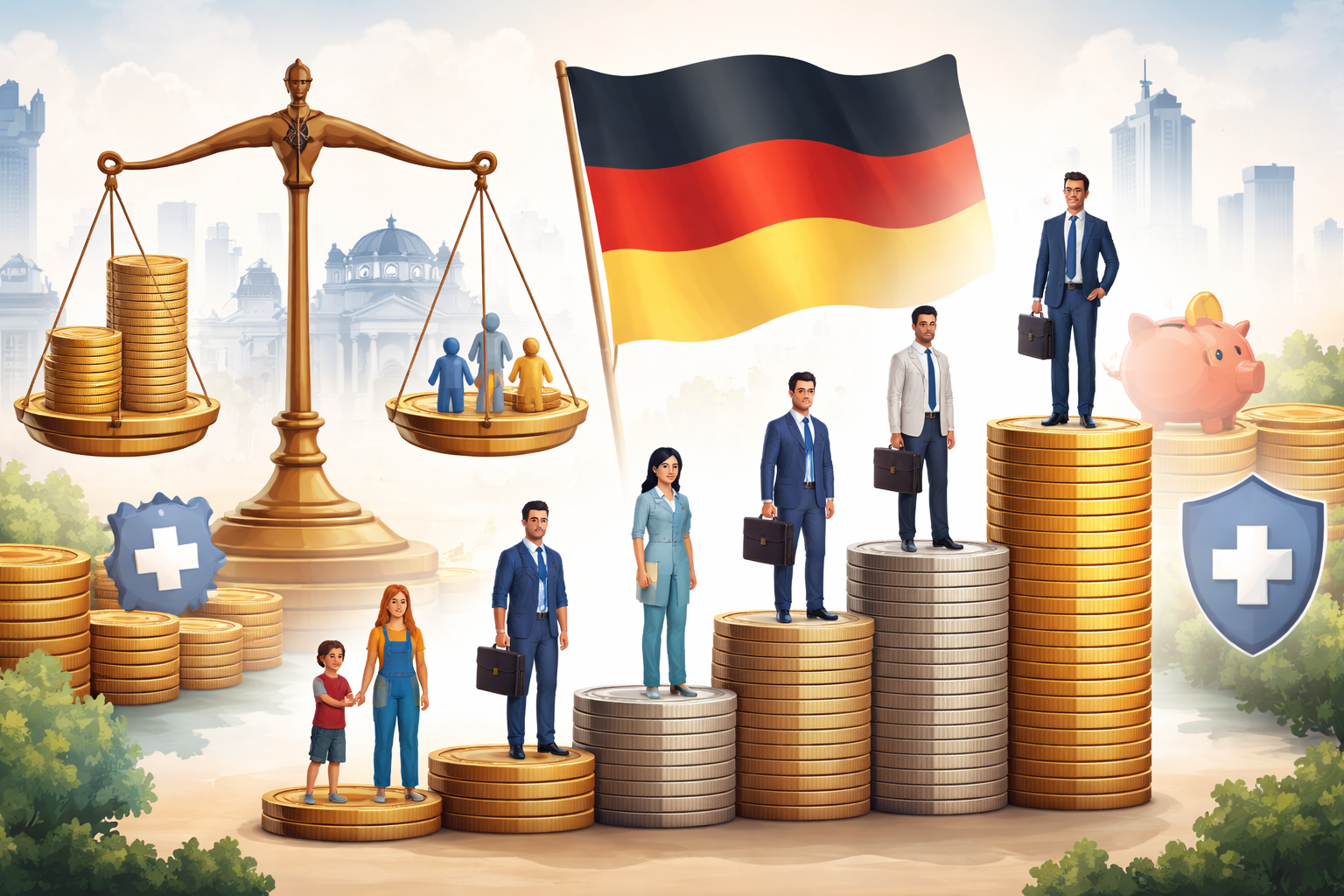
Germany is often regarded as one of the most successful examples of a modern welfare state in Europe. Its strong economy, comprehensive social security system, and commitment to social protection have shaped the lives of its citizens for decades. At the same time, German society is not free from social inequalities. Social stratification—based on class, income, education, occupation, gender, and migration background—continues to influence life chances in significant ways. From a sociological perspective, understanding the relationship between social stratification and the welfare state in Germany helps us evaluate how far social policies have succeeded in promoting equality, social cohesion, and social mobility.
This article examines the historical development of Germany’s welfare state, the structure of social stratification in German society, and the role of social policies in reducing or reproducing inequality. It also explores contemporary challenges such as globalization, migration, aging, and labor market changes.
Historical Roots of the German Welfare State
The foundations of the German welfare state were laid in the late 19th century under Chancellor Otto von Bismarck. Germany introduced the world’s first compulsory social insurance system, including health insurance, accident insurance, and old-age pensions. The main goal was to protect workers from social risks and reduce the appeal of socialist movements.
After World War II, West Germany expanded social welfare as part of its reconstruction process. The concept of the “social market economy” combined capitalist growth with social protection. The state guaranteed citizens protection against unemployment, illness, disability, and poverty while allowing market forces to operate.
Following reunification in 1990, the welfare system was extended to East Germany, though economic disparities between East and West persisted. Today, Germany has one of the most comprehensive welfare systems in the world, but it also faces growing pressure due to demographic changes and economic transformation.
Understanding Social Stratification in Germany
Social stratification refers to the structured inequalities between different groups in society. In Germany, stratification is shaped mainly by:

- Economic class
- Education and qualifications
- Occupational status
- Income and wealth
- Gender
- Migration background
- Regional differences
Although Germany promotes equality through social policies, social class still strongly influences life chances.
Class Structure
German society can broadly be divided into upper, middle, and working classes, though sociologists recognize more complex layers within these categories. The middle class remains large, but it has become increasingly polarized. Highly skilled professionals enjoy job security and rising incomes, while low-skilled workers often face precarious employment.
The working class, particularly in low-wage sectors such as retail, care work, and logistics, experiences greater economic insecurity. Meanwhile, wealth concentration among the upper class has increased, reflecting global trends in inequality.
Education and Social Mobility
Germany’s education system plays a major role in shaping social stratification. Students are separated into different school tracks at an early age, such as Gymnasium, Realschule, and Hauptschule. This tracking system often reproduces class inequality, as children from middle- and upper-class families are more likely to enter higher academic tracks.
Although university education is largely affordable, access remains unequal. Students from disadvantaged backgrounds face more barriers, limiting upward social mobility.
Occupational Stratification
Germany’s labor market is structured by strong vocational training and professional hierarchies. Skilled workers with apprenticeships and higher education enjoy stable employment, while low-skilled workers are more vulnerable to unemployment and job insecurity.
The rise of temporary contracts, part-time work, and gig economy jobs has further deepened occupational inequalities.
The German Welfare State Model
Germany follows a conservative-corporatist welfare model, according to sociologist Gøsta Esping-Andersen’s classification. This model emphasizes:
- Social insurance linked to employment
- Protection of traditional family roles
- Strong role of employers and trade unions
- Status-based benefits
The welfare system is designed to maintain social stability rather than radically reduce inequality.
Key Welfare Programs
Germany’s welfare state includes:
- Health insurance (mandatory for all)
- Unemployment benefits
- Pension system
- Family and child benefits
- Housing assistance
- Social assistance for the poor
These programs aim to protect citizens from major social risks and ensure a minimum standard of living.
Welfare State and Reduction of Inequality
From a sociological perspective, the welfare state plays a crucial role in moderating social stratification.
Income Redistribution
Through progressive taxation and social transfers, the German state redistributes income. Unemployment benefits, child allowances, and pensions reduce poverty rates and protect vulnerable groups. Without these policies, income inequality would be significantly higher.
Protection Against Social Risks
The welfare state reduces the risks associated with illness, old age, and job loss. This protection helps maintain social stability and prevents large sections of the population from falling into extreme poverty.
Support for Families
Family policies, including parental leave and child benefits, support working parents and encourage gender equality. However, women still face challenges in career advancement, indicating persistent gender stratification.
Persistent Inequalities in German Society
Despite strong welfare institutions, social inequality remains.
Wealth Inequality
Wealth distribution in Germany is highly unequal. While most people rely on wages and pensions, a small elite controls significant assets such as property and financial investments. The welfare state focuses more on income redistribution than wealth redistribution, allowing wealth inequality to persist.
Gender Stratification
Women earn less than men on average and are more likely to work part-time. Traditional family roles continue to influence career opportunities. Although social policies support working mothers, gender inequality remains embedded in the labor market.
Migrant Inequality
Germany has a large migrant population, including refugees and second-generation immigrants. Many migrants face disadvantages in education, employment, and housing. Language barriers, discrimination, and lower qualifications limit their social mobility.
The welfare state provides support, but social integration remains a challenge.
East–West Divide
Economic differences between eastern and western Germany continue to shape social stratification. Eastern regions often have lower wages, higher unemployment, and fewer opportunities, reinforcing regional inequality.
Labor Market Reforms and Social Stratification
In the early 2000s, Germany introduced the Hartz reforms to modernize the labor market. These reforms reduced unemployment but also expanded low-wage and temporary jobs.

From a sociological viewpoint, these changes increased labor market flexibility but also deepened inequality. Many workers now face job insecurity, limited benefits, and unstable income, especially in service sectors.
The welfare state shifted from passive support to “activation policies,” emphasizing personal responsibility and labor market participation.
The Role of Trade Unions and Social Partnership
Germany’s system of social partnership between employers, trade unions, and the state has traditionally reduced class conflict. Collective bargaining ensures fair wages and working conditions for many workers.
However, union membership has declined, particularly among young and precarious workers. This weakens collective protection and contributes to growing inequality.
Aging Population and Welfare Challenges
Germany has an aging population, which places pressure on pensions, healthcare, and social services. Older citizens rely heavily on welfare benefits, while younger workers face higher contributions.
This demographic shift raises sociological questions about intergenerational inequality and the sustainability of the welfare state.
Globalization and Social Stratification
Global economic competition has transformed German industry. While high-skilled workers benefit from global markets, low-skilled workers face job losses and wage pressure.
The welfare state helps cushion these effects, but globalization continues to reshape class structures and labor conditions.
Digitalization and the Future of Work
Automation and digital technologies are changing the German labor market. Some jobs are disappearing, while new ones require advanced skills.
This transformation may increase inequality between skilled and unskilled workers. The welfare state must adapt through education, training, and social protection.

Sociological Evaluation of the German Welfare State
From a sociological perspective, Germany’s welfare state has been successful in:
- Preventing extreme poverty
- Providing social security
- Promoting social stability
- Reducing income inequality
However, it has been less effective in addressing:
- Wealth inequality
- Educational inequality
- Gender inequality
- Migrant exclusion
The system tends to preserve existing social hierarchies rather than transform them.
Welfare State and Social Cohesion
The German welfare model promotes social cohesion by ensuring that most citizens feel protected. Trust in public institutions remains relatively high.
Yet rising inequality and political polarization suggest that social cohesion is under pressure. Some groups feel excluded from economic progress.
Conclusion
Social stratification and the welfare state in Germany are closely connected. The welfare system has played a vital role in protecting citizens from social risks and reducing income inequality. It has contributed to social stability, economic security, and political cohesion.
At the same time, German society remains stratified along lines of class, education, gender, migration background, and region. Structural inequalities continue to shape life chances, and the welfare state often reinforces rather than eliminates these differences.
From a sociological perspective, the future of the German welfare state depends on its ability to adapt to globalization, demographic change, digitalization, and social diversity. Policies that promote equal education, inclusive labor markets, gender equality, and migrant integration will be crucial for creating a more just and cohesive society.
Germany’s experience shows that while welfare states can reduce inequality, they must continuously evolve to meet new social challenges.
FAQs on Social Stratification and Welfare State in Germany
1. What is social stratification in Germany?
Social stratification in Germany refers to the hierarchical division of society based on class, income, education, occupation, and social status.
2. How does the welfare state function in Germany?
Germany’s welfare state provides social security through health insurance, pensions, unemployment benefits, and family support programs.
3. Which welfare model does Germany follow?
Germany follows the conservative-corporatist welfare model, emphasizing social insurance linked to employment.
4. Does the welfare state reduce inequality in Germany?
Yes, it reduces income inequality, but wealth and educational inequalities still remain.
5. What role does education play in social stratification in Germany?
The early tracking system in schools often reproduces class differences and limits social mobility.
6. How does class structure affect German society?
Upper and middle classes enjoy better opportunities, while lower-income groups face job insecurity and limited mobility.
7. Are migrants socially disadvantaged in Germany?
Many migrants face challenges in education, employment, and social integration.
8. What is the East–West divide in Germany?
Eastern Germany generally has lower wages and fewer job opportunities compared to the West.
9. How does the pension system reflect social stratification?
Higher earners receive better pensions, reflecting lifetime income differences.
10. What impact did the Hartz reforms have?
They reduced unemployment but increased low-wage and insecure jobs.