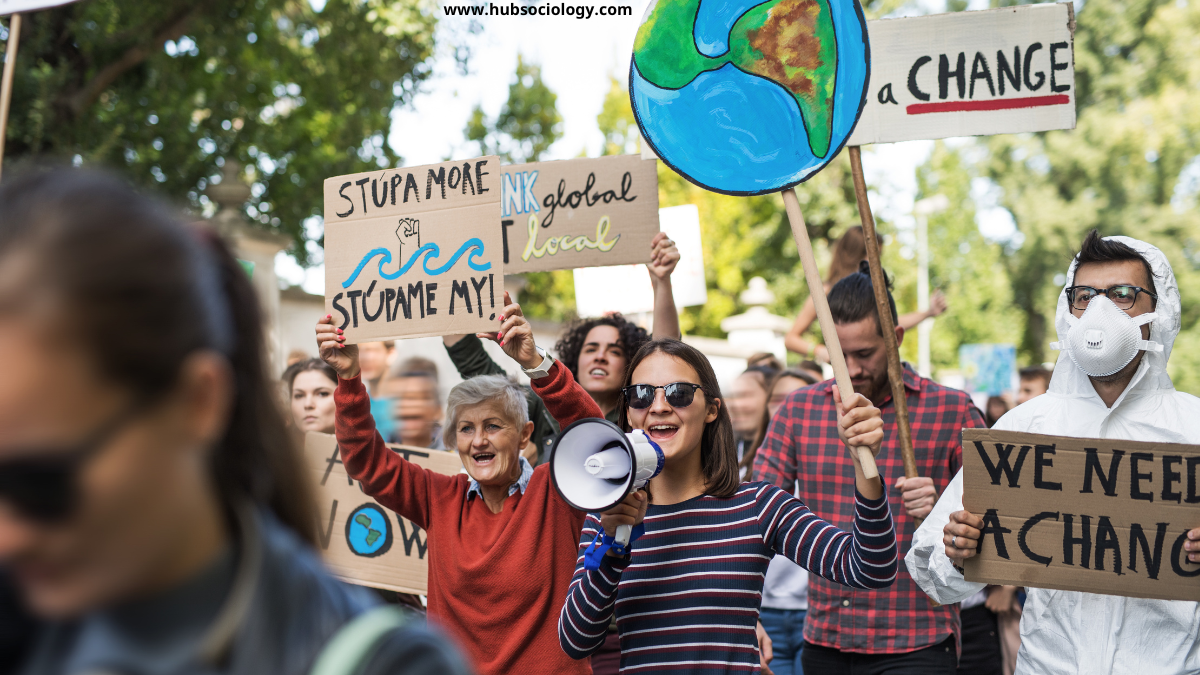
Social movements have long been central forces shaping American society, functioning as collective responses to inequality, exclusion, and contested power structures. From the mid-twentieth-century Civil Rights Movement to the contemporary Black Lives Matter Movement, the struggle for racial justice in the United States reveals how oppressed groups mobilize resources, challenge hegemonic institutions, and reshape cultural narratives. Sociologically, these movements illuminate the dynamics of collective identity, political opportunity, social change, and resistance.
While the context and tactics have evolved, the core demand—recognition of Black humanity and equality—remains deeply connected across generations.

Table of Contents
Historical Foundations and Structural Inequalities
To understand the trajectory from Civil Rights to Black Lives Matter, it is essential to examine the structural inequalities embedded in American society. The legacy of slavery, Jim Crow segregation, discriminatory housing policies, unequal education, employment disparities, and racialized policing have historically reinforced a racial hierarchy. Sociologists studying systemic racism argue that these inequalities are not isolated incidents but “deep structures” reproduced through institutions, policies, and cultural norms. Movements for racial justice thus emerge as corrective mechanisms responding to the failure of formal institutions to guarantee equal rights.
The mid-twentieth century Civil Rights Movement arose in a period when legal segregation and disenfranchisement were entrenched. African Americans faced limited access to public services, segregated schools, and frequent violence. These structural constraints shaped both the urgency and the form of collective action, pushing Black communities to adopt strategies that would challenge the moral legitimacy of segregation while appealing to national ideals of democracy and justice.
The Emergence of the Civil Rights Movement
The Civil Rights Movement of the 1950s and 1960s remains one of the most influential social movements in U.S. history. It was driven by a combination of grassroots organizing, religious institutions, student activism, and national advocacy organizations. Sociologists often highlight the pivotal role of Black churches and community networks, which functioned as hubs for mobilization. These networks created shared identities and collective consciousness, crucial for sustaining participation in the face of repression.
The movement gained national attention through strategic nonviolent protests, boycotts, marches, and civil disobedience. The Montgomery Bus Boycott (1955–56), sparked by Rosa Parks’ refusal to give up her seat, demonstrated the power of coordinated community action. The sit-ins initiated by students in Greensboro in 1960 challenged the legitimacy of segregated public spaces and inspired similar actions across the South. The 1963 March on Washington further emphasized the moral weight of the movement, combining demands for jobs and freedom with calls for legislative reform.
Sociologically, the Civil Rights Movement succeeded because it effectively aligned resource mobilization, political opportunity, and cultural framing. The media played a critical role in broadcasting images of police brutality, which shifted public opinion and pressured national leaders to act. International politics also influenced domestic decisions; during the Cold War, segregation weakened America’s democratic image abroad, creating openings for reform. These structural conditions helped facilitate landmark victories such as the Civil Rights Act of 1964 and the Voting Rights Act of 1965.
Collective Identity, Leadership, and Internal Tensions
Movements are rarely unified, and the Civil Rights Movement was no exception. While Martin Luther King Jr. symbolized nonviolent resistance rooted in Christian ethics, other leaders and organizations advocated different approaches. Malcolm X and the Nation of Islam critiqued integrationist strategies and emphasized Black nationalism, self-defense, and cultural pride. These ideological differences reveal how social movements reflect diverse understandings of freedom and empowerment within marginalized communities.
Sociologists argue that internal debates can strengthen movements by allowing them to adapt to changing social realities. In the case of the Civil Rights Movement, tension between nonviolent and militant strategies contributed to a broader spectrum of activism, ranging from voter registration drives to the emergence of the Black Power Movement. Although the mainstream narrative often underscores unity, sociological analysis reveals a complex, evolving movement shaped by negotiations of identity, strategy, and representation.
From Civil Rights to Black Power: Shifting Frames
The late 1960s witnessed a shift toward more radical forms of activism. The Black Power Movement, represented by groups like the Black Panther Party, challenged the slow pace of reform and the persistent socioeconomic inequalities that remained even after legislative gains. This movement reframed the struggle from a purely rights-based discourse to one focused on community autonomy, self-determination, and control over resources.
Sociologically, this transition reflects the changing perceptions of political opportunity. As federal support waned and white backlash increased, many activists concluded that systemic change required confronting economic inequality, police violence, and institutional racism more directly. The Black Panthers’ community programs—free breakfasts, health clinics, and education—demonstrated how social movements can function as alternative institutions, filling gaps left by the state.
Though often misrepresented as purely militant, the Black Power era expanded the terrain of social justice by emphasizing dignity, cultural pride, and intersectional struggles. The movement also shaped future activism by highlighting the interconnectedness of race, class, gender, and state violence—ideas that later influenced Black feminist scholars and contemporary movements like Black Lives Matter.
The Rise of Black Lives Matter
Black Lives Matter (BLM) emerged in 2013 after the acquittal of George Zimmerman for the killing of Trayvon Martin. Founded by Alicia Garza, Patrisse Cullors, and Opal Tometi, the movement began as a hashtag but rapidly evolved into a broad-based network addressing police brutality and systemic racism. Unlike earlier movements, BLM was deeply rooted in digital activism, decentralized leadership, and intersectional frameworks. This marked a significant departure from the hierarchical leadership structures of the Civil Rights era.
Sociologically, BLM represents a new wave of social movement organizing shaped by the digital age. Social media platforms enabled rapid dissemination of information, coordination of protests, and global solidarity. Visual evidence of police violence—such as the deaths of Michael Brown, Eric Garner, Breonna Taylor, and George Floyd—mobilized millions of people, making BLM one of the largest protest movements in U.S. history. The movement expanded beyond racial justice to include issues related to gender, sexuality, poverty, incarceration, and immigration, reflecting a broader understanding of how systems of oppression intersect.
BLM’s emphasis on intersectionality draws from the work of scholars like Kimberlé Crenshaw, who argued that racial oppression cannot be understood in isolation from gender and class. The significant participation of women, queer activists, and youth highlights how contemporary movements strive to create inclusive spaces and avoid replicating the hierarchies of previous eras.
Tactics, Strategies, and Repertoires of Contention
A comparison of the Civil Rights Movement and BLM reveals shifts in tactics and strategies. While earlier activists relied heavily on organized marches, sit-ins, and legal advocacy, contemporary activists use digital tools for mobilization, public education, and political pressure. The use of smartphones to record police interactions provides a new form of witnessing that challenges official narratives. Hashtags serve as rallying calls, transforming individual tragedies into collective demands.
However, both movements share important sociological similarities. They use public disruption to draw attention to injustice, rely on community networks for support, and frame their struggles within broader moral and democratic ideals. Both also face backlash, often characterized by attempts to delegitimize their demands through narratives of criminality, extremism, or anti-nationalism. Sociologists note that such backlash is a common response to movements challenging existing power structures, reflecting deeper anxieties about social change.
BLM’s decentralized model allows for local autonomy, with chapters organizing according to community needs. This flexibility strengthens resilience but also leads to debates over direction, goals, and representation. These internal negotiations reflect the dynamic nature of social movements and the ongoing challenge of balancing unity with diversity.
Media Representation and Public Opinion
Media has always played a powerful role in shaping perceptions of social movements. During the Civil Rights era, televised images of police dogs and firehoses attacking peaceful protesters generated national sympathy and pressured policymakers to act. With BLM, social media democratized activism by allowing marginalized groups to bypass traditional gatekeepers and narrate their own experiences.
Yet media representations also shape public opinion in complex ways. Mainstream outlets often focus on moments of conflict, overshadowing the structural issues driving protests. Sociologists studying media framing argue that movements, particularly those representing marginalized groups, must constantly battle misrepresentation. BLM activists counter negative framing by producing their own content, conducting teach-ins, and promoting community-based storytelling.
Public opinion on both the Civil Rights Movement and BLM has fluctuated over time. While the Civil Rights Movement is now celebrated, it faced intense criticism during the 1960s. Similarly, BLM experienced widespread support after the murder of George Floyd, followed by political polarization. This cyclical pattern reflects how societies frequently resist transformative demands before ultimately accepting them as part of their moral progress.
Institutional Responses and Policy Outcomes
Social movements aim not only to raise awareness but also to influence policy and institutional practice. The Civil Rights Movement achieved major legislative victories, including desegregation laws and voting protections. These reforms significantly reshaped American society, although they did not eliminate racial inequality.
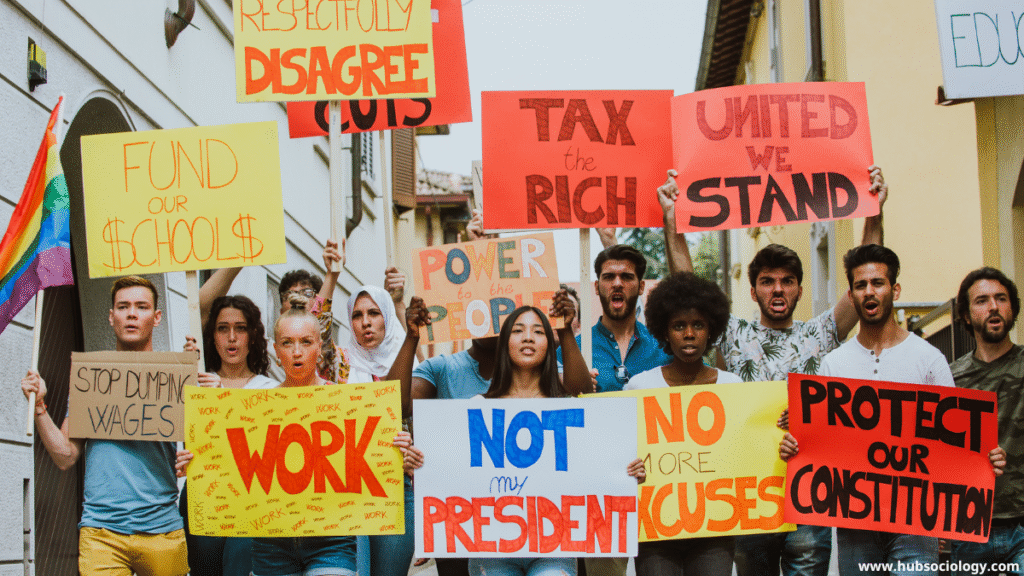
BLM’s impact is still unfolding. While it has not produced sweeping federal legislation comparable to the 1960s, it has influenced local policies on policing, increased oversight, and sparked national conversations on criminal justice reform. The movement also encouraged corporations, universities, and public institutions to address racial disparities and implement diversity initiatives. Sociologists note that cultural change often precedes policy change, and BLM has already shifted the national discourse on race, making systemic racism a widely acknowledged concept.
Sociological Significance of the Movements
Comparing the Civil Rights Movement and Black Lives Matter reveals the evolution of collective struggle across generations. Both movements—
- challenge institutionalized racism
- mobilize collective identity and community solidarity
- use moral narratives to demand recognition and justice
- confront state power, particularly in the realm of policing
- spark national debates about democracy, citizenship, and equality
Sociologically, these movements demonstrate that social change is an ongoing process shaped by conflict, negotiation, and collective action. Movements do not simply emerge spontaneously; they arise when oppressed groups develop shared grievances, recognize political opportunities, and articulate compelling visions for the future.
Continuity and Transformation
Although separated by decades, the Civil Rights Movement and Black Lives Matter are connected by a continuous struggle against systemic racism. Yet they also reflect the transformations in American society—technological innovation, demographic changes, ideological shifts, and new forms of surveillance and policing.
The Civil Rights Movement fought for legal equality within a segregated society. BLM confronts subtler forms of institutional racism maintained through criminal justice systems, economic inequality, and social exclusion. While earlier activists demanded inclusion within American institutions, contemporary activists increasingly question the legitimacy of those institutions and advocate transformative alternatives.
Conclusion
From the Civil Rights Movement of the 1950s and 1960s to the contemporary Black Lives Matter Movement, the history of racial justice activism in the United States illustrates the power of collective mobilization to challenge entrenched inequalities. These movements reveal how oppressed groups redefine democracy by expanding its boundaries, exposing contradictions between national ideals and lived realities. Sociologically, they highlight the ongoing struggle between dominant power structures and movements from below, shaped by changing political contexts, cultural narratives, and forms of resistance.
The Civil Rights Movement laid the foundation for legal equality and inspired global anti-racist struggles. Black Lives Matter builds on that legacy while adapting to new forms of inequality in the digital age. Together, they demonstrate that social movements are vital engines of social change, continually reshaping American society and pushing it toward greater justice, recognition, and human dignity.
Do you like this this Article ? You Can follow as on :-
Facebook – https://www.facebook.com/hubsociology
WhatsApp Channel – https://whatsapp.com/channel/0029Vb6D8vGKWEKpJpu5QP0O
Gmail – hubsociology@gmail.com
15 FAQs on Social Movements
1. What are Social Movements in the context of the United States?
Social Movements in the United States refer to organized collective actions by groups seeking to challenge inequality, influence public policy, and bring about social change. The Civil Rights Movement and Black Lives Matter are two major examples.
2. How do Social Movements arise in society?
Social Movements arise when groups develop shared grievances, recognize opportunities for change, and mobilize resources. Structural inequalities and systemic injustices often trigger these movements.
3. What made the Civil Rights Movement one of the most influential Social Movements in U.S. history?
The Civil Rights Movement succeeded because it combined grassroots organizing, moral leadership, media exposure, and legal strategies to challenge segregation and racism.
4. How are Social Movements connected to systemic racism in the United States?
Social Movements like the Civil Rights Movement and Black Lives Matter highlight how systemic racism is embedded in institutions such as law enforcement, housing, education, and employment.
5. What role did leadership play in earlier Social Movements such as the Civil Rights Movement?
Leadership in earlier Social Movements, especially figures like Martin Luther King Jr. and Rosa Parks, provided vision, strategy, and moral authority, helping unify widespread activism.
6. How is the Black Lives Matter Movement different from earlier Social Movements?
Black Lives Matter differs from earlier Social Movements through its decentralized structure, heavy use of social media, and intersectional approach that includes gender, sexuality, and economic justice.
7. Why is collective identity important in Social Movements?
Collective identity gives members of Social Movements a sense of belonging and shared purpose, helping them remain committed even in the face of repression or social backlash.
8. How do Social Movements use media to influence public opinion?
Social Movements rely on traditional and digital media to expose injustices, mobilize supporters, and counter negative narratives. Social media has especially transformed modern activism.
9. What are the common tactics used in Social Movements?
Common tactics in Social Movements include protests, marches, sit-ins, civil disobedience, online campaigns, boycotts, and community service programs that offer alternatives to state institutions.
10. How do Social Movements impact public policy?
Social Movements pressure institutions to change laws and policies. The Civil Rights Movement led to the Civil Rights Act and Voting Rights Act, while Black Lives Matter has influenced policing reforms and national debates on systemic racism.
11. What challenges do Social Movements face in achieving their goals?
Social Movements often face state repression, media misrepresentation, internal disagreements, resource limitations, and public backlash driven by fear of social change.
12. Why do some Social Movements experience backlash?
Backlash occurs because Social Movements challenge dominant power structures, leading individuals or groups benefiting from the status quo to resist change.
13. How do Social Movements contribute to cultural change?
Beyond policy reforms, Social Movements reshape societal values, language, and moral understanding. For example, Black Lives Matter shifted public discourse by making concepts like systemic racism and police brutality widely recognized.
14. What is the role of youth in Social Movements today?
Youth play a major role in contemporary Social Movements by driving digital activism, organizing local protests, and bringing fresh perspectives to issues of identity, justice, and equality.
15. How do Social Movements remain relevant across generations?
Social Movements remain relevant by adapting strategies to new technologies, addressing evolving social issues, and connecting present struggles to historical legacies like the Civil Rights Movement.