
India’s reservation system is one of the most debated public policies in the world. Supporters see it as a necessary tool for social justice and democratic inclusion. Critics argue it can weaken merit, create new inequalities, and harden identities. From a sociological perspective, reservation is not just a “policy decision”—it is a window into India’s historical hierarchy, power relations, social mobility, and the struggle over what equality should mean in a deeply unequal society.
This article explores the reservation system in India through sociological arguments both for and against, focusing on caste, class, power, representation, and the lived experience of inequality.

What is the Reservation System?
Reservation in India refers to constitutionally backed affirmative action measures that provide quota-based access to education, government jobs, and political representation for certain historically disadvantaged groups. The primary categories include:
- Scheduled Castes (SCs)
- Scheduled Tribes (STs)
- Other Backward Classes (OBCs)
- Additional provisions like EWS (Economically Weaker Sections) in recent years
- Special provisions for women in some areas and proposals for wider political reservation
Sociologically, reservation is a response to the reality that Indian society was structured for centuries by graded inequality, where caste functioned as a rigid system of social ranking and exclusion.
Sociological Foundations: Why Reservation Exists
Reservation rests on the idea that inequality is not only economic but also social, cultural, and historical. Unlike poverty alone, caste-based disadvantage is often reproduced through:
- stigma and discrimination
- restricted social networks
- residential segregation
- unequal school quality and learning environments
- limited access to elite institutions and occupations
- inherited social status affecting life chances
Sociologists describe this as structural inequality—a system that shapes opportunities long before individuals can “compete” on equal terms.
In simple terms: reservation is built on the belief that equal opportunity cannot exist without correcting unequal starting points.
Sociological Arguments For Reservation
1) Correcting Historical Injustice and Social Exclusion
One major sociological argument is that caste oppression was not an accidental outcome—it was an organized social system that denied education, land, dignity, and occupational freedom to many communities. Even after legal equality, social attitudes and institutional discrimination do not vanish quickly.
Reservation therefore acts as a compensatory mechanism—a policy attempt to repair deep historical harm. From this view, reservation is not “charity”; it is justice.
2) Social Mobility and Life Chances
Sociology emphasizes “life chances” (a concept associated with Max Weber): the probability that an individual can access education, health, security, and status. People from privileged castes/classes often inherit advantages—good schools, coaching, confidence, language capital, and networks.
Reservation can increase upward mobility for communities historically denied these advantages. The sociological claim is that mobility is not only about talent but also about access.
When a first-generation learner from a marginalized background reaches a professional role, it can change the social trajectory of an entire family and sometimes a whole community.
3) Representation and Democratic Inclusion
Reservation is also justified through the politics of representation. If institutions—universities, civil services, legislatures—are dominated by historically privileged groups, then decision-making power becomes socially biased.
In this argument, reservation strengthens democracy by ensuring that marginalized groups are not only “ruled” but also participate in ruling. Sociologically, representation matters because policies, priorities, and public empathy are shaped by who sits at the table.
4) Breaking Caste-Based Monopolies
Caste historically controlled occupations and authority. Many elite professions and state institutions remained socially closed for long periods even after independence. Reservation is seen as a tool to break entrenched monopolies and open up sectors where exclusion was socially normalized.
From this lens, reservation is a counter-force to social closure—the process by which dominant groups protect their privileges by controlling entry into desirable positions.
5) Reducing Social Stigma Through Visibility
When members of marginalized communities enter administration, academia, medicine, engineering, law, and other elite occupations, it can challenge stereotypes. Sociologically, this is symbolic and cultural change.
Visibility can weaken the belief that certain groups “naturally” belong to lower-status work. Over time, such representation can reshape social imagination, especially among children and youth.
6) Equality of Outcome vs Equality of Opportunity
Many supporters argue that focusing only on “equal opportunity” ignores reality. If two runners start at different distances from the finish line, “same rules” will not produce fairness.
Reservation pushes society slightly toward substantive equality—not just formal equality on paper. This is why sociologists often say that policies must address not only individuals but also structures.
7) Evidence of Continuing Discrimination
A key sociological point is that caste has not disappeared. It exists in marriage patterns (endogamy), housing discrimination, everyday prejudice, and institutional bias. In many places, caste networks still influence hiring, promotions, and social acceptance.
Reservation is viewed as necessary because discrimination is not only a past fact—it continues in modern forms.
Sociological Arguments Against Reservation

1) Meritocracy and Perceived Unfairness
The strongest argument against reservation is the claim that it undermines merit by giving advantages based on group identity rather than performance. Critics argue that competitive exams should reward the “best candidate,” and that quotas may lower institutional standards.
Sociologically, this is also a conflict of values: meritocratic ideals vs social justice ideals.
However, sociologists also point out that “merit” is socially shaped—access to coaching, quality schooling, English proficiency, and confidence are unevenly distributed. Still, the perception of unfairness can be socially powerful and politically mobilizing.
2) The “Creamy Layer” Problem and Intra-Group Inequality
A common sociological critique is that benefits often go repeatedly to better-off families within reserved categories, especially in OBC reservations. This creates intra-group inequality, where the most disadvantaged remain excluded while a relatively privileged segment captures opportunities.
From this view, reservation can sometimes produce an internal elite within marginalized groups, leaving the poorest behind unless policy design becomes more sensitive and data-driven.
3) Reinforcing Caste Identities Instead of Reducing Them
Some critics argue that reservation strengthens caste consciousness because it requires official classification and political competition around caste categories. Instead of weakening caste, it may institutionalize it in public life.
Sociologically, this touches the debate between:
- those who believe caste will fade only when society stops recognizing it, and
- those who argue caste fades only when caste-based inequality fades—and recognition is necessary to fight it.
4) Social Polarization and Resentment
Reservation can generate social tensions, especially when groups feel excluded from opportunities. Student conflicts, protests, and political polarization sometimes intensify around quota debates.
Sociologists describe this as relative deprivation—people feeling deprived not because they are absolutely poor, but because they compare themselves to others and perceive injustice.
This resentment can become dangerous when it turns into hostility toward marginalized groups rather than toward inequality itself.
5) Overemphasis on Public Sector and Limited Reach
Another critique is practical: reservations apply mainly to government jobs and public institutions, while the private sector and informal sector employ the majority of people. If the state shrinks recruitment or if economic growth is largely private, reservation’s impact may be limited for many groups.
Sociologically, this raises a question: can reservation alone deliver justice when structural inequality exists across labor markets, land ownership, and education systems?
6) Neglect of Universal Educational Reform
Some argue reservation addresses outcomes at the top—college seats and jobs—without fixing the root: unequal schooling, malnutrition, poor learning environments, and lack of support. Without strong universal reforms, reservation becomes a contest over scarce seats rather than expansion of capability for all.
In sociological terms, reservation may redistribute limited opportunities instead of expanding social resources, unless paired with systemic reforms.
7) Mismatch and Psychological Stress
A debated claim is that beneficiaries may face “mismatch,” meaning they may enter highly competitive environments without adequate academic preparation due to poor schooling. This can lead to stress, dropout, or stigma.
Sociologists emphasize that if institutions do not provide bridging support—remedial programs, mentorship, anti-discrimination mechanisms—then social inclusion may remain incomplete and emotionally costly.
Sociological Middle Ground: What the Debate Often Misses
The reservation debate is often framed as merit vs quota, but sociologically it is more accurately:
- Privilege vs disadvantage
- Structure vs individual
- Equality as fairness vs equality as justice
- Representation vs efficiency
- Historical oppression vs present competition
Many arguments talk about “who deserves what,” but sociology asks: Who had access to what—and for how long?
It also asks: Which groups set the definition of merit, and why?
A More Balanced Sociological View: Reservation + Reform
From a sociological policy perspective, reservation works best when combined with reforms that reduce inequality at its roots:
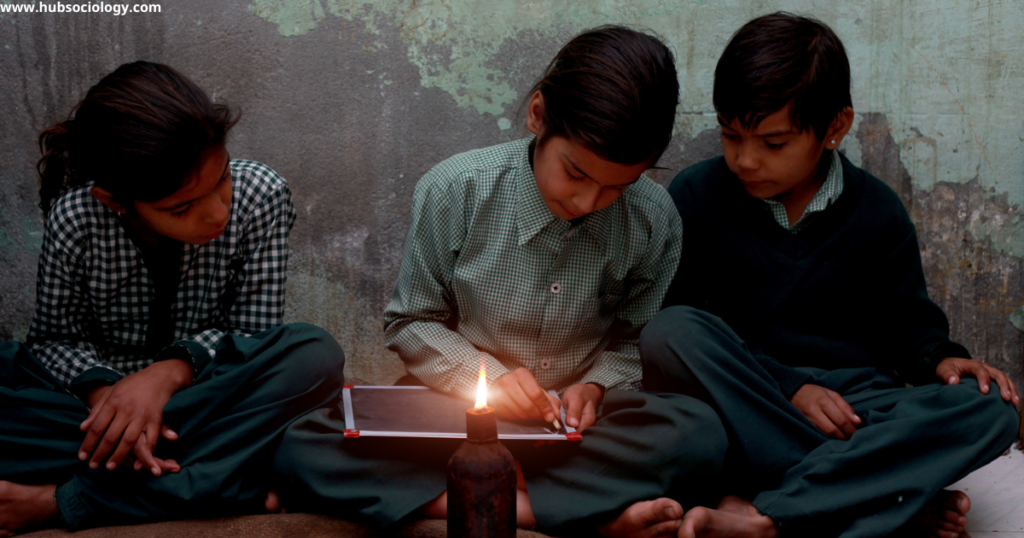
- Stronger public schooling with quality teachers, infrastructure, and learning support
- Scholarships and mentoring for first-generation learners
- Anti-discrimination enforcement in institutions and hostels
- Data transparency to evaluate who benefits and who remains excluded
- Refining targeting, especially where “creamy layer” capture is high
- Expanding seats and jobs, so inclusion does not become a zero-sum conflict
- Social awareness efforts, because legal inclusion without cultural change can still produce humiliation and isolation
Sociologically, this approach treats reservation not as a complete solution, but as one tool among many in a broader project of social transformation.
Conclusion
The reservation system in India is not simply a policy about quotas; it is a reflection of India’s struggle to balance historical justice, social equality, and modern competition. Sociological arguments in favor emphasize structural inequality, representation, social mobility, and the need to dismantle caste-based exclusion. Arguments against focus on merit, social polarization, internal inequalities, and the risk of reinforcing caste identities.
A sociological conclusion is that reservation remains meaningful because social inequality remains real—but reservation alone cannot create a fair society. The real challenge is to build a system where marginalized communities do not need special access because the foundations—education, dignity, opportunity, and social acceptance—are genuinely equal.
Until then, reservation continues to be both a symbol and an instrument of India’s unfinished project of social justice.
FAQs on Reservation System in India
1. What is the Reservation System in India?
The Reservation System in India is a policy that provides quota-based access to education, government jobs, and political representation for socially and historically disadvantaged groups.
2. Why was the Reservation System in India introduced?
The Reservation System in India was introduced to correct historical injustices caused by caste-based discrimination and to promote social equality.
3. Which groups benefit from the Reservation System in India?
Scheduled Castes (SC), Scheduled Tribes (ST), Other Backward Classes (OBC), and Economically Weaker Sections (EWS) benefit from the Reservation System in India.
4. What is the sociological purpose of the Reservation System in India?
Sociologically, the Reservation System in India aims to reduce structural inequality, promote social mobility, and ensure representation of marginalized communities.
5. How does the Reservation System in India promote social justice?
The Reservation System in India promotes social justice by providing equal opportunities to groups historically excluded from education and employment.
6. Is the Reservation System in India based only on caste?
Traditionally, the Reservation System in India focused on caste, but now it also includes economic criteria like EWS reservations.
7. What are the main arguments in favor of the Reservation System in India?
Supporters argue that the Reservation System in India corrects historical injustice, increases representation, and improves social mobility.
8. What are the main criticisms of the Reservation System in India?
Critics say the Reservation System in India affects merit, increases social division, and benefits only a small section within reserved groups.
9. Does the Reservation System in India reduce caste discrimination?
The Reservation System in India helps reduce inequality, but caste discrimination still exists in social life, marriage, and workplaces.
10. What is the creamy layer in the Reservation System in India?
The creamy layer refers to economically advanced members of OBC groups who are excluded from reservation benefits.
11. Is the Reservation System in India permanent?
The Reservation System in India is reviewed periodically, but it continues because social inequality still exists.
12. How does the Reservation System in India affect education?
The Reservation System in India increases access to higher education for marginalized students.
13. Does the Reservation System in India harm merit?
This is debated. Sociologists argue that merit is influenced by social background and unequal access to resources.
14. Can the Reservation System in India end caste inequality?
The Reservation System in India alone cannot end caste inequality without broader social and educational reforms.
15. What is the future of the Reservation System in India?
The future of the Reservation System in India depends on social change, data-based reforms, and inclusive development policies.