
Introduction
Poverty in America is often misunderstood as a result of individual failure, laziness, or poor decision-making. However, sociologists argue that poverty is largely shaped by structural forces rather than personal shortcomings. Despite being one of the richest nations in the world, the United States continues to experience widespread economic inequality, housing insecurity, food shortages, and limited access to quality healthcare and education.
From a sociological perspective, poverty is not simply an economic issue but a social condition influenced by historical inequalities, institutional practices, labor market changes, racial discrimination, and public policies. Understanding the structural causes of poverty helps us move beyond blaming individuals and toward recognizing how social systems create and maintain economic disadvantage.

This article explores the major structural and social causes of poverty in America, focusing on inequality, race, education, labor markets, gender, housing, healthcare, and public policy.
Understanding Poverty Sociologically
Sociology views poverty as a product of social organization rather than individual behavior. People are born into different social positions that affect their access to resources, opportunities, and power.
Key sociological ideas related to poverty include:
- Structural inequality – Unequal access to wealth, education, and jobs
- Social stratification – Hierarchical class systems
- Institutional discrimination – Bias within social systems
- Intergenerational poverty – Poverty passed from one generation to the next
These factors interact to limit social mobility for millions of Americans.
Economic Inequality and the Wealth Gap
One of the strongest structural causes of poverty in America is economic inequality. Over the past few decades, wealth has become increasingly concentrated among the top earners, while wages for working-class people have stagnated.
The richest 1% of Americans control a large portion of national wealth, while millions struggle to afford basic necessities. This unequal distribution means that:
- Poor families have fewer savings
- Emergencies push them deeper into debt
- Children lack educational opportunities
- Social mobility becomes harder
Sociologists argue that inequality is maintained through tax policies, corporate practices, and political influence that favor the wealthy.
Labor Market Changes and Job Insecurity
The American labor market has undergone major transformations. Manufacturing jobs that once provided stable incomes have declined, replaced by low-wage service jobs and gig work.

Many workers now face:
- Part-time employment
- No job security
- Lack of benefits
- Low wages
Even full-time workers often remain poor, leading to the rise of the working poor. This shows that poverty is not just about unemployment but about low-quality employment.
Structural issues such as automation, outsourcing, and weakened labor unions have reduced workers’ bargaining power, keeping wages low while living costs rise.
Education Inequality
Education is often seen as a path out of poverty, but access to quality education in America is unequal. Public schools are funded largely through local property taxes, meaning wealthy neighborhoods have better schools than poor communities.
Children in low-income areas face:
- Overcrowded classrooms
- Fewer resources
- Less experienced teachers
- Limited technology access
As a result, students from poor families are less likely to attend college or secure high-paying jobs. This creates a cycle of poverty where economic disadvantage is passed from one generation to the next.
Racial Inequality and Systemic Discrimination
Race plays a significant role in American poverty. Black, Hispanic, and Native American communities experience higher poverty rates than white Americans due to historical and ongoing discrimination.
Key structural factors include:
- Slavery and segregation
- Redlining and housing discrimination
- Employment bias
- Unequal policing and incarceration
Even today, people of color are more likely to face job discrimination, lower wages, and limited access to quality housing and education.
Sociologists describe this as systemic racism, where institutions produce unequal outcomes based on race.
Gender and Poverty
Women are more likely than men to live in poverty, especially single mothers. This is known as the feminization of poverty.
Contributing factors include:
- Gender wage gap
- Caregiving responsibilities
- Limited childcare support
- Part-time work
Women often work in lower-paying jobs such as healthcare, retail, and education. When combined with childcare costs and lack of family support, many women struggle to achieve financial stability.
Housing Inequality and Homelessness
Affordable housing is increasingly scarce in American cities. Rent prices have risen faster than wages, pushing low-income families into overcrowded or unsafe housing.
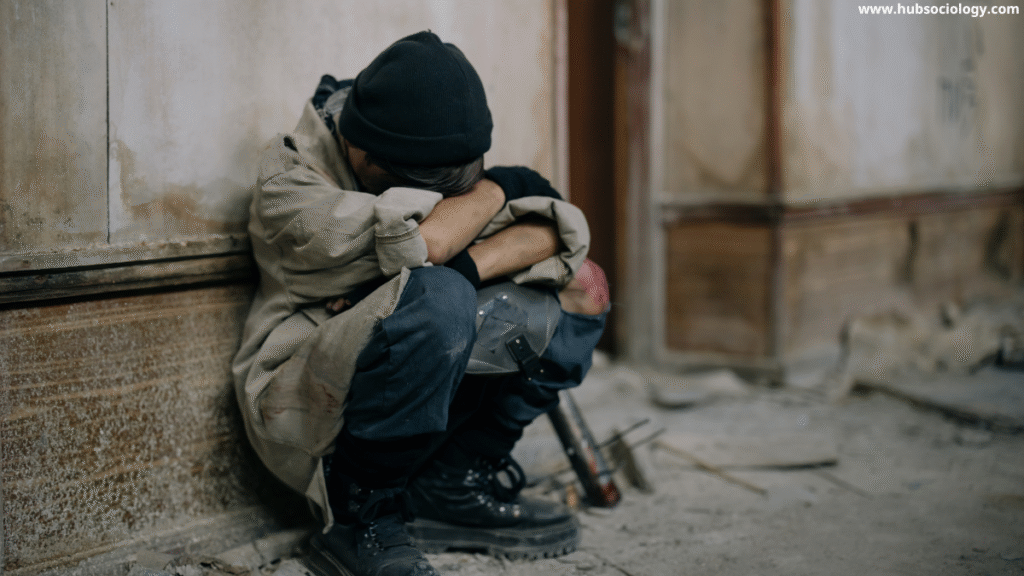
Structural housing problems include:
- Gentrification
- Lack of rent control
- Discriminatory lending practices
- Limited public housing
Without stable housing, people face higher risks of unemployment, poor health, and social exclusion. Homelessness is a visible sign of deep structural poverty.
Healthcare Access and Medical Poverty
The U.S. healthcare system is expensive and largely privatized. Many low-income Americans lack insurance or cannot afford medical treatment.
As a result:
- Illness leads to job loss
- Medical bills cause debt
- Preventive care is ignored
Health problems can push families into poverty, creating a health-poverty cycle. Poor communities also have fewer hospitals and healthcare facilities.
Public Policy and Welfare Systems
Government policies play a major role in shaping poverty. While the U.S. has welfare programs such as SNAP, Medicaid, and housing assistance, these programs often provide limited support.
Critics argue that:
- Benefits are too low
- Eligibility rules are strict
- Social stigma discourages use
- Funding is inconsistent
Some policies focus more on controlling the poor than supporting them. Sociologists advocate for stronger social safety nets to reduce inequality.
The Culture of Poverty Debate
Some theories suggest that poor communities develop behaviors that maintain poverty, such as lack of planning or low educational values. However, many sociologists criticize this idea because it blames victims instead of addressing structural barriers.
Poverty-related behaviors are often responses to limited opportunities, not the cause of poverty itself.
Intergenerational Poverty
Children born into poverty face long-term disadvantages. Limited nutrition, unsafe neighborhoods, and weak schools affect physical, emotional, and cognitive development.
Without structural support, many children remain trapped in the same economic position as their parents.
This shows how poverty is socially reproduced across generations.
Globalization and Economic Shifts
Global trade has changed the American economy. While it has increased profits for corporations, it has reduced manufacturing jobs for workers.
Low-skilled workers face competition from cheaper international labor, leading to job loss and wage decline.
This global economic structure contributes to domestic poverty.
Social Exclusion and Marginalization
Poverty also involves social exclusion. Poor people often lack political influence, media representation, and access to decision-making processes.
They are more likely to be:
- Criminalized
- Stereotyped
- Ignored by policymakers
This marginalization weakens their ability to demand change.
Urban vs. Rural Poverty
Poverty exists in both cities and rural areas, but it takes different forms.
Urban poverty includes:
- High housing costs
- Homelessness
- Crime
Rural poverty involves:
- Limited job opportunities
- Poor infrastructure
- Lack of healthcare
Both reflect structural neglect.
Poverty and the Criminal Justice System
The U.S. has one of the highest incarceration rates in the world. Poor communities, especially communities of color, are heavily policed.
Criminal records limit employment opportunities, trapping people in poverty even after release.
This creates a poverty-prison cycle.
Media Representation of Poverty
Media often portrays the poor as irresponsible or dependent on welfare. This reinforces stereotypes and reduces public support for social programs.
Sociologists argue for more accurate representations that highlight structural causes.
Solutions from a Sociological Perspective
To reduce poverty, sociologists suggest structural reforms such as:
- Living wages
- Affordable housing
- Universal healthcare
- Quality education
- Fair taxation
- Strong labor protections
These solutions focus on changing systems, not blaming individuals.
Conclusion
Poverty in America is not simply the result of personal failure. It is shaped by structural inequalities in education, labor markets, housing, healthcare, race, gender, and public policy.
A sociological approach helps us understand that poverty is created and maintained by social systems that benefit some groups while disadvantaging others. To truly address poverty, the focus must shift from individual responsibility to systemic reform.
By recognizing the structural causes of poverty, society can move toward more just and inclusive solutions that provide equal opportunities for all.
FAQs on Poverty in America
- What is Poverty in America?
Poverty in America refers to the condition where individuals or families lack sufficient income to meet basic needs such as food, housing, healthcare, and education. - What are the main causes of Poverty in America?
Major causes include income inequality, low wages, unemployment, racial discrimination, poor education systems, and weak social welfare policies. - Is Poverty in America a structural problem?
Yes, sociologists argue that Poverty in America is mainly caused by structural factors like unequal access to resources, labor market changes, and institutional discrimination. - How does education affect Poverty in America?
Unequal access to quality education limits job opportunities, keeping many people trapped in Poverty in America across generations. - What role does race play in Poverty in America?
Systemic racism has created long-term economic disadvantages for Black, Hispanic, and Native American communities, increasing Poverty in America. - How does job insecurity contribute to Poverty in America?
Low-paying, temporary, and unstable jobs prevent financial stability, leading many working Americans to remain poor. - What is the feminization of Poverty in America?
It refers to the higher poverty rates among women, especially single mothers, due to wage gaps and caregiving responsibilities. - How does healthcare impact Poverty in America?
High medical costs and lack of insurance push many families into debt, worsening Poverty in America. - What is intergenerational Poverty in America?
It is the transmission of poverty from parents to children due to limited access to education, nutrition, and opportunities. - How does housing inequality affect Poverty in America?
Rising rents and lack of affordable housing force many low-income families into unstable living conditions. - Is Poverty in America linked to the criminal justice system?
Yes, mass incarceration limits employment opportunities and deepens economic inequality. - How does globalization influence Poverty in America?
Outsourcing and automation have reduced stable jobs, increasing economic insecurity. - Do welfare programs reduce Poverty in America?
They help, but limited benefits and strict eligibility rules reduce their overall impact. - Why is Poverty in America higher in minority communities?
Historical discrimination, unequal schooling, and job bias contribute to higher poverty rates. - Can Poverty in America be reduced?
Yes, through better wages, affordable housing, universal healthcare, and education reform.