Introduction
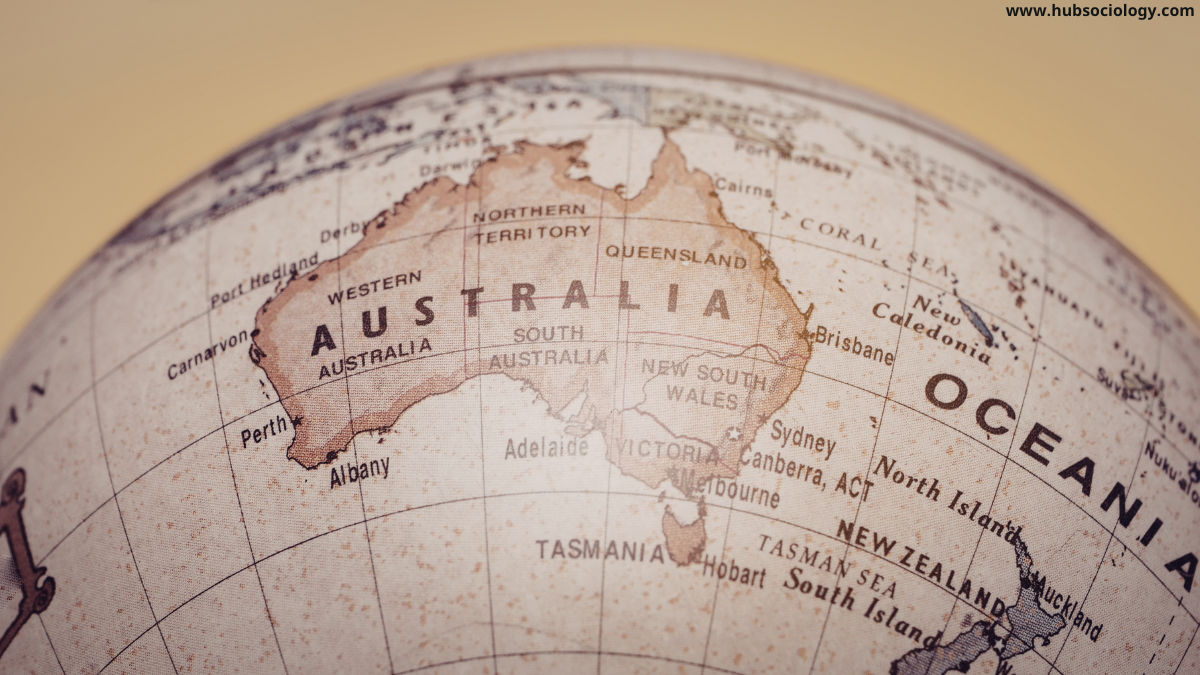
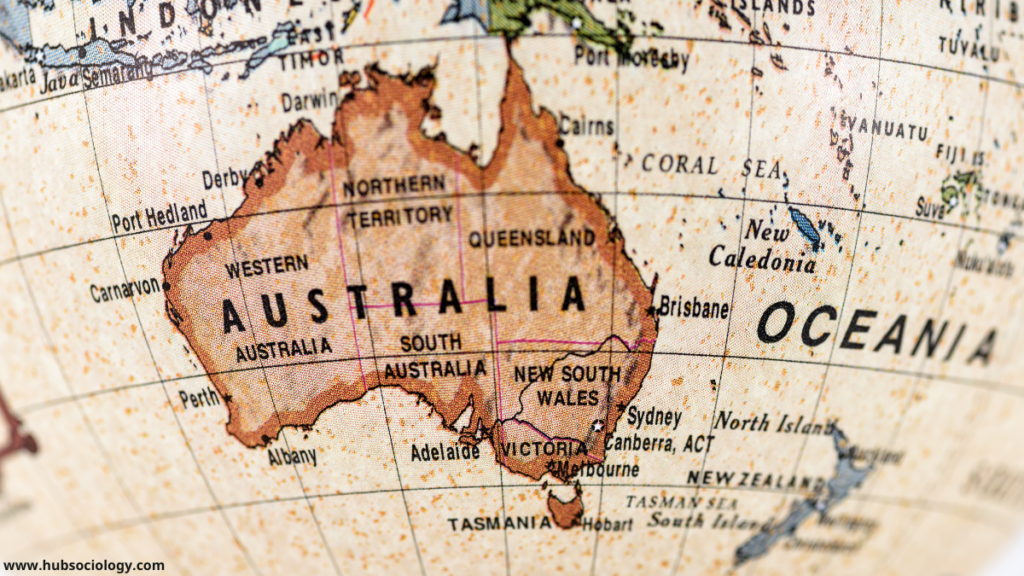
Oceania—covering Australia, New Zealand, Papua New Guinea, and thousands of Pacific Island nations—represents one of the most culturally diverse and historically layered regions in the world. Its societies embody complex interactions between Indigenous traditions, colonial histories, environmental challenges, migration patterns, and global cultural flows. From the Aboriginal and Torres Strait Islander peoples of Australia to the Māori of Aotearoa (New Zealand), from Polynesian and Micronesian communities to post-colonial island states struggling with development, Oceania sociology examines how these societies negotiate culture, identity, and social transformation across time and space.
In sociological terms, Oceania is a laboratory for studying cultural resilience, hybrid identities, social inequality, globalization, and ecological vulnerability. The region’s colonial legacies, coupled with rapid modernization and climate change, shape a unique sociocultural landscape where tradition and transformation coexist in both tension and harmony. This article explores the sociological dimensions of Oceania by focusing on its cultural foundations, identity formations, and contemporary processes of social change.
1. Cultural Foundations of Oceania
1.1 Indigenous Worldviews and Social Organization
Indigenous societies in Oceania possess deeply rooted worldviews that emphasize kinship, land, spirituality, and collective responsibility. Kinship structures often extend beyond biological ties to include clans, tribes, and village networks. These social systems maintain order, transmit knowledge, and preserve cultural continuity.
For example:
- Aboriginal Australian societies traditionally relied on the “Dreaming” as a cosmological framework connecting people, ancestors, and lands. Social norms, moral values, and identity are derived from ancestral stories and sacred landscapes.
- The Māori of Aotearoa place strong emphasis on whakapapa (genealogy), whānau (extended family), and iwi (tribal groups), shaping their social organization and collective identity.
- Polynesian societies such as Samoa and Tonga emphasize fa’a Samoa and anga fakatonga, cultural codes centered on respect, reciprocity, and hierarchy.
These worldviews challenge Western assumptions about individuality, property, and governance. Indigenous relational systems prioritize collectivism over individualism, holistic cosmologies over secular rationalism, and land stewardship over resource extraction.
1.2 Colonial Encounters and Cultural Disruption
European colonial expansion profoundly transformed Oceania’s sociocultural landscape. British colonization in Australia and New Zealand introduced new legal systems, property regimes, and racial hierarchies that marginalized Indigenous peoples. In many Pacific Island nations, French, American, German, and British colonial powers reshaped political authority and social structures.
Sociologically, colonialism in Oceania led to:
- Cultural assimilation and loss of Indigenous languages
- Dispossession of land and forced relocation
- Imposed Christianity and decline of traditional belief systems
- Racial segregation and institutional discrimination
- New class and gender hierarchies shaped by colonial labor systems
However, cultural disruption did not lead to cultural disappearance. Across the region, Indigenous communities resisted colonization through cultural preservation, adaptation, and political struggle. Modern Oceania societies reflect a blend of Indigenous resilience and colonial legacies, producing hybrid cultural identities.
2. Identity Formation in Oceania
2.1 Indigenous Identity and Cultural Revitalization
Since the late 20th century, Oceania has seen a significant Indigenous cultural revival. Movements for language reclamation, land rights, and political recognition have reshaped national narratives.
Key examples include:
- The Māori Renaissance of the 1970s leading to the restoration of te reo Māori, establishment of kōhanga reo (language nests), and legal recognition of Māori cultural rights.
- Aboriginal land rights movements culminating in the 1992 Mabo decision, which overturned terra nullius and affirmed Native Title.
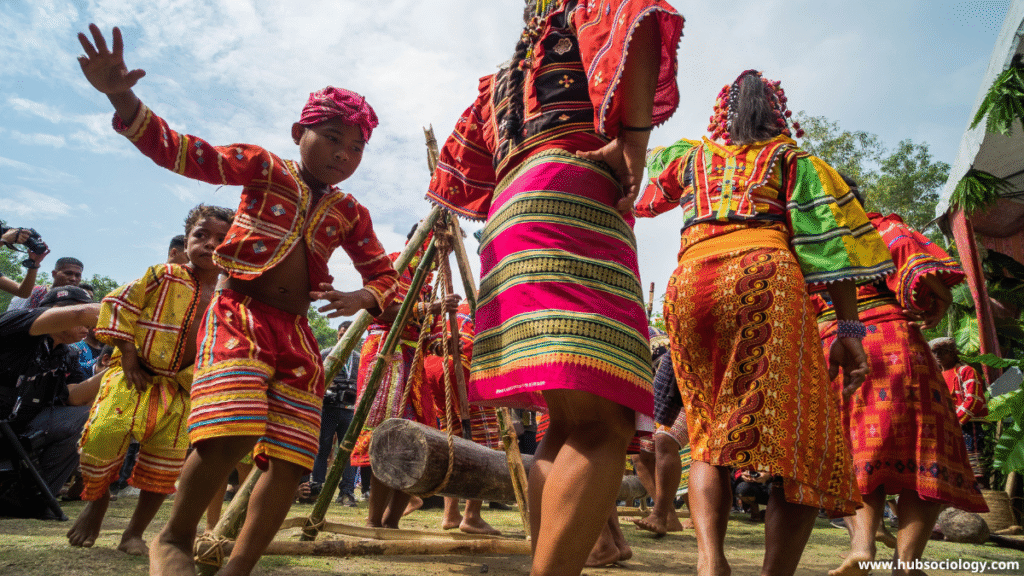
- Cultural festivals in Polynesia such as the Pacific Arts Festival, promoting traditional dance, navigation, tattooing, and storytelling.
Indigenous identity in Oceania today is both traditional and contemporary, navigating between ancestral heritage and modern citizenship.
2.2 Multiculturalism and Migration
Migration is central to Oceania’s modern identity. Australia and New Zealand, in particular, are highly multicultural societies shaped by immigration from Europe, Asia, and the Pacific.
Sociological impacts of migration include:
- Ethnic diversity and cultural pluralism
- Diasporic communities maintaining transnational ties
- Hybrid identities blending local, Indigenous, and migrant cultures
- Racial stratification, particularly affecting Pacific Islanders in New Zealand and Australia
Pacific Island nations also experience intense regional migration flows, with people moving for education, employment, and climate-related displacement.
2.3 National Identity and Postcolonial Narratives
Nation-building in Oceania involves negotiating between Indigenous heritage, colonial histories, and contemporary multicultural realities.
Examples:
- Australia struggles with debates over constitutional recognition, national holidays, and reconciliation.
- New Zealand positions itself as bicultural (Māori–Pākehā) while navigating increasing multicultural diversity.
- Island nations like Fiji grapple with ethnic tensions between Indigenous Fijians and Indo-Fijians.
Postcolonial sociology highlights how national identities are contested, evolving, and mediated through political power and historical memory.
3. Social Transformation in Oceania
3.1 Urbanization and Changing Social Structures
Urbanization is rapidly transforming Oceania’s social fabric. Major cities like Sydney, Auckland, Suva, and Port Moresby are hubs of economic activity, migration, and cultural exchange.
Sociological transformations include:
- Shift from village-based collective life to urban individualism
- Change in gender roles, family structures, and employment patterns
- New social inequalities based on race, class, and access to housing
- Cultural homogenization due to Western consumer culture
Urban life creates opportunities but also contributes to social fragmentation, particularly for Indigenous and Pacific Islander youth facing exclusion or discrimination.
3.2 Education, Modernity, and Social Mobility
Education is a significant driver of social mobility in Oceania. However, access and outcomes vary across groups.
- Indigenous students often face structural barriers linked to poverty, rural isolation, and cultural disconnect.
- Pacific Island students in New Zealand and Australia encounter institutional biases and socioeconomic challenges.
- Modernity introduces new aspirations tied to global careers, technology, and digital culture.
Sociologically, education in Oceania is a site of cultural negotiation—balancing Western curricula with Indigenous knowledge systems.
3.3 Gender Transformations
Gender roles in Oceania are shifting due to modernization, globalization, and feminist movements.
Traditional societies often valued gender complementarity, though colonial systems imposed patriarchal norms. Today:
- Women increasingly participate in leadership, politics, and labor markets.
- Gender-based violence remains a pressing issue, especially in Melanesia.
- LGBTQ+ communities are gaining visibility, though acceptance varies across nations.
Gender transformations reveal tensions between cultural traditions and modern rights-based frameworks.
3.4 Climate Change and Environmental Sociology
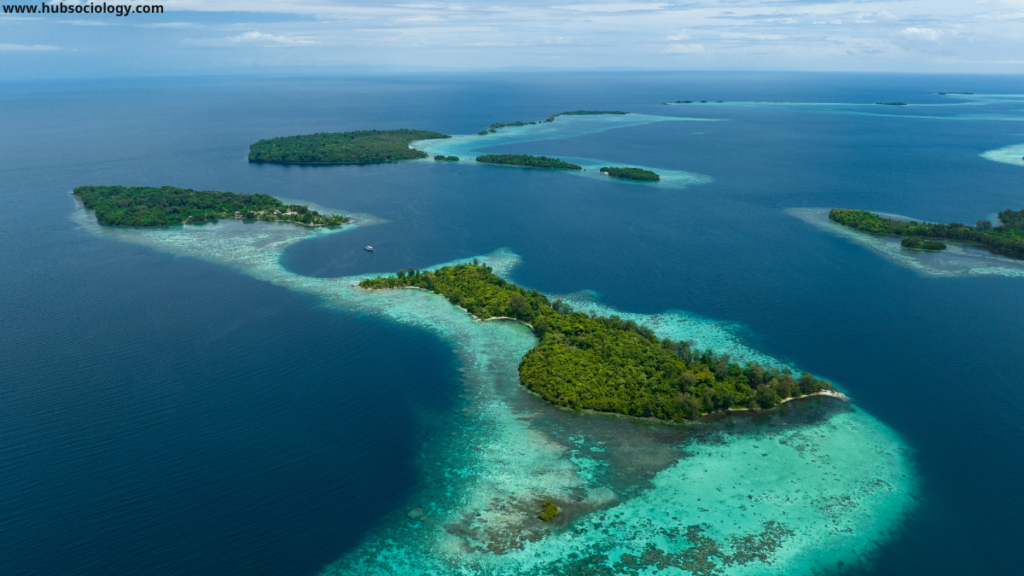
Oceania is the epicenter of climate vulnerability. Rising sea levels, extreme weather events, and ecological degradation threaten livelihoods, especially in low-lying island states like Kiribati, Tuvalu, and the Marshall Islands.
Climate change in Oceania is a sociological issue because it affects:
- Migration and displacement
- Cultural identity tied to ancestral lands
- Political advocacy, including Pacific-led climate diplomacy
- Economic inequalities, with island nations bearing the brunt of global emissions
Environmental sociology highlights that climate change is not just ecological—it is deeply social, reshaping communities, identities, and political struggles.
4. Globalization and Cultural Change
4.1 Tourism and Cultural Commodification
Tourism is a major economic sector in Oceania. While it generates income, it also leads to cultural commodification.
Issues include:
- Performing culture for tourists
- Loss of authenticity
- Economic dependence
- Reinforced stereotypes of “exotic” island cultures
However, some communities leverage tourism to support cultural preservation and local empowerment.
4.2 Media, Technology, and Global Cultural Flows
Digital media is transforming Oceania:
- Youth engage with global pop culture—K-pop, anime, Hollywood, sports
- Social media strengthens diasporic connections
- Indigenous digital activism campaigns—such as Māori TikTokers or Aboriginal artists—revitalize identity
Globalization creates hybrid cultural forms, blending Indigenous traditions with global influences.
4.3 Geopolitics and Regional Integration
Oceania is becoming a geopolitical arena involving Australia, New Zealand, the United States, China, and regional organizations like the Pacific Islands Forum.
Sociological impacts:
- Power dynamics influence development aid, migration policies, and environmental negotiations
- Pacific Island nations assert agency through regional solidarity movements
- Global geopolitics shape national identity and economic pathways
5. Social Inequality and Justice in Oceania
5.1 Indigenous Inequality in Australia and New Zealand
Despite progress, Indigenous peoples face persistent inequalities in:
- Income and employment
- Education
- Health outcomes
- Housing
- Criminal justice systems
Sociologists attribute these disparities to historical dispossession, systemic racism, and structural exclusion.
5.2 Inequality in Pacific Island Nations
Pacific Island countries experience development challenges due to:
- Limited natural resources
- Geographic isolation
- Dependence on foreign aid
- Vulnerable economies
- Youth unemployment
Social inequality intersects with gender, ethnicity, and urban–rural divides.
5.3 Movements for Social Justice
Recent decades have seen powerful movements aiming to transform Oceania:
- Māori land and language rights movements
- Indigenous rights campaigns in Australia
- Anti-colonial and decolonization movements in the Pacific
- Climate justice activism led by youth and women
- LGBTQ+ rights campaigns in urban centers
These movements represent ongoing struggles for recognition, equality, and cultural sovereignty.
Conclusion
Oceania sociology provides a rich lens for understanding how cultures, identities, and societies transform in response to historical forces, global pressures, and local resilience. The region embodies the complexities of postcolonial identity, multicultural coexistence, Indigenous rights, and environmental vulnerability. From the revival of traditional languages and genealogies to the rise of digital activism and climate advocacy, Oceania illustrates how societies negotiate continuity and change.
As Oceania faces the future, key sociological themes—cultural preservation, social justice, migration, gender equality, and climate adaptation—will shape its trajectory. Understanding these processes not only enriches sociological knowledge but also highlights the enduring strength and creativity of the peoples of Oceania as they navigate a rapidly changing world.
Do you like this this Article ? You Can follow as on :-
Facebook – https://www.facebook.com/hubsociology
WhatsApp Channel – https://whatsapp.com/channel/0029Vb6D8vGKWEKpJpu5QP0O
Gmail – hubsociology@gmail.com
15 FAQs on Oceania Sociology
1. What is Oceania sociology?
Oceania sociology is the study of social structures, cultures, identities, and historical transformations in the Pacific region, including Australia, New Zealand, and Pacific Island nations.
2. Why is culture important in understanding Oceania?
Culture forms the foundation of social organization, identity, and collective memory in Oceania, especially among Indigenous communities with strong ties to land, kinship, and spirituality.
3. How did colonialism impact Oceania societies?
Colonialism introduced new political, legal, and economic systems that marginalized Indigenous people, disrupted cultural traditions, and reshaped social hierarchies.
4. What role does Indigenous identity play in modern Oceania?
Indigenous identity is central to contemporary movements for land rights, cultural revitalization, language preservation, and political recognition across the region.
5. How does migration influence Oceania societies?
Migration contributes to multiculturalism, transnational ties, and hybrid identities, particularly in Australia and New Zealand, while also causing challenges related to inequality and discrimination.
6. What is the significance of kinship in Oceania sociology?
Kinship networks shape social norms, resource distribution, conflict resolution, and collective responsibilities, forming the backbone of many Oceanic communities.
7. How is climate change affecting the Pacific Islands?
Climate change causes displacement, livelihood disruption, erosion of cultural heritage, and political advocacy for global climate action among Pacific Island states.
8. What is the Māori Renaissance?
The Māori Renaissance refers to revitalization movements since the 1970s that restored Māori language, cultural practices, and political rights in New Zealand.
9. How has globalization transformed Oceania?
Globalization introduced digital media, consumer culture, tourism, and geopolitical competition, creating both opportunities and tensions in traditional societies.
10. What are the key social inequalities in Australia and New Zealand?
Indigenous communities face unequal access to education, health care, employment, and justice due to historical dispossession and structural discrimination.
11. How do Pacific Island nations manage cultural preservation?
Communities safeguard heritage through festivals, traditional navigation, language programs, community governance, and intergenerational knowledge transfer.
12. Why is gender sociology important in Oceania?
Shifting gender roles, feminist movements, and LGBTQ+ rights debates highlight evolving power structures and cultural expectations across the region.
13. What is the sociological significance of tourism in Oceania?
Tourism shapes cultural commodification, economic dependency, identity performance, and community-led strategies for sustainable development.
14. How do urbanization trends affect social life?
Urbanization leads to new forms of inequality, changing family structures, youth culture shifts, and tension between traditional values and modern lifestyles.
15. What are the main social justice movements in Oceania today?
Key movements include Indigenous land rights campaigns, climate justice activism, language revitalization, decolonization efforts, and gender equality initiatives.