Introduction
Migration has been one of the most transformative forces in the making and remaking of Irish society. For centuries, Ireland was primarily known as a land of emigration. Waves of Irish people left their homeland due to famine, colonial domination, economic hardship, and political conflict. However, the late twentieth and early twenty-first centuries witnessed a dramatic reversal: Ireland became a destination for migrants from Europe, Africa, Asia, and Latin America. This shift has profoundly reshaped Irish cultural life, social institutions, and national identity.
From a sociological perspective, migration is not simply a demographic phenomenon; it is a catalyst for cultural change, social restructuring, and identity negotiation. This article examines migration and cultural change in Irish society through key sociological theories and historical developments, focusing on identity, multiculturalism, integration, religion, language, labour markets, and state policy.
Historical Context: From Emigration to Immigration
Irish society was long marked by large-scale emigration. The Great Famine of 1845–1852 accelerated the departure of millions to the United States, Britain, Canada, and Australia. Emigration became embedded in Irish collective memory and national identity. The Irish diaspora formed powerful communities abroad, particularly in the United States, shaping global perceptions of Irishness.
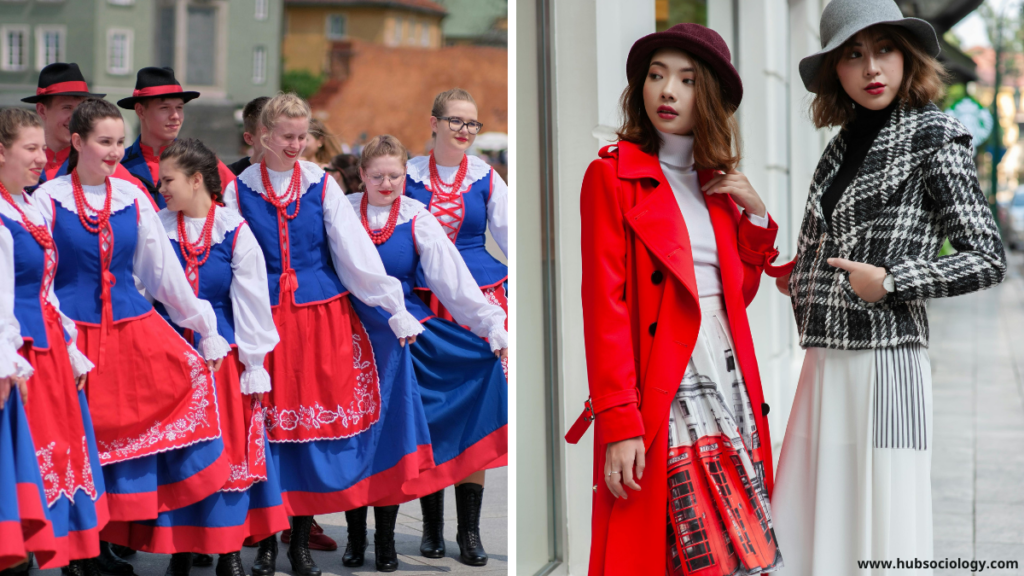
By the late twentieth century, however, Ireland underwent major economic transformation. The economic boom known as the “Celtic Tiger” in the 1990s and early 2000s generated labour shortages and attracted migrants from Central and Eastern Europe, especially after the expansion of the European Union in 2004. Ireland’s membership in the European Union facilitated free movement, particularly from Poland, Lithuania, and Latvia.
This transition from a sending to a receiving country required Ireland to rethink its cultural assumptions, institutional frameworks, and national narratives.
Theoretical Perspectives on Migration and Cultural Change
Sociological theory provides multiple lenses through which to understand migration in Ireland.
Functionalist Perspective
From a functionalist viewpoint, migration contributes to social stability by filling labour shortages, enhancing economic productivity, and increasing demographic vitality. Migrants provide essential services in healthcare, construction, agriculture, and hospitality. In an aging society, migration helps maintain population balance.
However, functionalism also highlights the need for integration mechanisms. Schools, workplaces, and religious institutions must adapt to incorporate newcomers, ensuring social cohesion.
Conflict Theory
Conflict theorists emphasize power relations and inequality. Migration can generate competition for jobs, housing, and welfare resources. In Ireland, economic downturns—particularly after the 2008 financial crisis—sparked tensions around unemployment and public spending. Anti-immigrant sentiments, though less extreme than in some European countries, emerged in certain contexts.
Conflict theory also draws attention to structural inequalities faced by asylum seekers, especially those housed in Direct Provision centres, a controversial system of accommodation introduced in 2000.
Symbolic Interactionism
At the micro-level, symbolic interactionism explores how everyday interactions shape identities. Migrants negotiate their cultural identities in schools, workplaces, and neighbourhoods. Irish people reinterpret what it means to be “Irish” in response to visible diversity. Cultural symbols—food, language, dress, festivals—become sites of negotiation and hybridization.
Demographic Transformation and Diversity
According to census data, the proportion of foreign-born residents in Ireland increased significantly from the 1990s onward. Polish nationals became one of the largest migrant communities. The Polish language became one of the most commonly spoken languages after English and Irish.
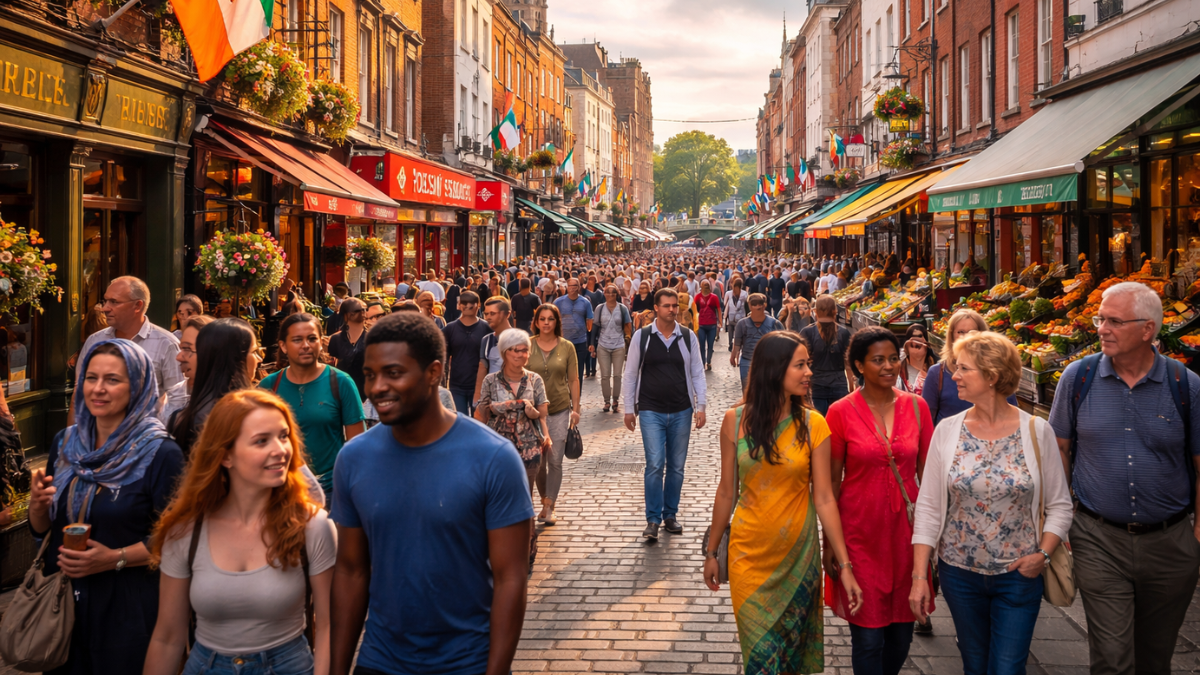
Urban centres such as Dublin, Cork, and Galway became multicultural hubs. Ethnic shops, international restaurants, and diverse religious institutions transformed the cultural landscape. Multicultural festivals and intercultural initiatives became more common, reflecting both grassroots engagement and state-sponsored diversity programs.
This demographic shift has altered everyday life in Ireland. Classrooms are more linguistically diverse; workplaces include employees from multiple national backgrounds; neighbourhoods feature a variety of cuisines and cultural practices.

Religion and Cultural Pluralism
Historically, Irish society was strongly shaped by Roman Catholicism. The Catholic Church played a central role in education, healthcare, and moral regulation. Migration introduced significant religious diversity, including Islam, Orthodox Christianity, Pentecostalism, Hinduism, and secular worldviews.
The growth of mosques, Orthodox churches, and multicultural Christian congregations signals a transformation in Ireland’s religious landscape. The decline of institutional Catholic authority—due in part to secularization and clerical abuse scandals—coincided with rising diversity.
Sociologically, this shift represents both secularization and pluralization. Religion is no longer monopolized by a single institution; rather, it is diversified and individualized. Interfaith dialogue and intercultural initiatives reflect efforts to maintain social harmony in a pluralistic context.
Language and Identity
Language plays a crucial role in cultural integration. While English remains dominant, the presence of multiple languages has expanded Ireland’s linguistic landscape. Schools have had to develop English as an Additional Language (EAL) programs to support migrant children.
The Irish language (Gaeilge), historically central to national identity, faces a complex situation. On one hand, state promotion of Irish continues; on the other, the multicultural reality challenges the assumption that Irish identity is tied to linguistic heritage. Migrants may embrace Irish language learning as a form of integration, while others prioritize English for economic mobility.
This dynamic illustrates the fluid nature of identity. Irishness is increasingly defined by civic participation rather than ethnic homogeneity.
Education and Second-Generation Integration
Schools are key sites of cultural change. Second-generation migrants—children born in Ireland to immigrant parents—often navigate dual identities. They may identify as both Irish and Nigerian, Irish and Polish, or Irish and Brazilian.
Curricula have gradually incorporated multicultural perspectives. Anti-racism education, diversity training, and intercultural policies aim to foster inclusion. However, challenges remain, including subtle discrimination and social segregation in certain areas.
Sociologically, the experiences of second-generation youth are crucial indicators of long-term integration. Their educational attainment, employment prospects, and sense of belonging will shape Ireland’s future social cohesion.
Labour Market and Economic Integration
Migration has significantly influenced Ireland’s labour market. During the Celtic Tiger era, migrants filled low-skilled and high-skilled positions alike. Many Eastern European workers contributed to construction and service industries, while highly skilled professionals entered technology and healthcare sectors.
Economic downturns exposed vulnerabilities. Migrants were often among the first to experience job losses during the 2008 recession. Nonetheless, many remained, demonstrating long-term commitment to Irish society.
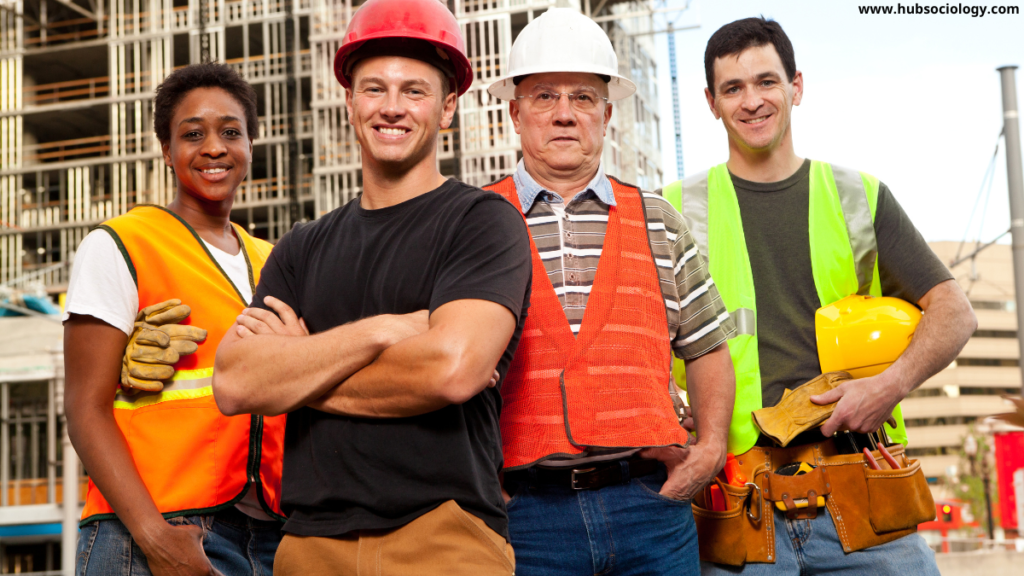
Labour market integration is not merely economic; it influences social mobility, class structure, and interethnic relations. When migrants experience underemployment or discrimination, social inequalities may deepen. Conversely, successful integration enhances social cohesion.
Citizenship and National Identity
A significant moment in Ireland’s migration history was the 2004 citizenship referendum, which ended automatic birthright citizenship. Prior to the referendum, any child born in Ireland was entitled to citizenship. The change reflected concerns about “citizenship tourism” and signaled a shift in the understanding of national belonging.
Citizenship policy reveals tensions between civic and ethnic conceptions of nationhood. While Ireland increasingly embraces diversity, debates around asylum, borders, and national identity continue.
Irish national identity, once closely tied to Catholicism, Gaelic culture, and shared historical struggle, is evolving. Contemporary Irishness may include diverse ethnic backgrounds, religious beliefs, and cultural practices.
The Direct Provision System and Social Debate
One of the most debated aspects of Irish migration policy has been the Direct Provision system, which accommodates asylum seekers while their applications are processed. Critics argue that prolonged stays in institutional settings create social exclusion, mental health challenges, and restricted autonomy.
From a sociological standpoint, Direct Provision highlights how state policies shape integration outcomes. Segregated accommodation can hinder social interaction and reinforce marginalization. Recent reforms aim to replace Direct Provision with a more humane system, reflecting growing public awareness and advocacy.
Media Representation and Public Discourse
Media plays a crucial role in shaping perceptions of migrants. Positive narratives emphasize economic contribution, cultural enrichment, and humanitarian responsibility. Negative narratives may focus on crime, welfare dependency, or cultural threat.
In Ireland, public discourse has generally been moderate compared to some European contexts. However, social media has amplified polarized views. Sociologically, discourse influences integration by shaping public attitudes and political decisions.
Multiculturalism, Interculturalism, and Social Policy
Ireland has adopted an intercultural approach rather than a strict multicultural model. Interculturalism emphasizes interaction, dialogue, and shared civic values. Government initiatives promote equality, anti-discrimination laws, and community integration projects.
The Employment Equality Acts and Equal Status Acts provide legal frameworks to combat discrimination. Civil society organizations play a vital role in supporting migrants and advocating for rights.
The success of interculturalism depends on sustained commitment, adequate funding, and community participation.
Cultural Hybridization and Everyday Life
Cultural change is most visible in everyday practices. Irish cuisine now includes Polish bakeries, Asian supermarkets, African hair salons, and Middle Eastern restaurants. Festivals celebrate Diwali, Eid, and Chinese New Year alongside St. Patrick’s Day.
These changes reflect cultural hybridization—the blending of traditions to create new forms. Music, fashion, and sports also demonstrate hybridity. Migrant athletes represent Ireland in international competitions, reshaping symbols of national pride.
Hybrid identities challenge rigid notions of authenticity. A person can be simultaneously Irish and African, Catholic and Muslim, traditional and modern.
Challenges and Future Prospects
Despite progress, challenges remain. Housing shortages, economic inequality, and political polarization can intensify anti-immigrant sentiment. Rural areas may experience integration differently from urban centres.
Climate change and global conflict may increase future migration flows. Ireland will need adaptive policies balancing humanitarian obligations with social cohesion.
Education, inclusive media narratives, and equitable labour policies will be central to maintaining harmony. The experiences of second-generation migrants will be particularly important in determining whether Ireland becomes a genuinely inclusive society.
Conclusion
Migration has fundamentally transformed Irish society. Once defined by emigration and cultural homogeneity, Ireland is now a diverse, dynamic, and pluralistic nation. Sociological analysis reveals that migration affects not only demographics but also identity, religion, language, labour markets, and national narratives.
Irish society stands at a crossroads between historical memory and contemporary diversity. The legacy of emigration fosters empathy toward newcomers, while economic and political pressures test social cohesion. Through inclusive policies, intercultural dialogue, and equitable institutions, Ireland has the opportunity to redefine Irishness in civic, pluralistic terms.
Migration and cultural change in Irish society illustrate a broader global reality: nations are not static entities but evolving communities shaped by movement, interaction, and negotiation. Ireland’s experience demonstrates that cultural change, though complex and sometimes contentious, can enrich social life and expand the meaning of belonging in the modern world.
FAQs on Cultural Change in Irish Society
1. What does Cultural Change in Irish Society mean?
Cultural Change in Irish Society refers to the transformation of values, traditions, social norms, language practices, religion, and identity patterns due to migration, globalization, economic development, and social reforms.
2. How has migration influenced Cultural Change in Irish Society?
Migration has diversified Ireland’s ethnic, religious, and linguistic composition. New communities from Europe, Africa, and Asia have introduced different cultural traditions, reshaping everyday life, food habits, festivals, and social interactions.
3. Why is Cultural Change in Irish Society closely linked to the Celtic Tiger era?
The economic boom of the 1990s and early 2000s attracted large numbers of migrants. This demographic shift accelerated Cultural Change in Irish Society by transforming Ireland from a historically emigrant nation into a multicultural destination.
4. How has religion contributed to Cultural Change in Irish Society?
Ireland was traditionally dominated by Catholicism, but migration and secularization have introduced religious pluralism, including Islam, Orthodox Christianity, Hinduism, and non-religious identities. This has reduced the monopoly of a single religious authority.
5. What role does language play in Cultural Change in Irish Society?
The rise of multilingualism—particularly Polish and other European languages—has expanded Ireland’s linguistic diversity. English remains dominant, but schools now support English as an Additional Language programs, reflecting ongoing Cultural Change in Irish Society.
6. How has Cultural Change in Irish Society affected national identity?
Irish identity is increasingly civic rather than purely ethnic or religious. Being Irish today often depends more on participation, citizenship, and social belonging than ancestry alone.
7. What impact has Cultural Change in Irish Society had on education?
Schools are more diverse, incorporating intercultural curricula and anti-racism policies. Second-generation migrants are redefining what it means to grow up Irish in a multicultural environment.
8. How has Cultural Change in Irish Society influenced food and lifestyle?
Urban areas now feature Polish bakeries, Asian supermarkets, African restaurants, and Middle Eastern cuisine. These everyday lifestyle shifts are visible markers of Cultural Change in Irish Society.
9. What challenges accompany Cultural Change in Irish Society?
Challenges include housing shortages, integration difficulties, social inequality, and occasional anti-immigrant sentiment. Managing diversity while maintaining cohesion is a continuing concern.
10. How does Cultural Change in Irish Society relate to citizenship debates?
The 2004 citizenship referendum reflected public debates about belonging and national identity, showing how Cultural Change in Irish Society can influence legal and political reforms.
11. What is the sociological importance of Cultural Change in Irish Society?
Sociologists study Cultural Change in Irish Society to understand social integration, identity negotiation, power relations, and the transformation of institutions in a globalized world.
12. How has Cultural Change in Irish Society affected rural communities?
Rural areas, once culturally homogeneous, now include migrant workers in agriculture and local services. This has gradually altered traditional community structures.
13. What role do media play in shaping Cultural Change in Irish Society?
Media narratives influence public perceptions of migrants. Positive coverage promotes inclusion, while negative portrayals can reinforce stereotypes and social tension.
14. How does Cultural Change in Irish Society impact second-generation migrants?
Second-generation individuals often develop hybrid identities, balancing family heritage with Irish cultural norms, which contributes to evolving definitions of Irishness.
15. What is the future of Cultural Change in Irish Society?
Future Cultural Change in Irish Society will likely continue as globalization, climate migration, and European integration shape demographics. Policies promoting intercultural dialogue and equality will determine long-term social harmony.