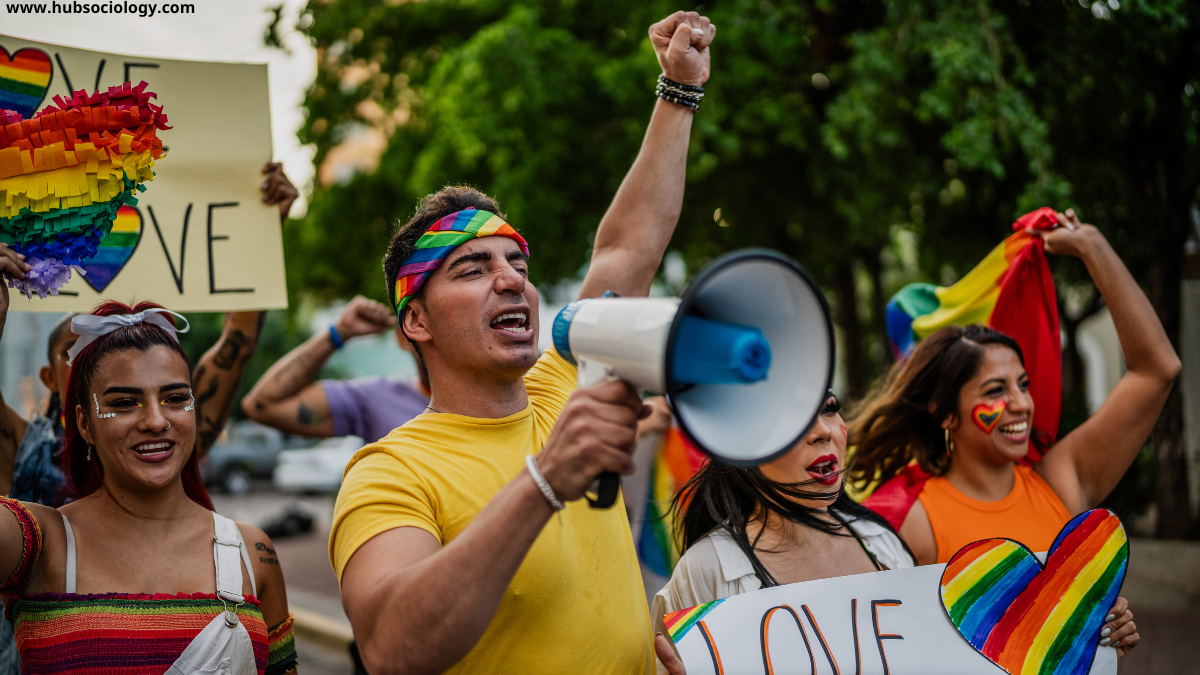
The LGBTQ+ rights movement in the United States represents one of the most significant and transformative social movements of the 20th and 21st centuries. Rooted in struggles for equality, dignity, and social justice, it has reshaped cultural norms, legal frameworks, institutional practices, and the broader understanding of identity in American society. From early homophile activism in the mid-1900s to contemporary debates on transgender rights, the movement provides a vivid example of how marginalized groups mobilize against structural inequalities.
Examining this movement sociologically reveals the dynamic interactions between social institutions, collective identities, cultural meanings, and power structures that shape the trajectory of social change in the U.S.
Historical Foundations and the Emergence of Collective Identity
Although LGBTQ+ individuals have always existed in American society, coherent political mobilization took form in the early 20th century. Organizations like the Society for Human Rights (1924) and later the Mattachine Society (1950) and Daughters of Bilitis (1955) laid the groundwork for organized resistance. These “homophile” groups emphasized assimilation and respectability, seeking to counter the criminalization and pathologization of homosexuality. A sociological reading of this early phase reflects strategies of interest-group politics within a highly repressive society. Activists framed homosexuality not as moral deviance but as an identity deserving legal protection. Their efforts were constrained by stigma and surveillance, illustrating Goffman’s idea of the “spoiled identity,” where LGBTQ+ individuals developed coping mechanisms ranging from secrecy to cautious activism.
The Stonewall Riots of 1969 marked a turning point by giving birth to a more assertive, mass-based social movement. Stonewall represented what sociologists call a “moral shock,” an event that disrupts social expectations and galvanizes collective action. It also served as a symbolic rupture against heteronormative policing and institutional repression. This dramatic confrontation with the state power created a sense of collective identity, propelling LGBTQ+ individuals to publicly affirm their existence, rights, and dignity. Sociologically, Stonewall exemplifies how social movements grow through networks, shared grievances, and the emergence of activists who transform personal suffering into public action.
LGBTQ+ Mobilization Through the Lens of Social Movement Theory
The rapid expansion of LGBTQ+ activism in the 1970s and 1980s can be analyzed using three major sociological theories of social movements:
1. Resource Mobilization Theory
This theory highlights how movements grow when they can access resources such as funding, media attention, organizational structure, and leadership. LGBTQ+ groups mobilized donations, legal expertise, and national networks. Organizations like the Human Rights Campaign, Lambda Legal, and PFLAG created institutional support systems for lobbying, litigation, and public education. Even local LGBTQ+ community centers became bases for political organizing, providing what sociologists call “infrastructures of dissent.”
2. Political Process Theory
This perspective emphasizes political opportunities—moments when the external environment becomes more favorable to protest. The feminist movement, civil rights movement, and broader cultural shifts in the 1960s created ideological space for challenging sexual norms. Later, the increasing presence of openly LGBTQ+ politicians and sympathetic policymakers expanded access to institutional channels. Meanwhile, the conservative backlash under Reagan and the Moral Majority in the 1980s also intensified LGBTQ+ activism, demonstrating how political threats can catalyze mobilization.
3. New Social Movement Theory
Unlike earlier class-based movements, LGBTQ+ activism is rooted in identity, culture, and meaning-making. The movement challenges dominant constructions of gender, sexuality, and family. It seeks not only legal reform but also cultural recognition, aligning with new social movement theorists who argue that modern movements prioritize self-expression, identity, and symbolic struggles over purely economic issues.
AIDS Epidemic and Transformation of Collective Action
The AIDS crisis of the 1980s stands as one of the most defining moments for the LGBTQ+ civil rights movement. Governmental neglect and societal stigma toward HIV-positive individuals exposed institutional inequalities and prompted new forms of activism. The formation of ACT UP (AIDS Coalition to Unleash Power) illustrated the evolution of radical, confrontational politics. Through sit-ins, die-ins, and direct action, activists demanded attention, treatment, and compassion.
Sociologically, the AIDS movement is significant for several reasons:
- It revealed the intersection between health, sexuality, and social inequality, demonstrating how marginalized groups disproportionately experience state neglect.
- It created new solidarities that transcended race, gender, and class, even as internal divisions remained.
- It shifted the movement’s strategy from identity affirmation to bio-political resistance, challenging scientific and governmental institutions.
The AIDS crisis also transformed public perceptions of LGBTQ+ people. Through collective mourning, community care networks, and public advocacy, the movement brought human faces to the epidemic and compelled society to recognize the structural violence inflicted on sexual minorities.
Legal Victories and Institutional Change
The legal landscape for LGBTQ+ rights underwent profound transformation from the late 20th century onward. The decriminalization of same-sex intimacy in Lawrence v. Texas (2003), repeal of “Don’t Ask, Don’t Tell” (2011), and nationwide legalization of same-sex marriage in Obergefell v. Hodges (2015) signify landmark victories. From a sociological perspective, these milestones illustrate how law both reflects and shapes cultural norms.
Legal victories often follow cultural shifts but can also advance new norms by legitimizing once-stigmatized identities. Importantly, these reforms demonstrate the interplay between legal opportunity structures and social movement activism. Court decisions were influenced by decades of grassroots organizing, shifting public opinion, and strategic litigation by advocacy groups.
Marriage equality, in particular, became a symbol of normalization and assimilation, raising debates within the movement. Some activists argued that focusing on marriage prioritized a narrow agenda aligned with middle-class norms while sidelining issues like homelessness among LGBTQ+ youth, transgender violence, and racial inequalities within LGBTQ+ communities. These debates show how social movements often experience internal contestation between mainstream and radical wings, each pursuing different visions of liberation.
Cultural Transformation and Shifts in Public Opinion
Cultural change has been both an outcome and a driver of LGBTQ+ activism. Over the past several decades, representation of LGBTQ+ individuals in media, education, and public life has increased dramatically. Sociologically, this reflects changing discourses surrounding sexuality and gender. Queer theory, feminist scholarship, and intersectionality studies influenced public understandings of identity and challenged rigid binaries.
Television shows, films, and celebrities played roles in humanizing LGBTQ+ experiences. Culture industries thus became important arenas for framing narratives and normalizing diverse identities. The concept of “cultural citizenship”—the right to be represented, recognized, and respected—gained importance as LGBTQ+ people demanded visibility and authenticity in media.
Public opinion surveys show that acceptance of LGBTQ+ rights has steadily increased, particularly among younger generations. This generational divide illustrates the sociological process of value change, where social norms shift through cohort replacement and exposure to diverse identities.
Intersectionality and Internal Diversity
A sociological analysis of the LGBTQ+ rights movement must acknowledge its internal diversity. LGBTQ+ individuals are not a homogeneous group. Race, class, gender identity, immigration status, and disability shape distinct experiences of marginalization.
Race and Class
LGBTQ+ people of color often face dual marginalization—homophobia within racial/ethnic communities and racism within predominantly white LGBTQ+ spaces. Issues such as economic inequality, HIV disparities, and criminal justice involvement disproportionately affect LGBTQ+ Black and Latinx individuals. Sociologically, this demonstrates how social movements risk replicating existing inequalities unless they adopt an intersectional approach.
Transgender and Non-Binary Rights
While transgender individuals have always been part of LGBTQ+ activism, mainstream recognition of trans rights has been more recent. Trans people face higher rates of violence, unemployment, housing discrimination, and healthcare barriers. The sociological understanding of gender as a social construct has helped activists challenge binary norms and push for inclusive policies such as gender-neutral bathrooms and legal gender recognition.
Youth and Education
Schools are critical socializing institutions where LGBTQ+ youth often experience victimization. The establishment of Gay-Straight Alliances (GSAs) and anti-bullying policies reflects movement efforts to transform school environments. These changes highlight how social movements not only challenge state institutions but also everyday microsystems where norms are reproduced.
Contemporary Challenges: Backlash, Polarization, and Policy Struggles
Despite significant progress, the LGBTQ+ rights movement continues to face resistance and backlash. Sociologists interpret this backlash as part of a cyclical process of social change: as marginalized groups gain visibility and rights, counter-movements emerge to defend traditional values and institutional privileges.
In recent years, debates over transgender participation in sports, healthcare rights, and bathroom access have intensified political polarization. Conservative lawmakers have introduced bills targeting gender-affirming care for youth and restricting drag performances. These policy conflicts reveal deep cultural anxieties surrounding gender, identity, and the definition of family.
The rise of digital media has amplified both activism and backlash. Social networks allow rapid mobilization but also facilitate misinformation and harassment. Digital platforms thus become contested spaces where cultural meanings and political identities are shaped.
Institutionalizing Equality: Workplaces, Education, and Healthcare
Institutions play a crucial role in determining the lived experiences of LGBTQ+ individuals. Many workplaces now implement anti-discrimination policies, diversity training, and inclusive benefits such as healthcare for same-sex partners. These practices reflect the institutionalization of equality norms, showing how social movements influence organizational cultures.

Educational institutions increasingly adopt LGBTQ+-inclusive curricula and support systems. Meanwhile, healthcare institutions must address unique needs of LGBTQ+ populations, including HIV care, mental health services, and transgender healthcare. Sociologically, these institutional reforms show how cultural values translate into organizational practices over time.
The Future of the LGBTQ+ Rights Movement in U.S. Society
The LGBTQ+ movement continues to evolve in response to emerging challenges and shifting cultural landscapes. Its future trajectory will likely focus on several key areas:
- Transgender and Non-Binary Rights: Ensuring access to healthcare, legal recognition, and protection from violence.
- Economic and Social Inequalities: Addressing homelessness, poverty, and job discrimination disproportionately affecting marginalized LGBTQ+ subgroups.
- Intersectional Activism: Building coalitions across racial, immigrant-rights, disability, and feminist movements.
- Global Solidarity: Supporting LGBTQ+ rights internationally, particularly where violence and criminalization persist.
The movement’s future also depends on sustaining generational engagement and creating inclusive spaces that recognize the diverse experiences within the LGBTQ+ population. Social change is not linear; it requires continuous advocacy, education, and cultural transformation.
Conclusion
The LGBTQ+ rights movement in U.S. society illustrates how marginalized groups challenge and reshape dominant structures of power, identity, and cultural norms. Sociologically, the movement demonstrates the interplay between individual experiences and collective action, the influence of political and cultural environments, and the importance of identity-based mobilization. From the early homophile movement to contemporary struggles for transgender rights, LGBTQ+ activism has broadened public understandings of equality and diversity. While significant challenges remain, the movement continues to be a powerful force for social change—transforming not only laws and policies but also the everyday lives, identities, and aspirations of millions of people.
Do you like this this Article ? You Can follow as on :-
Facebook – https://www.facebook.com/hubsociology
WhatsApp Channel – https://whatsapp.com/channel/0029Vb6D8vGKWEKpJpu5QP0O
Gmail – hubsociology@gmail.com
Frequently Asked Questions (FAQs)
1. What is the LGBTQ+ Rights Movement in the United States?
The LGBTQ+ Rights Movement refers to the organized efforts by lesbian, gay, bisexual, transgender, queer, and other gender-diverse individuals to gain legal equality, social acceptance, and protection from discrimination in U.S. society.
2. When did the LGBTQ+ Rights Movement begin?
Although early activism existed in the early 20th century, the movement gained momentum after the 1969 Stonewall Riots, which marked a turning point for mass mobilization.
3. What was the significance of the Stonewall Riots for the LGBTQ+ Rights Movement?
Stonewall served as a catalyst for modern LGBTQ+ activism by inspiring pride marches, community organizing, and public resistance against institutional discrimination.
4. How did the AIDS epidemic influence the LGBTQ+ Rights Movement?
The AIDS crisis of the 1980s galvanized activism, leading to new organizations like ACT UP and highlighting inequalities in healthcare, government response, and social stigma.
5. What major legal victories has the LGBTQ+ Rights Movement achieved?
Key breakthroughs include the decriminalization of same-sex intimacy (Lawrence v. Texas, 2003), repeal of “Don’t Ask, Don’t Tell” (2011), and nationwide marriage equality (Obergefell v. Hodges, 2015).
6. How does sociology help us understand the LGBTQ+ Rights Movement?
Sociology explains how identity, culture, institutions, and power influence collective action, showing why movements emerge, gain support, and achieve social change.
7. What role does intersectionality play in the LGBTQ+ Rights Movement?
Intersectionality reveals how race, gender, class, and sexuality shape diverse experiences within the LGBTQ+ community, influencing who benefits most from the movement’s progress.
8. Why are transgender rights a central issue today?
Transgender and non-binary individuals still face severe discrimination in healthcare, employment, education, and public life, making trans rights one of the movement’s most urgent concerns.
9. How has media representation influenced the LGBTQ+ Rights Movement?
Positive and diverse LGBTQ+ portrayals in media have increased public visibility, reduced stigma, and helped normalize queer identities in mainstream culture.
10. What challenges does the LGBTQ+ Rights Movement face today?
Contemporary challenges include anti-trans legislation, political polarization, misinformation, hate crimes, and inequalities affecting LGBTQ+ people of color and youth.
11. What is the role of the courts in advancing LGBTQ+ rights?
Courts interpret constitutional protections and have played a crucial role in striking down discriminatory laws and establishing marriage equality and anti-discrimination precedents.
12. How do schools and educational institutions impact the movement?
Schools shape youth experiences and can either reinforce stigma or promote inclusion through policies, curricula, and support groups like GSAs.
13. Why is workplace inclusion important for LGBTQ+ rights?
Workplaces are key institutions where discrimination historically occurred, making inclusive hiring, equality policies, and benefits essential to achieving full social equality.
14. What does “cultural citizenship” mean in the context of the LGBTQ+ Rights Movement?
It refers to the right to be represented, recognized, and respected in culture, media, and public life—beyond legal rights alone.
15. What is the future direction of the LGBTQ+ Rights Movement in the U.S.?
Future priorities include strengthening trans rights, addressing economic inequality, promoting intersectional activism, and resisting political backlash.
1 thought on “LGBTQ+ Rights Movement in U.S. Society: A Sociological Perspective”