Introduction
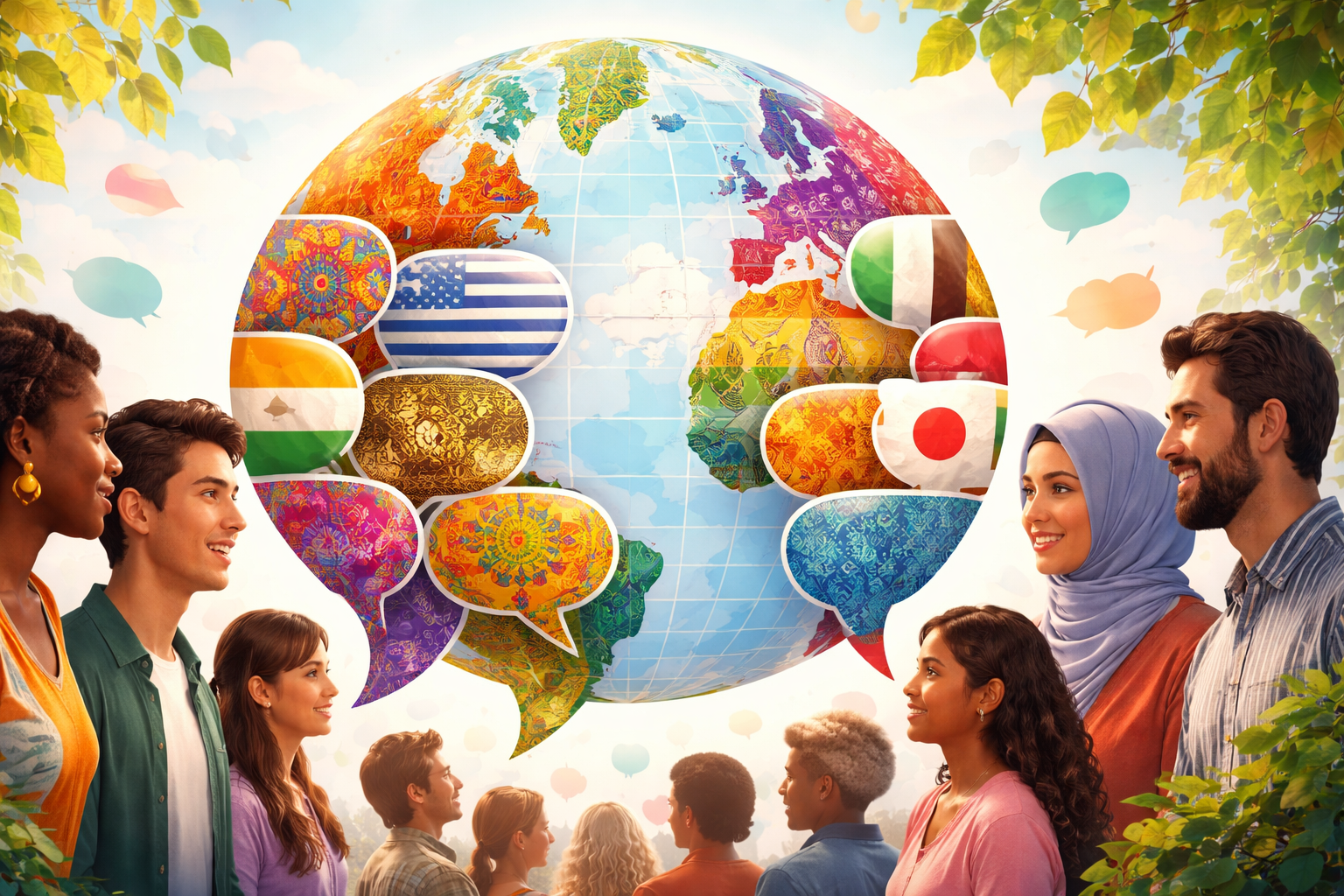
Language is far more than a medium of communication. It is a social institution, a cultural archive, and a powerful marker of identity. From a sociological perspective, language shapes how individuals perceive themselves, how communities define belonging, and how power operates within society. Among all forms of language, the mother tongue occupies a special position. It is the first language learned in early childhood, embedded in emotions, family relationships, traditions, and everyday social interactions.
In a rapidly globalizing world dominated by a few global languages such as English, Mandarin, and Spanish, mother tongues are increasingly marginalized. Yet, sociological research consistently highlights that the survival and recognition of mother tongues are essential for cultural continuity, social cohesion, and individual self-worth.

This article examines the relationship between language and identity, focusing on why mother tongues matter in shaping personal, cultural, and collective identities.
Language as a Social Phenomenon
Sociology views language as a social fact, to use Émile Durkheim’s terminology. Language exists outside the individual, yet it deeply influences individual thought and behavior. It is learned through socialization and maintained through social interaction. Language carries shared meanings, norms, and values that bind members of a society together.
From a symbolic interactionist perspective, language is central to meaning-making. George Herbert Mead emphasized that individuals develop a sense of self through interaction, and language plays a crucial role in this process. Without language, especially the familiar language of early socialization, individuals struggle to express emotions, interpret social cues, and participate fully in society.
Mother Tongue and the Formation of Identity
Identity is not innate; it is socially constructed. Language, particularly the mother tongue, is one of the earliest tools through which identity is shaped. Children learn not only words but also cultural meanings, moral values, and social roles through their mother tongue.
The mother tongue connects individuals to:
- Family history
- Collective memory
- Local traditions and customs
Through lullabies, folktales, proverbs, and everyday conversations, the mother tongue transmits cultural knowledge across generations. This process ensures continuity of identity within communities. When individuals speak their mother tongue, they often experience a sense of authenticity and emotional security that may not exist in a second or foreign language.
Language, Culture, and Collective Identity
Language and culture are inseparable. Anthropologist Edward Sapir argued that language is a guide to social reality. The vocabulary and grammar of a language reflect how a society understands the world. For example, many indigenous languages contain rich ecological knowledge, expressing relationships between humans and nature that dominant languages often fail to capture.

Collective identity, whether ethnic, regional, or national, is often built around a shared language. Mother tongues serve as symbols of unity and resistance, especially among marginalized groups. Sociologically, language becomes a boundary marker, distinguishing “us” from “them.” This boundary can foster solidarity but can also become a site of conflict when languages are hierarchically ranked.
Power, Language, and Social Inequality
Language is closely linked to power. Pierre Bourdieu introduced the concept of linguistic capital, arguing that some languages and accents carry more social value than others. In many societies, dominant languages are associated with education, employment, and upward mobility, while mother tongues of minority communities are labeled as inferior or backward.
This linguistic hierarchy leads to:
- Discrimination in education
- Social exclusion
- Loss of self-esteem among speakers of marginalized languages
When children are forced to abandon their mother tongue in schools, they often experience identity conflict and alienation. Sociological studies show that education systems that ignore mother tongues contribute to higher dropout rates and poorer academic performance among minority students.
Globalization and the Decline of Mother Tongues
Globalization has intensified contact between languages but has also accelerated language loss. According to sociolinguistic studies, thousands of languages are endangered. The dominance of global languages in media, technology, and education reduces the functional use of mother tongues.
From a sociological viewpoint, this decline is not natural but structural. Economic globalization privileges languages linked to global markets. As a result, parents may discourage children from using their mother tongue, believing it to be an obstacle to success. This creates intergenerational language gaps and weakens cultural transmission.
Language, Identity, and Emotional Expression
Mother tongues play a crucial role in emotional expression. Sociologists and psychologists alike note that individuals express emotions more deeply and authentically in their first language. Feelings such as love, grief, anger, and belonging are closely tied to the language learned in early social contexts.
Loss of the mother tongue often leads to emotional disconnection from one’s roots. Migrant communities frequently report a sense of cultural loss when younger generations can no longer speak the ancestral language. This linguistic shift affects family relationships and intergenerational communication.
Language and Resistance: Mother Tongues as Symbols of Struggle
Historically, mother tongues have played a central role in social movements and struggles for recognition. Anti-colonial movements across Asia, Africa, and Latin America emphasized indigenous languages as symbols of cultural autonomy and resistance against imperial domination.
Sociologically, the revival of mother tongues represents:
- Assertion of identity
- Rejection of cultural domination
- Demand for social justice
Language movements, such as those advocating regional languages in India or indigenous languages in Latin America, demonstrate how mother tongues can mobilize collective action and reshape political discourse.
Education and the Importance of Mother Tongue Instruction
Education is a key site where language and identity intersect. UNESCO and sociological research emphasize that early education in the mother tongue enhances cognitive development and learning outcomes. Children understand concepts more clearly when taught in a familiar language.
Mother tongue-based education also:
- Builds self-confidence
- Encourages participation
- Respects cultural diversity
Ignoring mother tongues in education not only disadvantages learners but also reinforces social inequalities. Sociologically, inclusive language policies in education promote social integration and cultural pluralism.
Language, Migration, and Hybrid Identities
In migrant societies, language becomes central to negotiating identity. Migrants often develop hybrid identities, combining elements of the host society’s language with their mother tongue. This linguistic hybridity reflects broader processes of cultural adaptation and negotiation.
However, when mother tongues are devalued in host societies, migrants may feel pressure to assimilate linguistically. This can result in identity tension, especially among second-generation migrants who struggle to balance heritage and belonging.
Digital Media and the Future of Mother Tongues
Digital technology presents both challenges and opportunities for mother tongues. While dominant languages dominate online spaces, digital platforms also enable the preservation and revitalization of minority languages. Social media, podcasts, and online literature allow communities to create content in their mother tongue.
From a sociological perspective, digital spaces can democratize language use, provided there is institutional and community support. The future of mother tongues depends not only on technology but also on social attitudes and policy frameworks.
Sociological Importance of Preserving Mother Tongues
Preserving mother tongues is not merely a cultural concern; it is a sociological necessity. Language diversity strengthens social resilience and fosters mutual respect in multicultural societies. When mother tongues are recognized and valued, individuals feel acknowledged and empowered.

Sociology emphasizes that inclusive language policies contribute to:
- Social cohesion
- Cultural sustainability
- Democratic participation
Ignoring linguistic diversity, on the other hand, deepens inequality and social fragmentation.
Conclusion
Language and identity are deeply intertwined, and mother tongues lie at the heart of this relationship. From shaping individual selfhood to sustaining collective memory, mother tongues play a vital sociological role. They are carriers of culture, instruments of resistance, and foundations of social belonging.
In an era of globalization and linguistic homogenization, the importance of mother tongues cannot be overstated. Sociologically, protecting and promoting mother tongues is essential for social justice, cultural diversity, and human dignity. Recognizing the value of mother tongues is not about resisting change but about ensuring that progress does not come at the cost of identity and social harmony.
FAQs on Language and Identity
- What is meant by Language and Identity in sociology?
Language and Identity in sociology refers to how language shapes an individual’s self-concept, social belonging, and cultural affiliation within society. - Why is language important for identity formation?
Language provides the symbols, meanings, and expressions through which individuals understand themselves and interact socially, making it central to identity formation. - How does mother tongue influence Language and Identity?
The mother tongue plays a foundational role in Language and Identity by transmitting cultural values, emotions, and social norms during early socialization. - What is the sociological relationship between language and culture?
Language reflects cultural beliefs and practices, and together they shape collective identity and social cohesion. - How does Language and Identity relate to social power?
Language and Identity are connected to power because dominant languages often carry higher social status, influencing access to education and employment. - What role does language play in collective identity?
Language helps construct collective identity by creating a shared sense of belonging among members of a community or nation. - How does globalization affect Language and Identity?
Globalization often promotes dominant languages, which can marginalize mother tongues and weaken cultural identity. - What is linguistic discrimination in the context of Language and Identity?
Linguistic discrimination occurs when individuals are treated unfairly based on their language, accent, or mother tongue, impacting their identity and social status. - Why is mother tongue education important for Language and Identity?
Mother tongue education strengthens Language and Identity by improving learning outcomes and affirming cultural self-worth. - How does migration influence Language and Identity?
Migration creates hybrid Language and Identity patterns as individuals balance their mother tongue with the language of the host society. - What is linguistic capital in Language and Identity studies?
Linguistic capital refers to the social value attached to certain languages, which influences identity and social mobility. - How does language loss affect identity?
Language loss weakens Language and Identity by disconnecting individuals from their cultural heritage and collective memory. - Can Language and Identity be preserved in the digital age?
Yes, digital media can support Language and Identity by enabling content creation and communication in mother tongues. - How do social movements use Language and Identity?
Social movements often use language as a symbol of resistance and identity assertion against cultural domination. - Why is Language and Identity important in multicultural societies?
Language and Identity promote mutual respect, social integration, and cultural diversity in multicultural societies.
1 thought on “Language and Identity: Why Mother Tongues Matter”