Introduction on Globalization and Identity Politics, Hate and Violence
Globalization is often described as the interconnectedness of economies, cultures, and societies across the globe. While it has brought opportunities for economic growth, technological progress, and cultural exchange, it has also created new social tensions. One of the most visible consequences of globalization in the sociological sphere has been the rise of identity politics, accompanied by growing instances of hate and violence. Identity politics, which once emerged as a means for marginalized groups to assert their rights and recognition, has in many contexts transformed into rigid boundaries of exclusion and hostility. In this light, globalization appears as a double-edged sword—promoting integration on one side and reinforcing fragmentation on the other.
This article examines the relationship between globalization and identity politics, hate, and violence from a sociological perspective. It explores how global processes reshape social identities, fuel insecurity, and encourage new forms of political and social conflicts.

Table of Contents
Globalization and the Reshaping of Identities
Sociologists argue that globalization alters the very foundations of identity. Traditionally, identities such as caste, tribe, religion, ethnicity, or nationality were localized and defined by immediate social contexts. With globalization, however, individuals and groups are exposed to a constant flow of global cultures, values, and practices.
- Hybridization of identities: Globalization fosters cultural mixing, leading to hybrid identities where people adopt multiple cultural elements.
- Threat to traditional identities: Simultaneously, the influx of global values often creates fear among communities who perceive their cultural uniqueness to be under threat.
- Resistance to homogenization: Many groups react defensively by reasserting their traditional identities more strongly than before, giving rise to rigid and exclusionary identity politics.
Anthony Giddens and other sociologists argue that globalization creates a sense of “ontological insecurity” where individuals and communities struggle to maintain continuity of their self-identity. This insecurity often translates into strong assertions of identity markers like religion, ethnicity, or nationalism.
Identity Politics in the Age of Globalization
Identity politics refers to the mobilization of people around shared aspects of identity such as race, religion, gender, language, or ethnicity. In the context of globalization, identity politics has become more visible and intense for several reasons:
- Economic Inequalities: Globalization has widened the gap between the rich and poor, both within nations and between them. Communities that feel economically marginalized often frame their grievances through identity politics, blaming “outsiders” or “others” for their deprivation.
- Cultural Backlash: The spread of Western consumer culture, liberal values, and modern lifestyles is seen by many traditional communities as a threat. This cultural intrusion creates a backlash where groups rally around conservative or fundamentalist identities.
- Political Mobilization: Politicians often exploit identity divisions to secure power. In globalized democracies, where rapid social changes create voter anxieties, leaders appeal to religious, ethnic, or national sentiments as a form of populist mobilization.
- Global Media and Social Networks: The internet and digital technologies amplify identity politics. Narratives of victimhood, hate speech, and calls for violence can spread globally in seconds, mobilizing people across borders.
Thus, globalization has not diminished the salience of identity; rather, it has intensified identity politics by providing new grounds for conflict and solidarity.

Hate and Violence in the Globalized World
The rise of identity politics in the global era is closely linked to hate and violence. These manifest in various forms:
- Ethnic and Religious Conflicts: From the Balkans in the 1990s to the Middle East and South Asia, globalization has often exacerbated old ethnic and religious tensions. Communities feel threatened by cultural dilution and economic inequalities, which spark violent confrontations.
- Terrorism and Extremism: Radical groups exploit global networks to spread extremist ideologies. The sense of alienation and marginalization caused by globalization often drives young people toward extremist identity-based violence.
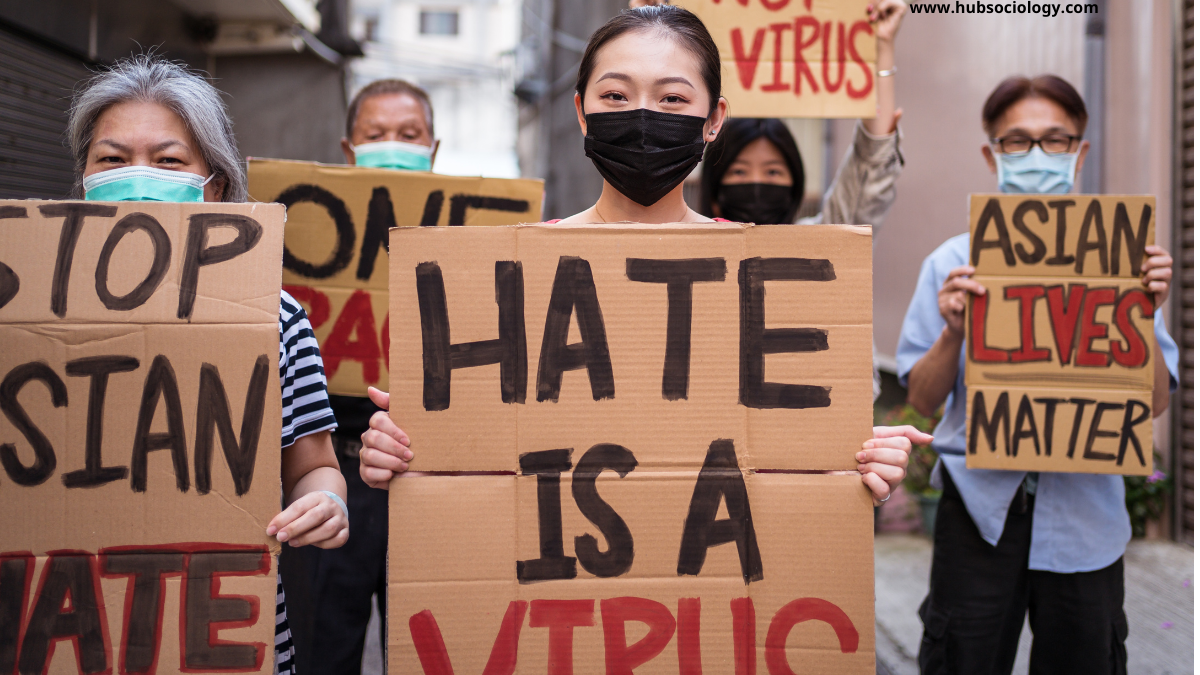
- Rise of Xenophobia: In many Western countries, immigration has become a flashpoint. Migrants are blamed for unemployment, cultural loss, or insecurity, leading to hate crimes and political movements rooted in xenophobia.
- Gender and Sexual Identity Violence: Global feminist and LGBTQ+ movements have gained visibility due to globalization. At the same time, conservative backlash has intensified hate crimes and violence against these groups in societies unwilling to embrace new cultural norms.
- Online Hate Speech: The digital age has globalized hate itself. Social media platforms allow extremist groups and hate mongers to target communities, radicalize individuals, and organize violent acts across borders.
Violence in the global age, therefore, is not confined to traditional battlefields; it occurs in neighborhoods, online spaces, and political institutions.
Theoretical Perspectives
1. Conflict Theory
Conflict theorists argue that globalization creates unequal power structures where dominant groups exploit others economically and culturally. This inequality leads to resentment, mobilization along identity lines, and violent struggles.
2. Cultural Defense Theory
According to this view, identity politics and violence emerge as defensive mechanisms. Communities threatened by cultural homogenization or domination cling to their identities and sometimes engage in violent means to protect them.
3. World-Systems Theory
Immanuel Wallerstein’s world-systems theory highlights how the global capitalist system divides the world into core, semi-periphery, and periphery. The resulting exploitation creates identity-based movements and violent resistance in marginalized regions.
4. Symbolic Interactionism
From this perspective, globalization creates new symbols of identity and difference. Hate and violence often emerge from symbolic battles over meaning—such as the use of religious symbols, language, or dress—which gain heightened significance in a globalized environment.
Case Studies and Examples
- India: The economic liberalization of the 1990s intensified both opportunities and inequalities. This coincided with the rise of religious identity politics, caste-based mobilization, and communal violence.
- Europe and the US: The rise of far-right populism is linked to globalization-induced immigration flows and economic insecurities. Hate crimes against minorities, especially migrants and Muslims, have increased.
- Middle East: Global interventions and modernization pressures have fueled sectarian conflicts and extremist mobilization.
- Africa: Ethnic violence and resource conflicts often become globalized as multinational corporations exploit natural resources, leaving local communities in conflict.
Consequences for Society on Globalization and Identity Politics, Hate and Violence
The sociological consequences of globalization-driven identity politics, hate, and violence are far-reaching:
- Erosion of Social Cohesion: Societies become fragmented into “us vs. them” divisions.
- Weakening of Democratic Values: Populism and authoritarianism thrive as leaders exploit identity insecurities.
- Normalization of Violence: Hate speech and violent acts become part of everyday life, desensitizing societies.
- Global Insecurity: Terrorism, migration crises, and ethnic wars destabilize international relations.
Toward a Resolution on Globalization and Identity Politics, Hate and Violence
Sociology also offers insights into mitigating the negative consequences of globalization on identity politics and violence:
- Inclusive Development: Reducing inequalities through fair economic policies can lessen grievances.
- Intercultural Dialogue: Encouraging cultural pluralism and tolerance can reduce the fear of cultural loss.
- Strengthening Civil Society: NGOs, grassroots organizations, and social movements can foster solidarity across identity lines.
- Responsible Media Use: Regulating online hate speech and promoting positive narratives can reduce the spread of violence.
- Global Governance: International institutions should promote peace, equity, and justice in global interactions.
Conclusion on Globalization and Identity Politics, Hate and Violence
Globalization has redefined the contours of identity, giving rise to new opportunities for recognition and solidarity but also new threats of exclusion, hate, and violence. Far from homogenizing the world, globalization has intensified identity politics, often turning them into battlegrounds for cultural survival and political power. The sociological challenge is to understand this dual nature of globalization and to seek pathways that foster inclusion, tolerance, and non-violence in a rapidly changing world.

Only by addressing the structural inequalities and cultural insecurities fueled by globalization can societies hope to transform identity politics from a source of division into a means of genuine empowerment and harmony.
Do you like this this Article ? You Can follow as on :-
Facebook – https://www.facebook.com/hubsociology
Whatsapp Channel – https://whatsapp.com/channel/0029Vb6D8vGKWEKpJpu5QP0O
Gmail – hubsociology@gmail.com
Exam-style questions on Globalization and Identity Politics, Hate and Violence
5 Marks Questions on Globalization and Identity Politics, Hate and Violence
- Define identity politics in the context of globalization.
- Explain how globalization creates “ontological insecurity” in individuals and communities.
- Mention two ways in which social media has amplified identity politics.
- What is meant by cultural backlash in a globalized society?
- Give two examples of hate and violence linked to globalization.
10 Marks Questions on Globalization and Identity Politics, Hate and Violence
- Discuss the relationship between globalization and the rise of identity politics with suitable examples.
- How does economic inequality under globalization contribute to identity-based conflicts?
- Examine the role of globalization in fueling religious and ethnic violence in the 21st century.
- Explain the cultural defense theory in the context of identity politics.
- Analyze the impact of globalization on xenophobia and anti-immigrant sentiments in Western countries.
15 Marks Questions on Globalization and Identity Politics, Hate and Violence
- Critically analyze how globalization has intensified identity politics, hate, and violence from a sociological perspective.
- “Globalization has both integrated and fragmented societies.” Discuss this paradox with reference to identity politics.
- Using conflict theory and world-systems theory, explain the rise of identity-based movements and violence in the globalized world.
- Evaluate the consequences of globalization-driven identity politics on democracy and social cohesion.
- Suggest sociological measures to mitigate hate and violence arising from identity politics in the era of globalization.
1 thought on “Globalization and Identity Politics, Hate and Violence: A Sociological Analysis”