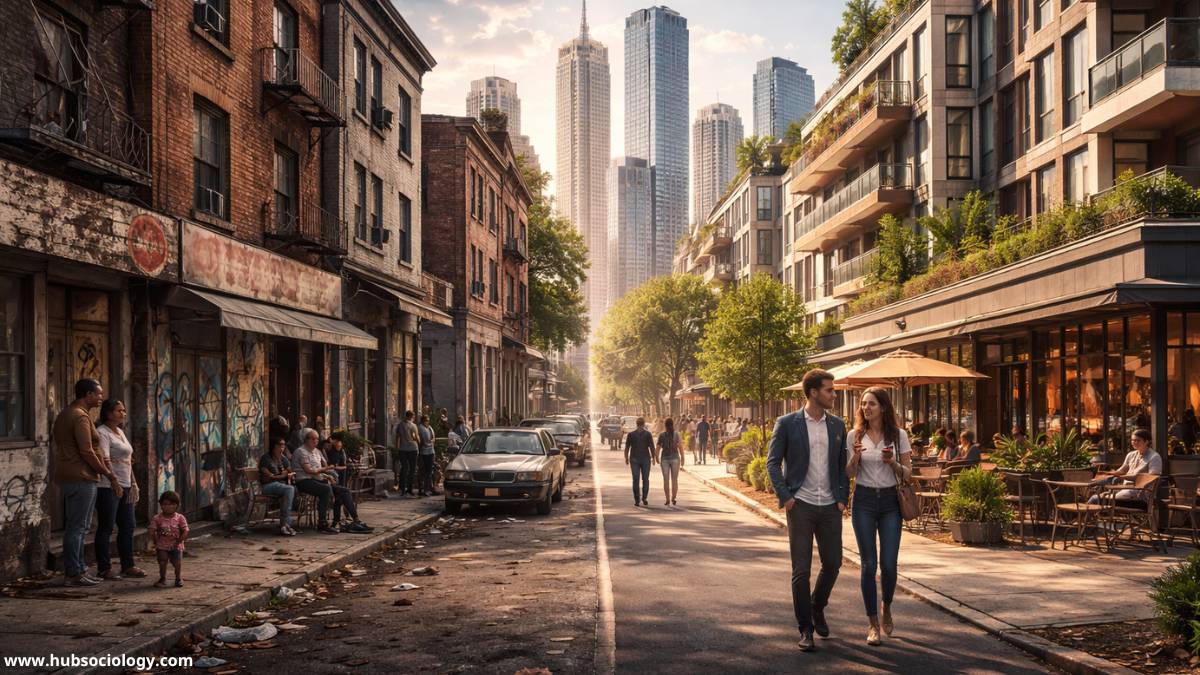
Urban change is one of the most visible features of modern American society. Over the last few decades, many cities in the United States have undergone rapid transformation. Old industrial neighborhoods, once home to working-class and minority populations, are now filled with luxury apartments, trendy cafés, art galleries, and rising property values. This process is commonly known as gentrification.
While gentrification is often celebrated as a sign of urban revival, it has also deepened urban inequality. Sociologists study gentrification not only as an economic process but also as a social, cultural, and political phenomenon. It reshapes communities, alters class relations, and influences who has the right to live in the city.
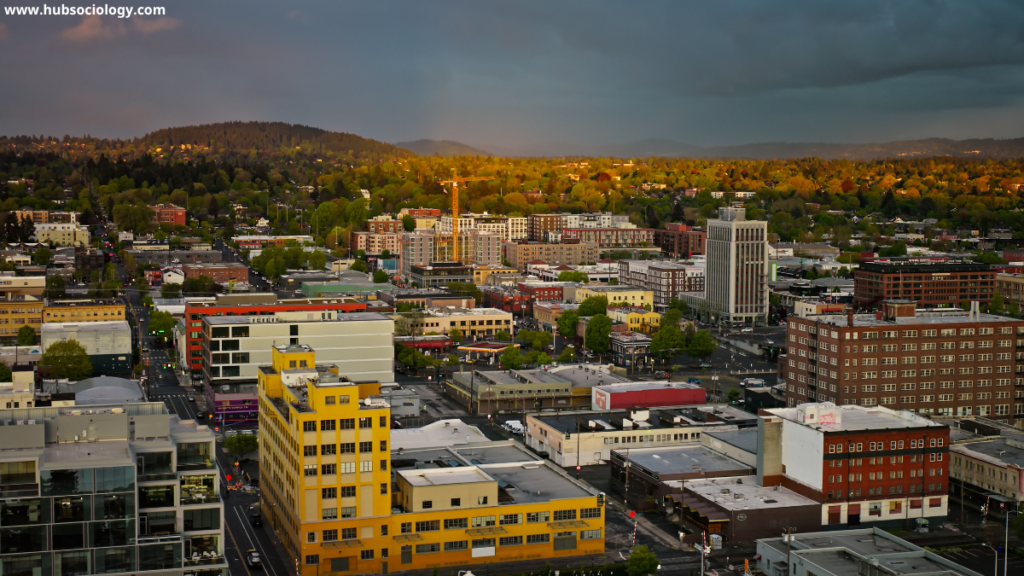
This article explores gentrification and urban inequality in American cities from a sociological perspective, examining its causes, impacts, and the social conflicts it creates.
Understanding Gentrification
Gentrification refers to the process by which wealthier individuals move into historically low-income or working-class urban neighborhoods. As new residents invest in housing and businesses, property values and living costs increase. Over time, original residents—often poor, working-class, and minority communities—are pushed out due to rising rents, taxes, and living expenses.
The term “gentrification” was first used by sociologist Ruth Glass in the 1960s to describe changes in London neighborhoods. Today, the concept is widely applied to American cities such as New York, San Francisco, Los Angeles, Chicago, and Washington, D.C.
From a sociological viewpoint, gentrification is not just about buildings and infrastructure. It is about power, class, race, and access to urban space.
Historical Roots of Urban Inequality
Urban inequality in the United States did not begin with gentrification. It has deep historical roots connected to industrialization, segregation, housing policies, and racial discrimination.
During the 20th century, many American cities experienced “white flight,” where middle-class white families moved to suburban areas. This left inner-city neighborhoods largely occupied by working-class, Black, and immigrant populations. These areas often suffered from underinvestment, poor public services, and declining infrastructure.
At the same time, discriminatory policies such as redlining prevented minority communities from accessing home loans and property ownership. As a result, wealth accumulation remained limited for these groups.
When urban land later became attractive to developers and middle-class professionals, these same neighborhoods became targets for gentrification. The people who had endured decades of neglect were now being displaced.
Causes of Gentrification in American Cities
Several social and economic forces drive gentrification.
One major factor is the shift in the urban economy. Many American cities have moved from industrial production to service-based and knowledge-based economies. Professionals working in technology, finance, media, and creative industries prefer to live close to city centers, leading to increased demand for urban housing.
Another cause is real estate investment. Developers see profit in renovating old buildings and constructing high-end housing. Local governments often support these projects because they increase tax revenue and attract tourism.
Cultural changes also play a role. Urban living is now associated with lifestyle, creativity, and status. Neighborhoods with “authentic” culture, history, and diversity become attractive to newcomers, even as that culture is gradually replaced.
Sociologically, gentrification reflects class restructuring in cities, where wealthier groups gain greater control over urban space.
The Role of Race and Ethnicity
Race is a central factor in American gentrification. Many gentrified neighborhoods were historically Black, Latino, or immigrant communities. These areas developed strong social networks, cultural traditions, and collective identities over generations.
When gentrification occurs, racial dynamics often change. White and affluent residents move in, while minority populations are pushed out. This leads to cultural displacement, where the original character of the neighborhood disappears even before physical displacement happens.
Sociologists argue that gentrification can reproduce racial inequality. Although cities become more “diverse” on paper, economic power remains concentrated among privileged groups.
In some cases, long-term residents feel like outsiders in their own neighborhoods. Local shops are replaced by expensive businesses that do not cater to their needs, and community spaces are lost.
Housing and Displacement
Housing is the most visible area where urban inequality appears. As neighborhoods gentrify, rents and property prices rise rapidly. Landlords may renovate buildings to attract wealthier tenants, forcing low-income residents to leave.
Displacement can be direct, such as eviction or unaffordable rent increases. It can also be indirect, when residents leave because the cost of living becomes too high.
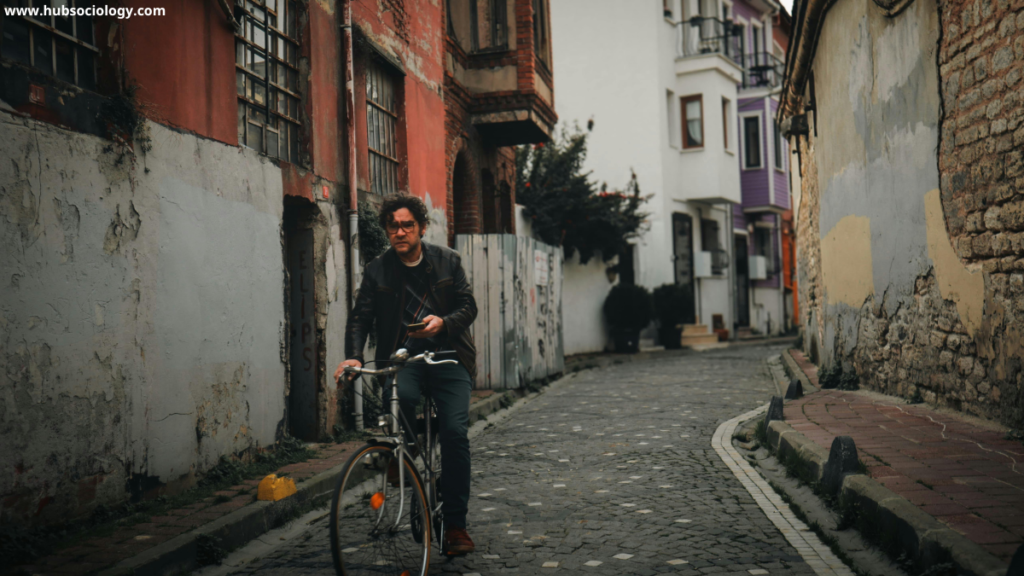
For working-class families, displacement often means moving to distant suburbs with fewer job opportunities, poor public transport, and weaker social networks. This deepens social inequality and spatial segregation.
Sociologically, housing is not just a place to live—it is a source of security, identity, and community. Losing a home means losing access to social support systems built over years.
Cultural Transformation of Neighborhoods
Gentrification also changes the cultural landscape of cities. Traditional local businesses, community centers, and cultural institutions often disappear. They are replaced by cafes, art studios, and luxury stores aimed at middle-class consumers.
This cultural shift reflects class-based tastes and lifestyles. Sociologist Pierre Bourdieu’s idea of “cultural capital” helps explain this process. New residents bring different cultural preferences that reshape public spaces and social norms.
Music, food, language, and street life may change, making original residents feel excluded. Even public behavior becomes regulated in new ways, with stricter policing and surveillance.
Thus, gentrification transforms not only physical space but also the social meaning of the neighborhood.
Economic Inequality and Job Access
Gentrification is often justified by claims that it brings jobs and economic growth. However, the benefits are not evenly distributed.
New businesses may create employment, but these jobs often require skills that local residents do not have. Many positions are low-wage service jobs with little job security.
Meanwhile, rising costs make it harder for working-class people to survive in the city. Economic opportunities concentrate among those who already have education, networks, and financial resources.
From a sociological perspective, gentrification reinforces class divisions rather than reducing them.
Education and Social Mobility
Schools in gentrifying areas also change. Wealthier families often demand better facilities, advanced programs, and special services. While this can improve school quality, it can also marginalize low-income students.
In some cases, original residents’ children are pushed out of local schools due to changing enrollment patterns or rising housing costs.
Education is a key factor in social mobility, but gentrification can limit access to stable educational environments for disadvantaged groups. This reproduces inequality across generations.
Public Policy and Urban Planning
Government policies play a major role in shaping gentrification. Zoning laws, tax incentives, and urban renewal projects often favor developers and investors.
Cities promote “revitalization” to attract business and tourism, sometimes ignoring the needs of existing residents. Affordable housing programs are often limited or poorly enforced.
Sociologists argue that urban planning reflects power relations. Wealthier groups have more influence over policy decisions, while marginalized communities struggle to make their voices heard.
Without strong protections, gentrification becomes a tool for social exclusion.
Resistance and Community Activism
Despite these challenges, many communities resist gentrification. Local residents organize protests, legal actions, and awareness campaigns to protect affordable housing and cultural spaces.
Community land trusts, rent control movements, and tenant unions are examples of collective action against displacement.
From a sociological viewpoint, these movements represent struggles over the “right to the city.” People demand the right to remain in their neighborhoods and shape urban development.
Such resistance highlights that cities are not just economic spaces but also social and political arenas.
Gentrification and Social Identity
Urban neighborhoods shape personal and collective identity. People develop a sense of belonging based on shared history, culture, and daily interactions.
When gentrification disrupts these ties, identity is affected. Displaced residents may experience emotional stress, loss of community, and cultural alienation.
Sociologists emphasize that inequality is not only material but also symbolic. Losing a place in the city can mean losing social recognition and dignity.
The Future of American Cities
Gentrification continues to reshape American cities. Some argue that it improves infrastructure and reduces crime. Others see it as a new form of urban inequality that benefits the rich at the expense of the poor.
The future depends on policy choices. Inclusive development, affordable housing, and community participation can reduce inequality.
Sociology reminds us that cities are collective spaces. Urban growth should serve all residents, not just those with economic power.
Conclusion
Gentrification is a complex social process that reflects deeper inequalities in American society. It is shaped by class, race, economic forces, and political decisions.
While it brings visible changes to urban landscapes, it also creates displacement, cultural loss, and social exclusion.
From a sociological perspective, gentrification is not just about development—it is about who belongs in the city and who is pushed out.
Understanding these dynamics is essential for creating more just and inclusive urban futures.
FAQs
1. What is gentrification in American cities?
Gentrification is the process where wealthier people move into low-income urban neighborhoods, leading to rising property prices and the displacement of original residents.
2. How does gentrification increase urban inequality?
It raises housing costs, forces out low-income residents, and concentrates resources among wealthier groups, deepening social and economic inequality.
3. Why are minority communities most affected by gentrification?
Historically marginalized racial and ethnic groups often live in underinvested areas that later become targets for redevelopment, making them more vulnerable to displacement.
4. Is gentrification always harmful?
While it can improve infrastructure and services, it often harms long-term residents by increasing living costs and reducing access to affordable housing.
5. What role does housing play in urban inequality?
Housing determines access to safety, education, jobs, and community networks, making it a key factor in social inequality.
6. How do governments contribute to gentrification?
Through urban renewal policies, zoning laws, and real estate incentives that favor developers over local residents.
7. What is cultural displacement?
It occurs when the traditions, businesses, and identity of a community disappear due to gentrification.
8. Can gentrification affect education?
Yes, rising housing costs can push families out of school districts, limiting stable education for children.
9. How do communities resist gentrification?
Through protests, tenant unions, rent control campaigns, and community land trusts.
10. What does sociology say about urban inequality?
Sociology views urban inequality as a result of power, class, race, and unequal access to resources in cities.
1 thought on “Gentrification and Urban Inequality in American Cities: A Sociological Perspective”