Introduction on Digital Inclusion in India
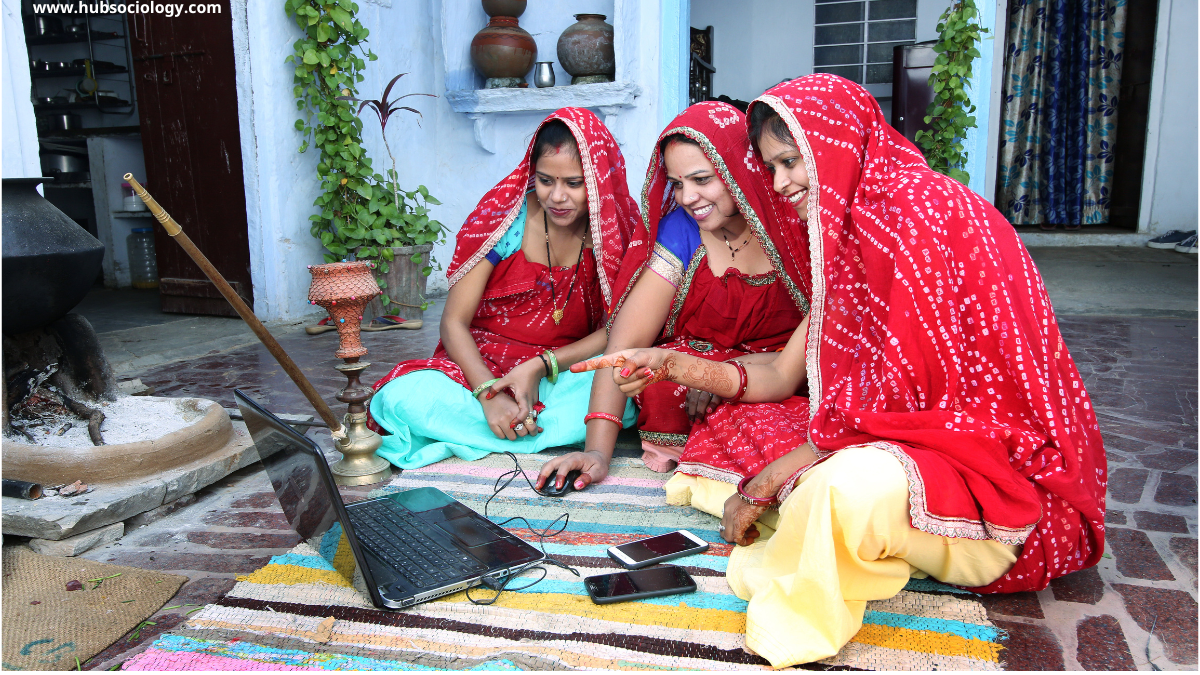
In the 21st century, digital technology has become a transformative force shaping economies, politics, and societies worldwide. In India, a nation with immense diversity in terms of caste, class, gender, religion, and geography, the concept of digital inclusion carries a deeper sociological meaning. It is not merely about access to the internet or devices but about ensuring equitable participation in the digital sphere regardless of social or economic backgrounds. Digital inclusion, thus, becomes a vital tool for empowerment, social mobility, and reducing inequalities. Yet, it also reflects the entrenched social hierarchies that persist within Indian society.
This article examines digital inclusion in India from a sociological perspective—exploring its role in bridging social divides, reshaping institutions, and contributing to empowerment, while also analyzing the challenges posed by structural inequalities.

Table of Contents
The Concept of Digital Inclusion
Digital inclusion refers to the ability of individuals and communities to access and effectively use information and communication technologies (ICTs). It involves three dimensions:
- Access to infrastructure – availability of internet connectivity, digital devices, and electricity.
- Digital literacy – the knowledge and skills required to use digital tools.
- Meaningful participation – using technology for education, employment, healthcare, governance, and social integration.
From a sociological standpoint, digital inclusion is not only a technological issue but also a social process that reflects power relations, cultural values, and patterns of inequality in society.
Historical Context of Digital India
The Indian state recognized the transformative potential of ICTs early on. Initiatives such as the National e-Governance Plan (2006) and later the Digital India Mission (2015) sought to expand digital connectivity, e-services, and literacy across the nation. These policies aimed to bridge the gap between urban and rural areas, reduce bureaucratic inefficiencies, and promote social inclusion.
However, sociologically, the expansion of digital infrastructure has not been uniform. Urban centers and middle-class populations benefited earlier, while marginalized communities—tribals, Dalits, women, and rural poor—continued to struggle with limited access. This reflects how structural inequalities in Indian society shape the process of digital inclusion.
Digital Inclusion and Social Stratification
Indian society is marked by hierarchical divisions of caste, class, gender, and region. Digital inclusion intersects with these divisions in complex ways:
1. Caste and Social Access
Dalits and tribal communities historically excluded from education and resources often find themselves on the wrong side of the digital divide. Lack of connectivity in remote areas, coupled with economic disadvantage, limits their participation in the digital world. Yet, where access is provided, digital platforms have empowered marginalized voices—for example, Dalit activists using social media to challenge caste oppression and mobilize movements.
2. Class and Economic Inequality
Class is a decisive factor in digital access. The affordability of smartphones, data packs, and internet services remains unequal. While India boasts of being the world’s second-largest internet user base, large sections of the rural poor are digitally excluded. This reinforces existing patterns of economic inequality, where the wealthy gain more opportunities from digital platforms in employment and education.
3. Gender Divide
The gender digital divide in India is stark. Studies show that women, particularly in rural areas, are less likely to own mobile phones or access the internet due to patriarchal restrictions, lower literacy levels, and financial dependence. This exclusion perpetuates gender inequalities in education, healthcare, and employment. On the positive side, digital initiatives focusing on women—such as online self-help groups, digital banking for rural women, and e-health platforms—have enabled new forms of empowerment.
4. Regional Disparities
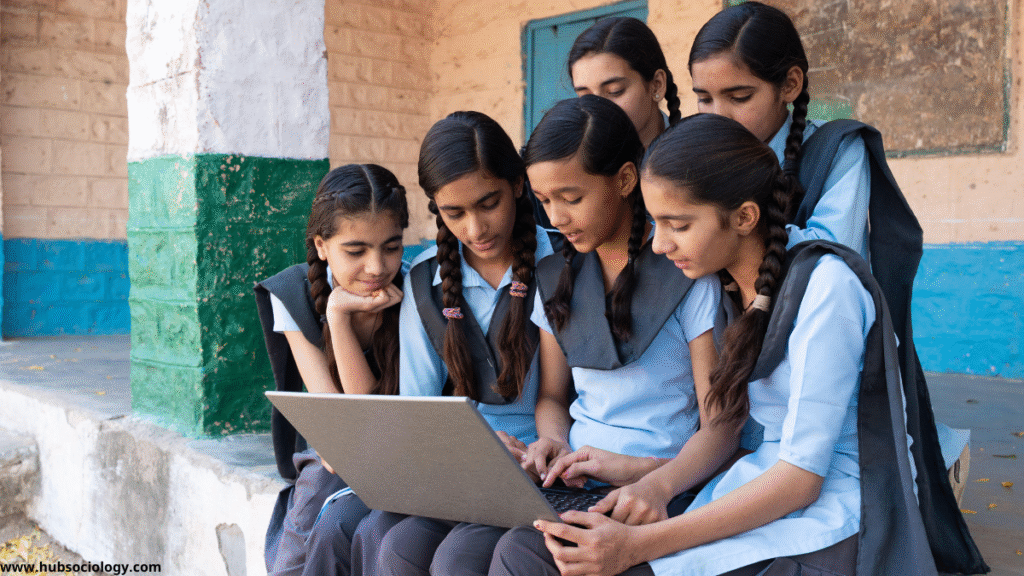
Digital penetration is uneven across states and between urban and rural India. Metropolitan cities like Delhi, Mumbai, and Bengaluru enjoy high-speed internet and digital services, whereas remote villages in states such as Jharkhand, Bihar, and the Northeast face connectivity challenges. This regional imbalance reflects the broader sociological phenomenon of “developmental dualism” in India.
Digital Inclusion as Social Empowerment
When viewed sociologically, digital inclusion can act as a powerful agent of social change. It helps marginalized communities challenge traditional hierarchies and provides new opportunities for participation.
- Education: Online learning platforms and digital classrooms have expanded educational opportunities, especially during the COVID-19 pandemic. However, lack of access highlighted the digital divide in education, revealing how disadvantaged students were excluded.
- Healthcare: Telemedicine and health apps have created access to medical advice in remote areas, contributing to health equity.
- Governance and Citizenship: Digital inclusion allows citizens to access government services, welfare schemes, and information. E-governance strengthens democracy by making the state more accessible.
- Social Movements: Digital platforms have become crucial for mobilizing social movements, from women’s rights campaigns to farmers’ protests. This reflects the role of ICTs in strengthening collective identities and challenging power structures.
- Employment and Entrepreneurship: Digital platforms provide opportunities for self-employment, gig work, and small-scale entrepreneurship. Rural artisans, for example, can reach global markets through e-commerce platforms.
Thus, digital inclusion has the potential to democratize opportunities and reduce social exclusion.
Challenges to Digital Inclusion in India
Despite progress, significant barriers remain:
- Economic Barriers: Poverty restricts access to devices and internet services, particularly in rural and tribal areas.
- Educational Gaps: Digital literacy is low among marginalized groups, limiting meaningful use of technology.
- Patriarchy and Cultural Norms: Social restrictions on women’s use of technology reinforce gender inequality.
- Language Divide: A majority of digital content is in English or Hindi, alienating non-Hindi and regional language speakers.
- Infrastructure Gaps: Unstable electricity and poor network coverage in rural areas hinder connectivity.
- Data Privacy and Surveillance: Increasing digitalization raises concerns of exclusion through surveillance, cybercrimes, and misuse of personal data, particularly among vulnerable populations.
From a sociological viewpoint, these challenges demonstrate that technology alone cannot ensure inclusion unless supported by social reforms, policy measures, and cultural shifts.
The Sociological Lens: Technology and Society
The study of digital inclusion aligns with key sociological theories:
- Modernization Theory suggests that technology promotes development and modernization. Digital India policies align with this perspective, seeking to transform traditional structures.
- Conflict Theory highlights how unequal access to digital technology reinforces social inequalities between rich and poor, men and women, upper and lower castes.
- Symbolic Interactionism focuses on how individuals use digital platforms to construct identities, build communities, and express resistance.
Thus, digital inclusion must be seen as a contested process shaped by power, inequality, and agency within Indian society.
Policy Measures and the Way Forward
To achieve meaningful digital inclusion, India requires an integrated approach:
- Affordable Access: Expanding low-cost internet and subsidized devices for marginalized groups.
- Localized Content: Promoting digital services in regional languages to increase inclusivity.
- Digital Literacy Programs: Large-scale community-level training, especially for women and rural populations.
- Gender-Sensitive Policies: Encouraging women’s access to digital tools by addressing cultural restrictions.
- Public-Private Partnerships: Collaboration between government, NGOs, and private companies to expand connectivity.
- Inclusive Governance: Ensuring that e-governance platforms are user-friendly and accessible to all sections of society.
Conclusion on Digital Inclusion in India
Digital inclusion in India is not merely about bridging the technological divide; it is about addressing deep-rooted social inequalities. While digital technologies hold immense potential to empower marginalized groups and promote democratic participation, the benefits are unevenly distributed. From caste and class to gender and regional divides, digital exclusion reflects the broader hierarchies of Indian society.

Therefore, a sociological approach is crucial to understand digital inclusion as a social transformation process, not just a technological one. For India to realize the vision of a digitally empowered society, digital inclusion must go hand-in-hand with policies addressing poverty, education, gender equality, and social justice. Only then can digital technology become a true equalizer, enabling inclusive growth and fostering a more equitable society.
Do you like this this Article ? You Can follow as on :-
Facebook – https://www.facebook.com/hubsociology
Whatsapp Channel – https://whatsapp.com/channel/0029Vb6D8vGKWEKpJpu5QP0O
Gmail – hubsociology@gmail.com
Topic Related Question on Digital Inclusion in India
5 Marks Questions on Digital Inclusion in India
- Define digital inclusion in the Indian context.
- How does caste influence digital inclusion in India?
- Mention two barriers to women’s digital inclusion in rural India.
- What role does digital literacy play in achieving social empowerment?
- State two major challenges of digital inclusion in India.
10 Marks Questions on Digital Inclusion in India
- Explain how digital inclusion can reduce social inequalities in India.
- Discuss the relationship between class and digital access in Indian society.
- How do regional disparities affect the process of digital inclusion?
- Analyze the role of ICT in education and healthcare with reference to marginalized communities.
- What are the sociological implications of the gender digital divide in India?
15 Marks Questions on Digital Inclusion in India
- “Digital inclusion is not only a technological issue but also a social process.” Discuss with reference to Indian society.
- Critically analyze the role of government initiatives like Digital India in promoting social empowerment through digital inclusion.
- Examine digital inclusion in India through the lenses of modernization theory, conflict theory, and symbolic interactionism.
- To what extent has digital inclusion transformed social movements and collective identities in India?
- Evaluate the challenges of digital inclusion in India and suggest sociologically informed solutions for bridging the digital divide.