Introduction
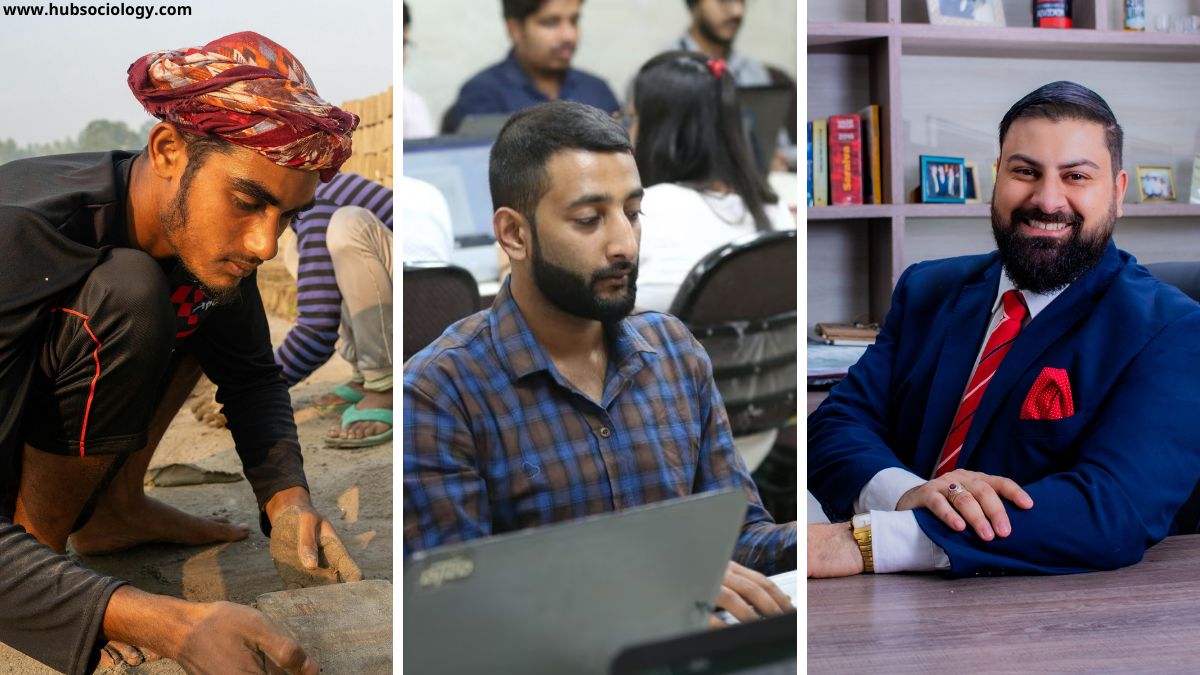
India is one of the fastest-growing economies in the world, yet it remains one of the most unequal societies. While a small section of the population enjoys immense wealth, luxury, and global opportunities, a large segment still struggles with poverty, unemployment, and basic survival. Between these two extremes lies the Indian middle class, often considered the backbone of the nation. This sharp division between the rich, middle class, and the poor reflects class inequality, a central concern in sociology.
Class inequality in India is not just about income. It is deeply connected with caste, education, occupation, gender, region, and access to resources. Sociologists study these inequalities to understand how social structures reproduce privilege for some groups while limiting opportunities for others.
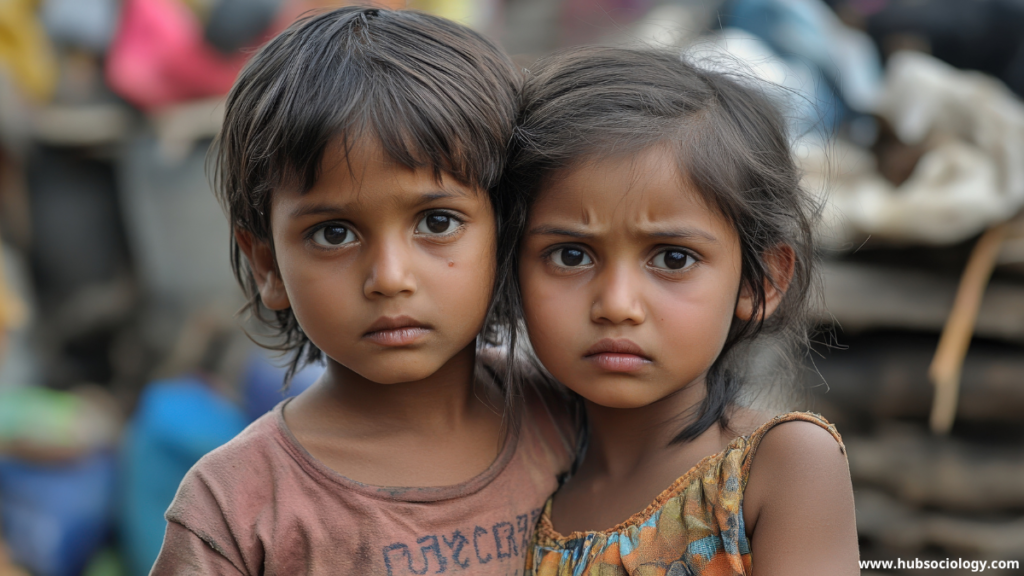
This article explores class inequality in India by analyzing the living conditions, power, and social mobility of the rich, middle class, and the poor.
Understanding Class Inequality in Sociology
In sociology, class inequality refers to the unequal distribution of wealth, power, and status among different social groups. Karl Marx viewed class as a result of economic relations, dividing society into the bourgeoisie (owners) and the proletariat (workers). Max Weber expanded this idea by including status and power along with economic class.
In the Indian context, class is shaped not only by income and occupation but also by caste, education, land ownership, and urban-rural differences. Social mobility is possible, but structural barriers often restrict upward movement, especially for the poor.
The Rich in India: Privilege and Power
Economic Dominance
The richest section of Indian society controls a major share of the nation’s wealth. Business tycoons, corporate leaders, real estate magnates, and large landowners enjoy enormous economic power. This class benefits from investments, inheritance, and access to global markets.
Wealth accumulation among the rich is often intergenerational. Children of wealthy families inherit not just money but also social networks, elite education, and cultural capital. This makes it easier for them to maintain their class position.
Social and Political Influence
The rich enjoy high social status and strong political connections. Their influence can shape policies, urban development, and even media narratives. Access to private healthcare, elite schools, luxury housing, and international travel further separates them from the rest of society.
From a sociological perspective, this group represents structural privilege, where wealth translates into power and opportunities that remain inaccessible to most citizens.
Lifestyle and Cultural Capital
Pierre Bourdieu’s concept of cultural capital explains how the rich use education, language, and lifestyle to maintain social superiority. English fluency, global exposure, and elite institutions create symbolic boundaries between the rich and other classes.
The Indian Middle Class: Aspiration and Insecurity
Growth of the Middle Class
India’s middle class has expanded significantly due to education, urbanization, and service-sector growth. This group includes professionals, teachers, government employees, small business owners, and skilled workers.
The middle class represents aspiration, stability, and social mobility. Many families have moved from poverty to relative comfort through education and employment.
Economic Stability with Uncertainty
Although the middle class enjoys better living standards than the poor, it still faces economic insecurity. Rising inflation, job competition, housing costs, and healthcare expenses create financial pressure.
Unlike the rich, the middle class depends mainly on salaries, not assets. A job loss or medical emergency can push families into poverty, showing the fragile nature of middle-class security.
Education as a Mobility Tool
Education is the key instrument for middle-class advancement. Parents invest heavily in private schools, coaching centers, and higher education. However, unequal access to quality education limits opportunities for many.
Sociologically, the middle class plays a crucial role in shaping social norms, political opinions, and consumer culture in India.
The Poor in India: Struggle and Exclusion
Living Conditions
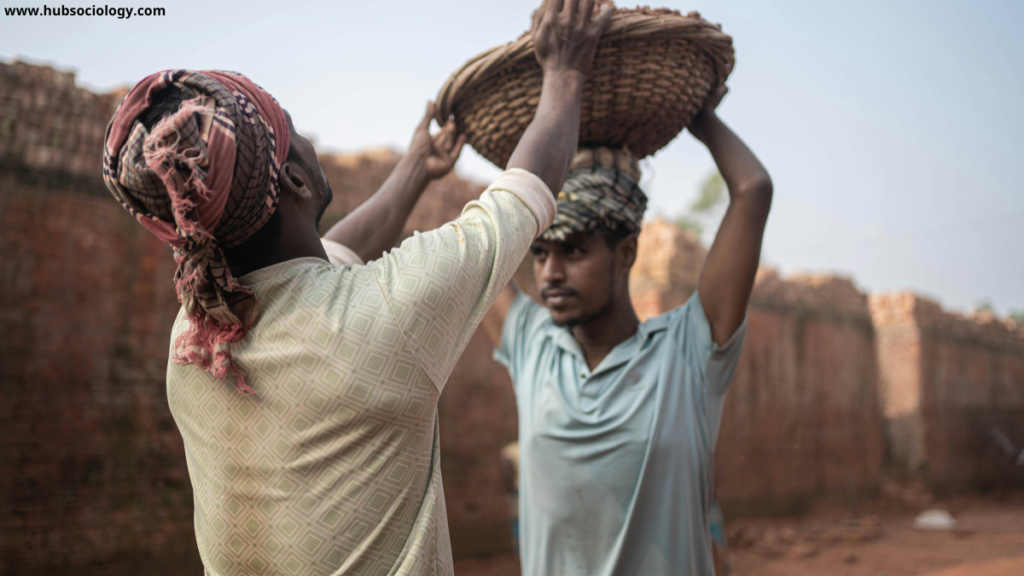
A large section of India’s population still lives in poverty, especially in rural areas, urban slums, and informal settlements. Limited access to clean water, healthcare, education, and housing defines everyday life for the poor.
Many work in the informal sector as daily wage laborers, domestic workers, street vendors, and agricultural laborers. These jobs offer low income, no job security, and no social protection.
Structural Barriers
Poverty in India is not only economic but also social. Caste discrimination, gender inequality, regional imbalance, and lack of education trap people in cycles of deprivation.
Children from poor families often drop out of school to support household income. This limits their future opportunities and reproduces poverty across generations.
Social Exclusion
The poor face social stigma and exclusion. They are often invisible in policy decisions and lack political representation. According to sociological theory, this reflects marginalization, where certain groups remain outside the benefits of development.
Caste and Class: A Unique Indian Dimension
Unlike Western societies, Indian class inequality is deeply linked to the caste system. Historically marginalized castes such as Dalits and Adivasis are overrepresented among the poor.
Even when income improves, caste identity can continue to affect social status, marriage, and employment opportunities. This shows that class mobility does not automatically erase social inequality.
Reservation policies have helped some disadvantaged groups access education and jobs, but structural discrimination still exists.
Urban–Rural Divide
Class inequality is also shaped by geography. Urban areas offer better jobs, infrastructure, and services, while rural regions struggle with agricultural distress, unemployment, and migration.
Many rural poor migrate to cities in search of work but end up in slums with poor living conditions. This rural-urban migration highlights the uneven nature of India’s development.
Gender and Class Inequality
Women experience class inequality differently from men. Poor women face double disadvantage due to poverty and patriarchy. They often work in low-paid, informal jobs and have limited access to education and healthcare.
Middle-class women have more opportunities but still face workplace discrimination and unpaid domestic labor. Even wealthy women encounter gender-based restrictions despite economic privilege.
Sociologically, this shows how class and gender intersect to shape social experiences.
Education and Class Reproduction
Education is often seen as the path to equality, but it also reproduces class differences. Elite schools, English-medium education, and coaching institutes are accessible mainly to the rich and middle class.

Government schools serving the poor often lack resources, leading to lower learning outcomes. This educational gap maintains class divisions across generations.
Media, Consumption, and Class Identity
Indian media and advertising often promote upper-class lifestyles as symbols of success. This shapes aspirations of the middle class and reinforces class hierarchies.
Consumer culture creates visible markers of class such as smartphones, cars, clothing brands, and housing. These symbols reinforce social boundaries between the rich, middle class, and the poor.
Government Policies and Inequality
India has implemented welfare schemes like:
- Public Distribution System (PDS)
- MGNREGA ( Now VB-G RAM G )
- Ayushman Bharat
- Mid-Day Meal Scheme
These programs aim to reduce poverty and inequality. However, gaps in implementation, corruption, and exclusion errors limit their effectiveness.
From a sociological perspective, welfare policies reduce extreme poverty but do not fully address structural inequality.
Social Mobility in India
Social mobility refers to movement between classes. While education, urban jobs, and entrepreneurship allow some upward mobility, large barriers remain for the poor.
The rich largely maintain their position through inherited wealth, while the poor struggle to escape poverty. The middle class experiences both upward and downward mobility depending on economic conditions.
Digital Divide and New Inequalities
Technology has created new opportunities but also new inequalities. The rich and middle class benefit from digital education, online business, and remote work, while the poor lack internet access and digital skills.
This digital divide has widened class inequality, especially after COVID-19.
Conclusion
Class inequality in India is a complex social reality shaped by wealth, caste, education, gender, and geography. The rich enjoy privilege and power, the middle class lives with aspiration and insecurity, and the poor face structural exclusion.
Despite economic growth, social inequality remains deeply rooted. Sociological analysis shows that inequality is not accidental but produced by social systems, institutions, and historical patterns.
For a more equal India, policies must focus not only on economic growth but also on social justice, quality education, healthcare, and inclusive development. True progress requires reducing the gap between the rich, the middle class, and the poor, ensuring dignity and opportunity for all citizens.
FAQs on Class Inequality in India
1. What is meant by Class Inequality in India?
Class Inequality in India refers to the unequal distribution of wealth, resources, power, and opportunities among the rich, middle class, and poor sections of society.
2. Why is Class Inequality in India so high?
Class Inequality in India is high due to historical factors like caste, unequal access to education, regional imbalance, unemployment, and concentration of wealth among a small elite.
3. How does caste influence Class Inequality in India?
Caste plays a major role in Class Inequality in India because marginalized castes often face discrimination in education, employment, and social mobility.
4. Who are considered the rich class in India?
The rich class in India includes business owners, industrialists, top corporate professionals, and large landowners who control a significant share of the country’s wealth.
5. What challenges does the middle class face in India?
The middle class faces job insecurity, rising living costs, education expenses, and limited savings despite relatively stable incomes.
6. How do the poor experience Class Inequality in India?
The poor suffer from lack of quality education, healthcare, stable jobs, housing, and social security, keeping them trapped in poverty.
7. What role does education play in Class Inequality in India?
Education can reduce Class Inequality in India, but unequal access to quality schools and colleges often reproduces social class differences.
8. Is Class Inequality in India increasing or decreasing?
Many studies suggest that Class Inequality in India is increasing due to rapid wealth concentration and unequal economic growth.
9. How does urbanization affect Class Inequality in India?
Urbanization creates opportunities but also increases slum populations, informal jobs, and housing inequality, deepening class divisions.
10. What is the link between gender and Class Inequality in India?
Women from poor and middle-class backgrounds face double inequality due to economic hardship and gender discrimination.
11. How do government policies address Class Inequality in India?
Welfare schemes like MGNREGA, PDS, and Ayushman Bharat aim to reduce poverty, but structural inequality still persists.
12. What is social mobility in the context of Class Inequality in India?
Social mobility refers to movement between social classes, but in India, it is often limited for the poor due to systemic barriers.
13. How does the digital divide affect Class Inequality in India?
Lack of internet access and digital skills among the poor increases educational and job inequality.
14. Can Class Inequality in India be reduced?
Yes, through inclusive education, employment generation, healthcare access, and fair economic policies.
15. Why is Class Inequality in India a sociological issue?
Because it affects social relationships, power structures, identity, and life chances, making it a core subject of sociology.
1 thought on “Class Inequality in India: Rich, Middle Class, and the Poor”