Introduction
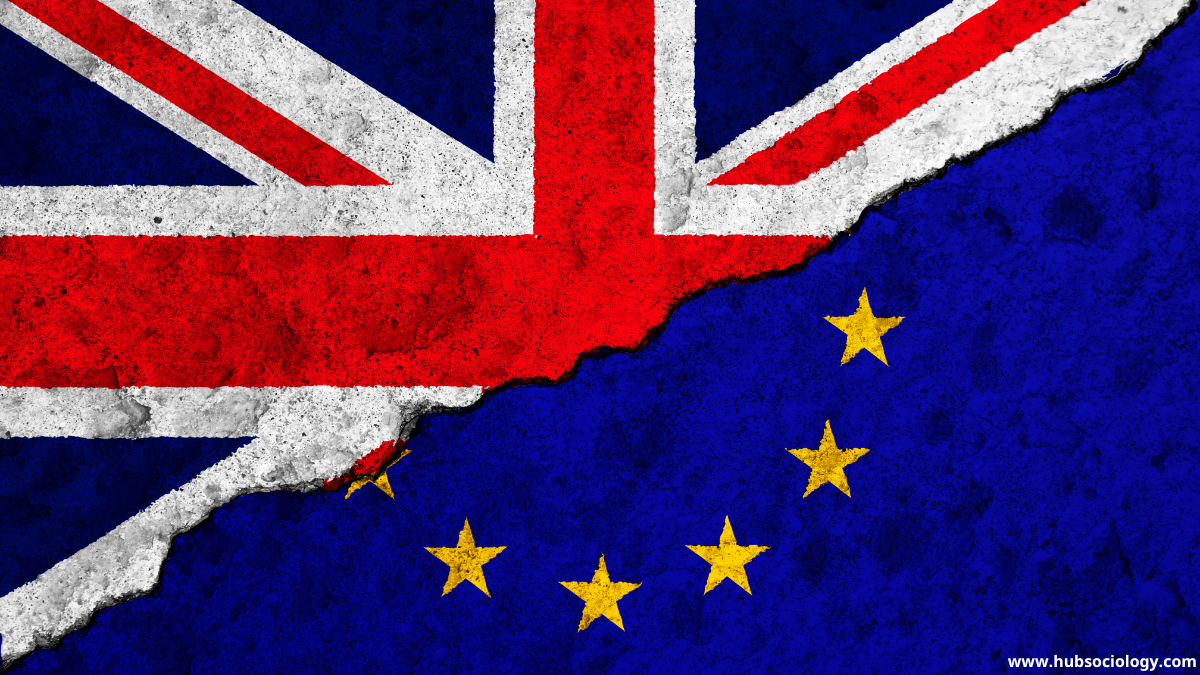
Brexit—the United Kingdom’s decision to leave the European Union following the 2016 referendum—represents one of the most significant political and social turning points in modern British history. While Brexit is often discussed in economic or political terms, its deeper and more lasting impact lies in the realm of society. The referendum did not merely determine Britain’s relationship with the European Union; it exposed, intensified, and restructured long-standing social divisions within British society. From class and regional inequalities to identity politics and generational conflicts, Brexit became both a symbol and a catalyst of social polarization.
From a sociological perspective, Brexit offers a critical case study of how political decisions interact with social structures, collective identities, power relations, and cultural narratives. This article examines Brexit as a process that revealed underlying fractures in British society while also creating new forms of polarization. By analyzing class divisions, regional disparities, nationalism, media influence, migration debates, and the erosion of social cohesion, the article seeks to understand how Brexit reshaped British social life and collective consciousness.
Understanding Social Polarization in Sociology
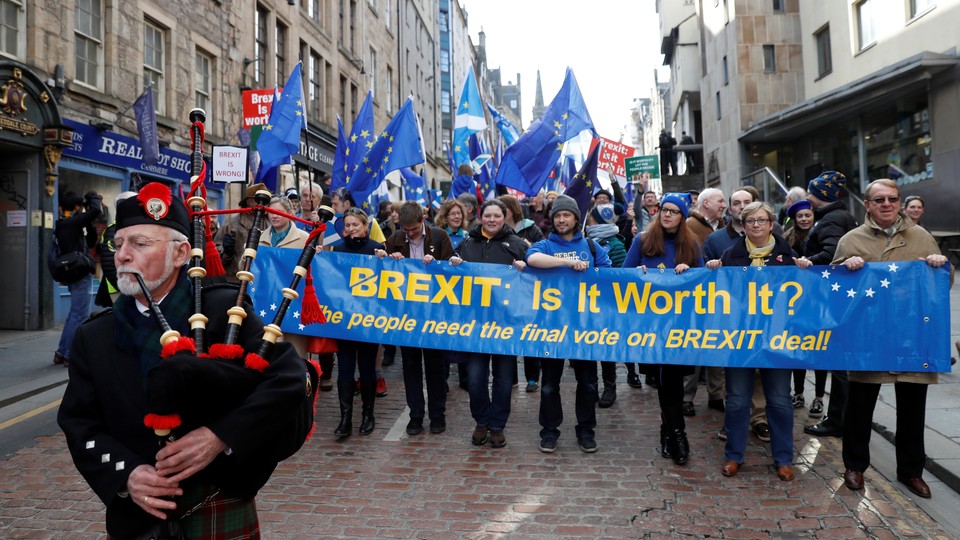
Social polarization refers to the widening gap between social groups in terms of beliefs, identities, economic conditions, and political orientations. Sociologists view polarization not simply as disagreement but as a process through which societies become divided into opposing camps with diminishing mutual understanding and trust.
In the context of Brexit, polarization was evident in binary categories such as “Leave” versus “Remain,” but these labels masked deeper social realities. Voting behavior correlated strongly with class, education, age, geography, and cultural outlook. Brexit thus functioned as a social mirror, reflecting structural inequalities that had accumulated over decades.
Sociological theories such as conflict theory, social identity theory, and cultural hegemony help explain why Brexit became so divisive. These frameworks suggest that political events gain emotional intensity when they resonate with people’s lived experiences, perceived marginalization, and sense of belonging.
Class Divisions and Economic Inequality
One of the most striking sociological aspects of Brexit was the role of social class. Statistical and sociological analyses consistently showed that working-class communities, particularly in post-industrial areas, were more likely to support Brexit. These regions had experienced decades of deindustrialization, job insecurity, wage stagnation, and reduced public services.
From a Marxist perspective, Brexit can be interpreted as an expression of class resentment. Many working-class voters perceived the European Union as an elite project benefiting corporations, professionals, and metropolitan centers while neglecting ordinary workers. Although the EU was not the direct cause of economic hardship, it became a symbolic target for frustration generated by neoliberal economic policies.
Conversely, middle-class and upper-middle-class professionals—especially those benefiting from globalization, higher education, and international mobility—were more likely to support remaining in the EU. This created a cultural and economic divide in which Brexit symbolized competing class interests and worldviews.
Regional Inequalities and the Geography of Brexit
Brexit voting patterns revealed deep regional polarization within the United Kingdom. England and Wales voted to leave the EU, while Scotland and Northern Ireland voted to remain. Even within England, stark contrasts emerged between London and other regions.
London, as a global city characterized by diversity, financial integration, and cultural openness, overwhelmingly supported remaining in the EU. In contrast, many rural areas, coastal towns, and former industrial regions supported Brexit. Sociologists interpret this divide as a reflection of uneven development and spatial inequality.
Decades of centralized economic growth had concentrated wealth, infrastructure, and opportunities in London and the South East. Peripheral regions often felt abandoned by political elites. Brexit thus became a mechanism through which marginalized regions expressed their dissatisfaction with the existing social order.
The regional divide also raised questions about national unity, particularly regarding Scottish independence and the future of Northern Ireland, further intensifying social polarization.
Identity, Nationalism, and Cultural Conflict
Brexit was not only an economic or political issue; it was deeply rooted in questions of identity. National identity, cultural belonging, and perceptions of sovereignty played a crucial role in shaping attitudes toward Brexit.
For many Leave supporters, Brexit symbolized the restoration of national sovereignty and control. The slogan “Take Back Control” resonated strongly with individuals who felt that globalization and supranational institutions had undermined British autonomy. From a sociological standpoint, this reflects the rise of cultural nationalism in response to perceived threats to identity.
Remain supporters, on the other hand, often embraced a more cosmopolitan identity, viewing European integration as compatible with British values. This clash between nationalist and cosmopolitan identities intensified cultural polarization, transforming political disagreement into moral and emotional conflict.
Social identity theory helps explain why Brexit debates became so emotionally charged. Individuals increasingly defined themselves as part of a “Leave” or “Remain” group, leading to in-group solidarity and out-group hostility.
Migration, Multiculturalism, and Social Anxiety
Migration was one of the most contentious issues during the Brexit campaign. Concerns about immigration, particularly from Eastern Europe, were central to Leave arguments. Sociologically, these concerns cannot be reduced to simple xenophobia; they must be understood within broader contexts of economic insecurity, cultural change, and social anxiety.
In areas experiencing rapid demographic change, immigration was often perceived as competition for jobs, housing, and public services. Media narratives frequently framed migrants as a burden, reinforcing moral panic and social fear. These narratives contributed to the stigmatization of immigrant communities and increased social tension.
At the same time, multicultural urban areas tended to support remaining in the EU, reflecting different everyday experiences of diversity. This contrast highlighted how social context shapes attitudes toward multiculturalism and integration.
Brexit thus intensified debates about who belongs in British society and under what conditions, deepening polarization around issues of race, ethnicity, and citizenship.
Generational Divide and Educational Differences
Age and education were among the strongest predictors of Brexit voting behavior. Younger voters overwhelmingly supported remaining in the EU, while older generations were more likely to vote Leave. Similarly, individuals with higher levels of education tended to support Remain.
From a sociological perspective, this generational divide reflects differing socialization processes and life experiences. Younger generations, having grown up in a globalized and digitally connected world, often see European identity as complementary to national identity. Older generations may associate national sovereignty with stability and tradition.
Educational institutions also play a key role in shaping political attitudes. Higher education often promotes critical thinking, cultural openness, and exposure to diversity, influencing political preferences. The Brexit divide thus revealed inequalities in cultural capital and access to knowledge.
Media, Political Discourse, and Polarization
The role of media in shaping Brexit-related polarization cannot be overlooked. British media, particularly tabloids, played a significant role in framing the EU as an external threat and promoting Eurosceptic narratives. Simplified and sensationalist coverage contributed to misinformation and emotional polarization.

Social media further intensified divisions by creating echo chambers in which individuals were exposed primarily to views that reinforced their existing beliefs. Algorithms amplified extreme positions, reducing opportunities for constructive dialogue.
From a sociological standpoint, this reflects the power of discourse in shaping social reality. Brexit debates were not merely about facts but about competing narratives of Britain’s past, present, and future.
Erosion of Social Trust and Community Relations
One of the most concerning sociological consequences of Brexit has been the erosion of social trust. Studies reported increased hostility in everyday interactions, strained family relationships, and heightened political intolerance following the referendum.
Communities became divided along political lines, with Brexit identities sometimes overriding shared local or social bonds. Trust in political institutions also declined, particularly as Brexit negotiations became prolonged and contentious.
This erosion of trust undermines social cohesion, which sociologists view as essential for the stability of democratic societies. Brexit thus represents not only a political rupture but a social one.
Brexit and the Future of British Society
Brexit’s long-term sociological impact continues to unfold. While the UK has formally left the EU, the social divisions revealed by the referendum remain deeply embedded. Addressing these divisions requires more than policy adjustments; it demands structural reforms aimed at reducing inequality, strengthening community ties, and promoting inclusive national narratives.
Sociologists argue that rebuilding social cohesion requires acknowledging the legitimate grievances that fueled Brexit while also challenging exclusionary and divisive ideologies. Education, media responsibility, and participatory governance play crucial roles in this process.
Conclusion
Brexit stands as a powerful example of how political events can crystallize deep social divisions. From class inequality and regional disparities to identity conflicts and generational divides, Brexit exposed the complex social fabric of British society. Rather than viewing Brexit solely as a policy decision, sociological analysis reveals it as a symptom of broader structural and cultural transformations.
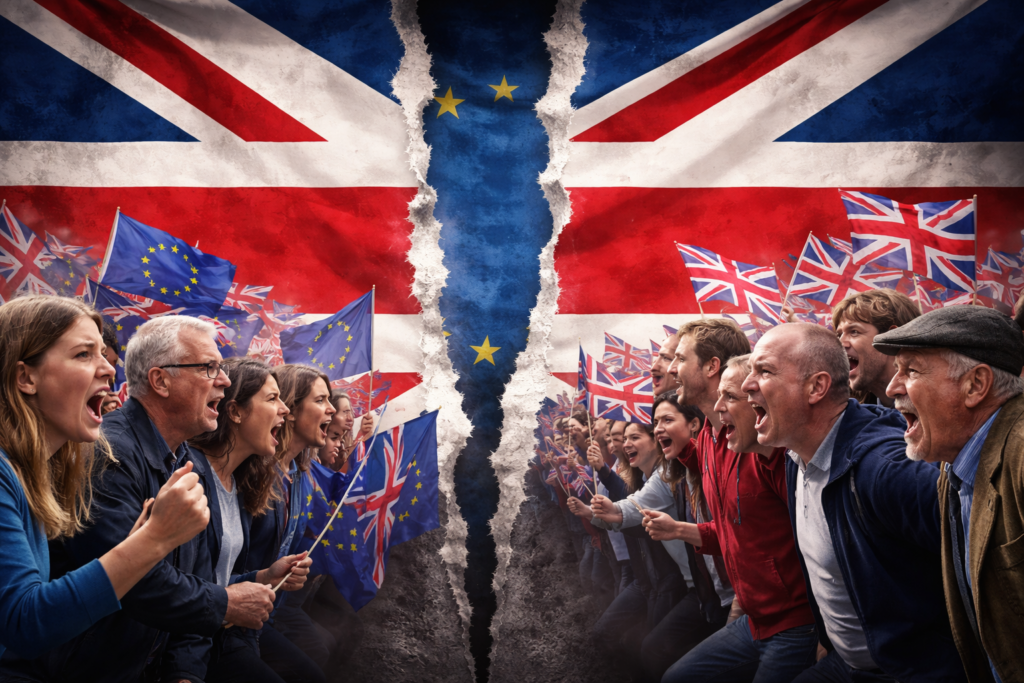
Understanding Brexit through a sociological lens helps move beyond simplistic explanations and encourages a more empathetic and critical engagement with social polarization. The future of British society will depend on its ability to confront these divisions and foster a more inclusive and cohesive social order.
FAQs: Social Polarization in British Society
1. What is meant by Social Polarization in British Society?
Social Polarization in British Society refers to the increasing division between social groups based on class, identity, region, political beliefs, and cultural values, especially intensified after Brexit.
2. How did Brexit contribute to Social Polarization in British Society?
Brexit deepened Social Polarization in British Society by dividing people into opposing camps—Leave and Remain—highlighting inequalities related to class, education, age, and regional development.
3. Why is Social Polarization in British Society considered a sociological issue?
Social Polarization in British Society involves structural inequalities, identity conflicts, power relations, and social cohesion, all of which are core concerns of sociology.
4. What role did class play in Social Polarization in British Society after Brexit?
Class played a major role as working-class communities often supported Brexit due to economic marginalization, while middle-class professionals largely opposed it, increasing Social Polarization in British Society.
5. How do regional inequalities affect Social Polarization in British Society?
Uneven economic development between London, industrial towns, and rural regions intensified Social Polarization in British Society, as marginalized areas expressed dissatisfaction through the Brexit vote.
6. Is Social Polarization in British Society linked to nationalism?
Yes, rising nationalism contributed to Social Polarization in British Society by emphasizing sovereignty and national identity, often in opposition to multicultural and European identities.
7. How did migration debates influence Social Polarization in British Society?
Migration debates fueled Social Polarization in British Society by creating social anxiety over jobs, public services, and cultural change, particularly in economically vulnerable communities.
8. What is the generational aspect of Social Polarization in British Society?
Younger generations tended to support EU membership, while older generations favored Brexit, reflecting a generational divide that intensified Social Polarization in British Society.
9. How does education relate to Social Polarization in British Society?
Higher education levels are associated with more pro-EU views, while lower educational attainment correlated with Brexit support, contributing to Social Polarization in British Society.
10. What role did the media play in Social Polarization in British Society?
Media narratives and sensational reporting amplified fears and misinformation, reinforcing divisions and deepening Social Polarization in British Society.
11. Did Brexit affect social trust in British society?
Yes, Brexit weakened trust in political institutions and strained interpersonal relationships, increasing Social Polarization in British Society.
12. How does Social Polarization in British Society impact democracy?
High levels of Social Polarization in British Society reduce constructive dialogue, increase political hostility, and challenge democratic consensus-building.
13. Can Social Polarization in British Society be reduced?
Reducing Social Polarization in British Society requires addressing economic inequality, promoting inclusive identities, responsible media practices, and participatory governance.
14. Is Social Polarization in British Society a long-term problem?
Yes, Social Polarization in British Society is likely to persist unless structural inequalities and cultural divisions are actively addressed through social and political reforms.
15. Why is studying Social Polarization in British Society important for sociology students?
Studying Social Polarization in British Society helps sociology students understand how political events reflect deeper social structures, inequalities, and identity conflicts.