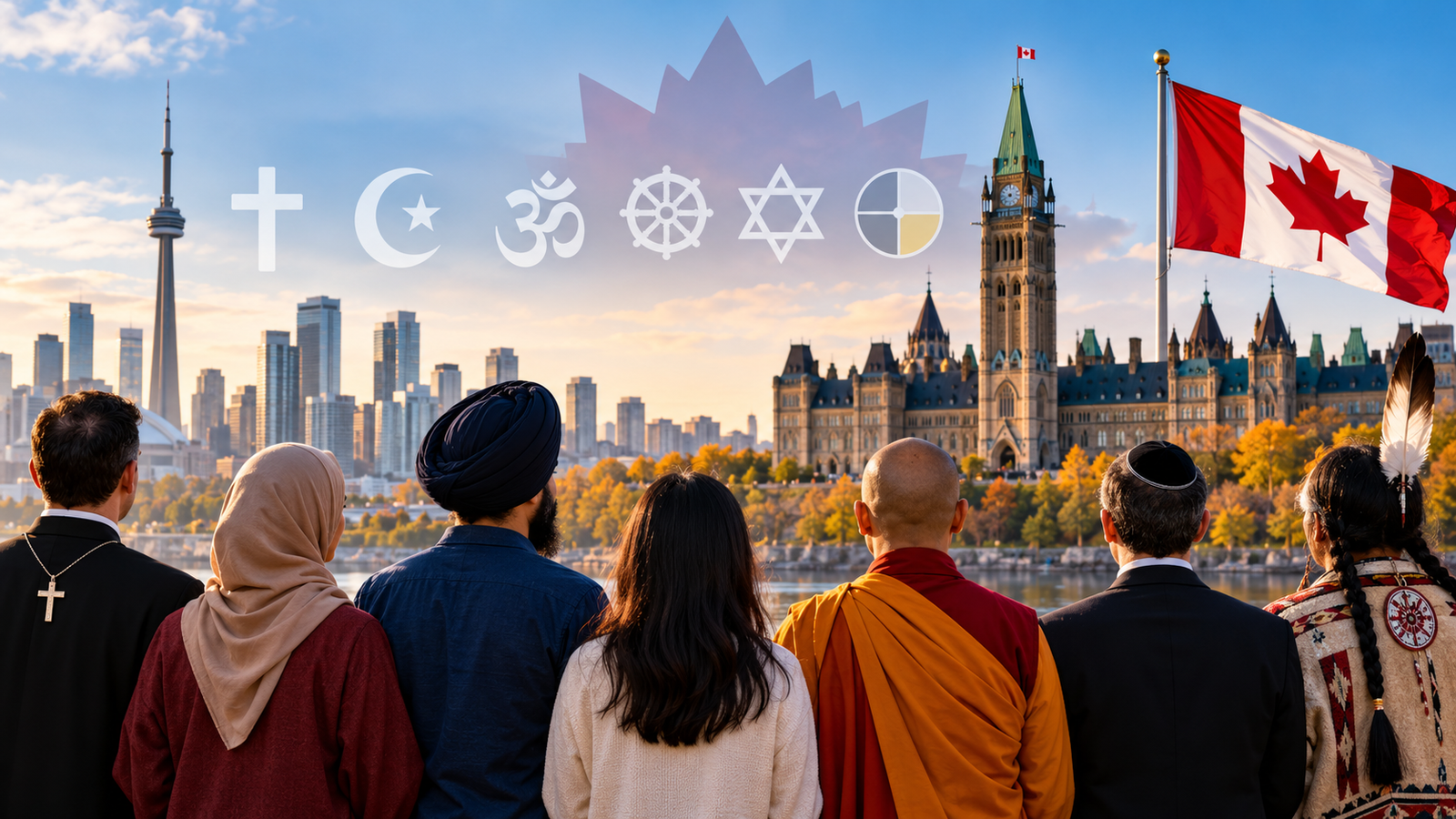
Introduction on Religion and Secularism in Canadian Society
Religion has played an important role in shaping Canadian society, influencing its cultural traditions, family structures, education, moral values, political institutions, and community relationships. However, Canada has experienced significant social transformations over recent decades. Declining religious affiliation, increasing immigration, growing cultural diversity, and changing attitudes toward personal freedom have reshaped the relationship between religion and public life. These developments make Secularism in Canadian Society an important subject of sociological investigation.
From a sociological perspective, secularism refers to the changing relationship between religious institutions, social structures, and the state. It may involve declining religious participation, the separation of religious authority from government, and the increasing acceptance of non-religious worldviews. Nevertheless, secularism does not necessarily mean the disappearance of religion. Religious communities continue to influence social relationships, provide emotional support, preserve cultural identities, and participate in public debates.
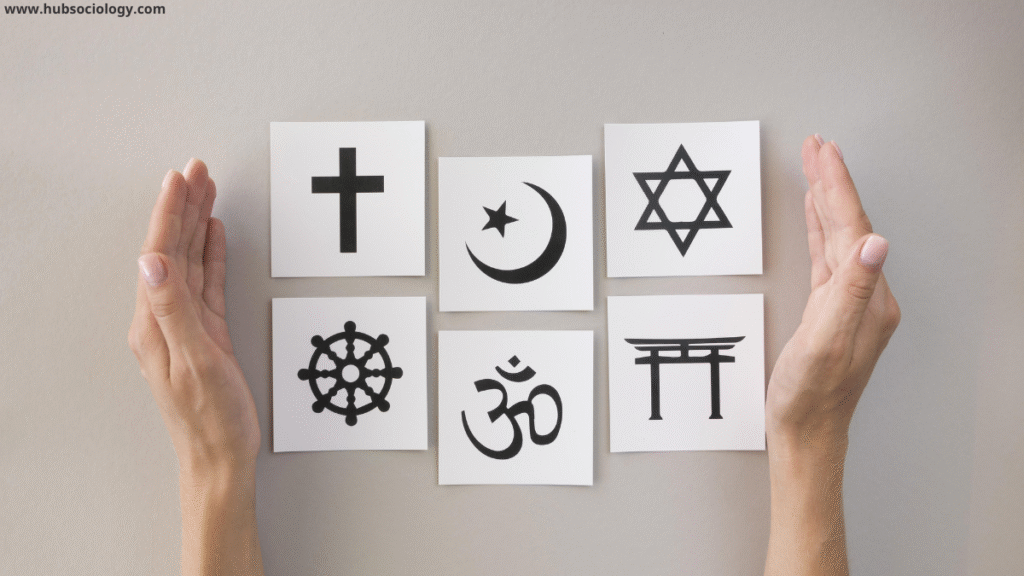
Secularism in Canadian Society represents a complex process in which religious traditions coexist with secular values, individual freedoms, multiculturalism, and democratic institutions. Canada’s experience demonstrates that modernization does not automatically eliminate religious belief. Instead, religion changes its social position and adapts to new cultural and political circumstances.
This article examines the historical development, theoretical foundations, religious diversity, social implications, and contemporary challenges of secularism in Canada.
Understanding Secularism in Canadian Society
Secularism is generally understood as a principle that supports the independence of political authority from religious control and protects freedom of conscience and belief. In a secular political system, individuals should be able to practise a religion, change their religion, or follow no religion without facing unjustified discrimination.
The concept of Secularism in Canadian Society has several dimensions. Political secularism concerns the relationship between government and religious institutions. Social secularization refers to changes in religious participation and the influence of religious organizations. Cultural secularism involves the growing acceptance of values that do not depend on religious teachings.
These dimensions do not always develop at the same rate. A person may support a secular government while maintaining strong religious beliefs. Similarly, a society may become less religious in terms of institutional participation while retaining religious holidays, ceremonies, and cultural traditions.
Therefore, Secularism in Canadian Society should not be understood simply as opposition to religion. It is better understood as an evolving social arrangement that attempts to balance religious freedom, individual autonomy, equality, and democratic governance.
Historical Development of Religion in Canadian Society
Historically, Christianity played a significant role in Canada’s social and institutional development. Catholic and Protestant churches influenced education, healthcare, charitable activities, community organization, and moral expectations. Religious institutions were particularly influential in the development of social life in several provinces.
In Quebec, the Roman Catholic Church historically exercised considerable influence over education, family life, and political culture. The Quiet Revolution of the 1960s brought substantial social and institutional changes, including the expansion of state responsibility in education, healthcare, and public administration. These transformations reduced the institutional dominance of the Catholic Church and contributed to the development of a more secular public sphere.
Elsewhere in Canada, Protestant traditions also influenced educational institutions, voluntary organizations, and community life. However, the relationship between religion and public institutions varied across regions and historical periods.
Immigration subsequently contributed to the diversification of Canadian religious life. Muslim, Hindu, Sikh, Buddhist, Jewish, and other religious communities became increasingly visible in cities and communities across the country. Indigenous spiritual traditions also remain important to many First Nations, Inuit, and Métis communities.
Consequently, Secularism in Canadian Society has developed through multiple historical processes rather than a single national experience. The decline of traditional religious authority, the expansion of public institutions, immigration, and changing cultural values have all contributed to the contemporary religious landscape.
Religious Diversity and Census Evidence
One of the most important characteristics of modern Canada is its combination of religious diversity and growing non-religious identification.
According to Statistics Canada’s 2021 Census, 53.3% of Canada’s population reported a Christian religious affiliation, compared with 67.3% in 2011 and 77.1% in 2001. Meanwhile, 34.6% reported having no religious affiliation or identifying with secular perspectives. This proportion increased from 16.5% in 2001 and 23.9% in 2011.
The same census recorded approximately 4.9% of the population as Muslim, 2.3% as Hindu, 2.1% as Sikh, 1.0% as Buddhist, and 0.9% as Jewish. These figures illustrate the growing importance of religious diversity in contemporary Canada.
Source: Statistics Canada, The Canadian Census: A Rich Portrait of the Country’s Religious and Ethnocultural Diversity (2022).
These statistics provide important evidence for understanding Secularism in Canadian Society. The declining proportion of Christians suggests a weakening of Christianity’s historical numerical dominance. The increasing proportion of people reporting no religion indicates that non-religious identities have become more socially visible and widely accepted.
However, census affiliation does not necessarily measure religious practice, personal conviction, or spirituality. Someone may identify with a religious tradition without regularly attending religious services. Another person may follow spiritual practices without identifying with an organized religion.
Therefore, the growth of secular identification should be interpreted alongside changes in religious participation, family practices, cultural identity, and individual beliefs.
Sociological Theories of Secularism in Canadian Society
Sociological theories provide useful explanations for the changing relationship between religion and society.
Émile Durkheim: Religion and Social Solidarity
Émile Durkheim argued that religion contributes to social solidarity by creating shared beliefs, collective rituals, and a sense of belonging. Religious ceremonies bring individuals together and reinforce the values of a community.
From Durkheim’s perspective, Secularism in Canadian Society raises questions about how social solidarity operates when traditional religious institutions become less influential. People who no longer participate in religious communities may find belonging through schools, workplaces, voluntary associations, sports organizations, and civic activities.
Nevertheless, religious institutions continue to provide collective identities and support networks for many Canadians. Durkheim’s approach therefore helps explain why secularization does not necessarily eliminate the social functions traditionally performed by religion.
Max Weber: Rationalization and Modernization
Max Weber associated modernization with rationalization, bureaucracy, and the increasing importance of systematic reasoning in social organization. As modern institutions develop, decisions concerning education, administration, healthcare, and law increasingly rely on professional expertise and formal procedures.
This perspective helps explain Secularism in Canadian Society, particularly the expansion of public institutions whose authority does not depend on religious leadership. Government policies and legal decisions are generally justified through constitutional principles, legislation, evidence, and public reasoning.
However, rationalization does not necessarily remove religion from everyday life. Religious beliefs may continue to influence personal decisions, moral commitments, and community relationships even when public institutions operate through secular procedures.
Peter Berger and the Changing Religious Landscape
The sociologist Peter Berger initially contributed to influential secularization arguments but later emphasized that modernity does not produce the disappearance of religion everywhere. Religious traditions can remain influential or experience renewed public visibility under modern conditions.
This approach is useful for understanding Secularism in Canadian Society because religious diversity and secularization can occur simultaneously. While some Canadians abandon organized religion, others maintain strong religious commitments or establish new religious communities.
The Canadian experience therefore challenges the assumption that modernization inevitably produces a uniformly non-religious population.
Religion, the State, and Constitutional Freedom
The legal framework of Canada plays a central role in shaping Secularism in Canadian Society. Section 2(a) of the Canadian Charter of Rights and Freedoms protects freedom of conscience and religion. This protection supports the right to hold religious beliefs, practise a religion, and maintain non-religious convictions.
The Canadian government explains that people are free to practise any religion or no religion. Religious expression can include prayer, religious clothing, and participation in public life, subject to applicable legal limits and the rights of others.
Source: Government of Canada, The Rights and Freedoms the Charter Protects.
Secular governance does not require the removal of every religious expression from public life. Rather, it raises questions about how governments can remain impartial while respecting the freedom of individuals and religious communities.
For sociologists, this relationship illustrates the difference between state neutrality and social secularization. A government can protect religious freedom while a substantial proportion of its population becomes less religious.
Secularism in Canadian Society therefore depends on both constitutional principles and the practical implementation of equality, freedom, and non-discrimination.
Immigration, Multiculturalism, and Religious Pluralism
Immigration is an important factor in the development of religious pluralism in Canada. Migrants bring religious traditions, cultural practices, languages, food customs, festivals, and community institutions that contribute to the country’s social diversity.
Muslim communities establish mosques and cultural organizations, Sikh communities maintain gurdwaras, Hindu communities organize temple activities and festivals, and Buddhist communities maintain religious centres. Jewish communities continue to sustain synagogues, educational institutions, and cultural associations.
These institutions provide more than opportunities for worship. They often support newcomers through social networks, language assistance, charitable services, cultural education, and employment connections.
In this context, Secularism in Canadian Society involves the coexistence of different religious traditions within a shared civic framework. Multiculturalism enables communities to preserve aspects of their cultural identities while participating in wider Canadian society.
However, religious diversity can also create disagreements concerning religious accommodation, public symbols, education, and gender equality. Such disagreements require public discussion, legal interpretation, and policies that respect individual rights.
A sociological analysis must therefore examine both the benefits of religious pluralism and the institutional challenges involved in managing diversity.
Secularism in Education and Public Institutions
Education is a major setting in which religion, secular values, and individual rights interact. Public educational institutions must consider curriculum requirements, freedom of belief, religious accommodation, and the rights of students from different backgrounds.
In an increasingly diverse society, schools can encourage students to understand different religious traditions without requiring them to adopt any particular belief. Teaching about religion as a historical and sociological phenomenon can promote cultural literacy and reduce prejudice.
Secularism in Canadian Society also influences discussions about religious clothing, dietary requirements, prayer, and religious holidays in educational settings. Policies vary according to the applicable legal framework and provincial or territorial rules.
The objective is not necessarily to exclude religious identity from schools but to ensure that students can participate in education without unfair treatment because of their beliefs or lack of belief.
Public institutions face similar considerations in healthcare, public administration, and social services. Respectful accommodation may help institutions serve diverse populations, while clear and consistent policies can protect fairness and institutional neutrality.
Family, Gender, and Changing Social Values

Religion has historically influenced family relationships, marriage practices, gender roles, and expectations concerning sexuality. Religious communities may continue to provide moral guidance and social support, although beliefs and practices differ considerably between traditions and among individuals within the same religion.
The growth of secular identification has contributed to changing discussions about marriage, divorce, reproductive autonomy, LGBTQ+ rights, and personal choice. These changes cannot be attributed exclusively to secularization; economic transformation, feminist movements, legal reforms, education, and generational change have also played important roles.
Nevertheless, Secularism in Canadian Society creates space for public debates in which moral questions are discussed through different ethical, legal, and social perspectives.
Some religious individuals support progressive social reforms, while others hold more traditional views. Similarly, secular individuals do not necessarily agree on every question of morality or public policy.
A sociological approach avoids treating religious and non-religious populations as internally uniform groups. It instead examines how social class, gender, age, education, migration, and community experiences shape people’s attitudes and practices.
Religion, Social Integration, and Community Support
Religious organizations continue to contribute to community life through charitable work, food assistance, volunteering, counselling, and support for vulnerable populations. These activities can strengthen social networks and create opportunities for collective action.
For immigrants and refugees, religious communities may offer a sense of familiarity and belonging during periods of adjustment. For older adults, religious participation may provide companionship and opportunities for social interaction. Religious organizations can also mobilize volunteers to address poverty, homelessness, and other social problems.
At the same time, non-religious organizations, community associations, and public welfare institutions perform similar social functions.
Secularism in Canadian Society should therefore be understood as a transformation in the organization of social life rather than the automatic disappearance of community solidarity. The key sociological question is how people establish trust, cooperation, and mutual support across religious and non-religious boundaries.
Strong social integration requires institutions that enable individuals to participate regardless of their religious identity.
Challenges: Discrimination, Religious Symbols, and Public Debate
Despite its commitment to freedom and equality, Canada continues to face challenges concerning religious discrimination and the accommodation of religious practices.
Members of religious minorities may experience prejudice, stereotyping, or exclusion because of their clothing, names, cultural backgrounds, or places of worship. Antisemitism, Islamophobia, and other forms of religious intolerance can undermine social trust and equal participation.
Public debates over religious symbols also reveal different interpretations of secularism. Some people argue that state neutrality requires restrictions on visible religious expression in particular public roles. Others contend that genuine neutrality requires public institutions to accommodate individual religious freedoms.
Quebec’s Bill 21, which restricts certain public employees in positions of authority from wearing specified religious symbols while exercising their duties, has become a prominent example of these disagreements. The law has generated debates about state secularism, religious freedom, equality, and the experiences of religious minorities.
These controversies demonstrate that Secularism in Canadian Society is not a single, universally agreed principle. Its practical meaning is shaped by constitutional law, provincial policies, political ideologies, and competing interpretations of equality.
An inclusive approach requires careful consideration of institutional neutrality, freedom of conscience, minority rights, and the potential consequences of public policies.
Indigenous Spirituality and Secular Institutions
The relationship between Indigenous spirituality and secular governance requires particular attention. Indigenous spiritual traditions are connected to land, community relationships, ancestral knowledge, ceremonies, and cultural continuity.
Colonial policies, including the residential school system, sought to suppress Indigenous languages, identities, and cultural practices. Christian institutions played roles in the operation of many residential schools, although the historical responsibilities and experiences of different institutions varied.
Contemporary discussions about reconciliation emphasize the importance of recognizing Indigenous rights, cultural traditions, and the lasting consequences of colonialism.
Secularism in Canadian Society must therefore be examined within Canada’s broader history of colonial power and cultural inequality. Treating all religious and spiritual traditions as though they have experienced the same historical conditions would overlook important social differences.
Respecting Indigenous spirituality requires attention to Indigenous self-determination, community knowledge, and the distinct relationship between spirituality, land, and identity.
The Future of Secularism in Canadian Society
The future of Secularism in Canadian Society will be influenced by demographic change, immigration, generational differences, technological communication, education, and evolving political debates.
Younger generations may be less likely to identify with traditional religious institutions, while some religious communities may maintain strong participation and develop new forms of organization. Digital platforms also allow religious and secular ideas to circulate beyond local communities.
Public institutions will continue to face questions about religious accommodation, equality, freedom of expression, and the limits of government authority. These debates will require policies that are legally sound, socially informed, and responsive to Canada’s diversity.
Another important question is whether secular institutions can maintain public trust while respecting the cultural and spiritual identities of different communities. The answer depends partly on how effectively governments, schools, workplaces, and civil society organizations address discrimination and promote equal participation.
Ultimately, Secularism in Canadian Society is likely to remain a continuing negotiation between religious freedom, state neutrality, individual autonomy, and collective identity.
Conclusion on Secularism in Canadian Society
Religion and secularism are interconnected forces in contemporary Canadian society. Christianity remains an important religious tradition, while Muslim, Hindu, Sikh, Jewish, Buddhist, Indigenous spiritual, and other communities contribute to the country’s cultural diversity. At the same time, the growing proportion of Canadians reporting no religious affiliation demonstrates a significant transformation in religious identity.
From a sociological perspective, Secularism in Canadian Society is best understood through the combined effects of modernization, immigration, constitutional protections, changing family structures, and evolving social values. Durkheim’s theory of solidarity, Weber’s analysis of rationalization, and Berger’s later reflections on religious pluralism help explain why secularization does not necessarily eliminate religion.
Canada’s experience illustrates that a society can become more secular in some institutional and cultural respects while remaining religiously diverse. The central challenge is to protect freedom of conscience, prevent discrimination, and enable people with different beliefs to participate equally in public life.
The long-term success of Secularism in Canadian Society will depend not on eliminating religion but on creating a democratic environment in which religious and non-religious citizens can coexist with dignity, mutual respect, and equal rights.
Frequently Asked Questions (FAQs)
1. What is Secularism in Canadian Society?
Secularism in Canadian Society refers to the relationship between religious beliefs, non-religious identities, public institutions, and state neutrality. It includes debates about religious freedom, equality, and the role of religion in public life.
2. Is Canada a secular country?
Canada protects freedom of conscience and religion through the Canadian Charter of Rights and Freedoms. Secularism in Canadian Society is reflected in constitutional protections and public institutions, although the relationship between religion and government remains a subject of debate.
3. What is the role of religion in Canadian society?
Religion provides spiritual guidance, cultural identity, community belonging, charitable assistance, and social support. Its influence varies across communities and individuals.
4. What percentage of Canadians have no religion?
According to the 2021 Census, 34.6% of Canada’s population reported no religious affiliation or a secular perspective.
5. Which religion is the largest in Canada?
Christianity was the largest religious affiliation in the 2021 Census, reported by 53.3% of the population.
6. How does immigration influence Secularism in Canadian Society?
Immigration increases religious diversity and brings new cultural traditions into public life. It also encourages discussions about multiculturalism, accommodation, and equal rights.
7. What does secularization mean sociologically?
Secularization refers to changes in religious participation, institutional influence, and the social significance of religion.
8. How does the Canadian Charter protect religious freedom?
Section 2(a) protects freedom of conscience and religion, allowing individuals to practise a religion or hold non-religious beliefs, subject to applicable legal limits.
9. What is the relationship between secularism and multiculturalism?
Secularism concerns the relationship between religion, public authority, and individual freedom, while multiculturalism recognizes cultural diversity. Both influence how diverse communities participate in Canadian society.
10. What are the main challenges facing Secularism in Canadian Society?
Major challenges include religious discrimination, disputes over religious symbols, questions of public accommodation, and balancing state neutrality with individual rights.
11. Does secularism mean that religion is disappearing?
No. Secularization may reduce the influence of religious institutions without eliminating personal belief, spirituality, or religious community life.
12. How does religion affect education in Canada?
Religion influences discussions about school policies, religious accommodation, cultural literacy, and freedom of belief. Educational institutions must follow applicable laws and policies.
13. What is the significance of Quebec’s secularism debate?
Quebec’s secularism debate highlights disagreements about religious symbols, government neutrality, equality, and freedom of religion.
14. How does secularism affect family life?
Secular values can influence attitudes toward marriage, gender roles, reproductive autonomy, and personal choice. These changes also reflect broader economic, cultural, and legal transformations.
15. Why is Secularism in Canadian Society important for sociological study?
Secularism in Canadian Society helps sociologists understand modernization, social integration, religious diversity, constitutional rights, cultural identity, and changing relationships between individuals and institutions.
References
- Statistics Canada. (2022). The Canadian Census: A Rich Portrait of the Country’s Religious and Ethnocultural Diversity. https://www150.statcan.gc.ca/n1/daily-quotidien/221026/dq221026b-eng.htm
- Government of Canada, Department of Justice. The Rights and Freedoms the Charter Protects. https://justice.canada.ca/eng/csj-sjc/rfc-dlc/ccrf-ccdl/rfcp-cdlp.html
- Durkheim, Émile. (1912). The Elementary Forms of Religious Life.
- Weber, Max. (1905). The Protestant Ethic and the Spirit of Capitalism.
- Berger, Peter L. (1967). The Sacred Canopy: Elements of a Sociological Theory of Religion.