Introduction
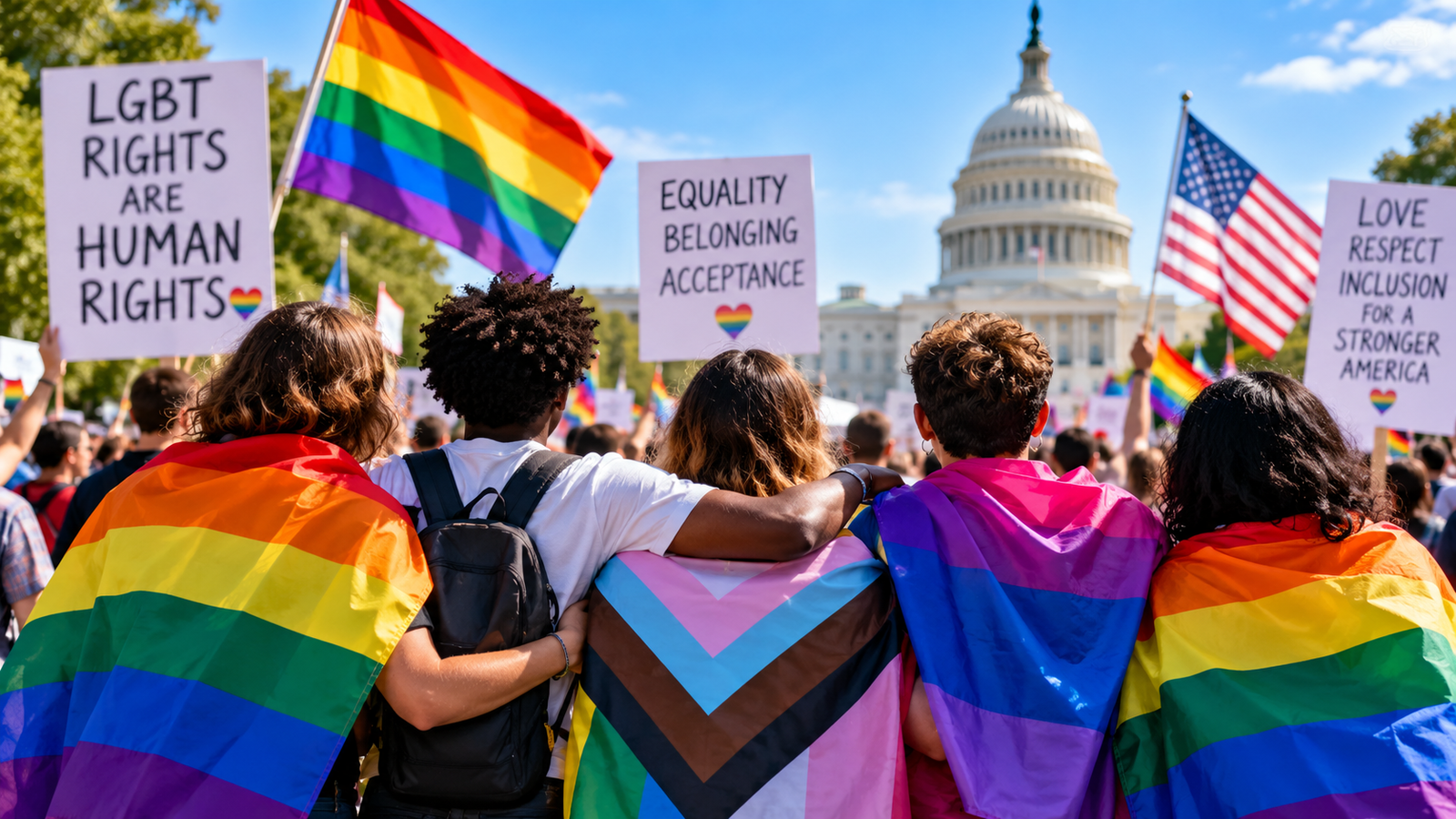
LGBT Rights have become one of the most significant social issues in contemporary American society. The struggle for equality among lesbian, gay, bisexual, and transgender people reflects broader debates about human rights, social justice, cultural values, identity, family, religion, and citizenship. Over several decades, the United States has experienced considerable changes in the legal recognition and public acceptance of LGBTQ people. However, these changes have not eliminated discrimination, social stigma, or political disagreements.
From a sociological perspective, LGBT Rights are not simply a matter of legislation. They are connected to social institutions, cultural expectations, power relations, and the ways societies define acceptable identities and relationships. The struggle for LGBT Rights demonstrates how marginalized communities challenge established social norms and demand equal participation in public life.
The legalization of same-sex marriage nationwide in 2015 represented a historic milestone. Nevertheless, contemporary debates surrounding transgender rights, workplace discrimination, education, healthcare, and freedom of expression demonstrate that equality remains a complex and evolving issue.
A 2025 Pew Research Center study found that LGBTQ adults perceived substantially different levels of social acceptance across groups. While 61% reported at least a fair amount of acceptance for gay and lesbian people, only 13% said the same about transgender people. These findings illustrate why LGBT Rights must be examined alongside the wider social conditions that shape everyday experiences. Source: Pew Research Center.
Historical Development of LGBT Rights in America
The history of LGBT Rights in America reflects a long struggle against criminalization, discrimination, and social exclusion. For much of American history, same-sex relationships were stigmatized, and laws in many jurisdictions criminalized consensual same-sex sexual activity. LGBTQ individuals frequently faced social isolation, employment discrimination, and pressure to conceal their identities.
During the twentieth century, LGBTQ communities increasingly organized to challenge these conditions. The Stonewall uprising of 1969 in New York City became an influential symbol of resistance to police harassment and discrimination. Although it was not the beginning of LGBTQ activism, Stonewall helped energize a broader movement demanding visibility, dignity, and equal rights.
The AIDS crisis of the 1980s further shaped the movement for LGBT Rights. Many LGBTQ activists criticized government responses, discrimination in healthcare, and the stigmatization of affected communities. Organizations such as ACT UP demonstrated how collective action could influence public discussion, medical advocacy, and government policy.
Legal developments gradually transformed the position of LGBTQ people. In Lawrence v. Texas (2003), the U.S. Supreme Court invalidated laws criminalizing consensual same-sex intimacy. In United States v. Windsor (2013), the Court struck down a key provision of the federal Defense of Marriage Act. Finally, Obergefell v. Hodges (2015) established a constitutional right to same-sex marriage nationwide.
These decisions expanded the legal recognition of LGBT Rights, particularly in matters of intimacy, marriage, and family life. However, legal victories did not automatically transform every community’s attitudes or eliminate prejudice.
The Sociological Meaning of LGBT Rights
Sociology examines how individual experiences are shaped by wider social structures. LGBT Rights provide an important example of the relationship between personal identity and institutional power.
Sexual orientation and gender identity exist within societies that establish expectations about relationships, masculinity, femininity, marriage, and family life. When these expectations privilege heterosexual and cisgender identities, LGBTQ people may experience marginalization.
The sociological study of LGBT Rights therefore considers how institutions distribute opportunities, recognition, and protection. It also explores how individuals and communities challenge social inequalities.
Functionalist Perspective
Structural functionalism examines how social institutions contribute to the stability and organization of society. From this perspective, debates about LGBT Rights can be understood through changing family structures, social norms, and institutional adaptation.
Traditional social expectations often treated heterosexual marriage as the standard model of family life. However, contemporary societies contain diverse family arrangements, including same-sex couples raising children, single-parent households, and families formed through adoption or assisted reproduction.
Recognizing diverse families through LGBT Rights can allow institutions such as schools, healthcare services, and government agencies to respond more effectively to the population they serve. Social stability does not necessarily require everyone to follow identical family or gender roles. Instead, institutions may adapt to changing social realities.
Conflict Theory
Conflict theory focuses on inequality, power, and competition over resources. It provides a useful framework for understanding why LGBT Rights have generated political and cultural conflict.
Groups with greater political influence may shape legislation, educational policies, workplace practices, and public definitions of acceptable behavior. LGBTQ activists challenge arrangements that exclude people from equal participation or protection.
From this perspective, the struggle for LGBT Rights involves more than changing individual attitudes. It also involves transforming institutional practices and addressing unequal access to employment, healthcare, housing, and political representation.
Conflict theory further explains why legal progress can produce resistance. Changes that challenge established cultural authority may generate opposition from groups that believe traditional social arrangements should remain dominant.
Symbolic Interactionism
Symbolic interactionism examines how people create meaning through everyday interactions. LGBT Rights are closely connected to identity formation, social labeling, and the acceptance or rejection individuals encounter in daily life.
Words, jokes, clothing expectations, pronouns, family conversations, and workplace interactions can communicate inclusion or exclusion. A person who repeatedly encounters negative stereotypes may feel pressure to hide their identity, while supportive relationships can strengthen confidence and belonging.
This perspective demonstrates that LGBT Rights are experienced not only in courts and legislatures but also in classrooms, neighborhoods, workplaces, and families. Everyday respect is an important component of meaningful social equality.
Social Acceptance of LGBTQ People in America
Social acceptance refers to the extent to which individuals and communities recognize LGBTQ people as legitimate members of society and treat them with dignity. Although acceptance has increased in many parts of the United States, it remains uneven.
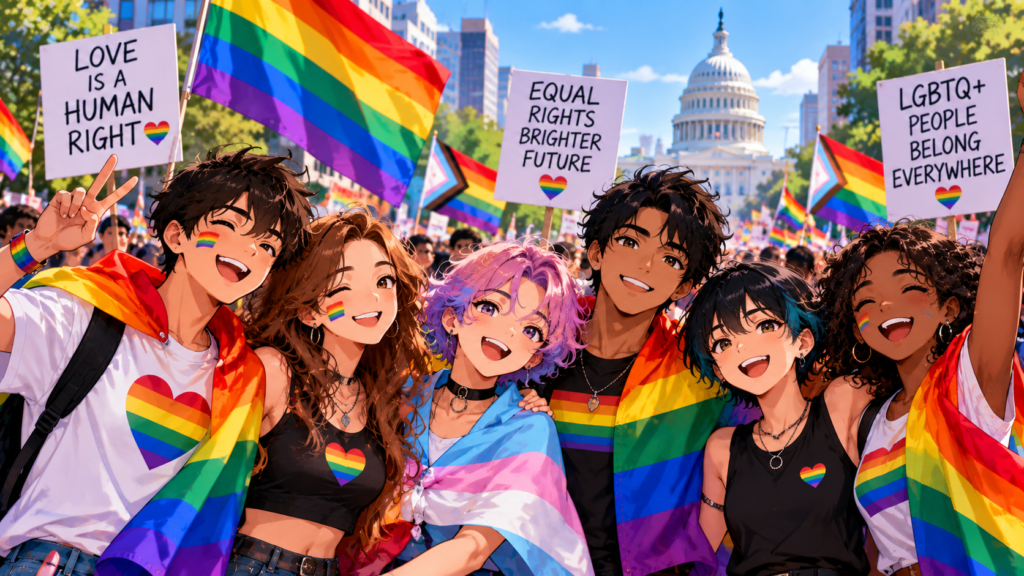
Pew Research Center’s 2025 study found that most LGBTQ adults perceived greater acceptance of gay and lesbian people than of transgender and nonbinary people. The research also indicated that many LGBTQ adults believed acceptance had increased over the preceding decade. Source: Pew Research Center.
These differences reveal that LGBTQ communities do not experience social progress uniformly. Acceptance of same-sex relationships may coexist with opposition to transgender visibility or gender diversity.
Geography also matters. Major metropolitan areas with established LGBTQ organizations and visible communities may provide greater opportunities for social connection and support. However, attitudes vary within cities as well as between urban, suburban, and rural communities.
Family background, education, religious beliefs, political identification, age, and personal relationships can also influence opinions about LGBT Rights.
Importantly, social acceptance is not identical to legal equality. A person may possess legal protection while still experiencing prejudice from relatives, coworkers, neighbors, or strangers. Conversely, supportive communities may offer a sense of belonging even when the surrounding political environment is hostile.
The Role of Family and Socialization
Family is one of the earliest institutions through which individuals learn values, expectations, and acceptable patterns of behavior. Consequently, family responses strongly influence the everyday experience of LGBT Rights.
Supportive families can provide emotional security, financial stability, and protection from social stigma. When parents and relatives respect an LGBTQ person’s identity, they can help reduce isolation and encourage educational and professional development.
By contrast, rejection can produce family conflict, emotional distress, housing insecurity, and social exclusion. Some LGBTQ people may delay disclosing their identities because they fear losing parental support or damaging important relationships.
Sociologically, these experiences demonstrate the importance of primary socialization. Families transmit cultural beliefs about gender, sexuality, religion, and marriage, but these beliefs can change through education, communication, and contact with LGBTQ people.
LGBT Rights therefore involve the freedom to participate in family life without being treated as inferior because of sexual orientation or gender identity. They also concern the recognition and protection of diverse family structures.
LGBT Rights in Education
Educational institutions play a central role in shaping attitudes toward diversity. Schools and universities transmit knowledge, establish behavioral expectations, and influence how young people understand social differences.
For LGBTQ students, educational environments can either promote belonging or reinforce marginalization. Bullying, harassment, exclusion from peer groups, and discriminatory treatment can interfere with students’ participation in school life.
Supportive educational practices may include clear anti-bullying policies, confidential access to counseling, fair disciplinary procedures, and age-appropriate discussions of diversity. Teachers and administrators can contribute to safer environments by responding consistently to harassment and treating students respectfully.
The debate over LGBT Rights in education also involves disagreements about parental authority, curriculum, religious beliefs, and the responsibilities of public institutions. Sociologically, these disputes reflect competing interpretations of childhood, citizenship, and cultural values.
A balanced approach recognizes that schools serve students from diverse backgrounds while maintaining their responsibility to prevent bullying and unequal treatment. Educational policies should be evaluated according to their effects on student safety, participation, and access to learning.
Workplace Equality and Economic Participation
Employment is a major source of income, social identity, status, and independence. Discrimination based on sexual orientation or gender identity can restrict these opportunities and reinforce broader economic inequality.
LGBT Rights in the workplace include concerns about hiring, promotion, compensation, harassment, workplace benefits, and protection from retaliation. Employees may encounter discrimination directly or may feel compelled to conceal their identities to avoid negative consequences.
In Bostock v. Clayton County (2020), the Supreme Court held that Title VII of the Civil Rights Act of 1964 prohibits employment discrimination against individuals for being gay or transgender. This decision established an important federal legal protection in employment.
Nevertheless, formal protection does not guarantee that every employee experiences equal treatment. Workplace cultures, management decisions, reporting systems, and access to legal remedies influence how rights operate in practice.
Organizations can support equality by establishing clear anti-harassment policies, applying rules consistently, providing accessible complaint procedures, and ensuring that employee benefits are administered fairly.
From a sociological perspective, LGBT Rights in employment concern both individual dignity and the distribution of economic opportunities. Inclusive workplaces can help people participate in professional life without unnecessary barriers related to identity.
Media Representation and Cultural Change
Media plays a powerful role in shaping public perceptions of LGBTQ people. Television, cinema, journalism, social media, literature, and digital entertainment influence how audiences understand identities and relationships.
Historically, LGBTQ characters were often absent, stereotyped, or portrayed negatively. Greater visibility has provided opportunities for audiences to encounter more varied experiences and question assumptions about gender and sexuality.
Representation can contribute to social acceptance when it presents LGBTQ people as multidimensional individuals with ordinary relationships, ambitions, responsibilities, and challenges. It can also create opportunities for LGBTQ audiences to see their experiences reflected in public culture.
Pew Research Center’s 2025 findings indicate that many LGBTQ adults believe increased representation in entertainment and politics could help improve acceptance. Source: Pew Research Center.
However, media representation alone cannot guarantee equality. Social media can spread supportive messages and build community networks, but it can also facilitate harassment, misinformation, and hostile public campaigns.
The sociological significance of media lies in its ability to influence social norms while reflecting the inequalities and disagreements already present in society.
Religion, Culture, and LGBT Rights
Religion is an important institution in American society, providing moral guidance, community, identity, and social support. Religious perspectives on LGBT Rights vary significantly across and within traditions.
Some religious communities affirm LGBTQ identities and support same-sex marriage, while others oppose particular forms of sexual or gender expression on theological grounds. Many communities contain internal disagreements between generations, religious leaders, and individual members.
Pew Research Center’s 2023–24 Religious Landscape Study found that 59% of U.S. adults affiliated with a religion believed homosexuality should be accepted by society, compared with 87% of religiously unaffiliated adults. These figures illustrate the relationship between religious affiliation and public attitudes, although neither category is uniform. Source: Pew Research Center.
Sociologically, religious disagreement about LGBT Rights illustrates the relationship between cultural continuity and social change. Religious institutions may preserve inherited traditions while also reconsidering their interpretations in response to changing social circumstances.
A democratic society must navigate questions of religious freedom, individual liberty, and equal treatment. Understanding these tensions requires distinguishing disagreement about beliefs from conduct that unlawfully denies other people their rights.
Political Polarization and Legal Challenges
LGBT Rights have become an important issue in American political debate. Political parties, advocacy organizations, courts, state legislatures, and federal authorities influence policies concerning marriage, employment, education, healthcare, and gender identity.
Political polarization can turn LGBTQ issues into symbols of broader disagreements about tradition, personal freedom, government authority, and social change. Consequently, policies affecting LGBTQ people may vary across jurisdictions and change as political leadership changes.
The Obergefell v. Hodges decision established nationwide constitutional protection for same-sex marriage. The Respect for Marriage Act, enacted in 2022, also established federal statutory protections for the recognition of valid marriages, including same-sex marriages, although it did not require every state to issue marriage licenses contrary to the Constitution or applicable law.
Other areas, particularly transgender-related healthcare, school policies, sports participation, and identity documentation, have generated continuing legal disputes. The precise legal position depends on the issue, jurisdiction, applicable court decisions, and subsequent legislation.
From a sociological perspective, these disputes show that LGBT Rights are shaped by the relationship between social movements, political institutions, public opinion, and judicial authority. Legal outcomes can influence public attitudes, while changing social attitudes can encourage further legal reform.
Intersectionality: Race, Class, Gender, and Sexuality
The concept of intersectionality, associated with legal scholar Kimberlé Crenshaw, explains how different systems of inequality can overlap. LGBTQ people do not experience discrimination in identical ways because sexual orientation and gender identity intersect with race, social class, disability, age, immigration status, and other social positions.
For example, an LGBTQ person with substantial financial resources may have greater access to supportive healthcare, legal assistance, and relocation opportunities than someone living in poverty. Similarly, racial discrimination may compound the difficulties experienced by LGBTQ people from marginalized racial or ethnic communities.
Research published by the Williams Institute at UCLA in February 2025, using U.S. National Crime Victimization Survey data from 2022 and 2023, found that LGBT people experienced substantially higher rates of violent victimization than non-LGBT people. The report also identified especially high victimization rates among Black LGBT people. Source: Williams Institute.
These findings demonstrate why LGBT Rights cannot be understood through sexual orientation or gender identity alone. Effective social policies must recognize the different resources, risks, and barriers experienced by diverse communities.
Challenges Facing LGBT Rights in Contemporary America
Despite significant legal and cultural changes, several challenges remain. Discrimination, harassment, family rejection, unequal access to services, and political conflict continue to affect LGBTQ communities.
Transgender and nonbinary people face particular disagreements over healthcare, identity recognition, public facilities, and participation in certain institutions. These issues involve competing legal claims and policy questions that differ according to context and jurisdiction.
Another challenge is the gap between formal rights and lived experiences. Anti-discrimination protections may exist, yet individuals can still face social isolation, hostile workplace cultures, or barriers to reporting mistreatment.
Online harassment and misinformation can intensify stigma, while political polarization may make constructive discussion more difficult. At the same time, LGBTQ advocacy organizations, supportive families, educators, healthcare professionals, and community groups continue to work toward greater inclusion.
Progress in LGBT Rights therefore requires more than occasional legal victories. It depends on effective institutions, accessible services, public education, fair enforcement, and respectful interaction in everyday life.
The Future of LGBT Rights and Social Acceptance
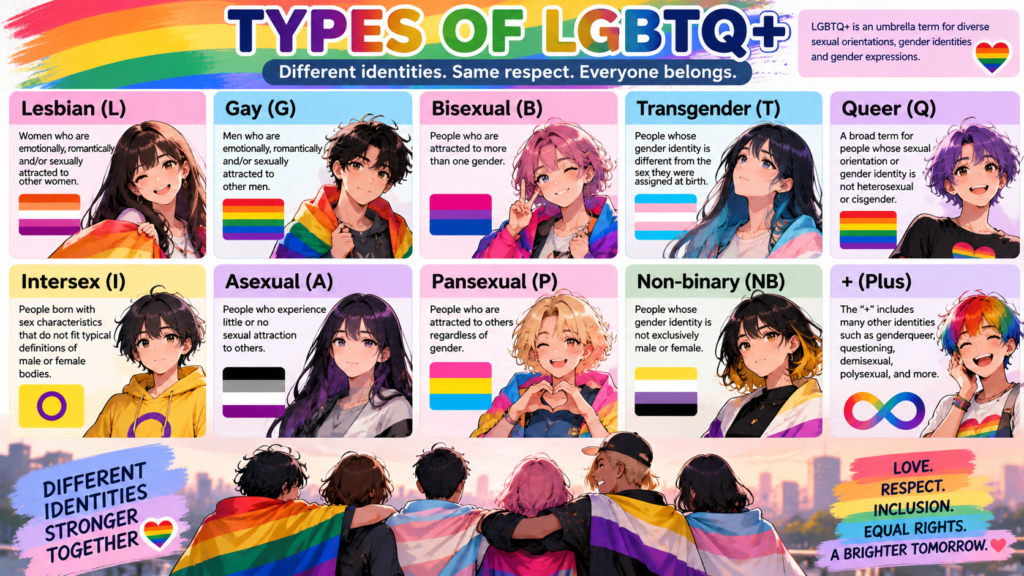
The future of LGBT Rights in America will be shaped by demographic change, social movements, legal decisions, education, media representation, and political developments.
Younger generations have grown up in a period of greater public visibility for LGBTQ people, although attitudes among young people are not uniform. Continued interaction between people from different backgrounds may challenge stereotypes and encourage more informed discussions.
Educational institutions can contribute by preventing harassment and promoting respectful engagement. Employers can strengthen fair treatment through transparent policies, while community organizations can provide support to people facing isolation or discrimination.
Policymakers also have an important role in ensuring that legal protections are clear, accessible, and consistently enforced. Research on discrimination, victimization, and social attitudes can help institutions identify gaps between official policies and actual experiences.
The future of LGBT Rights will not necessarily follow a straight line toward universal acceptance. Social progress can coexist with resistance, and legal developments may create new opportunities as well as new disagreements. Sustained progress requires institutions capable of protecting individual dignity while addressing legitimate policy questions through evidence, democratic participation, and the rule of law.
Conclusion
LGBT Rights and social acceptance in America illustrate the complex relationship between law, culture, identity, and social inequality. The expansion of marriage equality and employment protections represents significant progress, but discrimination and uneven acceptance demonstrate that legal change alone cannot eliminate social exclusion.
Sociological perspectives help explain these developments. Functionalism highlights institutional adaptation, conflict theory examines unequal power, and symbolic interactionism reveals how everyday interactions shape identity and belonging. Intersectionality further demonstrates that LGBTQ people experience different opportunities and barriers depending on their wider social circumstances.
Ultimately, LGBT Rights concern the ability of individuals to participate in society without unjust discrimination because of their sexual orientation or gender identity. A more inclusive society requires effective legal protections, responsible public institutions, supportive families, fair educational and workplace practices, and meaningful respect for human dignity.
Understanding LGBT Rights through sociology allows us to move beyond simple political divisions and examine the deeper structures that shape equality. The continuing challenge for American society is to ensure that the principles of freedom, equal protection, and democratic participation are reflected not only in laws but also in everyday social life.