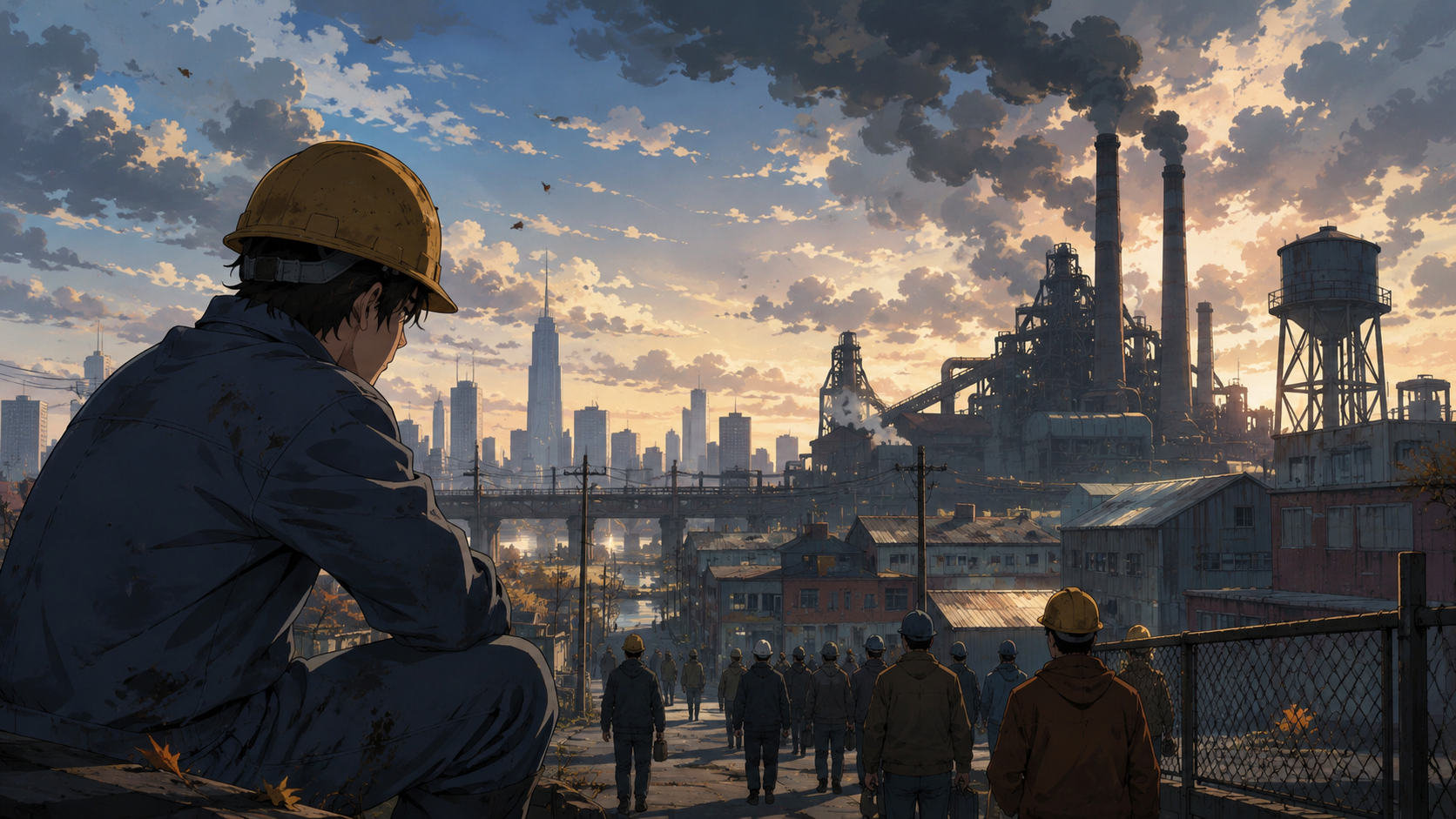
Introduction
Illinois has long occupied a significant place in the industrial history of the United States. From the steel mills of Chicago and the manufacturing centers of Rockford and Peoria to the coal mines of southern Illinois, industrial development shaped the economic and social landscape of the state for more than a century. Factories, railroads, warehouses, and industrial complexes created employment opportunities for millions of workers and contributed to the growth of strong working-class communities.
However, the late twentieth and early twenty-first centuries witnessed profound changes in the industrial structure of Illinois. Globalization, automation, technological innovation, outsourcing, and economic restructuring led to the decline of traditional manufacturing industries. As factories closed and jobs disappeared, many communities faced unemployment, poverty, social disorganization, and growing inequality.
From a sociological perspective, industrial decline is not simply an economic phenomenon. It affects family structures, community relationships, educational opportunities, social mobility, labor identity, and political participation. Labor issues emerging from industrial decline reveal deeper social processes involving class relations, power dynamics, and institutional transformation.

This article explores the sociological dimensions of industrial decline and labor issues in Illinois, examining their historical roots, causes, consequences, and future implications.
Historical Development of Industry in Illinois
Illinois emerged as an industrial powerhouse during the nineteenth century. Several factors contributed to its industrial growth:
- Strategic location in the American Midwest
- Extensive railroad networks
- Access to waterways such as Lake Michigan and the Mississippi River
- Availability of immigrant labor
- Expansion of domestic and international markets
Chicago became one of the most important industrial cities in America. The city was known for steel production, meatpacking, machinery manufacturing, and transportation industries. Other cities such as Joliet, Rockford, East St. Louis, Decatur, and Peoria also developed strong industrial economies.
Industrialization transformed Illinois society. Rural populations migrated to urban centers seeking employment. Immigrants from Europe and later migrants from the American South became part of the industrial workforce. Industrial jobs provided relatively stable wages and helped create a large middle and working class.
The rise of labor unions also became a defining feature of Illinois industrial society. Workers organized to demand better wages, safer working conditions, and labor rights. Consequently, labor movements became important social institutions shaping the state’s economic and political culture.
Understanding Industrial Decline
Industrial decline refers to the reduction or disappearance of manufacturing and heavy industry within a region. Sociologists often use the term “deindustrialization” to describe this process.
Beginning in the 1970s, Illinois experienced significant industrial restructuring. Traditional industries faced increasing competition from foreign manufacturers and lower-cost production centers.
Several major factories either downsized or permanently closed. Employment in manufacturing sectors gradually decreased while service-sector employment expanded.
The decline of industry represented more than a shift in economic activity. It transformed entire communities whose identities had been built around industrial labor for generations.
Causes of Industrial Decline in Illinois
Globalization
Globalization played a major role in industrial decline. Companies increasingly moved production to countries with lower labor costs. Manufacturing firms sought greater profits by relocating factories abroad.
This process reduced employment opportunities for Illinois workers, particularly those lacking advanced educational qualifications.
From a sociological perspective, globalization altered power relations between labor and capital. Corporations gained greater flexibility, while workers faced increased job insecurity.
Automation and Technological Change

Technological advancement improved productivity but reduced demand for labor.
Machines and automated systems replaced many routine manufacturing tasks previously performed by workers. While technology created new employment opportunities in specialized sectors, it eliminated many traditional industrial jobs.
This technological transformation contributed to structural unemployment among workers whose skills no longer matched labor market demands.
Economic Restructuring
The American economy gradually shifted from manufacturing toward services, finance, healthcare, logistics, and information technology.
Illinois mirrored this national trend. Cities once dependent on manufacturing increasingly relied on service-sector industries.
While economic restructuring generated new jobs, many former industrial workers struggled to transition into these sectors because of differences in skill requirements and wage structures.
Corporate Decisions and Plant Closures
Corporate mergers, acquisitions, and profit-maximization strategies often resulted in factory closures.
Communities that depended heavily on a single industry experienced severe economic shocks when employers relocated or ceased operations.
Sociologists argue that such decisions demonstrate the unequal power relationship between corporations and local communities.
Sociological Perspectives on Industrial Decline
Functionalist Perspective
Functionalists view society as a system of interconnected institutions working together to maintain stability.
Industrial decline disrupts this equilibrium because employment serves several social functions:
- Income generation
- Social integration
- Identity formation
- Community stability
When industries collapse, institutions such as families, schools, and local governments experience strain.
Functionalists emphasize the need for adaptation through education, retraining programs, and economic diversification.
Conflict Perspective
Conflict theorists focus on power inequalities between social groups.
According to this perspective, industrial decline reflects capitalist priorities rather than community interests. Corporations relocate production to maximize profits, often disregarding the social consequences for workers.
Workers bear the costs of unemployment and economic insecurity while corporate owners benefit from increased efficiency and lower labor expenses.
Conflict theorists argue that labor issues in Illinois demonstrate broader patterns of class inequality.
Symbolic Interactionist Perspective
Symbolic interactionists examine how individuals create meaning through social interaction.
For many Illinois workers, industrial employment represented more than a source of income. It provided identity, pride, and social status.
Factory closures often result in a loss of occupational identity. Workers may experience feelings of humiliation, uncertainty, and social exclusion.
This perspective highlights the emotional and cultural consequences of industrial decline.
Labor Issues in Illinois
Unemployment and Job Insecurity
One of the most visible consequences of industrial decline is unemployment.
Factory closures have displaced thousands of workers across Illinois. Even workers who remain employed often face uncertainty due to temporary contracts, outsourcing, and changing labor market conditions.
Job insecurity affects mental health, family stability, and community well-being.
Research consistently shows that prolonged unemployment increases stress, anxiety, and social isolation.
Wage Inequality

Many manufacturing jobs historically offered wages capable of supporting middle-class lifestyles.
Workers transitioning into service-sector employment frequently encounter lower wages and fewer benefits.
As a result, income inequality has increased in many Illinois communities.
Sociologists view wage inequality as a significant source of social stratification and reduced social mobility.
Decline of Labor Unions
Illinois has a rich labor history, but union membership has declined over recent decades.
Several factors contributed to this decline:
- Industrial restructuring
- Growth of non-union service sectors
- Legislative changes
- Corporate resistance to unionization
The weakening of labor unions has reduced workers’ bargaining power.
Consequently, workers often face greater challenges in negotiating wages, benefits, and workplace protections.
Precarious Employment
Many workers have moved from stable industrial jobs into precarious forms of employment.
Precarious work includes:
- Temporary jobs
- Contract work
- Gig economy employment
- Part-time positions
Such employment often lacks job security, healthcare benefits, and retirement protections.
The growth of precarious labor has become a major sociological concern because it increases economic vulnerability.
Impact on Communities
Urban Decline
Several Illinois cities experienced economic decline following industrial contraction.
Neighborhoods dependent on manufacturing employment faced:
- Population loss
- Reduced tax revenues
- Housing deterioration
- Increased poverty
Urban sociologists describe these processes as forms of community disorganization.
As economic opportunities diminish, social institutions struggle to maintain stability.
Rural Consequences
Industrial decline also affected rural Illinois.
Many small towns relied on manufacturing plants and related industries. When these facilities closed, residents often migrated elsewhere seeking employment.
Population decline created challenges for schools, healthcare facilities, and local businesses.
Social Capital Erosion
Social capital refers to networks, trust, and community relationships that facilitate cooperation.
Industrial workplaces often served as centers of social interaction and community life.
When factories closed, workers lost not only employment but also important social networks.
Reduced social capital weakens collective action and community resilience.
Effects on Families
Industrial decline significantly influences family life.
Financial Stress
Job loss frequently creates economic hardship.
Families may struggle to pay for:
- Housing
- Healthcare
- Education
- Daily necessities
Financial stress can increase marital conflict and emotional strain.
Changes in Gender Roles
Historically, many industrial jobs were occupied by men.
As manufacturing employment declined, family roles often changed. Women increasingly entered the workforce or became primary earners.
These changes transformed household dynamics and gender expectations.
Intergenerational Effects
Children growing up in economically distressed communities often face limited educational and occupational opportunities.
Sociologists emphasize that industrial decline can contribute to the reproduction of inequality across generations.
Race, Ethnicity, and Labor Inequality
Industrial decline has not affected all groups equally.
African American and Latino communities in Illinois have often experienced disproportionately high levels of unemployment and economic hardship.
Historical patterns of residential segregation and labor market discrimination intensified the impact of industrial restructuring.
Many minority workers were concentrated in industries most vulnerable to decline.
Consequently, deindustrialization contributed to widening racial economic disparities.
A sociological analysis highlights how structural inequalities shape labor market outcomes.
Education and Workforce Transformation
Education has become increasingly important in the post-industrial economy.
Many new jobs require advanced technical knowledge, digital skills, and specialized training.
Former industrial workers often face barriers to acquiring these qualifications.
Community colleges, vocational programs, and workforce development initiatives play critical roles in helping workers adapt.
However, unequal access to educational resources remains a significant challenge.
Political and Social Responses
Government Programs
State and federal governments have implemented various programs to address industrial decline.
These include:
- Workforce retraining initiatives
- Economic development projects
- Infrastructure investments
- Employment assistance programs
While such efforts provide support, their effectiveness varies across communities.
Community-Based Initiatives
Local organizations often play important roles in responding to economic challenges.
Community groups promote:
- Job training
- Social services
- Economic revitalization
- Neighborhood development
These initiatives strengthen social cohesion and resilience.
Labor Activism
Despite declining union membership, labor activism remains significant in Illinois.
Workers continue organizing around issues such as:
- Fair wages
- Workplace safety
- Healthcare access
- Employment rights
New forms of labor activism have emerged among service-sector and gig-economy workers.
The Future of Labor in Illinois
The future labor market in Illinois will likely be shaped by technological innovation, environmental sustainability, and economic diversification.
Emerging sectors include:
- Renewable energy
- Healthcare
- Logistics
- Information technology
- Advanced manufacturing
These industries offer opportunities for economic growth but require substantial workforce adaptation.
Successful transitions will depend on investments in education, infrastructure, and social support systems.
Policymakers must balance economic competitiveness with social equity to ensure that future development benefits all residents.
Conclusion
Industrial decline and labor issues in Illinois represent complex social phenomena that extend far beyond economic statistics. The decline of manufacturing industries has reshaped communities, altered family structures, transformed labor markets, and intensified social inequalities. From unemployment and wage insecurity to community disorganization and racial disparities, the consequences of deindustrialization reveal the deep interconnections between economic change and social life.
A sociological perspective demonstrates that industrial decline is not merely the result of technological progress or market competition. It is also shaped by power relations, institutional decisions, and broader structural forces. Understanding these dynamics is essential for developing policies that promote social justice, economic opportunity, and community resilience.
As Illinois continues adapting to a post-industrial economy, addressing labor issues will remain a central challenge. Investments in education, workforce development, social protection, and community revitalization can help create a more inclusive future. By recognizing the human dimensions of economic transformation, society can better support workers and communities navigating the ongoing effects of industrial decline.
FAQs
1. What are the major labor issues in Illinois today?
The major labor issues in Illinois include unemployment, wage inequality, job insecurity, declining union membership, automation, and workforce displacement due to industrial decline.
2. How has industrial decline affected labor issues in Illinois?
Industrial decline has led to factory closures, job losses, reduced wages, and economic instability, making labor issues in Illinois more significant for workers and communities.
3. Why are labor unions important in addressing labor issues in Illinois?
Labor unions help workers negotiate for better wages, safer working conditions, healthcare benefits, and job security, reducing many labor issues in Illinois.
4. How does automation contribute to labor issues in Illinois?
Automation replaces many traditional manufacturing jobs, creating challenges for workers whose skills may no longer match labor market demands.
5. What role does globalization play in labor issues in Illinois?
Globalization has encouraged companies to move production overseas, leading to job losses and increased competition for workers in Illinois.
6. Which industries are most affected by labor issues in Illinois?
Manufacturing, steel production, transportation, warehousing, and certain service sectors have been heavily impacted by labor issues in Illinois.
7. How do labor issues in Illinois affect local communities?
These issues can lead to poverty, population decline, reduced economic activity, and weakened community institutions.
8. Are labor issues in Illinois linked to income inequality?
Yes. Many displaced workers move into lower-paying jobs, contributing to income inequality and reduced social mobility.
9. How do labor issues in Illinois impact families?
Job insecurity and unemployment can create financial stress, affect family relationships, and limit educational opportunities for children.
10. What is precarious employment, and how does it relate to labor issues in Illinois?
Precarious employment refers to temporary, part-time, or contract work that lacks stability and benefits, a growing concern among labor issues in Illinois.
11. How do labor issues in Illinois affect minority communities?
Minority communities often face higher unemployment rates and economic challenges due to historical inequalities and labor market discrimination.
12. What government programs address labor issues in Illinois?
Programs focusing on job training, workforce development, unemployment assistance, and economic revitalization help address labor issues in Illinois.
13. Can education help solve labor issues in Illinois?
Yes. Education and vocational training can equip workers with skills needed for emerging industries such as technology, healthcare, and renewable energy.
14. What are the future trends related to labor issues in Illinois?
Future trends include increased automation, growth in advanced manufacturing, expansion of the service economy, and demand for skilled labor.
15. Why is a sociological approach important for understanding labor issues in Illinois?
A sociological approach examines how economic changes affect social structures, communities, families, inequality, and worker identities.