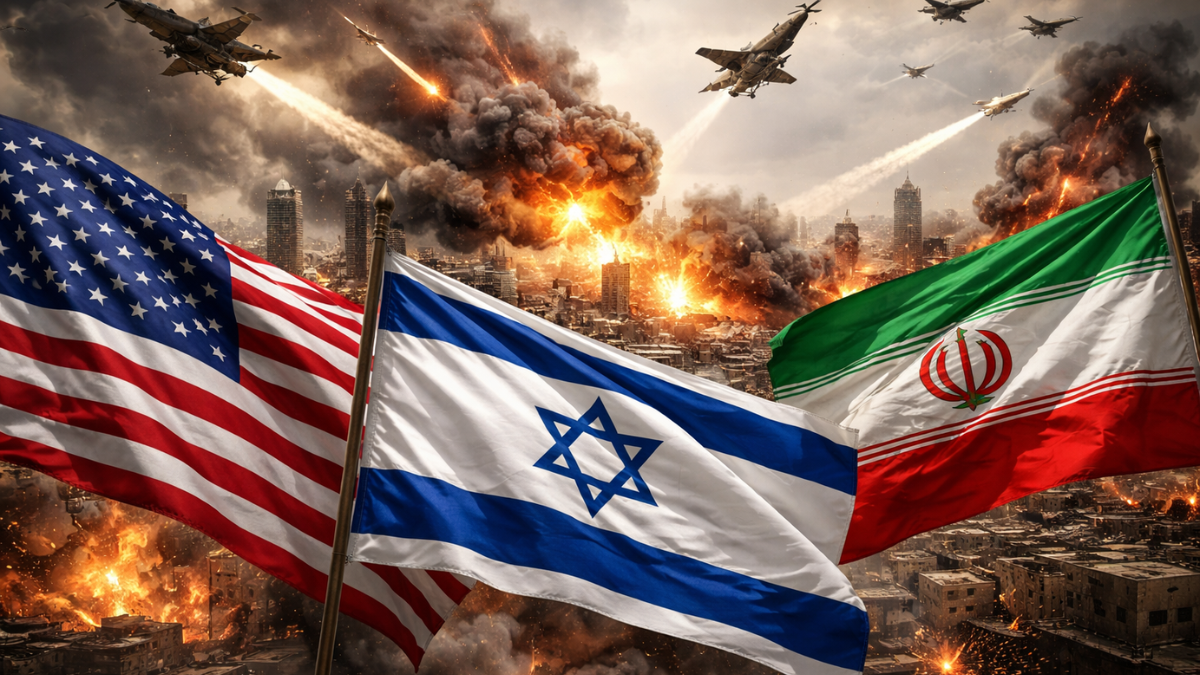
The sudden escalation of direct military action between the United States, Israel and Iran marks a turning point not only in regional security but in the social architecture that underpins the contemporary global order. Beyond battlefield maps and headline metrics, the conflict is reconfiguring identities, norms, institutions, economic patterns, and everyday social life across diverse societies. This article analyzes those shifts from a sociological perspective: how collective meanings are re-made, how institutions and networks adapt (or fail), and what the longer-term social consequences are likely to be for global governance, transnational solidarities, and inequality.
A crisis of legitimacy for liberal institutions
The post–Cold War global order depended heavily on a web of institutions, legal norms, and shared expectations: the centrality of the United Nations for conflict arbitration, the norms of proportionality and civilian protection under international humanitarian law, and an expectation that inter-state disputes would rarely result in open, large-scale strikes between major powers or their proxies. When high-profile strikes and counter-strikes occur — and when major powers are implicated directly — the legitimacy of those institutions is put under intense strain.
Recent coordinated strikes attributed to the United States and Israel against targets in Iran, and the intense diplomatic fallout that followed, show how fragile the normative scaffolding is when strategic calculation overrides multilateral dispute-resolution pathways. International actors and public audiences will judge institutions by their capacity to restrain escalation and to protect non-combatants; where institutions are perceived to fail, alternative forms of authority and solidarity move to fill the vacuum. This erosion of institutional authority fuels skepticism — especially in parts of the Global South — about whether rules-based multilateralism serves all states equally.
Sociologically, legitimacy is not merely legal compliance; it is perceived moral rightness. When states bypass or instrumentalize forums like the United Nations to achieve strategic goals, publics in different societies interpret that action through existing narratives — historical memory, colonial grievances, and media frames — and update their trust in global institutions accordingly. That update has consequences for cooperation on issues from climate change to global health.
Narrative struggle and the politics of meaning
War is fought on two fronts: kinetic and discursive. How the conflict is represented — in domestic media, social platforms, and elite deliberations — shapes public opinion, recruitment into social movements, and diasporic mobilization. Narratives about sovereignty, victimhood, terror, and resistance travel swiftly across borders and become resources for political actors elsewhere.
In liberal democracies, governments often appeal to national security and moral exceptionalism to justify alliances and military interventions; in authoritarian and semi-authoritarian contexts, the same events are mobilized to consolidate rule by invoking existential threat. For instance, claims about high-level Iranian leadership being targeted or killed (as reported in multiple outlets) instantly become frames that domestic actors can use to rally support or to delegitimize opponents. The speed and reach of these claims make narrative competition a central social process in the formation of collective action.

Diasporas and transnational advocacy networks reframe local events through cultural memory and religious symbolism. Muslim-majority and Jewish diasporic communities, for example, may reinterpret distant strikes as immediate moral crises, intensifying mobilization, protests, and solidarity campaigns in cities from New York to London to Mumbai. These mobilizations, in turn, exert pressure on host-country politics and can reshuffle domestic electoral calculations.
Realignment of alliances and the sociology of power blocs
Great-power politics has long structured global alignments; yet contemporary alignments are more fluid, filtered through economic dependencies and networked interdependencies. The direct involvement of the United States with Israel against Iran provokes re-evaluations across regional and extra-regional states. States in the Gulf, East Asia, Africa, and Latin America will recalculate security strategies and trade ties based on perceived reliability, risk, and the balance of costs and benefits.

For many states, the calculus is simple: maintain energy flows and avoid becoming entangled in Western–Middle Eastern disputes; yet for others, the conflict is an opportunity to assert strategic autonomy, deepen ties with rival powers, or present themselves as mediators. The sociological effect is a more transactional world in which norms of alliance are supplanted by short-term calculations — a development that undermines stable coalition-building for global public goods. Several leading policy institutes and think tanks are already analyzing how immediate strikes and reprisals translate into diplomatic repositioning.
Economic shocks, inequality, and social vulnerability
Conflict ripples through economies quickly, but the effects are highly uneven. The Middle East remains central to global energy supplies; disruptions to shipping lanes, oil infrastructure, or even the mere risk of a broader regional war raises energy prices and inflationary pressures worldwide. Recent trading days have already seen sharp spikes in oil prices and disrupted shipping patterns — developments that transmit into higher transport costs, food price increases, and balance-of-payment stresses for import-dependent developing countries.
Sociologically this produces a regressive distributional impact. Poor households and precarious workers in oil-importing countries bear the brunt through higher food and fuel bills. Governments with limited fiscal space are pressured to choose between subsidies (which strain public finances) and price liberalization (which provokes social unrest). For oil-exporting states, short-term fiscal gains can mask long-term instability created by militarization and the social costs of sudden rent-seeking windfalls. Multilateral institutions like the IMF and World Bank are already factoring regional instability into growth forecasts; the constrained capacity of many states to buffer shocks increases the risk of social unrest, migration, and political instability.
Refugees, displacement, and urban pressures
Conflict-induced displacement is a classic social consequence of war. Even when fighting is geographically contained, the fear of escalation prompts cross-border movement and internal displacement. Urban centers — often the first destinations for displaced people — face strain on housing, health, and education services. Cities that serve as diasporic hubs also confront rising social tensions when out-group scapegoating rises alongside economic hardship.
The sociology of sanctuary and social integration becomes crucial. Host communities’ responses range from solidarity and mutual aid to xenophobic backlash; these responses depend on historical patterns of coexistence, the framing of newcomers by political elites, and the capacity of civil society to mediate. Where conflict intersects existing cleavages (ethnic, religious, or class-based), episodes of displacement can harden social boundaries and create durable segregation.
Militarization, surveillance, and everyday life
Escalating interstate conflict fuels domestic militarization: higher defense budgets, expanded security apparatuses, and normalization of surveillance practices. Militarization alters everyday social relations through the increased presence of armed forces, checkpoints, and surveillance systems — all of which reshape trust, mobility, and civil liberties.
Sociologists emphasize how long-term exposure to security culture changes socialization patterns, from school curricula emphasizing patriotism to media cultivating threat perceptions. These changes endure beyond bout-of-conflict periods and can legitimize authoritarian practices under the guise of emergency. Civil society organizations, the legal profession, and the press become critical arenas contesting these transformations; their weakening or co-optation has profound implications for democratic resilience.
The law, human rights frameworks, and moral repertoires
Conflict tests the boundaries of international law and humanitarian norms. Experts note that the application of International Humanitarian Law (IHL) and norms of civilian protection come under intense scrutiny during cross-border strikes involving major powers. Debates about proportionality, targeted leadership decapitation, and accountability for civilian casualties re-emerge in public and judicial forums. The social consequence is twofold: first, a potential erosion of the moral authority of normative frameworks when they appear selectively enforced; second, an intensification of legal mobilization, as NGOs, victims’ groups, and transnational lawyers seek accountability through courts, commissions, and international tribunals.
When legal instruments are perceived as partial or ineffective, communities often turn to alternative moral repertoires — memories of past injustices, religious narratives, or populist rhetoric — to justify political action. These repertoires can enable cycles of revenge and protract conflict dynamics.
Information ecosystems, misinformation, and social fragmentation
The rapid acceleration of social media as a primary source of news means that rumor, misattribution, and targeted disinformation can shape social beliefs before verified facts are available. In a conflict context, this creates fertile ground for rumor cascades that polarize communities and erode epistemic trust. Once trust collapses, deliberative spaces shrink and radical narratives gain purchase.
Sociologically, this dynamic encourages epistemic segregation: communities that consume different media ecologies develop incompatible “facts” and rival interpretations of events. Policy responses that rely solely on fact-checking are insufficient; rebuilding epistemic consensus requires strengthening independent media, local community dialogues, and institutions that can credibly arbitrate contested claims.
Transnational activism, solidarity, and backlash
Conflicts of this nature catalyze transnational activism: coordinated protests, boycott campaigns, and advocacy coalitions that link movements across countries. These movements can pressure states, reshape corporate behavior, and influence multilateral agendas. Yet transnational activism also triggers counter-movements and state-led repression, especially where governments equate dissent with disloyalty or security risk.
The sociology of social movements shows that transnational frames that emphasize universal human rights can gain broad appeal — but only if activists successfully translate distant suffering into local stakes (e.g., through links to shared values or economic consequences). The contested terrain of global civil society thus becomes a battleground for the moral framing of the conflict.
Cybersecurity, supply chains, and the social life of infrastructures
Modern conflicts have an important non-kinetic dimension: cyber operations targeting critical infrastructure, financial networks, and communications. Disruptions to supply chains — particularly for semiconductors, shipping, and energy — reverberate into labor markets and household economies. Sociologists studying infrastructures emphasize how people’s everyday practices adapt when systems fail: alternative markets emerge, informal networks of mutual aid intensify, and power asymmetries among actors (states, corporations, and communities) become visible.
This conflict’s impact on global supply networks could accelerate localization strategies (reshoring, diversification), with consequences for labor geographies and industrial sociology. Economic decoupling, once costly, becomes a social and political choice rather than a purely technical one.
Culture, memory, and intergenerational effects
Wars imprint themselves on collective memory and cultural production. Memorialization, education policy, artistic expression, and family narratives transmit the experience to subsequent generations. Even populations physically distant from battle zones can develop identity markers shaped by the conflict — for example through charitable giving patterns, festival politics, or school curricula amended to reflect new pedagogical priorities.
Intergenerational studies show that prolonged exposure to geopolitical threat can produce durable shifts in risk perception, civic engagement, and social trust. These shifts influence political socialization and the long-term shape of civil societies.
Policy implications: building resilience and renewing norms
A sociological reading suggests several policy imperatives:
- Protect social safety nets quickly and equitably. Economic shock absorption must prioritize the most vulnerable to avoid regressive outcomes and social unrest.
- Support independent information institutions. Strengthening local journalism, community dialogue platforms, and media literacy can mitigate epistemic fragmentation.
- Invest in urban preparedness and integration. Cities that receive displaced populations need resources for housing, health, and education to reduce conflict between newcomers and hosts.
- Safeguard legal and humanitarian norms. International institutions should be empowered to monitor, investigate, and publicize violations transparently to sustain normative authority.
- Foster diplomatic channels and back-channel mediation. Civil society diplomacy, religious leaders, and neutral regional actors may provide important routes to de-escalation when formal channels are gridlocked.
- Address the narrative dimension. Governments and civil society must avoid simplistic, demonizing rhetoric and instead back inclusive moral repertoires that reduce the social appeal of revenge.
These policy directions are not technocratic fixes; they require social investments in trust-building, institutional capacity, and transnational cooperation.
Conclusion — the social architecture after the shock
The US–Israel–Iran confrontation is reshaping the global order along multiple sociological axes: institutional legitimacy, narrative politics, economic inequality, migration flows, and the everyday lived experience of militarization and surveillance. The conflict highlights how fragile the arrangements that sustained a relative international stability have become — but it also reveals social resources that can be mobilized for resilience: diasporic solidarity, civil society networks, legal mobilization, and local practices of mutual aid.
If the international community wishes to prevent the conflict from hardening into a new normal of fragmented, transactional politics, it must attend not only to military calculations but to the social consequences that determine whether peace is sustainable. Rebuilding trust — among peoples and between states — will be as important as any ceasefire line. The sociological lens shows that the global order is not merely a system of states and institutions; it is a living network of meanings, practices, and relationships that must be cared for if a stable, just, and humane world is to be possible.
FAQs: US–Israel–Iran Conflict
- What is the US–Israel–Iran conflict and how did it begin?
The US–Israel–Iran Conflict refers to a series of military escalations involving the United States, Israel, and Iran, rooted in long-standing regional tensions over nuclear programs, power rivalries, and past strikes by all parties. - Why are the United States and Israel jointly engaging Iran militarily?
Recent joint actions by the United States and Israel against Iran, including major strikes, stem from concerns over Iran’s nuclear ambitions and regional influence, which both Washington and Tel Aviv view as existential threats. - What are the main goals of Iran in the conflict with the US and Israel?
Iran seeks to resist foreign intervention, maintain its regional influence, protect sovereign interests, and counter military pressure from the US and Israel. - How has the US–Israel–Iran conflict affected global oil markets?
The conflict has disrupted energy market stability, pushing oil and commodity prices higher due to fears of supply interruptions, especially near vital routes like the Strait of Hormuz. - Does the US–Israel–Iran Conflict risk triggering a broader regional war?
Yes — analysts warn that the current escalations could draw in more actors, extend fighting geographically, and destabilize the broader Middle East. - What global reactions have emerged to the US–Israel military strikes on Iran?
Global responses vary — some countries condemn the strikes as unlawful, while others support diplomatic or restrained approaches, signaling divisions in international opinion. - How does the US–Israel–Iran Conflict impact international aviation and travel?
Widespread flight cancellations, airspace closures, and disrupted routes have occurred as airlines avoid conflicted Middle Eastern skies. - What social consequences does the conflict have on diasporic communities?
The conflict influences social cohesion and identity politics among diaspora communities, affecting demonstration patterns, solidarity networks, and domestic political debates globally. - How do media narratives shape public perception of the conflict?
Media framing — including national outlets and social platforms — heavily influences how publics interpret the US–Israel–Iran Conflict, shaping national identity and collective memory. - In what ways does the conflict affect economic inequality?
Rising fuel and commodity prices due to the conflict disproportionately impact vulnerable populations, heightening social inequality, especially in developing economies. - What role does the United Nations play in the US–Israel–Iran Conflict?
The United Nations calls for restraint and diplomacy and has condemned violence while urging de-escalation, reflecting tensions in global governance. - How are social movements responding to the conflict worldwide?
Transnational activism, protests, and solidarity campaigns have grown, while counter-movements and state crackdowns also emerge, emphasizing contestation in civil society. - Does the conflict accelerate cyber threats or security shifts?
Yes, conflicts today extend into cyberspace and economic infrastructures, influencing digital security policies and global supply chains. - Is the US–Israel–Iran Conflict reshaping global alliances?
The confrontations encourage some states to recalibrate alliances based on strategic and economic interests, leading to shifts in diplomatic networks and power blocs. - What social policies are needed to reduce conflict fallout globally?
Strengthening social safety nets, bolstering independent media, and investing in urban integration for displaced populations are among sociologically grounded recommendations.