Introduction
Disability is not merely a medical condition; it is a social experience shaped by cultural norms, institutional arrangements, public policies, and everyday interactions. In the United States, disability affects millions of individuals across age, race, gender, and class lines. Yet the lived experience of disability is profoundly influenced by the structure of society—its schools, workplaces, media, legal systems, and built environments. From a sociological standpoint, the issue of Disability and Social Inclusion in America involves examining how social institutions either marginalize or empower individuals with disabilities.
Historically, disability was treated primarily as a private tragedy or medical defect. However, contemporary sociological research emphasizes that many of the barriers faced by disabled individuals are socially constructed. Architectural obstacles, discriminatory attitudes, inadequate public transportation, limited employment opportunities, and exclusionary education systems create disadvantages that are not inherent in the impairment itself. Thus, social inclusion requires transforming social structures rather than merely treating individuals.
This article explores Disability and Social Inclusion in America through key sociological theories, historical developments, legal frameworks, institutional domains, intersectional inequalities, and future challenges.
Theoretical Perspectives on Disability
The Medical Model vs. The Social Model
The medical model views disability as a pathology residing in the individual body. Under this framework, the goal is cure, rehabilitation, or adaptation to fit into existing social norms. Sociologists critique this model because it overlooks the role of societal barriers.
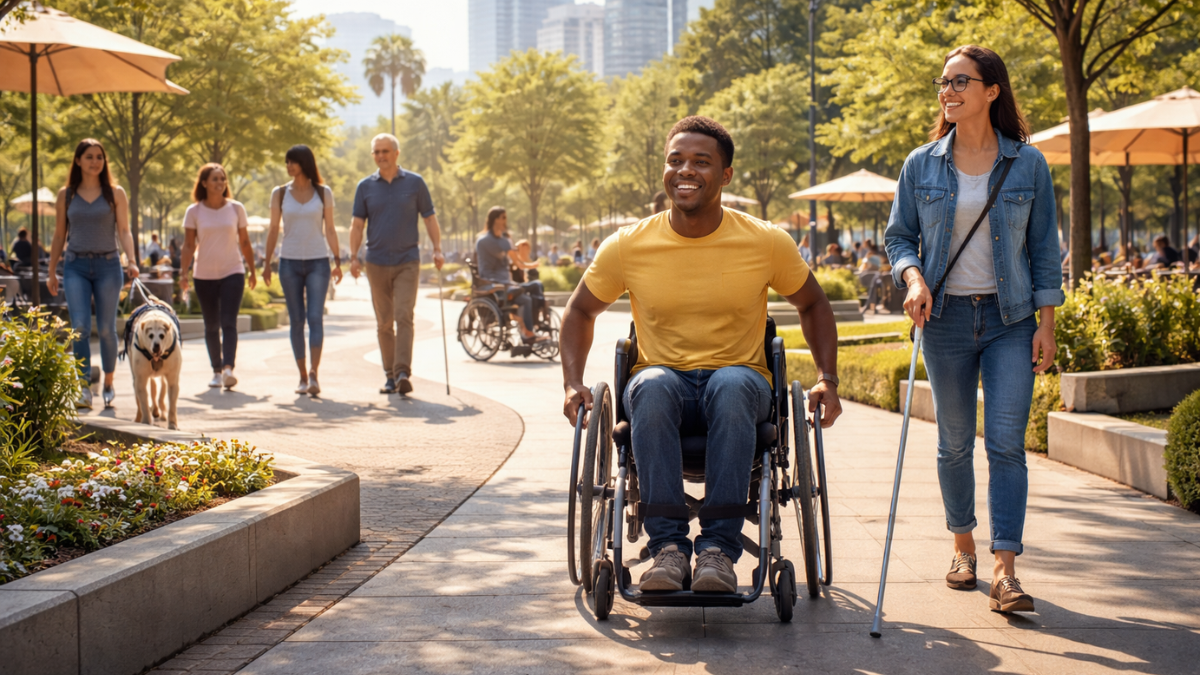
In contrast, the social model of disability argues that disability arises from the interaction between individuals with impairments and an inaccessible society. For example, a person who uses a wheelchair is “disabled” not by paralysis alone but by buildings without ramps or elevators. This model shifts responsibility from individuals to institutions and public design.
Functionalism
From a functionalist perspective, society is a system of interrelated parts working toward stability. Disability may be seen as a social category that requires specialized roles—such as medical professionals, caregivers, and welfare institutions. However, critics argue that functionalism can inadvertently justify exclusion by framing disabled individuals as dependent or outside productive norms.
Conflict Theory
Conflict theory, inspired by Marxist thought, emphasizes power and inequality. It highlights how economic systems prioritize productivity and profit, marginalizing those who do not fit ideal worker standards. In capitalist labor markets, individuals with disabilities often face wage discrimination, unemployment, and occupational segregation. Conflict theorists argue that social inclusion requires redistributing resources and transforming labor structures.
Symbolic Interactionism
Symbolic interactionists focus on everyday interactions and the construction of meaning. Disability stigma arises from labels and stereotypes that shape how people are perceived and treated. Erving Goffman’s concept of “spoiled identity” helps explain how visible disabilities can trigger social discomfort, leading to exclusion. Inclusive practices must therefore challenge stigma at the micro-level of social interaction.
Historical Evolution of Disability Rights in America
The trajectory of Disability and Social Inclusion in America reflects broader civil rights movements. In the early 20th century, individuals with disabilities were often institutionalized in asylums or segregated facilities. Eugenics movements even promoted forced sterilization.
The mid-20th century saw a gradual shift. After World War II, disabled veterans demanded recognition and support. By the 1960s and 1970s, the disability rights movement emerged alongside movements for racial and gender equality.
A landmark achievement was the passage of the Americans with Disabilities Act (ADA) in 1990. The ADA prohibited discrimination in employment, public accommodations, transportation, and telecommunications. It framed disability rights as civil rights, emphasizing accessibility and equal opportunity.
Subsequent laws such as the Individuals with Disabilities Education Act (IDEA) further strengthened inclusive education. These legal transformations signaled a paradigm shift from charity-based approaches to rights-based inclusion.
Education and Inclusive Schooling
Education plays a crucial role in shaping life chances. Historically, children with disabilities were excluded from mainstream classrooms. Today, inclusive education policies aim to integrate students with disabilities into general education settings.
IDEA mandates that children receive a “free appropriate public education” in the least restrictive environment. This promotes classroom inclusion, individualized education plans (IEPs), and support services.

From a sociological perspective, inclusive education challenges ableist assumptions. However, implementation varies widely. Schools in low-income areas may lack resources for assistive technologies or specialized staff. Thus, Disability and Social Inclusion in America are deeply linked to educational inequality and funding disparities.
Inclusive education not only benefits disabled students but also fosters empathy and diversity awareness among non-disabled peers. Schools become microcosms of inclusive societies.
Employment and Economic Participation
Employment is central to social inclusion, identity, and economic security. Despite legal protections, people with disabilities experience lower employment rates compared to non-disabled individuals.
Sociological analysis highlights several barriers:
- Workplace discrimination and stereotypes
- Inaccessible infrastructure
- Lack of accommodations
- Occupational segregation
The ADA requires reasonable accommodations, such as modified schedules or assistive devices. Yet compliance depends on employer attitudes and enforcement mechanisms.
The rise of remote work and digital platforms has created new opportunities for inclusion, especially after the COVID-19 pandemic. Flexible arrangements can benefit workers with mobility or chronic health conditions. However, digital divides and algorithmic biases can reproduce inequalities.
Economic marginalization also intersects with poverty. Disabled individuals are more likely to rely on social assistance programs such as Social Security Disability Insurance (SSDI). Sociologists argue that overly restrictive eligibility rules can trap individuals in cycles of dependency by discouraging part-time employment.
Healthcare and Social Policy
Healthcare access significantly shapes Disability and Social Inclusion in America. While medical care can enhance quality of life, disparities in insurance coverage and affordability persist.
The Affordable Care Act expanded coverage and prohibited discrimination based on preexisting conditions, benefiting many disabled individuals. However, ongoing debates about healthcare reform reveal the fragility of these gains.
Sociologically, healthcare systems reflect broader inequalities. Disabled individuals from racial minorities or low-income backgrounds often face compounded disadvantages. Structural racism and socioeconomic disparities intersect with disability to create layered marginalization.
Built Environment and Accessibility
Accessibility is a cornerstone of inclusion. The ADA established requirements for ramps, elevators, accessible restrooms, and transportation services. Cities have gradually adapted public spaces to meet universal design principles.
However, accessibility remains uneven. Rural areas may lack accessible transportation systems. Aging infrastructure poses challenges. Digital accessibility—such as screen-reader compatibility—has become increasingly important in the information age.

Universal design emphasizes creating environments usable by all people, regardless of ability. Sociologically, this approach recognizes diversity as a normal aspect of human variation rather than an exception requiring special treatment.
Media Representation and Cultural Attitudes
Cultural representation influences public perceptions. Historically, media portrayed disabled individuals as objects of pity, inspiration, or villainy. These stereotypes reinforce social distance.
In recent years, television and film have featured more authentic portrayals and disabled actors. Social media platforms allow disabled activists to share experiences and challenge stigma.
From a symbolic interactionist viewpoint, representation reshapes everyday interactions. When society normalizes disability as part of human diversity, social inclusion becomes more achievable.
Intersectionality: Disability, Race, Gender, and Class
Disability does not exist in isolation. Intersectionality theory emphasizes how multiple identities interact to produce complex forms of inequality.
For example, disabled women may experience gender-based discrimination in addition to ableism. Disabled individuals of color may confront racial bias in healthcare and employment. Low-income disabled individuals face greater barriers to assistive technologies and quality education.
Analyzing Disability and Social Inclusion in America through intersectionality reveals that inclusion strategies must address broader systems of inequality rather than focusing solely on impairment.
Political Participation and Advocacy
Political engagement is essential for social inclusion. Accessibility of polling stations, voting materials, and civic forums determines whether disabled citizens can exercise democratic rights.
Advocacy organizations have played a crucial role in shaping policy reforms. Grassroots activism has shifted public discourse from charity to empowerment. Online activism further amplifies disabled voices.
Sociologically, collective action transforms marginalized groups into political actors. Disability rights movements demonstrate how social change emerges from organized resistance and solidarity.
Technology and the Future of Inclusion
Assistive technologies—from hearing aids to speech recognition software—expand opportunities. Artificial intelligence and robotics hold potential for greater independence.
However, technology also raises ethical concerns. Surveillance technologies in care institutions, for example, may compromise autonomy. Sociologists emphasize balancing innovation with rights and dignity.
The digital era offers new possibilities for remote education, telehealth, and flexible employment. Ensuring digital accessibility will be central to advancing Disability and Social Inclusion in America in the coming decades.
Challenges Ahead
Despite progress, barriers remain:
- Persistent unemployment gaps
- Inadequate mental health services
- Social isolation and stigma
- Unequal access across regions
Aging populations will increase the prevalence of disability, making inclusion even more urgent. Climate change and disaster preparedness also raise accessibility concerns.
Sociologists argue that inclusion requires systemic transformation—rethinking productivity norms, urban planning, and social welfare systems.
Conclusion
Disability and Social Inclusion in America is not merely a policy issue but a reflection of societal values. Sociological perspectives reveal that disability is shaped by institutions, cultural meanings, and power structures. Progress has been achieved through civil rights legislation, inclusive education reforms, and advocacy movements. Yet inequalities persist across employment, healthcare, and social participation.
True inclusion requires embracing disability as part of human diversity. It involves removing structural barriers, challenging stigma, and ensuring equitable access to opportunities. As America continues to evolve socially and technologically, the pursuit of inclusion must remain central to democratic ideals.
Ultimately, building an inclusive society benefits everyone. When environments are designed for diverse abilities, they become more accessible, innovative, and humane. Disability rights are not a special interest—they are a measure of social justice itself.
FAQs on Social Inclusion in America (Disability Perspective)
1. What does Social Inclusion in America mean in the context of disability?
Social Inclusion in America refers to the full participation of people with disabilities in social, economic, political, and cultural life without discrimination or structural barriers.
2. Why is Social Inclusion in America important for people with disabilities?
Social Inclusion in America ensures equal access to education, employment, healthcare, and public spaces, promoting dignity, independence, and human rights.
3. How has Social Inclusion in America evolved over time?
Social Inclusion in America has progressed from institutional segregation to civil rights protections, especially after the passage of the Americans with Disabilities Act, which prohibited disability-based discrimination.
4. What role does education play in Social Inclusion in America?
Inclusive education policies allow students with disabilities to learn in mainstream classrooms with necessary support, fostering equal opportunity and reducing stigma.
5. How does employment affect Social Inclusion in America?
Employment promotes financial independence and social participation. However, barriers such as workplace discrimination and lack of accommodations still limit Social Inclusion in America.
6. What are the main barriers to Social Inclusion in America?
Common barriers include inaccessible infrastructure, social stigma, limited healthcare access, digital exclusion, and economic inequality.
7. How does healthcare impact Social Inclusion in America?
Accessible and affordable healthcare improves quality of life and enables active participation in society, making it a key factor in Social Inclusion in America.
8. What is the role of technology in advancing Social Inclusion in America?
Assistive technologies, remote work tools, and accessible digital platforms enhance independence and participation, strengthening Social Inclusion in America.
9. How does intersectionality influence Social Inclusion in America?
Social Inclusion in America is shaped by overlapping identities such as race, gender, and class, meaning disabled individuals may experience multiple forms of marginalization.
10. How do public policies promote Social Inclusion in America?
Federal and state policies mandate accessibility standards, anti-discrimination measures, and support services that foster Social Inclusion in America.
11. What is the connection between poverty and Social Inclusion in America?
Economic disadvantage can restrict access to education, healthcare, and assistive devices, making poverty a major obstacle to Social Inclusion in America.
12. How does media representation affect Social Inclusion in America?
Positive and realistic portrayals of disability challenge stereotypes and encourage broader acceptance, supporting Social Inclusion in America.
13. Why is community participation essential for Social Inclusion in America?
Participation in cultural events, civic engagement, and local organizations strengthens belonging and social networks, enhancing Social Inclusion in America.
14. How can urban planning improve Social Inclusion in America?
Universal design principles—such as ramps, accessible transportation, and inclusive public spaces—directly support Social Inclusion in America.
15. What future challenges may affect Social Inclusion in America?
Aging populations, economic shifts, and digital inequalities present ongoing challenges, requiring continuous policy innovation to sustain Social Inclusion in America.