
Introduction
Labor unions have historically played a central role in shaping economic democracy and worker power in the United States. From securing basic labor rights such as minimum wages, workplace safety, and collective bargaining to influencing broader social policies, unions once stood as powerful institutions representing the working class. However, over the past several decades, union influence in America has declined sharply. This decline has coincided with rising economic inequality, stagnant wages, job insecurity, and the weakening of worker protections.
From a sociological perspective, the decline of worker power in America and labor unions is not merely an economic issue but a structural transformation tied to power relations, class conflict, political ideology, globalization, and changes in work organization. This article examines the historical foundations of labor unions in America, the sociological causes behind declining worker power in America, and the broader social consequences of weakened unionism.
Historical Roots of Labor Unions in America
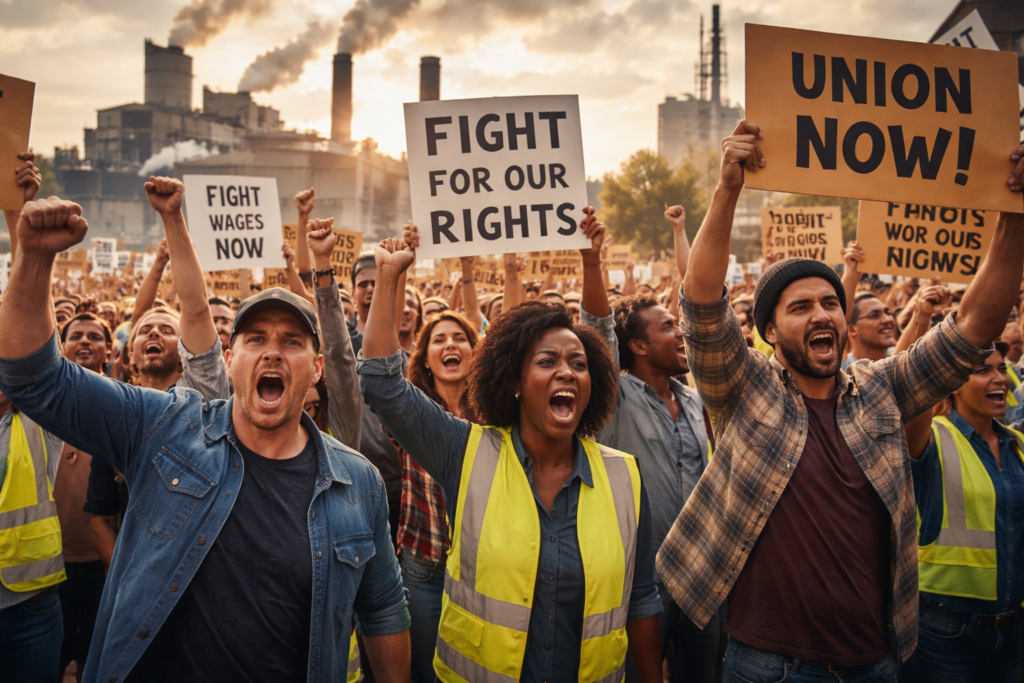
Labor unions emerged in the United States during the late 19th and early 20th centuries as a response to industrial capitalism. Rapid industrialization created harsh working conditions, long hours, low wages, and minimal safety standards. Workers organized collectively to counterbalance the power of factory owners and corporations.
The early labor movement gained momentum through struggles led by organizations such as the American Federation of Labor, which focused on skilled workers, and later the Congress of Industrial Organizations, which organized mass industrial labor. The New Deal era of the 1930s marked a turning point, as state policies legitimized union activity and collective bargaining.
Sociologically, this period reflects a temporary shift in power from capital to labor. The state acted as a mediator, institutionalizing labor rights and recognizing unions as legitimate representatives of workers. Union density peaked in the mid-20th century, particularly after World War II, when unions became embedded in American industrial society.
Labor Unions as Institutions of Worker Power
In sociological terms, labor unions function as collective actors that reduce power asymmetry between employers and employees. Individually, workers possess limited bargaining power; collectively, they can negotiate wages, benefits, and working conditions more effectively.
Unions also perform broader social functions. They foster class consciousness by helping workers recognize shared interests, encourage political participation, and promote norms of solidarity. According to conflict theory, unions represent organized resistance against capitalist exploitation by redistributing power and resources within society.
Beyond economic benefits, unions historically contributed to social mobility and reduced income inequality. Unionized workers earned higher wages, had better healthcare access, and enjoyed greater job security. These benefits often extended beyond union members, raising labor standards across entire industries.

The Decline of Union Membership in America
Despite their historical importance, labor unions in America have experienced a long-term decline since the late 1970s. Union membership has fallen steadily, especially in the private sector. This decline is not accidental but rooted in deep structural changes.
One major factor is the transformation of the American economy. Manufacturing jobs, which were traditionally unionized, have declined due to deindustrialization and automation. As service-sector employment expanded, many new jobs emerged in areas where unionization was weak or actively discouraged.
Another crucial factor is political opposition. Conservative political movements framed unions as obstacles to economic efficiency and individual freedom. Policies limiting collective bargaining rights, particularly in public-sector employment, weakened union influence. Laws allowing workers to opt out of union membership while still benefiting from union contracts further eroded financial and organizational strength.
Capitalism, Globalization, and Worker Insecurity
Globalization has significantly reshaped labor relations in America. Companies increasingly operate across borders, outsourcing production to countries with cheaper labor and fewer regulations. This global mobility of capital has weakened workers’ bargaining power, as employers can credibly threaten relocation.
From a sociological perspective, globalization intensifies class inequality by empowering transnational corporations while fragmenting the working class. Workers in different countries are often pitted against each other, reducing the effectiveness of collective action.
Additionally, technological change has altered workplace structures. Automation, artificial intelligence, and digital platforms have reduced demand for stable, long-term labor. Gig work and contract-based employment have replaced traditional jobs, making union organizing more difficult. These forms of work promote individualism and insecurity, undermining collective identity.
The Role of the State and Neoliberal Ideology
The decline of labor unions cannot be understood without examining the role of the state. Since the late 20th century, American public policy has increasingly reflected neoliberal ideology, emphasizing market freedom, deregulation, and privatization.
Neoliberalism redefines workers as individual market actors rather than members of a collective class. This ideological shift weakens support for unions by framing labor issues as personal responsibility rather than structural inequality. The state, instead of protecting labor, increasingly aligns with corporate interests.
Sociologically, this represents a shift in power structures. The state, once a partial ally of labor, has become a facilitator of capital accumulation. This realignment contributes to declining worker power and reinforces economic stratification.
Cultural Shifts and the Erosion of Class Consciousness
Cultural factors also play a significant role in declining union power. American society has increasingly embraced individualism, meritocracy, and consumer identity. These values discourage collective action and weaken class-based solidarity.
Media narratives often portray unions as outdated, corrupt, or obstructive. Such representations shape public perception and reduce support for organized labor. Younger workers, in particular, may lack exposure to union culture and history, making them less likely to see unions as relevant.
From a symbolic interactionist perspective, the meaning of work and labor organization has changed. Workers increasingly define themselves through personal achievement rather than collective struggle, which limits union mobilization.
Consequences of Declining Worker Power
The weakening of labor unions has had profound social consequences. One of the most visible outcomes is rising income inequality. As unions decline, wages stagnate while corporate profits and executive compensation grow.
Job insecurity has become widespread, with fewer benefits, limited protections, and unpredictable schedules. Workers face increased stress, reduced bargaining capacity, and diminished political voice. These conditions disproportionately affect marginalized groups, including racial minorities, women, and immigrants.
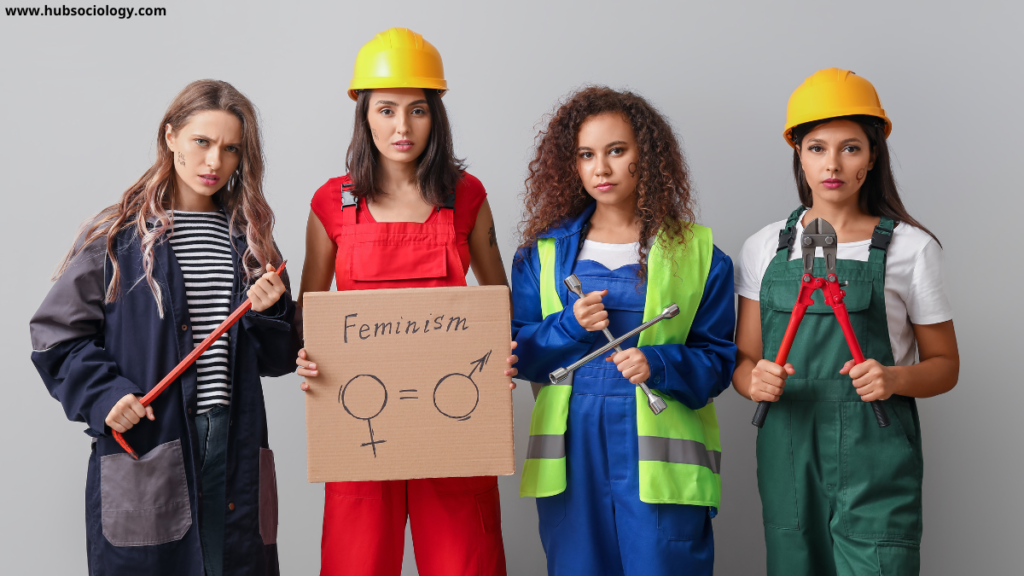
At a broader level, declining worker power undermines democratic participation. Unions historically mobilized voters, educated workers about political issues, and advocated for social welfare policies. Their decline reduces political engagement among working-class populations, contributing to democratic inequality.
Labor Unions and the Crisis of American Democracy
Sociologists increasingly link the decline of unions to challenges facing American democracy. When economic power becomes concentrated in the hands of a few, political power often follows. Weak labor organizations mean fewer institutional checks on corporate influence.
Unions once served as intermediary institutions connecting citizens to the political system. Their decline creates a representation gap, where working-class interests are underrepresented in policymaking. This contributes to political polarization, distrust, and social fragmentation.
In this sense, declining worker power is not just a labor issue but a democratic crisis. The erosion of collective institutions weakens social cohesion and intensifies inequality.
Possibilities for Labor Revival
Despite these challenges, labor unions are not entirely obsolete. Recent years have seen renewed interest in unionization among young workers, particularly in education, healthcare, and service industries. New forms of organizing are emerging that adapt to digital platforms and decentralized workplaces.
Sociologically, this suggests that class conflict remains relevant, even if its forms have changed. Workers continue to seek dignity, security, and fairness, creating potential for renewed collective action. However, meaningful revival will require supportive public policy, cultural shifts, and innovative organizing strategies.
Conclusion
The decline of labor unions and worker power in America reflects deep structural transformations within capitalism, politics, and culture. From globalization and technological change to neoliberal ideology and weakened state support, multiple forces have converged to undermine organized labor.
A sociological analysis reveals that this decline has far-reaching consequences for inequality, democracy, and social stability. Labor unions are not merely economic institutions; they are vital components of social power and collective identity. Understanding their decline is essential for addressing broader social problems in contemporary America.
Rebuilding worker power requires more than nostalgia for the past. It demands new forms of solidarity, institutional innovation, and a renewed commitment to social justice in an increasingly unequal society.
Frequently Asked Questions (FAQs): Worker Power in America
1. What is meant by worker power in America?
Worker Power in America refers to the ability of workers to influence wages, working conditions, job security, and labor policies through collective action, unions, and political participation.
2. How did labor unions strengthen worker power in America historically?
Labor unions strengthened Worker Power in America by organizing collective bargaining, securing labor rights, and reducing the power imbalance between employers and workers.
3. Why is worker power in America declining?
Worker Power in America is declining due to globalization, deindustrialization, anti-union laws, neoliberal economic policies, and the rise of insecure and gig-based employment.
4. What role does globalization play in weakening worker power in America?
Globalization weakens Worker Power in America by allowing corporations to relocate jobs overseas, reducing workers’ bargaining strength and job security.
5. How has neoliberal ideology affected worker power in America?
Neoliberal ideology promotes market freedom and individual responsibility, which undermines collective labor institutions and weakens Worker Power in America.
6. Is declining worker power in America linked to income inequality?
Yes, declining Worker Power in America is closely linked to rising income inequality, wage stagnation, and reduced access to benefits for working-class families.
7. How does the gig economy impact worker power in America?
The gig economy fragments employment relationships, making unionization difficult and significantly reducing Worker Power in America.
8. What is the relationship between worker power in America and democracy?
Worker Power in America supports democracy by increasing political participation and representation of working-class interests; its decline weakens democratic accountability.
9. Are younger workers interested in rebuilding worker power in America?
Yes, many younger workers are showing renewed interest in unions and collective action, indicating potential revival of Worker Power in America.
10. How does automation affect worker power in America?
Automation reduces demand for stable labor, increases job insecurity, and further weakens Worker Power in America.
11. Why is class consciousness important for worker power in America?
Class consciousness helps workers recognize shared interests, which is essential for strengthening Worker Power in America through collective action.
12. What sectors still show strong worker power in America?
Education, healthcare, logistics, and public services continue to demonstrate relatively stronger Worker Power in America through union presence.
13. Can worker power in America be restored?
Worker Power in America can be restored through supportive labor laws, innovative union strategies, and cultural shifts toward collective solidarity.
14. How do anti-union laws affect worker power in America?
Anti-union laws weaken collective bargaining rights and reduce organizational strength, directly undermining Worker Power in America.
15. Why is worker power in America important for social justice?
Worker Power in America promotes fair wages, dignity at work, and economic equality, making it essential for broader social justice.