Introduction
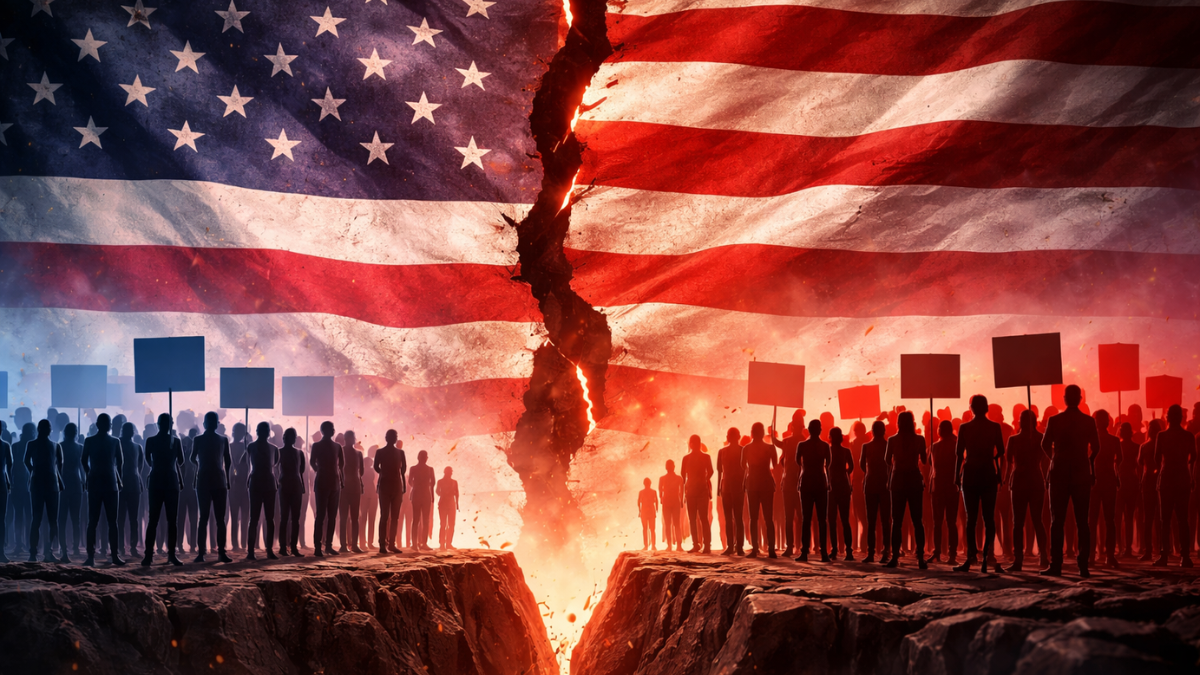
Political polarization has become one of the most defining features of contemporary American society. The growing ideological divide between citizens, political parties, and social groups has reshaped public discourse, weakened democratic trust, and intensified social conflict. In everyday life, political identity increasingly determines how Americans interpret reality, choose media, form friendships, and evaluate national institutions. From debates over immigration and racial justice to economic inequality and cultural values, compromise appears rarer, while confrontation has become normalized.
From a sociological perspective, political polarization is not simply the result of individual opinions or partisan leadership. Rather, it is deeply embedded in structural inequalities, cultural transformations, media systems, and historical legacies. Understanding why political polarization is increasing in America requires examining how social forces interact to produce division at both the macro and micro levels of society. This article analyzes political polarization through classical and contemporary sociological lenses, focusing on economic inequality, identity politics, media fragmentation, institutional change, and social trust.
Understanding Political Polarization Sociologically
Political polarization refers to the process through which political attitudes, beliefs, and identities move toward ideological extremes, reducing overlap and mutual understanding between opposing groups. Sociologically, polarization is not merely about disagreement; it is about social distance. Groups come to see each other not as legitimate opponents but as moral enemies.
Émile Durkheim’s concept of social solidarity helps explain this phenomenon. In highly polarized societies, shared norms weaken, leading to what Durkheim called anomie, or normlessness. Meanwhile, Max Weber’s emphasis on power and authority highlights how political elites mobilize ideology to secure dominance, often deepening social divisions. Conflict theorists further argue that polarization reflects underlying struggles over resources, status, and control.
Economic Inequality and Class-Based Polarization
One of the most significant drivers of political polarization in America is rising economic inequality. Over recent decades, wealth and income gaps have widened dramatically, reshaping class relations and political alignments. Sociologically, economic inequality fuels polarization by creating divergent life experiences and political interests among social classes.
Working-class communities often experience job insecurity, wage stagnation, and declining social mobility, while affluent groups benefit from globalization, technological advancement, and financialization. These unequal outcomes produce resentment, frustration, and political alienation. As a result, economic grievances are increasingly translated into political identities.
Conflict theory explains this process as a struggle between dominant and subordinate classes. Political polarization intensifies when economic systems appear rigged, and democratic institutions are perceived as serving elite interests. The weakening of labor unions and collective bargaining has further reduced class-based solidarity, pushing individuals toward identity-driven politics rather than collective economic action.
Cultural Change and Identity Politics
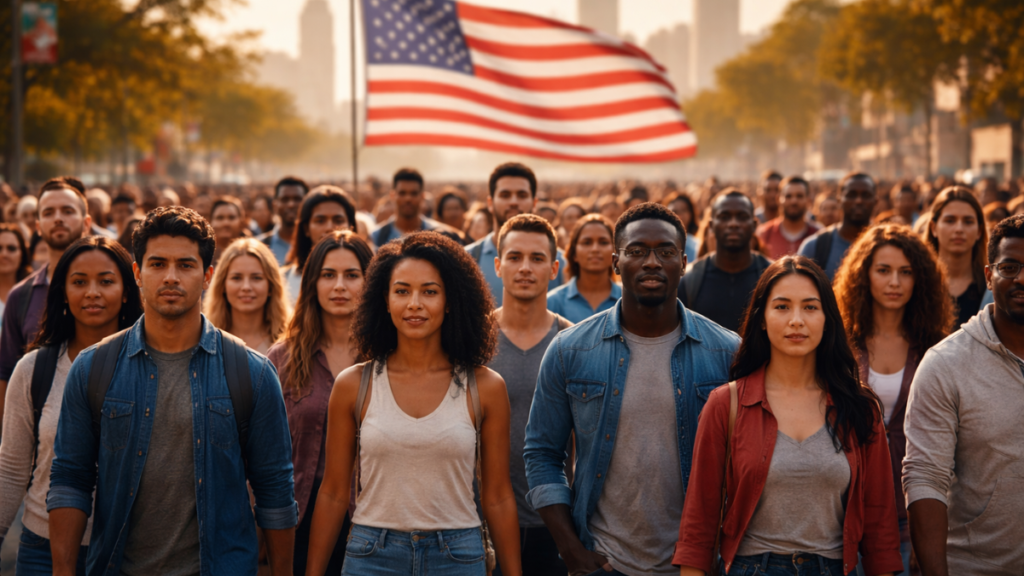
Cultural transformations related to race, gender, sexuality, religion, and national identity have significantly contributed to polarization. America’s increasing demographic diversity has challenged traditional social hierarchies, generating both progressive movements and conservative backlash.
From a sociological standpoint, identity politics emerges when marginalized groups mobilize around shared experiences of discrimination. While such movements seek inclusion and justice, they also provoke resistance from groups that perceive cultural change as a threat to their status. This dynamic aligns with Weber’s theory of status groups, where social honor and recognition become sources of conflict.
Political polarization intensifies when cultural identities overlap with political affiliations. For example, attitudes toward immigration, multiculturalism, and gender norms increasingly align with partisan identities, making political disagreement feel deeply personal. As politics becomes moralized, compromise is interpreted as betrayal rather than negotiation.
The Role of Political Parties and Ideological Sorting
The ideological transformation of American political parties has played a central role in increasing polarization. Over time, the Democratic and Republican parties have become more internally homogeneous and externally distinct. This process, known as ideological sorting, reduces the presence of moderates and cross-cutting identities.
Sociologically, political parties function as social organizations that structure political behavior and identity. When party affiliation becomes a primary marker of social belonging, polarization deepens. Individuals increasingly choose where to live, work, and socialize based on political compatibility, reinforcing echo chambers.
The weakening of intermediary institutions—such as local civic associations and bipartisan organizations—has further intensified this trend. Without spaces for cross-ideological interaction, political identities harden, and mutual distrust grows.
Media Fragmentation and the Construction of Political Reality
Media systems play a crucial role in shaping political consciousness. The rise of cable news, digital platforms, and algorithm-driven content has transformed how Americans consume political information. Instead of shared narratives, citizens now inhabit fragmented media environments that reinforce existing beliefs.
Symbolic interactionism helps explain how media influences polarization. Individuals interpret political symbols, language, and events through socially constructed meanings. When media outlets frame issues in emotionally charged and partisan ways, they shape collective perceptions of reality.
The decline of traditional gatekeeping journalism has also reduced exposure to opposing viewpoints. Sensationalism, misinformation, and outrage-driven content generate engagement but undermine deliberative democracy. As media becomes a site of ideological competition rather than public dialogue, polarization accelerates.
Social Media, Algorithms, and Group Polarization
Social media platforms amplify political polarization by encouraging performative politics and emotional expression. Online interactions often lack accountability and nuance, making extreme views more visible and socially rewarded. Algorithms prioritize content that generates strong reactions, pushing users toward ideological extremes.
From a sociological perspective, this reflects the process of group polarization, where individuals adopt more extreme positions after interacting with like-minded peers. Digital communities function as virtual in-groups, reinforcing identity boundaries and hostility toward outsiders.
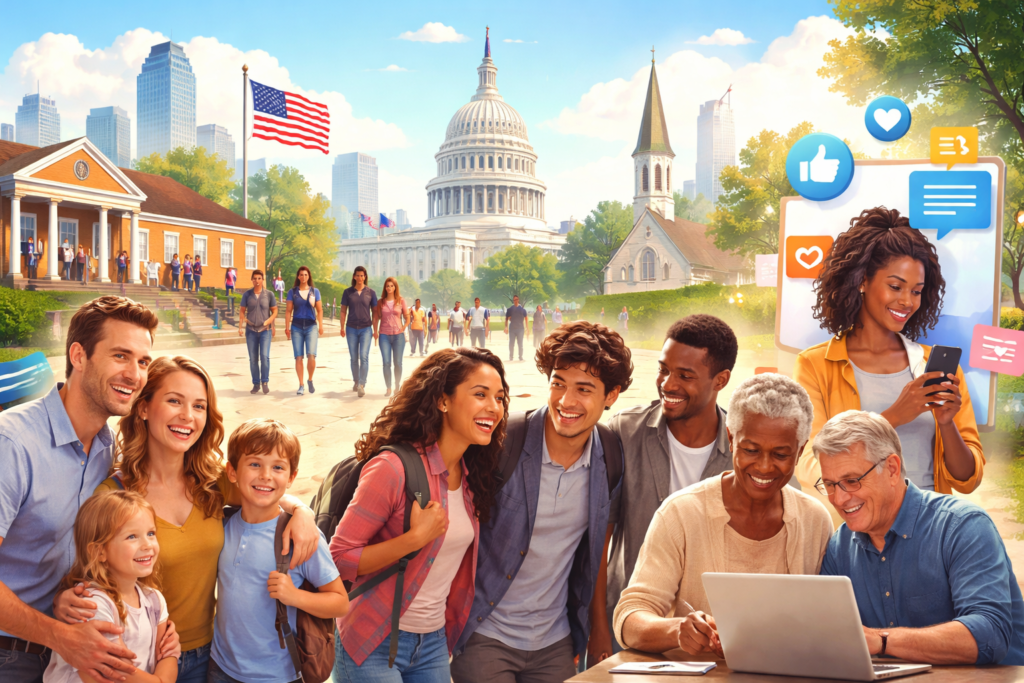
Additionally, social media blurs the line between personal identity and political ideology. Political opinions become central to self-presentation, increasing emotional investment and reducing openness to compromise.
Declining Trust in Institutions and Democratic Legitimacy
Trust is a foundational element of social cohesion. In America, trust in government, media, educational institutions, and even science has declined significantly. Sociologically, this erosion of institutional trust creates fertile ground for polarization.
When citizens believe institutions are corrupt, biased, or ineffective, they seek alternative sources of authority and meaning. This often leads to conspiracy thinking, populist movements, and rejection of expert knowledge. Political opponents are no longer seen as misguided but as illegitimate or dangerous.
Durkheim’s concept of collective conscience helps explain this crisis. As shared moral frameworks weaken, society struggles to maintain consensus, leading to fragmentation and conflict.
Racial History and the Legacy of Conflict
America’s long history of racial inequality continues to shape political polarization. Issues related to race, policing, voting rights, and historical memory remain deeply contested. Sociologically, unresolved historical injustices create enduring fault lines within society.
Critical race theory emphasizes how structural racism is embedded in legal, economic, and political institutions. Efforts to address these inequalities often provoke resistance from groups invested in maintaining the status quo. This dynamic transforms racial issues into polarized political symbols.
The politicization of race intensifies emotional responses, making rational debate difficult. As racial identity becomes increasingly linked to political identity, polarization becomes both social and structural.
Geographic Segregation and Political Homogeneity
Residential and geographic segregation also contribute to polarization. Urban and rural communities differ significantly in economic opportunities, cultural values, and political priorities. These spatial divides reduce everyday interaction between groups with different worldviews.
Sociologist Robert Putnam’s concept of social capital highlights how community networks foster trust and cooperation. When communities become politically homogeneous, social capital is inward-looking rather than bridging, reinforcing polarization.
Geographic sorting means that many Americans rarely encounter opposing political perspectives in meaningful ways, allowing stereotypes and misconceptions to flourish.
Education, Knowledge, and Political Worldviews
Education plays a complex role in political polarization. Higher education often correlates with liberal political attitudes, while non-college populations may gravitate toward conservative positions. However, polarization is not simply about education levels but about knowledge systems and cultural authority.
Sociologically, education functions as a site of cultural reproduction. Conflicts over curricula, history, and scientific knowledge reflect deeper struggles over power and values. When education becomes politicized, it reinforces ideological divides rather than promoting critical dialogue.
Conclusion
Political polarization in America is not an accidental or temporary phenomenon. It is the result of interconnected social, economic, cultural, and institutional processes that have evolved over decades. From rising inequality and identity-based conflict to media fragmentation and declining trust, polarization reflects deeper structural transformations within American society.
A sociological perspective reveals that polarization is both a cause and a consequence of weakened social cohesion. Addressing it requires more than electoral reform or partisan moderation. It demands rebuilding social trust, strengthening democratic institutions, reducing inequality, and creating spaces for meaningful cross-group interaction.
Understanding why political polarization is increasing in America is the first step toward imagining a more inclusive and deliberative democratic future—one where disagreement exists without social fragmentation, and diversity strengthens rather than divides society.
Frequently Asked Questions on Political Polarization
1. What is political polarization?
Political polarization refers to the growing ideological divide in society where individuals and groups hold increasingly extreme and opposing political views, reducing consensus and mutual understanding.
2. Why is political polarization increasing in America?
Political polarization is increasing due to rising economic inequality, cultural conflicts, media fragmentation, identity politics, and declining trust in democratic institutions.
3. How does sociology explain political polarization?
Sociology explains political polarization as a product of structural inequality, social identity formation, power struggles, and weakened social cohesion within modern societies.
4. What role does economic inequality play in political polarization?
Economic inequality fuels political polarization by creating unequal life chances, class resentment, and political alienation among disadvantaged social groups.
5. How does social media contribute to political polarization?
Social media intensifies political polarization by promoting echo chambers, rewarding extreme opinions, and limiting exposure to opposing viewpoints.
6. Is political polarization a threat to democracy?
Yes, extreme political polarization can weaken democracy by reducing compromise, increasing distrust, and undermining democratic norms and institutions.
7. How does identity politics affect political polarization?
Identity politics can deepen political polarization when social identities such as race, religion, or gender become tightly linked to political affiliation.
8. What is ideological sorting in political polarization?
Ideological sorting occurs when political parties become more internally uniform and ideologically extreme, increasing political polarization between parties.
9. How does media fragmentation increase political polarization?
Media fragmentation increases political polarization by creating separate information environments that reinforce partisan beliefs and limit shared political narratives.
10. Can education reduce political polarization?
Education can reduce political polarization by promoting critical thinking and civic awareness, but it may also reinforce polarization if knowledge becomes politicized.
11. What is the relationship between culture and political polarization?
Cultural change influences political polarization by challenging traditional norms, leading to conflicts over values, identity, and social hierarchy.
12. How does declining trust increase political polarization?
Declining trust in government, media, and institutions increases political polarization by encouraging suspicion, conspiracy thinking, and political extremism.
13. Is political polarization unique to the United States?
Political polarization exists globally, but its intensity in the United States is shaped by historical inequality, two-party competition, and media dynamics.
14. How does geographic segregation affect political polarization?
Geographic segregation increases political polarization by limiting interaction between groups with different political beliefs, reinforcing stereotypes.
15. Can political polarization be reduced?
Political polarization can be reduced through inclusive policies, reducing inequality, strengthening civic institutions, and encouraging dialogue across social groups.