Introduction
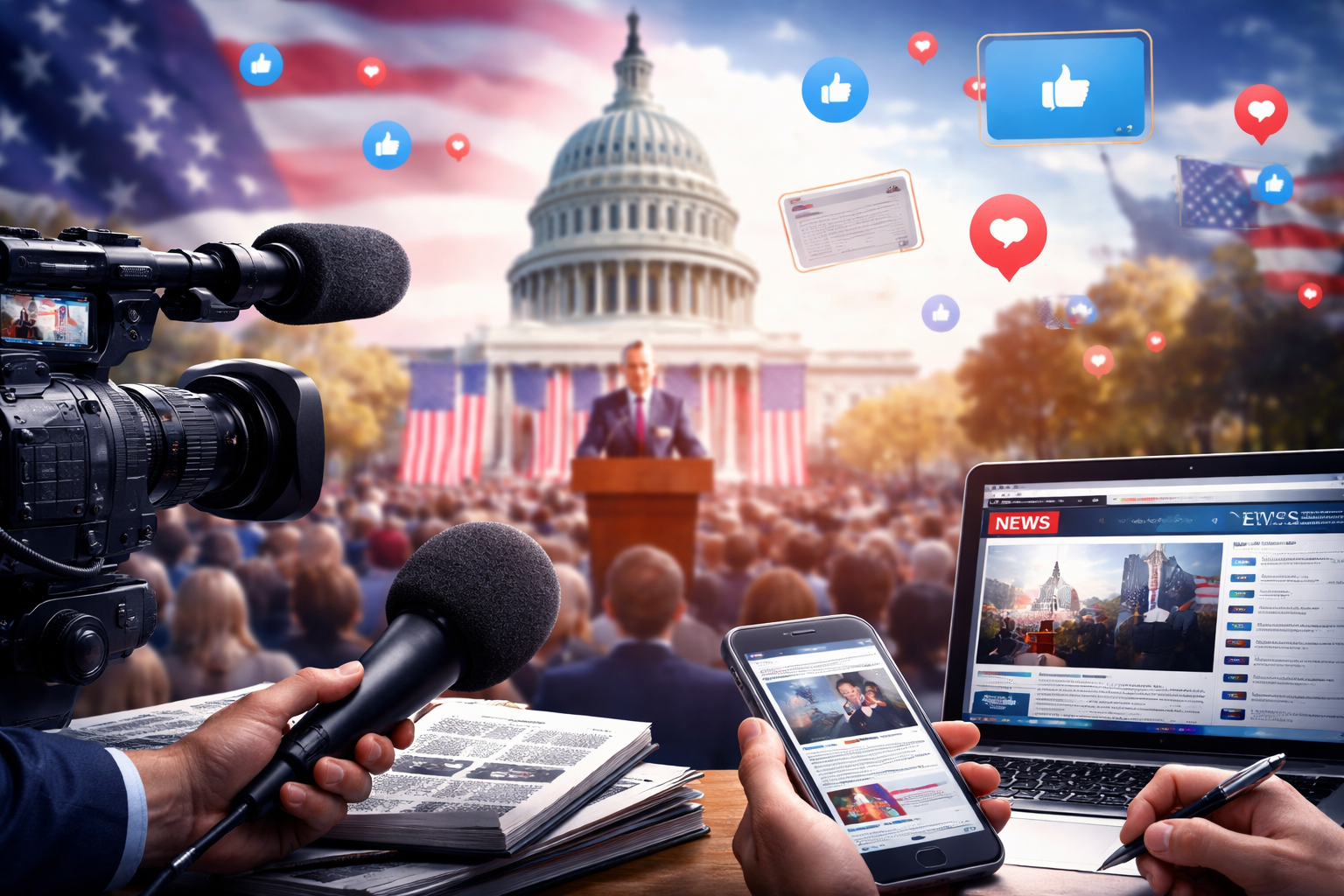
In modern democratic societies, media plays a decisive role in shaping political life, public opinion, and power relations. In the United States, media has evolved from a simple information-transmitting institution to a powerful social force deeply embedded in political processes. From newspapers and radio to television, digital platforms, and social media, American politics today is inseparable from media influence. Sociology provides a critical lens to examine how media not only reports political events but also constructs political reality, reinforces ideologies, and mediates relationships between the state, political elites, and citizens.
The role of media in American politics must be understood within broader sociological frameworks such as power, ideology, social control, hegemony, and political communication. Media does not operate in a vacuum; it reflects economic interests, institutional structures, cultural values, and technological transformations. This article explores the sociological dimensions of media’s role in American politics, focusing on agenda-setting, political socialization, propaganda, polarization, democracy, and inequality.
Media as a Political Institution
From a sociological perspective, media is not merely a neutral channel of information but an institution with its own norms, values, and power. In American politics, media functions as an intermediary between political institutions and the public. It selects which issues deserve attention, frames political debates, and legitimizes certain viewpoints while marginalizing others.
Media organizations operate within capitalist market structures, relying heavily on advertising revenue, corporate ownership, and audience ratings. This economic foundation influences political content, often prioritizing sensationalism, conflict, and personalities over substantive policy discussions. Sociologists argue that this commercialization of political communication reduces complex political issues into simplified narratives that are easier to consume but harder to critically evaluate.
Agenda-Setting and Framing in American Politics
One of the most significant sociological roles of media in American politics is agenda-setting. Media does not tell people what to think, but it powerfully influences what people think about. By giving repeated attention to specific issues such as immigration, crime, national security, or inflation, media shapes public priorities and political discourse.
Framing is equally important. Media frames political issues in particular ways that influence interpretation. For example, welfare policies may be framed as social support for vulnerable populations or as government dependency and economic burden. These frames reflect underlying ideological orientations and affect how citizens perceive political problems and solutions.

In American politics, conservative and liberal media outlets often frame the same event in contrasting ways, reinforcing ideological divisions. Sociologically, this contributes to the construction of political reality along partisan lines rather than shared democratic understanding.
Media and Political Socialization
Media plays a central role in political socialization, the process through which individuals acquire political values, beliefs, and attitudes. In the United States, media exposure begins early and continues throughout life, shaping how citizens understand democracy, leadership, patriotism, and political participation.
Television debates, election coverage, political advertisements, and social media campaigns influence voter perceptions of candidates and parties. Media often emphasizes charisma, image, and emotional appeal rather than policy competence, encouraging a personality-centered political culture. This shift reflects broader cultural changes in American society, where politics increasingly resembles entertainment.
From a sociological standpoint, media-driven political socialization can lead to passive citizenship, where individuals consume political content without deep engagement, critical thinking, or collective action.
Media, Power, and Elite Dominance
Critical sociologists argue that American media often serves elite interests by reinforcing dominant ideologies and power structures. Political elites, corporations, and state institutions have greater access to media platforms, enabling them to shape narratives and public discourse.
Noam Chomsky’s propaganda model suggests that media filters information through ownership, advertising, sourcing, flak, and ideology. In American politics, this means that media frequently normalizes militarism, neoliberal economic policies, and corporate interests while marginalizing radical or alternative perspectives.
The close relationship between political power and media institutions can undermine democratic ideals by limiting genuine pluralism. Sociologically, this reflects how media becomes a tool of hegemony, maintaining consent rather than overt coercion.
Media and Election Politics
Elections in the United States are highly mediatized events. Campaigns rely heavily on television coverage, digital advertising, and social media outreach. Media exposure can significantly influence candidate visibility, fundraising, and voter support.
The emphasis on opinion polls, horse-race journalism, and scandal coverage often overshadows substantive policy debate. This creates a political environment where image management becomes more important than ideological clarity or governance capability.
Sociologists argue that media-driven elections contribute to political cynicism, declining trust in institutions, and voter apathy. At the same time, media can also mobilize voters by highlighting critical issues and encouraging participation, showing its dual and contradictory role.
Social Media and the Transformation of American Politics
The rise of social media has fundamentally transformed the relationship between media and American politics. Platforms such as Twitter, Facebook, YouTube, and TikTok allow politicians to bypass traditional media and communicate directly with citizens.
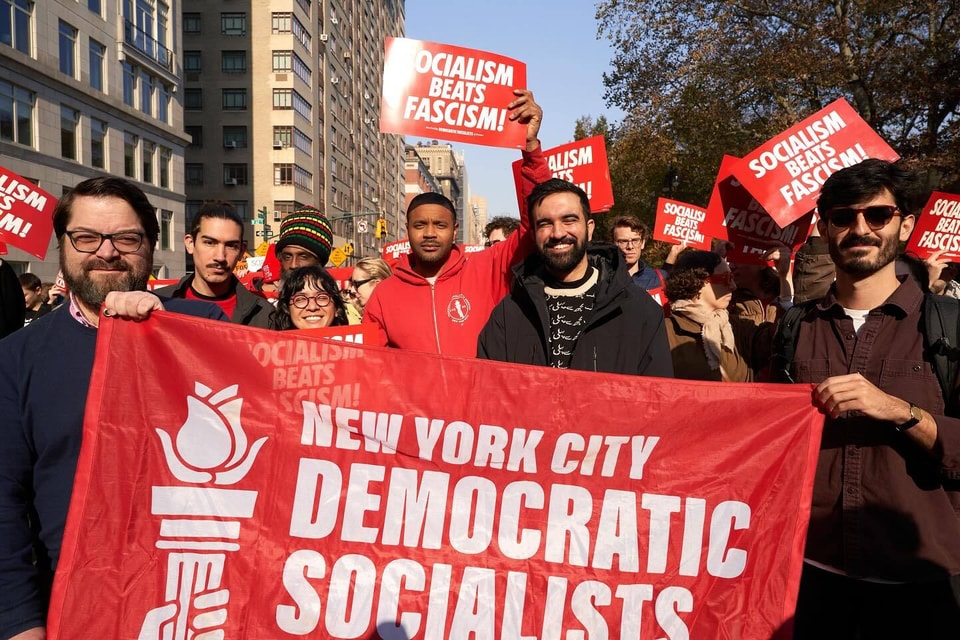
From a sociological perspective, social media democratizes political communication by giving voice to marginalized groups and grassroots movements. Movements like Black Lives Matter gained national and global visibility through digital platforms, challenging mainstream narratives.
However, social media also intensifies political polarization, misinformation, and echo chambers. Algorithms prioritize emotionally charged content, reinforcing ideological silos and reducing exposure to diverse viewpoints. This contributes to social fragmentation and the erosion of shared political reality in American society.
Media, Polarization, and Identity Politics
Media has played a significant role in deepening political polarization in the United States. Partisan news outlets and ideological online communities reinforce identity-based politics, where political affiliation becomes tied to social identity, culture, and morality.
Sociologically, this phenomenon reflects the intersection of media with race, class, religion, and nationalism. Media narratives often simplify complex social issues into binary oppositions, intensifying social divisions and reducing opportunities for dialogue.
The politicization of media consumption means that trust in information sources is increasingly determined by political identity rather than credibility. This challenges the functioning of democracy, which depends on informed and rational public debate.
Media and Democracy in American Society
In theory, media is essential to democracy by informing citizens, ensuring accountability, and facilitating public discourse. Investigative journalism has exposed political corruption, abuse of power, and human rights violations throughout American history.
However, from a sociological viewpoint, the democratic potential of media is constrained by economic inequalities, corporate ownership, and political influence. Access to media platforms and the ability to shape narratives remain unevenly distributed across social groups.
The digital divide further complicates democratic participation, as marginalized communities often lack equal access to digital media literacy and resources.
Media Ethics, Responsibility, and Public Trust
Declining trust in media institutions reflects broader crises of legitimacy in American politics. Sensationalism, misinformation, and political bias have weakened media credibility.
Sociologically, media ethics must be understood as a social responsibility rather than individual morality. Media institutions influence collective consciousness and social order, making ethical reporting essential for democratic stability.
Restoring trust requires transparency, diversity in ownership, media literacy education, and stronger public accountability mechanisms.
Conclusion
The role of media in American politics is complex, dynamic, and deeply sociological. Media shapes political knowledge, constructs social reality, reinforces power relations, and influences democratic participation. While media has the potential to strengthen democracy by informing and empowering citizens, it can also distort political discourse, deepen inequality, and reinforce elite dominance.
Understanding media’s role through a sociological lens reveals that political communication is not merely about information but about power, ideology, and social structure. In an era of digital transformation and political polarization, the relationship between media and American politics remains one of the most critical issues for democratic society.
A sociological approach encourages critical media consumption, institutional reform, and active citizenship, essential for sustaining democratic values in the United States.
Frequently Asked Questions (FAQs) on Media in American Politics
1. What is meant by Media in American Politics?
Media in American Politics refers to the role played by newspapers, television, radio, digital platforms, and social media in shaping political opinions, influencing elections, and structuring public discourse in the United States.
2. How does Media in American Politics influence public opinion?
Media in American Politics influences public opinion through agenda-setting, framing of issues, selective reporting, and repeated exposure to political narratives that shape citizens’ perceptions and priorities.
3. What is the sociological importance of Media in American Politics?
From a sociological perspective, Media in American Politics is important because it reflects power relations, reinforces dominant ideologies, and mediates the relationship between political institutions and society.
4. How does Media in American Politics affect democratic processes?
Media in American Politics affects democracy by informing citizens, holding leaders accountable, and enabling political participation, but it can also distort democratic debate through misinformation and elite influence.
5. What role does media play during American elections?
During elections, Media in American Politics shapes candidate visibility, campaign narratives, voter perceptions, and turnout by focusing on debates, polls, advertisements, and political controversies.
6. How does social media change Media in American Politics?
Social media has transformed Media in American Politics by enabling direct communication between politicians and citizens, amplifying grassroots movements, and accelerating political polarization and misinformation.
7. What is agenda-setting in Media in American Politics?
Agenda-setting in Media in American Politics refers to the ability of media to influence which political issues the public considers important by giving them frequent and prominent coverage.
8. How does framing work in Media in American Politics?
Framing in Media in American Politics involves presenting political issues in specific ways that influence how audiences interpret events, policies, and political actors.
9. Is Media in American Politics neutral?
Sociologically, Media in American Politics is not fully neutral, as media content is influenced by ownership structures, advertising pressures, political ideology, and institutional interests.
10. How does Media in American Politics contribute to political polarization?
Media in American Politics contributes to polarization by promoting partisan narratives, creating ideological echo chambers, and reinforcing identity-based political divisions.
11. What is the relationship between media and political power in the USA?
In Media in American Politics, political power and media are closely connected, as elites often use media platforms to shape public discourse and maintain ideological dominance.
12. How does Media in American Politics impact political socialization?
Media in American Politics shapes political socialization by influencing values, beliefs, attitudes, and political behavior from an early age through continuous exposure to political content.
13. What are the ethical issues related to Media in American Politics?
Ethical issues in Media in American Politics include bias, sensationalism, misinformation, lack of accountability, and the commercialization of political communication.
14. Can Media in American Politics promote social change?
Yes, Media in American Politics can promote social change by giving visibility to marginalized voices, supporting social movements, and challenging dominant political narratives.
15. Why is Media in American Politics important for sociological studies?
Media in American Politics is crucial for sociology because it reveals how communication, power, ideology, and social structures interact within modern democratic societies.
1 thought on “Role of Media in American Politics: A Sociological Perspective”