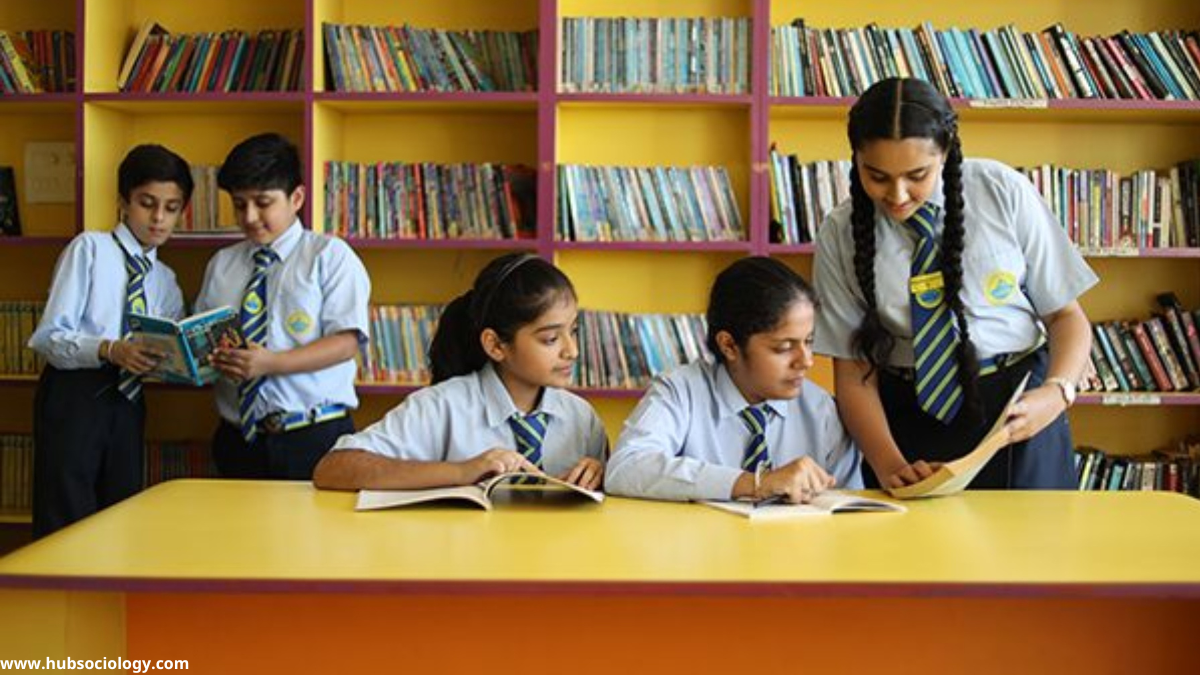
Introduction on Education in Social Mobility
Education has long been regarded as one of the most powerful instruments of social change. In a society like India, where social stratification is deeply rooted in caste, class, gender, and region, education plays a crucial role in enabling individuals to move upward in the social hierarchy. Social mobility refers to the movement of individuals or groups from one social position to another within a society. This movement can be vertical (upward or downward) or horizontal (movement within the same status level).
From a sociological perspective, education is not merely a means of acquiring knowledge; it is also a mechanism through which social inequalities are reproduced or reduced. In India, education has historically functioned both as a tool of empowerment and as a system that reflects existing social disparities. This article explores how education influences social mobility in India, the opportunities it provides, the challenges it faces, and its broader social implications.

Understanding Social Mobility in the Indian Context
Indian society has traditionally been structured around rigid social hierarchies, particularly the caste system. For centuries, social status was largely determined by birth rather than merit or achievement. Occupations, lifestyles, and even social interactions were governed by caste identities. This limited the possibility of upward mobility for large sections of the population, especially Dalits, Adivasis, and other marginalized communities.
With the advent of modern education during the colonial period and its expansion after independence, new pathways for social mobility emerged. Education introduced the idea that individual achievement, rather than inherited status, could determine one’s position in society. Sociologists such as M. N. Srinivas and Andre Béteille have highlighted how education contributed to the weakening of traditional hierarchies and encouraged merit-based advancement.
However, social mobility in India is not uniform. While some groups have benefited significantly from educational opportunities, others continue to face structural barriers that limit their progress.
Education as an Agent of Social Change
Education functions as a key agent of socialization. Schools and universities transmit not only academic knowledge but also social values, norms, and skills required for participation in modern society. Through education, individuals gain access to new ideas, critical thinking, and professional competencies that can transform their life chances.
From a functionalist perspective, education prepares individuals for different social roles based on merit and ability. In theory, this promotes equality of opportunity. In India, education has enabled many people from disadvantaged backgrounds to enter professions such as engineering, medicine, civil services, and academia, thereby improving their social and economic status.
Education also promotes social awareness. It exposes learners to democratic values, constitutional rights, and social justice ideals. This has contributed to movements for equality, gender empowerment, and the assertion of marginalized identities.
Historical Development of Education in India
During the colonial period, education was largely limited to urban elites and upper-caste groups. English education created a small middle class that gained access to administrative and professional roles. However, the majority of the population, especially in rural areas, remained excluded from formal education.
After independence, the Indian state recognized education as a fundamental tool for nation-building and social justice. Policies such as the Right to Education Act, expansion of public universities, and reservation (affirmative action) in educational institutions aimed to democratize access to education.
The introduction of reservations for Scheduled Castes (SC), Scheduled Tribes (ST), and Other Backward Classes (OBC) in higher education played a significant role in promoting social mobility. These measures allowed historically marginalized groups to access elite institutions that were previously dominated by upper-caste students.
Education and Caste-Based Mobility
Caste remains one of the most significant factors influencing social mobility in India. For lower-caste communities, education has often been the primary means of escaping traditional occupational roles and achieving higher social status.
Dalit and Adivasi students who gain access to higher education can enter white-collar professions, government services, and academic fields. This not only improves their economic conditions but also challenges caste-based discrimination.

However, sociological studies show that caste-based inequalities persist within educational institutions. Students from marginalized backgrounds often face discrimination, lack of mentorship, and financial difficulties. Dropout rates are higher among SC and ST students, especially in higher education.
Despite these challenges, education continues to be a powerful tool for caste mobility. Many social reformers, including Dr. B. R. Ambedkar, emphasized education as the foundation of liberation and dignity for oppressed communities.
Class, Poverty, and Educational Access
Economic class strongly influences educational opportunities in India. Children from affluent families have access to private schools, coaching centers, digital resources, and English-medium education. These advantages significantly increase their chances of academic success and high-status employment.
In contrast, children from poor households often attend under-resourced government schools with limited infrastructure and teacher shortages. Many students are forced to drop out due to financial constraints, child labor, or family responsibilities.
From a Marxist perspective, education can reproduce class inequality by favoring those who already possess economic and cultural capital. Pierre Bourdieu’s concept of cultural capital is particularly relevant in the Indian context. Middle- and upper-class families transmit language skills, confidence, and social networks that help their children succeed academically.
Thus, while education offers the possibility of upward mobility, it does not guarantee equal outcomes for all social classes.
Gender and Educational Mobility
Education has played a transformative role in improving the status of women in India. Increased female literacy and higher education have led to better employment opportunities, delayed marriages, and greater participation in public life.
Educated women are more likely to enter professional careers, achieve financial independence, and challenge traditional gender roles. This has contributed to changes in family structures, fertility patterns, and gender relations.
However, gender disparities persist, especially in rural areas and among poorer communities. Girls often face early marriage, household responsibilities, and limited access to secondary and higher education. Social norms and safety concerns also restrict female mobility.
Sociologically, education acts as both a tool of empowerment and a site of gender inequality. While it enables women’s upward mobility, structural barriers continue to limit their full participation in the education system.
Rural–Urban Divide in Education
The rural–urban divide is another major factor affecting social mobility in India. Urban areas generally have better schools, colleges, and access to technology. Students in cities benefit from exposure to competitive environments, diverse career options, and professional networks.
In rural regions, educational facilities are often inadequate. Teacher absenteeism, lack of infrastructure, and limited subject choices restrict students’ academic development. As a result, rural students face disadvantages in competitive examinations and job markets.
Migration from rural to urban areas for education is a common strategy for upward mobility. However, this process is often difficult and costly, making it accessible mainly to those with some financial support.
Higher Education and Professional Mobility
Higher education is a crucial pathway to upward social mobility in India. Degrees in engineering, medicine, law, management, and civil services provide access to high-status, well-paying jobs.
Institutions like IITs, IIMs, and central universities symbolize merit-based success. For students from disadvantaged backgrounds, admission to such institutions represents not just economic mobility but also social recognition.
However, access to elite institutions is highly competitive and often influenced by coaching culture, language proficiency, and prior schooling. This creates unequal chances of success.
Sociologists argue that higher education can both reduce and reproduce inequality. While it opens doors for some, it also reinforces hierarchies by privileging students with better preparation and resources.
Education, Employment, and Status
Education directly influences employment opportunities in India. Formal qualifications are essential for entering organized sector jobs, government services, and professional careers.
White-collar employment brings not only economic benefits but also social prestige. Educated individuals gain respect, authority, and influence within their communities.

However, the growing problem of educated unemployment challenges the traditional link between education and mobility. Many graduates struggle to find suitable jobs due to skill mismatches, economic slowdown, and limited job creation.
This has led to frustration and downward mobility among educated youth, particularly from middle- and lower-middle-class backgrounds.
Role of Government Policies
The Indian state has implemented several policies to promote educational access and social mobility:
- Reservation in educational institutions
- Scholarships for marginalized students
- Midday meal schemes
- Digital education initiatives
- Expansion of public universities
These policies aim to reduce inequality and create a more inclusive education system. While progress has been made, implementation gaps and regional disparities remain major challenges.
Education and Intergenerational Mobility
Education plays a crucial role in intergenerational mobility, where children achieve a higher social status than their parents. Many first-generation learners in India have used education to move from agricultural or manual labor backgrounds into professional careers.
This shift changes family aspirations, lifestyles, and social identities. Over time, it contributes to the formation of a more diverse middle class.
However, sociologists note that intergenerational mobility is uneven. Families with educated parents are more likely to produce educated children, reinforcing social advantage.
Limitations of Education as a Mobility Tool
While education is important, it is not a magic solution to inequality. Several structural factors limit its effectiveness:
- Unequal school quality
- Language barriers
- Digital divide
- Social discrimination
- Economic constraints
Moreover, social networks, political connections, and inherited wealth often play a larger role in success than education alone.
Thus, education must be supported by broader social reforms to achieve true equality.
Conclusion
From a sociological perspective, education is one of the most significant forces shaping social mobility in India. It has enabled millions to challenge traditional hierarchies, access new opportunities, and improve their life chances. Education has weakened the rigid boundaries of caste, expanded women’s roles, and created pathways for rural and marginalized communities to enter the modern economy.
However, education also reflects existing inequalities. Class, caste, gender, and regional disparities continue to shape who benefits most from the system. While education opens doors, not everyone starts with the same key.
For education to truly function as an engine of social mobility, India must focus on improving school quality, ensuring equal access, reducing discrimination, and aligning education with employment opportunities. Only then can education fulfill its promise of creating a more just, inclusive, and mobile society.
FAQs on Education in Social Mobility
- What is meant by education in social mobility?
Education in social mobility refers to the role of education in helping individuals move from one social class to another, especially from lower to higher social positions. - How does education promote social mobility in India?
Education in social mobility works by providing skills, qualifications, and opportunities that allow individuals to access better jobs, income, and social status. - Why is education important for upward social mobility?
Education in social mobility is important because it enables people to improve their economic conditions and challenge traditional social hierarchies. - What is the relationship between caste and education in social mobility?
Education in social mobility helps lower-caste groups break traditional occupational barriers and achieve higher social status. - How does higher education influence social mobility?
Higher education in social mobility provides access to professional careers, government jobs, and social prestige. - Can education reduce social inequality?
Yes, education in social mobility can reduce inequality by creating equal opportunities, though structural barriers still exist. - What role does education play in intergenerational mobility?
Education in social mobility allows children to achieve a better social position than their parents. - How does poverty affect education in social mobility?
Poverty limits access to quality education, making social mobility through education more difficult. - Is education alone enough for social mobility?
Education in social mobility is important, but factors like social networks, economy, and policy also matter. - How does gender affect education in social mobility?
Education in social mobility helps women gain independence, but gender inequality still restricts access in some areas. - What is the rural-urban gap in education in social mobility?
Urban students have better educational access, making social mobility easier than for rural students. - How do government policies support education in social mobility?
Reservations, scholarships, and free education programs strengthen education in social mobility. - What challenges limit education in social mobility?
Poor infrastructure, discrimination, and unemployment weaken education in social mobility. - How does education change social status?
Education in social mobility improves employment prospects and social respect. - What is the future of education in social mobility in India?
With reforms, education in social mobility can create a more equal and inclusive society.