Introduction
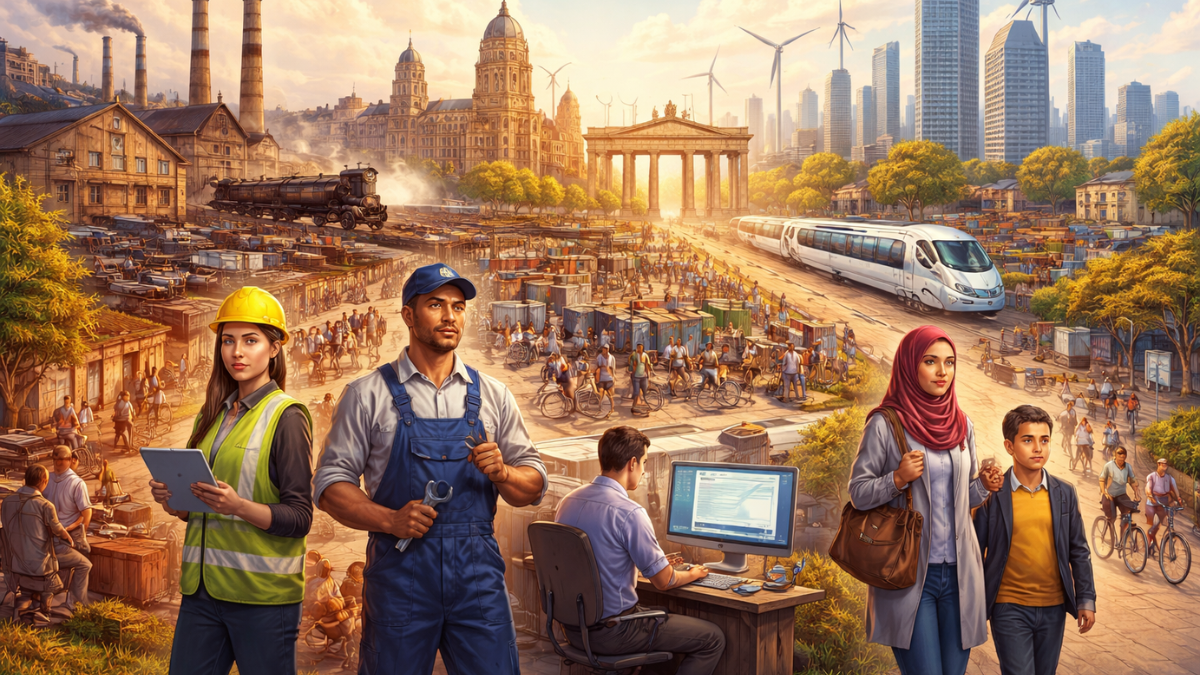
The history of Germany offers one of the most compelling case studies of how industrialization reshapes society. From the late nineteenth century to the digital age, Germany has experienced waves of economic transformation that have deeply influenced its social structure, work culture, political institutions, and everyday life. Industrialization in Germany did not simply introduce factories and machines; it altered family systems, class relations, urbanization patterns, gender roles, and national identity.
This article examines the sociological dimensions of industrialization, work culture, and social change in Germany. It explores how industrial growth laid the foundation for modern German society, how work culture became central to social organization, and how recent developments—such as globalization and digitalization—continue to redefine labor and social life.
The Early Phase of Industrialization in Germany
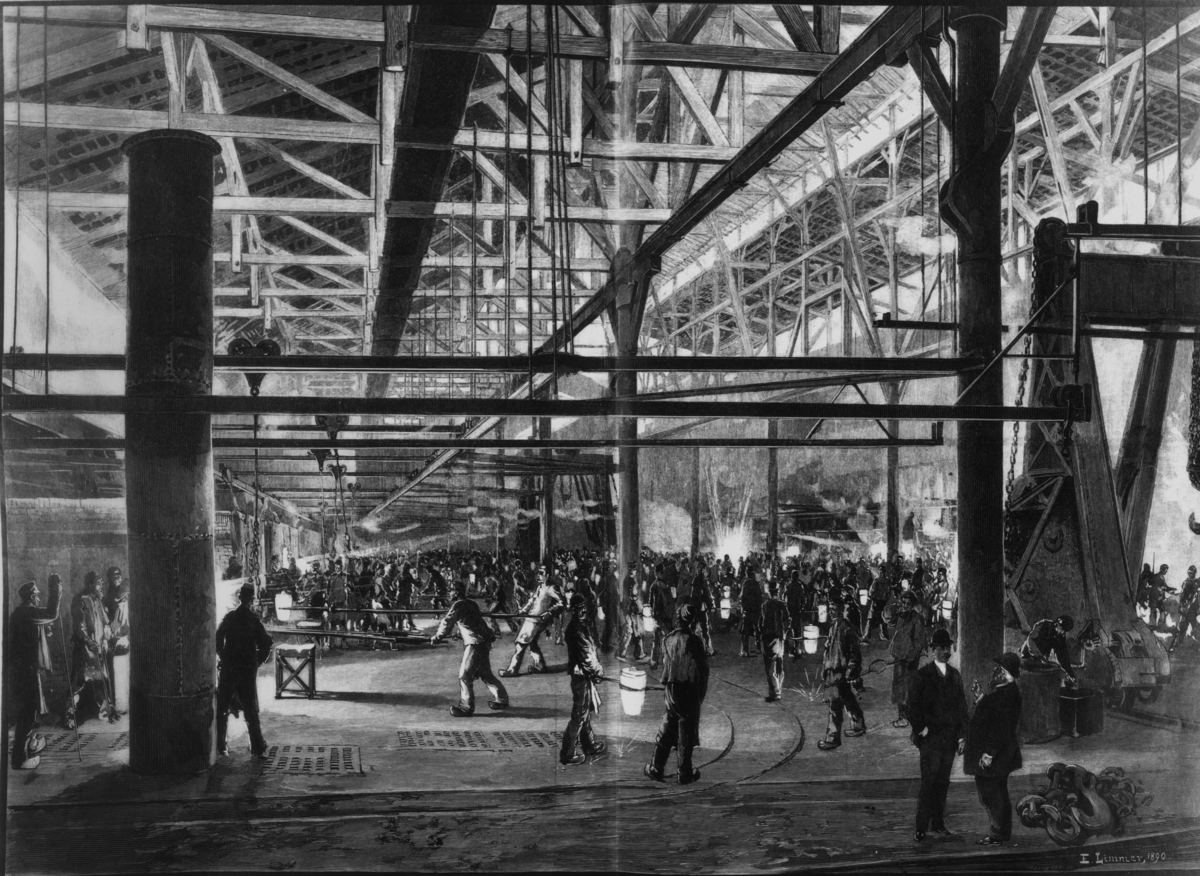
Industrialization in Germany began later than in Britain but advanced rapidly after political unification under the leadership of Otto von Bismarck in 1871. The newly unified state invested heavily in infrastructure, particularly railways and heavy industries such as coal and steel. The Ruhr region became the heart of industrial production, transforming rural landscapes into urban-industrial centers.
From a sociological perspective, this transformation marked the transition from agrarian Gemeinschaft (community-based) society to Gesellschaft (society based on impersonal relations), concepts famously introduced by Ferdinand Tönnies. Traditional rural communities were disrupted as peasants migrated to cities for industrial work. Social relations became increasingly formal, contractual, and economically driven.
The rise of factories created a new industrial working class. Long working hours, poor housing conditions, and labor exploitation led to the emergence of trade unions and socialist movements. Industrialization thus not only produced wealth but also class conflict, laying the groundwork for modern labor politics in Germany.
Industrial Capitalism and Class Formation
German industrialization generated distinct social classes: industrial capitalists, the middle class (including professionals and civil servants), and the working class. This stratification can be analyzed using the framework of Karl Marx, who argued that industrial capitalism creates conflict between the bourgeoisie and the proletariat.
In Germany, class conflict took institutional form. The Social Democratic movement grew significantly in the late nineteenth and early twentieth centuries. At the same time, Bismarck introduced social welfare policies—such as health insurance and pension systems—to integrate the working class into the state and reduce revolutionary tendencies. These early welfare measures became foundational to Germany’s later social market economy.
Industrial capitalism also reshaped family life. The male breadwinner model became dominant, particularly during the early twentieth century. Women increasingly entered factory work but were often paid less and expected to maintain domestic responsibilities. Industrialization thus reinforced certain gender hierarchies even as it created new opportunities.
Work Culture and the Protestant Ethic
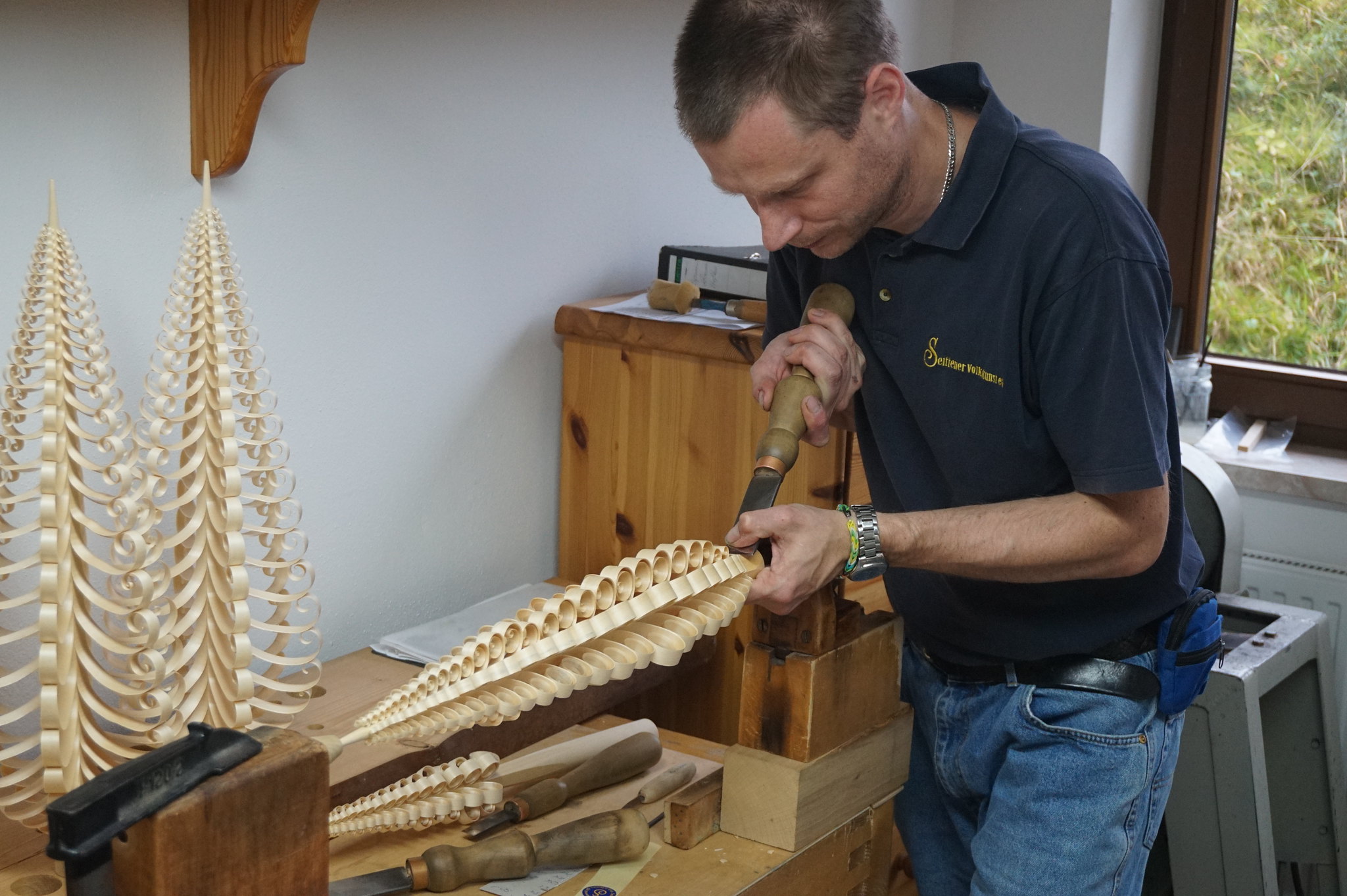
German work culture is often associated with discipline, punctuality, efficiency, and technical excellence. Sociologically, this work ethic can be connected to the ideas of Max Weber. In his famous work The Protestant Ethic and the Spirit of Capitalism, Weber argued that Protestant values encouraged rational organization of labor, discipline, and commitment to work as a moral duty.
In Germany, particularly in Protestant regions, work became more than economic necessity; it became a marker of identity and citizenship. The concept of “Ordnung” (order) and the emphasis on vocational training fostered a highly skilled labor force. The dual education system, combining apprenticeships with formal schooling, institutionalized this cultural orientation toward disciplined work.
Large industrial firms such as Siemens and Volkswagen became symbols of national pride and industrial strength. Workplaces were not only sites of production but also arenas of social integration, where workers formed collective identities and participated in works councils.
The Impact of War and Reconstruction
The two World Wars significantly disrupted Germany’s industrial and social structure. After World War II, Germany was divided into East and West, each following different economic models.
In West Germany, the “social market economy” balanced capitalist growth with social welfare protections. Industrial reconstruction led to rapid economic growth during the Wirtschaftswunder (economic miracle) of the 1950s and 1960s. Sociologically, this period fostered upward mobility, consumer culture, and a stable middle class.
East Germany, under socialist planning, organized work through state-controlled industries. Employment was guaranteed, but economic inefficiencies and political repression shaped everyday life. After reunification in 1990, the integration of the two systems created new inequalities and social tensions, particularly in eastern regions where unemployment rose sharply.
Reunification also intensified debates about national identity, labor markets, and social solidarity. The transformation from state socialism to market capitalism required cultural adaptation as much as economic restructuring.
Urbanization and Social Transformation

Industrialization accelerated urbanization in cities such as Berlin, Hamburg, and Munich. Urban growth created new forms of social interaction and cultural life. Cities became centers of political activism, artistic experimentation, and intellectual exchange.
However, rapid urbanization also produced overcrowding, poor sanitation, and class segregation. Working-class neighborhoods were often separated from affluent districts, reinforcing social inequality. Over time, urban planning and welfare policies aimed to improve housing and public services, reflecting the state’s growing role in social management.
The city became a site of modernity—characterized by anonymity, diversity, and individualism. Traditional social controls weakened, while new forms of association, such as labor unions and political parties, emerged.
Gender Roles and Labor Market Participation
Industrialization initially reinforced patriarchal norms, but over time it contributed to significant shifts in gender roles. Women entered the workforce in large numbers during wartime and increasingly in peacetime industries. The feminist movements of the 1960s and 1970s challenged traditional gender expectations.
Today, Germany has high female labor force participation, though part-time work remains common among women. Policies such as parental leave and childcare support reflect attempts to balance work and family life. Sociologically, this indicates the negotiation between traditional family structures and modern economic demands.
The transformation of gender roles also intersects with immigration and multiculturalism, adding complexity to debates about work, identity, and integration.
Immigration, Diversity, and Work
Post-war industrial growth required additional labor. Germany invited “Gastarbeiter” (guest workers) from countries such as Turkey and Italy. Over time, many settled permanently, transforming Germany into a multicultural society.
Industrial workplaces became spaces of intercultural interaction. While economic integration occurred, social integration was uneven. Immigrant communities often faced discrimination and occupational segregation. In recent decades, policies have increasingly recognized Germany as an immigration country, emphasizing integration and equal opportunity.
Work thus remains central to debates about citizenship and belonging. Employment not only provides income but also social recognition and participation in collective life.
Digitalization and the Changing Nature of Work
In the twenty-first century, Germany faces new transformations linked to automation, artificial intelligence, and Industry 4.0. Manufacturing remains strong, but service and knowledge sectors are expanding.
Digitalization challenges traditional work patterns. Remote work, flexible schedules, and platform-based employment alter the boundaries between work and private life. Sociologists note both opportunities and risks: greater autonomy for some workers, but precarious conditions for others.
Germany’s strong system of co-determination, in which workers participate in corporate governance, provides institutional mechanisms to manage these transitions. However, globalization and technological competition require continuous adaptation.
Social Cohesion and Contemporary Challenges
Industrialization created wealth and welfare institutions, but it also produced inequality. Regional disparities between western and eastern Germany persist. The transformation of heavy industry has left some regions economically vulnerable.
Moreover, the rise of populist movements in certain areas reflects anxieties about globalization, migration, and technological change. Work remains a central axis of identity, and disruptions to stable employment can generate broader social tensions.
Despite these challenges, Germany’s emphasis on vocational training, social partnership, and welfare policies continues to shape a relatively cohesive society compared to many other industrialized nations.
Conclusion
Industrialization in Germany has been a transformative force that reshaped social structures, work culture, and collective identity. From the rapid industrial expansion of the nineteenth century to the digital economy of today, work has remained central to German social organization.
Sociologically, Germany demonstrates how industrialization is not merely an economic process but a comprehensive social transformation. It reorganizes class relations, urban life, gender roles, family structures, and national identity. It also shows how institutions—such as welfare systems, vocational education, and co-determination—can mediate the tensions of capitalist development.
As Germany moves further into the era of digitalization and globalization, the relationship between industrial heritage, work culture, and social change continues to evolve. Understanding this dynamic offers valuable insight into the broader sociological processes that shape modern societies.
FAQs on Social Change in Germany
1. What are the main drivers of Social Change in Germany?
The main drivers of Social Change in Germany include industrialization, urbanization, globalization, digitalization, migration, demographic shifts, and policy reforms within the welfare state.
2. How did industrialization contribute to Social Change in Germany?
Industrialization transformed Germany from an agrarian society into an industrial power, leading to urban growth, class formation, labor movements, and the development of modern social institutions.
3. How has reunification influenced Social Change in Germany?
The reunification of East and West Germany in 1990 reshaped economic structures, labor markets, and regional identities, creating both integration opportunities and social inequalities.
4. What role does work culture play in Social Change in Germany?
Germany’s disciplined and skill-oriented work culture has shaped social mobility, vocational training systems, and strong labor institutions, contributing significantly to Social Change in Germany.
5. How has immigration affected Social Change in Germany?
Immigration has increased cultural diversity, transformed urban demographics, influenced labor markets, and sparked debates on integration and national identity.
6. What is the impact of digitalization on Social Change in Germany?
Digitalization has altered traditional industries, expanded remote work, increased technological skills demand, and reshaped work-life balance, accelerating Social Change in Germany.
7. How has urbanization influenced Social Change in Germany?
Urbanization has created modern cities, diversified lifestyles, and increased social stratification while also fostering innovation and cultural exchange.
8. What demographic trends are shaping Social Change in Germany?
An aging population, low birth rates, and migration trends are major demographic factors influencing Social Change in Germany, especially in labor and welfare systems.
9. How has gender equality contributed to Social Change in Germany?
Increased female labor force participation, parental leave policies, and gender equality movements have redefined family roles and workplace norms.
10. What role does the welfare state play in Social Change in Germany?
Germany’s social market economy and welfare policies help reduce inequality and support social cohesion during periods of economic and structural transformation.
11. How do education and vocational training impact Social Change in Germany?
Germany’s dual education system promotes skilled labor, reduces unemployment, and supports economic stability, thereby shaping long-term Social Change in Germany.
12. Has globalization accelerated Social Change in Germany?
Yes, globalization has expanded international trade, influenced cultural exchange, and increased competition, contributing to shifts in employment patterns and social identity.
13. How has class structure evolved in Social Change in Germany?
Germany’s class structure has shifted from traditional industrial classes to a more diversified middle-class and service-based economy, though inequality remains.
14. What challenges accompany Social Change in Germany?
Challenges include regional inequality, integration issues, labor market restructuring, political polarization, and adapting to technological innovation.
15. Why is Social Change in Germany important for sociological study?
Social Change in Germany provides a valuable case study of how industrialization, welfare institutions, and globalization interact to transform social structures and cultural norms.