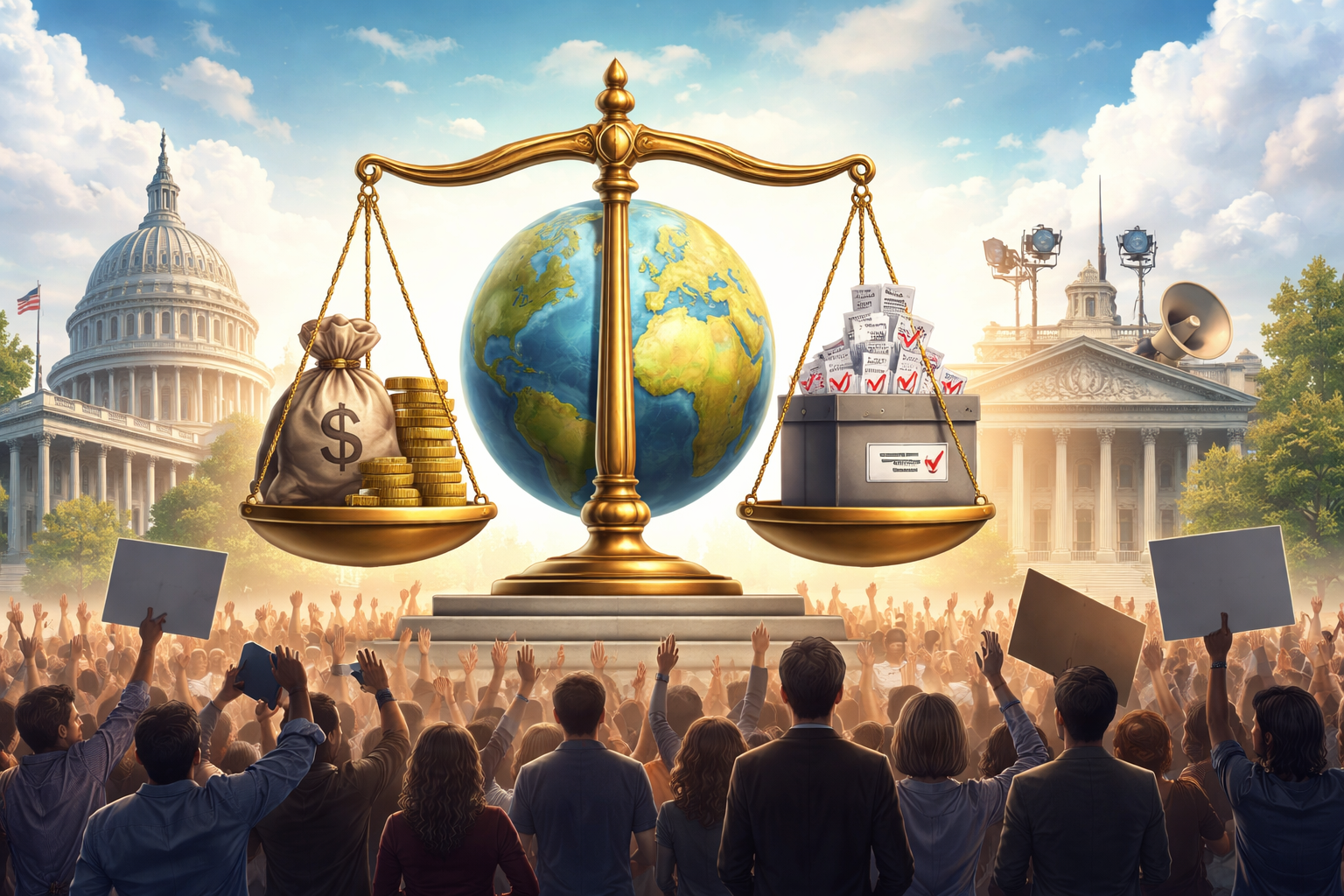
Introduction: The Democratic Promise and the Power Puzzle
Democracy is often celebrated as the political system where power rests in the hands of the people. Elections, constitutions, civil liberties, and representative institutions are presented as evidence that citizens collectively rule themselves. Yet sociologists have long questioned whether this ideal matches reality. If citizens truly control power, why do policies often favor elites? Why do economic inequalities persist despite political equality? And why do governments frequently respond more swiftly to corporate interests than to popular demands?
From a sociological perspective, democracy is not merely a political arrangement but a complex social structure shaped by class, institutions, ideology, and global forces. Power in democratic nations is rarely centralized in one place; instead, it flows through overlapping networks of economic, political, cultural, and technological influence. This article explores who really controls power in democratic societies, moving beyond formal institutions to uncover the deeper structures that shape decision-making.

Understanding Power in Sociology
In sociology, power is not limited to the authority exercised by governments. It refers to the ability to influence decisions, control resources, shape norms, and define reality itself. Power can be visible, such as laws passed by parliaments, or invisible, such as shaping what issues are even considered worthy of public debate.
Classical sociologists laid the foundation for understanding power. Max Weber defined power as the probability of carrying out one’s will even against resistance. Karl Marx emphasized economic power, arguing that those who control the means of production ultimately dominate society. Later thinkers expanded this view to include cultural and ideological forms of power.
In democratic nations, power must therefore be examined not only in parliaments and elections but also in markets, media, bureaucracies, and everyday social relations.
The Formal Face of Power: Elected Governments
At the most visible level, democratic power appears to be exercised by elected representatives. Citizens vote, governments form, and laws are passed through constitutional procedures. Parliaments, courts, and executives operate within legal frameworks designed to ensure accountability and transparency.
However, sociological research consistently shows that formal political power does not operate in a social vacuum. Elected leaders depend on campaign funding, party organizations, bureaucratic expertise, and media visibility. As a result, their autonomy is often constrained by forces beyond voters’ control.
While elections allow citizens to choose between alternatives, they rarely allow people to shape the full range of political possibilities. This gap between electoral participation and actual policy influence raises questions about who truly governs in democratic systems.
Economic Elites and Corporate Power
One of the most influential sources of power in democratic nations is economic capital. Corporations, financial institutions, and wealthy individuals possess resources that allow them to shape political outcomes in subtle yet powerful ways.
Through lobbying, political donations, and control over investment decisions, economic elites can influence legislation, taxation policies, labor laws, and environmental regulations. Governments, even in democracies, often fear capital flight, unemployment, or market instability, which gives corporations structural power over public policy.

Sociologically, this reflects a form of class dominance where political equality coexists with economic inequality. While citizens may have equal voting rights, their capacity to influence decision-making varies dramatically depending on wealth and access.
Bureaucracy and the Power of Administration
Another often overlooked center of power in democratic nations is bureaucracy. Civil servants, regulatory agencies, and administrative institutions possess technical expertise and continuity that elected officials often lack.
Bureaucrats shape policy implementation, interpret laws, and control access to information. Their decisions can significantly affect citizens’ lives, from welfare distribution to immigration procedures. Because bureaucratic power operates through rules and procedures rather than elections, it is less visible but highly influential.
From a sociological viewpoint, bureaucracy represents institutional power—authority embedded in organizational structures rather than individual actors. This can stabilize democracy but also distance decision-making from popular control.
Media, Ideology, and Cultural Power
Power in democratic nations is also exercised through culture and communication. Media institutions play a crucial role in shaping public opinion, defining political agendas, and framing social problems.
Ownership patterns in media industries often concentrate influence in the hands of a few corporations or elites. Even without direct censorship, media can marginalize certain voices while amplifying others. Issues that receive sustained coverage are perceived as important, while others remain invisible.
This form of power aligns with the sociological concept of ideological control, where dominant groups shape beliefs and values in ways that legitimize existing power structures. Democracy may allow free expression, but not all expressions carry equal weight.
Political Parties and Elite Circulation
Political parties are essential institutions in democratic systems, but they also function as gatekeepers of power. Party leadership determines candidate selection, policy priorities, and coalition strategies. As a result, political competition often occurs within boundaries set by party elites.
Sociologists argue that democratic politics frequently involves elite circulation rather than mass rule. Different groups of elites replace one another through elections, but the overall structure of power remains relatively stable. Radical alternatives are often excluded or absorbed into existing frameworks.
This does not mean elections are meaningless, but it suggests that democracy operates within limits shaped by institutional and class interests.
Civil Society: Resistance and Counter-Power
While elites wield significant influence, democratic nations also contain spaces of resistance. Trade unions, social movements, NGOs, and grassroots organizations represent forms of counter-power that challenge dominant interests.
Historically, labor rights, civil rights, gender equality, and environmental protections have advanced through collective action rather than elite initiative. Civil society can pressure governments, reshape public discourse, and expand democratic participation.
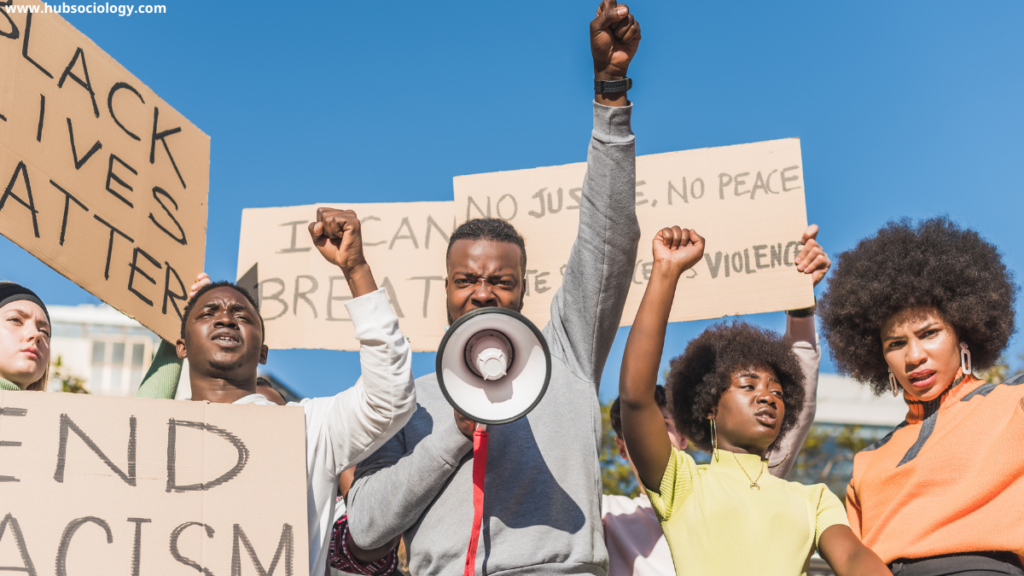
From a sociological perspective, democracy is not a fixed system but an ongoing struggle between dominant and subordinate groups. Power is constantly negotiated, contested, and redefined.
Globalization and External Constraints
In an increasingly globalized world, democratic power is also constrained by international forces. Global markets, multinational corporations, international financial institutions, and trade agreements limit the policy choices available to national governments.
Even when citizens vote for change, governments may claim their hands are tied by economic realities or global obligations. This creates a democratic paradox where national sovereignty exists formally but is weakened in practice.
Sociologically, this highlights the transnational dimension of power, where decisions affecting citizens are often made beyond democratic reach.
Technology, Data, and Surveillance Power
In the digital age, power has taken new forms. Technology companies control platforms that shape communication, political mobilization, and access to information. Data collection and surveillance technologies allow both states and corporations to monitor behavior on an unprecedented scale.
While digital tools can enhance participation, they can also reinforce inequalities and manipulate public opinion. Algorithmic decision-making often lacks transparency, raising concerns about accountability in democratic societies.
This emerging form of power illustrates how democracy must adapt to new social realities beyond traditional political institutions.
Who Really Controls Power? A Sociological Synthesis
From a sociological standpoint, power in democratic nations is distributed but unequal. It does not reside solely with voters, nor is it monopolized by a single elite. Instead, it is shared among multiple actors—economic elites, political leaders, bureaucrats, media institutions, and global forces—within a structured hierarchy.
Democracy provides mechanisms for participation and accountability, but these mechanisms operate within social and economic constraints. The reality of democratic power is therefore more complex than the idealized notion of “rule by the people.”
Conclusion: Democracy as an Ongoing Social Process
The question of who controls power in democratic nations does not have a simple answer. Sociologically, democracy is best understood as a dynamic process rather than a completed achievement. Power is constantly shaped by class relations, institutions, culture, and global systems.
While democratic structures offer opportunities for popular influence, they do not automatically guarantee equality or justice. Real democratic power depends on active citizenship, strong civil society, economic fairness, and transparency across institutions.
Ultimately, the struggle over power is also a struggle over the meaning of democracy itself. Whether democratic nations move closer to genuine popular control or drift further into elite dominance depends not only on elections, but on broader social transformations.
Frequently Asked Questions (FAQs)
1. What is meant by power in democratic nations?
Power in Democratic Nations refers to the ability of individuals, groups, or institutions to influence political decisions, public policies, and social norms within a system that claims to be governed by the people.
2. Do citizens really control power in democratic nations?
Formally, citizens control power through voting and participation, but sociologically, power in democratic nations is often influenced by elites, institutions, and economic forces beyond direct public control.
3. How do economic elites shape power in democratic nations?
Economic elites shape power in democratic nations through corporate lobbying, campaign financing, control over investments, and influence on employment and economic stability.
4. What role do governments play in power in democratic nations?
Governments exercise visible power through laws and policies, but their authority is often constrained by bureaucracies, markets, and global pressures shaping power in democratic nations.
5. Why is bureaucracy important in understanding power in democratic nations?
Bureaucracy controls policy implementation and administrative decisions, making it a crucial yet less visible component of power in democratic nations.
6. How does media influence power in democratic nations?
Media shapes public opinion, political agendas, and social narratives, allowing it to exercise cultural and ideological power in democratic nations.
7. Is power in democratic nations equally distributed?
No, power in democratic nations is unevenly distributed due to class, wealth, education, and access to institutional networks.
8. What is elite dominance in democratic systems?
Elite dominance refers to a situation where a small group controls key resources and decision-making, limiting genuine popular influence over power in democratic nations.
9. How do political parties affect power in democratic nations?
Political parties act as gatekeepers by selecting candidates and shaping policies, thereby structuring access to power in democratic nations.
10. Can civil society challenge power in democratic nations?
Yes, social movements, NGOs, and unions create counter-power and can reshape power in democratic nations through protest, advocacy, and public pressure.
11. How does globalization impact power in democratic nations?
Global markets and international institutions restrict national policy choices, influencing power in democratic nations beyond domestic democratic control.
12. What role does technology play in power in democratic nations?
Digital platforms, data control, and surveillance technologies have become new sources of power in democratic nations, shaping political communication and behavior.
13. Is democracy compatible with unequal power structures?
Sociologically, democracy often coexists with inequality, meaning power in democratic nations can remain concentrated despite political equality.
14. How do sociologists study power in democratic nations?
Sociologists analyze institutions, class relations, ideology, and everyday practices to understand how power in democratic nations operates beyond elections.
15. Can power in democratic nations become more people-centered?
Yes, through stronger institutions, transparency, economic equality, and active citizen participation, power in democratic nations can move closer to democratic ideals.