Introduction
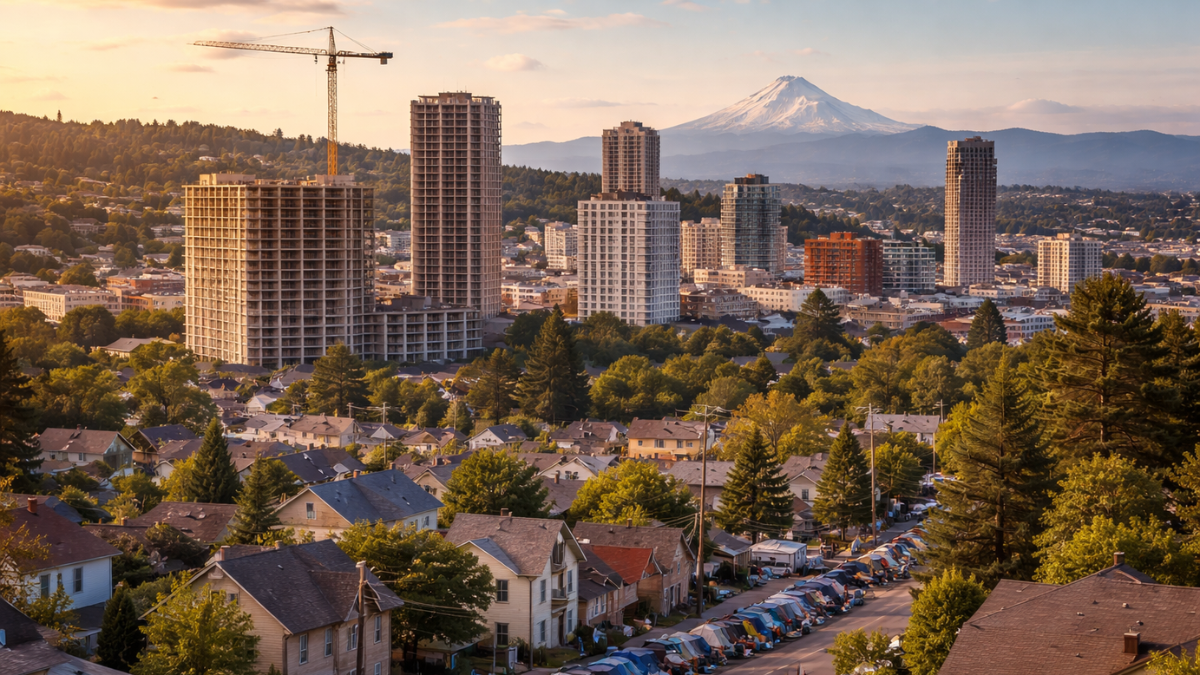
Urbanization, as a defining feature of modern society, has reshaped the demographic, economic, and spatial organization of regions across the world. In the United States, the state of Oregon presents a compelling case where rapid urban growth has intersected with a deepening housing crisis. Cities like Portland, Eugene, and Bend have experienced significant population inflows, driven by economic opportunities, environmental amenities, and cultural appeal. However, this urban expansion has also intensified housing shortages, rising rents, homelessness, and socio-spatial inequality.
From a sociological perspective, the housing crisis in Oregon is not merely a matter of supply and demand. It reflects broader structural issues such as economic inequality, policy frameworks, urban planning regimes, and the commodification of housing. This article examines the relationship between urbanization and the housing crisis in Oregon, focusing on its causes, consequences, and potential solutions through sociological lenses.
Urbanization in Oregon: Patterns and Drivers
Urbanization in Oregon has accelerated over the past few decades, particularly in metropolitan regions. The Portland metropolitan area has emerged as a hub for technology, creative industries, and sustainable urban living, attracting both domestic migrants and international residents.
Several factors have contributed to this urban growth. First, Oregon’s economic transformation—from a resource-based economy to one driven by services and technology—has increased urban job opportunities. Second, lifestyle migration has played a crucial role, as individuals seek environmentally conscious and culturally vibrant cities. Third, regional planning policies, such as urban growth boundaries, have concentrated development within designated areas, intensifying urban density.
However, this rapid urbanization has not been matched by proportional housing development. Oregon faces a severe shortage of housing units, with estimates suggesting a deficit of around 140,000 homes needed to meet demand. This imbalance between population growth and housing supply has laid the foundation for the current crisis.
Structural Causes of the Housing Crisis
Housing Supply Deficit
The most immediate cause of Oregon’s housing crisis is the insufficient supply of housing. The state has struggled to produce enough homes to accommodate its growing population. Reports indicate that Oregon ranks among the worst states in terms of housing underproduction.
Additionally, construction rates have failed to meet targets. Recent data shows that housing development remains below required levels, exacerbating shortages and pushing prices upward.
From a sociological standpoint, this shortage reflects structural constraints in the housing market, including land-use regulations, high construction costs, and limited investment in affordable housing.
Rising Housing Costs and Rent Burden
Urbanization has led to increased demand for housing in cities, resulting in rising property values and rents. Oregon is now considered one of the least affordable states in terms of housing cost burden.

High rents disproportionately affect low- and middle-income households, many of whom spend a significant portion of their income on housing. This phenomenon, known as “cost burden,” reduces disposable income and increases vulnerability to economic shocks.
Economic Inequality and Labor Market Changes
The housing crisis is deeply intertwined with economic inequality. While urbanization has created high-paying jobs in sectors like technology, it has also marginalized workers in low-wage industries. This dual labor market creates uneven access to housing.
Economic instability, including job loss and rising living costs, has further intensified the crisis, pushing more individuals toward housing insecurity and homelessness.
Urban Planning and Policy Constraints
Oregon’s urban growth boundary (UGB) system, designed to prevent urban sprawl and protect agricultural land, has had unintended consequences. While it promotes sustainable development, it also restricts the availability of land for housing, contributing to higher prices within urban areas.
Although policies such as inclusionary zoning and legislation like House Bill 2001 aim to diversify housing types, their impact has been gradual and insufficient to address the scale of the crisis.
Homelessness as a Social Outcome
One of the most visible consequences of the housing crisis in Oregon is the rise in homelessness. Sociological research consistently shows that homelessness is closely linked to the lack of affordable housing.
Recent data highlights the severity of the issue. In 2025, homelessness in Oregon increased significantly, with over 27,000 individuals experiencing homelessness, a large proportion of whom were unsheltered.
Homelessness in Oregon is not limited to a single demographic group. It includes families, veterans, youth, and individuals with mental health or substance use challenges. The growing number of “working homeless”—people with jobs but without stable housing—underscores the structural nature of the crisis.
From a sociological perspective, homelessness reflects systemic failures in housing, healthcare, and social welfare systems. It is not merely an individual problem but a collective social issue rooted in inequality and exclusion.
Gentrification and Displacement
Urbanization in Oregon has also led to processes of gentrification, particularly in cities like Portland. As affluent populations move into urban neighborhoods, property values increase, leading to the displacement of long-term residents.
Gentrification has several sociological implications. It transforms the cultural and social fabric of neighborhoods, often eroding community networks and social capital. It also reinforces spatial inequality, as marginalized groups are pushed to peripheral areas with fewer resources and opportunities.

The displacement of low-income residents further exacerbates housing instability, creating a cycle of vulnerability and exclusion.
Social Stratification and Spatial Inequality
The housing crisis in Oregon highlights the intersection of social stratification and spatial inequality. Access to housing is increasingly determined by income, race, and class, leading to segregated urban spaces.
Low-income households are often concentrated in areas with limited infrastructure, poor access to services, and higher exposure to environmental risks. In contrast, affluent populations occupy well-serviced neighborhoods with better amenities.
This spatial segregation reinforces social inequalities, limiting upward mobility and perpetuating cycles of poverty. It also raises questions about the right to the city and the equitable distribution of urban resources.
Policy Responses and Their Limitations
Government Initiatives
The Oregon government has implemented several measures to address the housing crisis, including increased funding for affordable housing, rent assistance programs, and efforts to streamline housing development.
Legislative initiatives aim to accelerate construction and promote diverse housing types, such as duplexes and cottage clusters. These policies reflect an acknowledgment of the structural nature of the crisis.
However, despite significant investments, progress has been slow. Homelessness continues to rise, and housing affordability remains a major concern.
Alternative Housing Models
Innovative approaches, such as tiny house villages and community-based housing initiatives, have emerged as potential solutions. These models emphasize affordability, community participation, and sustainability.
For example, small-scale housing projects in Oregon have provided transitional housing for homeless individuals, demonstrating the potential of alternative models to address immediate needs.
However, such initiatives are limited in scale and cannot replace comprehensive structural reforms.
Sociological Theories and Interpretations
Political Economy Perspective
From a political economy perspective, the housing crisis in Oregon can be understood as a result of the commodification of housing. Housing is treated as a market commodity rather than a social right, leading to profit-driven development and exclusion.
This perspective highlights the role of capitalism in shaping urban housing markets, where affordability is often secondary to profitability.
Urban Ecology and Spatial Distribution
Urban ecology theory emphasizes the spatial distribution of populations within cities. In Oregon, competition for urban space has led to the concentration of wealth in certain areas and the marginalization of others.
This framework helps explain patterns of segregation and displacement observed in urban neighborhoods.
Social Justice and Right to Housing
The housing crisis raises fundamental questions about social justice and the right to housing. Sociologists argue that access to safe and affordable housing is a basic human right, essential for dignity and well-being.
In this context, the crisis in Oregon reflects broader societal inequalities and the need for more equitable policy interventions.
Future Challenges and Prospects

The future of housing in Oregon depends on the ability of policymakers, communities, and stakeholders to address structural issues. Key challenges include increasing housing supply, ensuring affordability, and reducing homelessness.
Climate change and environmental constraints will also shape urban development, requiring sustainable and resilient housing solutions.
Moreover, the integration of social policies with housing strategies is essential to address the root causes of inequality.
Conclusion
The urbanization and housing crisis in Oregon is a complex and multifaceted issue that reflects broader social, economic, and political dynamics. Rapid urban growth, combined with structural constraints in the housing market, has created a situation where many residents struggle to access affordable and stable housing.
From a sociological perspective, the crisis is not merely about housing shortages but about inequality, exclusion, and the commodification of basic needs. Addressing this crisis requires a holistic approach that integrates economic, social, and policy interventions.
Ultimately, the case of Oregon serves as a critical example of the challenges faced by urban societies worldwide. It underscores the need to rethink housing not just as a market commodity, but as a fundamental component of social justice and human well-being.
FAQs
- What is the Housing Crisis in Oregon?
The Housing Crisis in Oregon refers to the shortage of affordable housing, rising rents, and increasing homelessness across urban and rural areas of the state. - What are the main causes of the Housing Crisis in Oregon?
The Housing Crisis in Oregon is caused by rapid urbanization, limited housing supply, rising construction costs, and restrictive land-use policies. - How does urbanization contribute to the Housing Crisis in Oregon?
Urbanization increases population in cities like Portland, creating higher demand for housing and intensifying the Housing Crisis in Oregon. - Why is housing so expensive in Oregon?
Housing is expensive due to supply shortages, high demand, and economic inequality, all central to the Housing Crisis in Oregon. - Who is most affected by the Housing Crisis in Oregon?
Low-income families, renters, elderly people, and marginalized communities are most affected by the Housing Crisis in Oregon. - How does the Housing Crisis in Oregon impact homelessness?
The Housing Crisis in Oregon directly contributes to rising homelessness due to lack of affordable and accessible housing options. - What role does government policy play in the Housing Crisis in Oregon?
Government policies, including zoning laws and urban growth boundaries, shape housing availability and influence the Housing Crisis in Oregon. - Is the Housing Crisis in Oregon limited to urban areas?
No, the Housing Crisis in Oregon also affects rural areas, though it is more severe in cities. - What is the connection between income inequality and the Housing Crisis in Oregon?
Income inequality widens the gap between housing costs and wages, worsening the Housing Crisis in Oregon. - How does gentrification affect the Housing Crisis in Oregon?
Gentrification increases property values and displaces low-income residents, intensifying the Housing Crisis in Oregon. - What are some solutions to the Housing Crisis in Oregon?
Solutions include increasing housing supply, expanding affordable housing programs, and reforming zoning laws to ease the Housing Crisis in Oregon. - How does rent burden relate to the Housing Crisis in Oregon?
Rent burden occurs when households spend a large portion of income on rent, a key feature of the Housing Crisis in Oregon. - What is the role of affordable housing in solving the Housing Crisis in Oregon?
Affordable housing development is essential to reducing inequality and addressing the Housing Crisis in Oregon. - How does the Housing Crisis in Oregon affect social inequality?
The crisis deepens social inequality by limiting access to safe housing and opportunities for disadvantaged groups. - Can the Housing Crisis in Oregon be solved in the future?
Yes, but it requires long-term policy reforms, investment in housing, and addressing structural inequalities underlying the Housing Crisis in Oregon.